Blog
PDRN vs. PN: Understanding the Real Difference in Your Skincare and Treatments
Author
Ray
Published
Category
PDRN Serum
PDRN and PN aren't the same — and choosing the wrong one matters. Learn the real science-backed differences and which treatment suits your skin goals.

Author
Ray
An esteemed medical aesthetics expert with 40 years of profound experience in the field. With decades of expertise in non-invasive procedures, anti-aging science, and advanced dermatological solutions, the author is dedicated to sharing insights that connect clinical innovation with real-world patient results. Passionate about advancing safe, effective, and high-impact aesthetic treatments for a global clientele.
What’s better than insider perks, pro tips, and surprises?
Sign up to get the most recent blog articles in your email every week.
Join now.
Our company’s main product lines include HA (Hyaluronic Acid) fillers, CaHA (Calcium Hydroxylapatite) fillers, PLLA (Poly-L-Lactic Acid) biostimulators, and other advanced aesthetic solutions, all developed and manufactured by trusted partner facilities with whom we have maintained long-term, stable collaborations.
I help them with sales and export operations, while our company also provides sourcing and procurement services in China to help international clients solve supply-related challenges. If you need assistance with procurement, please feel free to contact us.
If you've been exploring advanced skin treatments lately, you've almost certainly encountered two ingredients that seem interchangeable on the surface: PDRN and PN. Both are derived from DNA. Both are praised for skin regeneration. Both are ingredients used in high-end aesthetic treatments and skincare formulations. And yet, they are not the same thing — and treating them as identical could mean choosing the wrong treatment for your specific skin concern.
This guide cuts through the marketing language and explains, clearly and honestly, what PDRN and PN actually are, how they work, where they differ, and which one makes sense for your goals.
The Short Answer
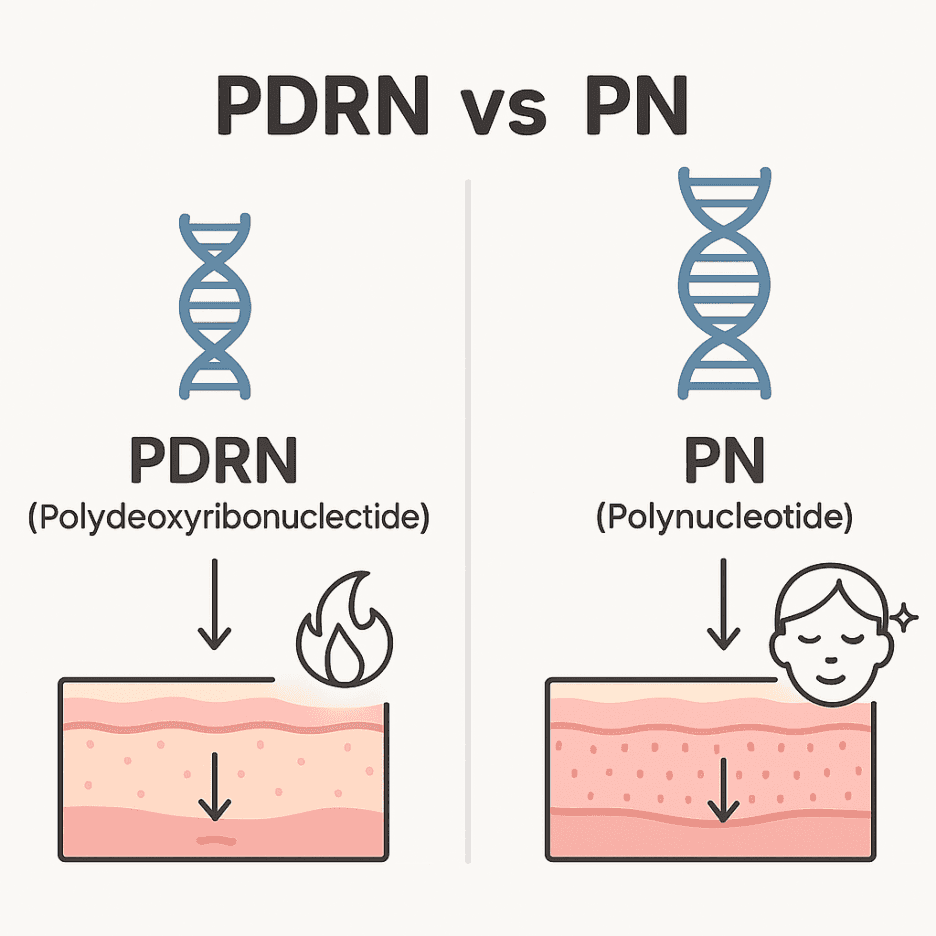
PDRN (Polydeoxyribonucleotide) is a highly purified, short-chain DNA fragment derived primarily from salmon sperm or trout DNA. It works by activating specific cellular receptors to stimulate tissue repair and regeneration at a deep biological level. PN (Polynucleotide) refers to longer-chain DNA or RNA fragments, often less processed, that work primarily through hydration and structural support in the skin. PDRN is the more bioactive and targeted molecule; PN is broader in scope and formulation. The right choice depends on what your skin needs to fix — not just what sounds more advanced.
Key Takeaways
PDRN and PN are related but chemically distinct — PDRN is a specific, short-chain subset of polynucleotides with tighter purity standards.
PDRN works through receptor activation (specifically A2A adenosine receptors), triggering cell repair and collagen production at a biological level.
PN works through biophysical hydration and structural scaffolding, making it excellent for volume, plumpness, and moisture retention.
PDRN is typically preferred for wound healing, pigmentation, scarring, and targeted tissue repair.
PN is often preferred for overall skin quality, hydration, and as a preventative anti-aging booster.
They can be used together, and many advanced protocols combine both for synergistic results.
Neither is universally "better" — the right choice is skin-goal and skin-type dependent.
What Is PDRN? A Closer Look at the Ingredient
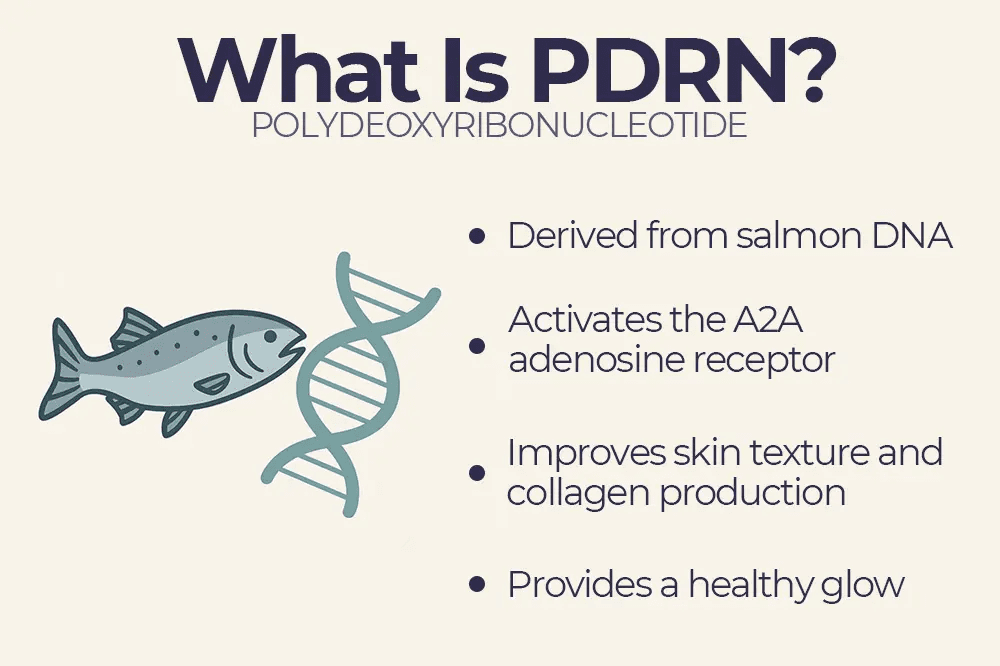
PDRN stands for Polydeoxyribonucleotide. Despite the intimidating name, the concept is relatively straightforward: it is a purified extract of DNA fragments taken from salmon (most commonly Oncorhynchus mykiss, the rainbow trout) or similar fish species. The DNA is carefully processed, sterilized, and broken down into short molecular chains — specifically chains between 50 and 2,000 base pairs in length.
This isn't a gimmick. PDRN has been studied in clinical medicine — particularly in wound care, ischemic tissue repair, and diabetic ulcer treatment — for several decades. Its application in aesthetics is an extension of that medical research, not the origin of it.
Where Does PDRN Come From?
The salmon or trout DNA used in PDRN production is chosen for a specific reason: the DNA base pair sequence of fish sperm is remarkably similar to human DNA in structural terms. This high biocompatibility means the body is unlikely to mount an immune response, making it safe for injection or topical application in most individuals.
The raw material undergoes multiple stages of purification — including enzymatic digestion, filtration, and sterilization — to isolate only the active PDRN fraction and eliminate any proteins, lipids, or contaminants that could trigger irritation.
How PDRN Works in the Skin
This is where PDRN separates itself from more generic skin boosters. PDRN doesn't just sit in the skin and hydrate it. It binds to A2A adenosine receptors on cell surfaces — receptors that play a key role in regulating inflammation, promoting angiogenesis (new blood vessel formation), and stimulating fibroblast activity.
Fibroblasts are the cells responsible for producing collagen, elastin, and hyaluronic acid — the structural proteins that keep skin firm, elastic, and youthful. When PDRN activates these receptors, it essentially tells your skin's repair machinery to switch on. The result is a cascade of regenerative activity: new collagen is synthesized, damaged cells are cleared, and tissue quality improves from within.
This receptor-mediated mechanism is what makes PDRN particularly effective for compromised skin — scars, sun damage, hyperpigmentation, and post-procedure recovery.
What Is PN? Not Quite the Same Thing
PN stands for Polynucleotide. Technically, PDRN is a type of polynucleotide — but the reverse is not always true. Not every polynucleotide is PDRN, and this is where the confusion begins.
In the aesthetics and skincare industry, "PN" is often used as a broader marketing or category term that encompasses a range of nucleotide-based ingredients. These may include longer DNA chains, RNA fragments, or mixed nucleotide complexes. The molecular weight of PN formulations tends to be higher — meaning the chains are longer — and the purity specifications can vary more widely between manufacturers.
The Molecular Distinction
Think of it this way: PDRN is a specific grade within the PN family. It has defined molecular weight ranges, defined purity requirements, and defined sourcing standards. PN, as a commercial category, is broader and less rigidly defined. When a product is marketed simply as "containing polynucleotides," that tells you the category — but not the quality, the molecular weight, or the specific mechanism being leveraged.
This matters significantly when comparing clinical outcomes. A PN product from one brand may behave quite differently from another — depending on chain length, concentration, and formulation method.
What PN Does Differently
Rather than binding to specific cellular receptors the way PDRN does, longer-chain polynucleotides tend to work through biophysical and physicochemical mechanisms. They act somewhat like a biological scaffold: attracting and retaining water molecules, supporting the extracellular matrix, and providing a structural environment in which skin cells can function better.
This makes PN formulations particularly valuable for:
Deep hydration and moisture retention
Improving overall skin texture and radiance
Providing a subtle lifting or plumping effect
Supporting skin quality as a preventative measure
PN is less targeted in its repair signaling but broader in its hydrating and supporting benefits.
What Exactly Are PDRN and PN?
The core similarity is that both PDRN and PN are derived from salmon DNA. This DNA is extracted and processed to create biocompatible molecules that are highly effective for skin regeneration and tissue repair. They share the same fundamental function: delivering nucleosides and nucleotides—the building blocks of DNA—to cells to stimulate repair and growth.
The Technical Difference: Size Matters
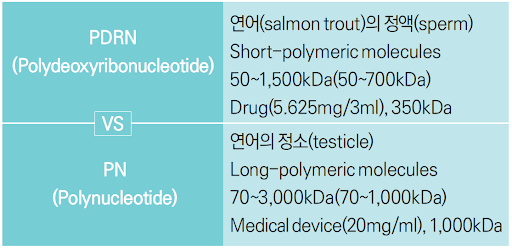
The distinction between PDRN (Polydeoxyribonucleotide) and PN (Polynucleotide) comes down to the molecular size and complexity.
PDRN (Polydeoxyribonucleotide): This is the smaller, less complex molecule. It is essentially a fragment or a segment of DNA. Because of its smaller size, PDRN is most often used in topical cosmetics and sometimes in medical applications outside of cosmetic injectables, such as promoting wound healing in specialized clinics. Its primary role is to serve as a growth factor activator, encouraging damaged tissue to regenerate.
PN (Polynucleotide): This is a larger, more complex molecule. PN consists of a long chain of several PDRN units linked together. It is considered a polymer, meaning it’s made of repeating subunits. Because it is a larger, more viscous molecule, PN is the active ingredient used specifically in injectable skin boosters like Rejuran. When injected, the larger PN molecules stay in the dermis longer, providing a more lasting framework for skin structure improvement, deeper hydration, and sustained collagen production.
Where and How They Are Used
This difference in size dictates the appropriate application and the expected effect:
PN (Injectables): PN is designed for deep dermal injection. When introduced into the skin, it helps repair damaged skin structure, improve elasticity, and reduce the appearance of fine lines and scars. Because it lasts longer in the tissue, it provides a powerful, sustained anti-aging and repairing effect. This is the main ingredient behind treatments like the famous Rejuran Healer.
PDRN (Topicals and Mesotherapy): PDRN is frequently found in serums, creams, and home-use cosmetic ampoules. It’s small enough to be absorbed through the skin's surface, where it can provide mild regenerative and calming benefits. Occasionally, PDRN is also used in a less concentrated injectable form via very superficial mesotherapy or micro-needling treatments for general skin tone and texture improvement, especially when compared to the intense structural work done by PN.
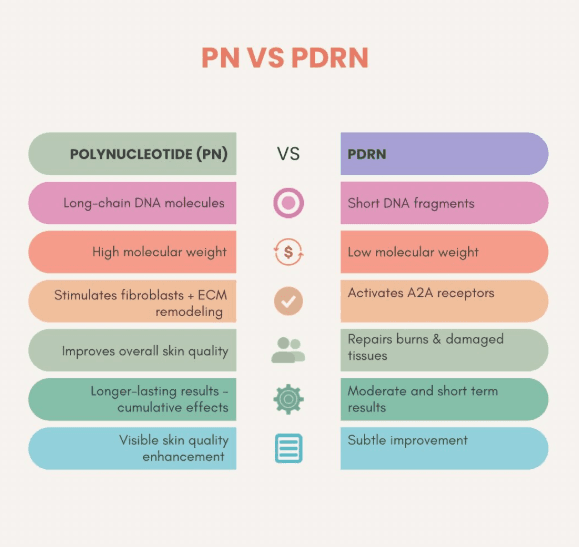
PDRN vs. PN — The Core Differences, Side by Side
Molecular Structure & Purity
Property | PDRN | PN (General) |
|---|---|---|
Full Name | Polydeoxyribonucleotide | Polynucleotide |
Chain Length | Short (50–2,000 base pairs) | Longer, variable |
Purity Standard | Tightly defined | Variable by manufacturer |
Source | Primarily salmon/trout DNA | Fish DNA, sometimes mixed |
Type | DNA-based only | DNA or RNA fragments |
Standardization | High | Moderate to variable |
Mechanism of Action
PDRN works through receptor-mediated biological signaling — specifically A2A adenosine receptor activation, which triggers intracellular repair cascades, collagen synthesis, and anti-inflammatory responses.
PN (longer chain) works through biophysical support — improving the structural integrity and hydration status of the extracellular matrix, which indirectly supports healthier cell behavior.
In short: PDRN talks directly to your cells. PN builds a better environment for your cells to live in. Both outcomes are valuable — they're just different mechanisms.
Treatment Applications
Concern | PDRN | PN |
|---|---|---|
Acne scars & post-inflammatory marks | ✅ Strong fit | ⚪ Secondary option |
Dark circles & periorbital concerns | ✅ Strong fit | ⚪ Secondary option |
Post-procedure skin recovery | ✅ Strong fit | ✅ Useful |
Dry, dehydrated skin | ⚪ Some benefit | ✅ Strong fit |
Preventative anti-aging | ⚪ Some benefit | ✅ Strong fit |
Sun-damaged or ischemic tissue | ✅ Strong fit | ⚪ Secondary option |
Skin laxity & lifting | ⚪ Indirect effect | ✅ More direct |
General skin radiance & glow | ✅ Yes | ✅ Yes |
Results Timeline and Longevity
PDRN results are often described as progressive — the skin improves over several weeks as cellular repair processes accumulate. Most protocols recommend 3–4 sessions spaced 1–2 weeks apart, with results that can last several months. Because it's working at a cellular level, the changes tend to be substantive rather than purely surface-level.
PN results may be more immediately visible in terms of plumpness and hydration — patients often notice a luminous quality and improved skin texture after 1–2 sessions. Longevity varies widely by formulation and concentration.
Which One Should You Choose?
Neither PDRN nor PN is inherently superior. The right choice is determined by your skin's current condition and your treatment goals.
Choose PDRN If…
You have active scarring, post-acne marks, or pigmentation issues
You're recovering from a laser treatment, peel, or surgery and want to accelerate healing
You have dark circles with a hollow or damaged quality to the under-eye area
Your skin shows signs of chronic sun damage or uneven texture
You want a treatment that works at a biological repair level
Choose PN If…
Your primary concern is dehydration, dullness, or lack of radiance
You want a preventative anti-aging treatment to maintain skin quality
You're looking for subtle plumping and structural support
Your skin is generally healthy but lacking in glow and bounce
You prefer a gentler, broadly supportive skin booster
Can You Use Both?
Yes — and in many advanced aesthetic practices, combining PDRN and PN is a deliberately designed protocol. PDRN handles the deep repair and regeneration work while PN provides hydration support and structural enhancement. They don't compete; they complement. Some formulations on the market already contain both in calibrated ratios.
If you're considering a combined approach, consult with a qualified aesthetic practitioner who can assess your skin and recommend a sequencing that makes clinical sense for your specific concerns.
What to Expect From Each Treatment
PDRN Treatment Experience
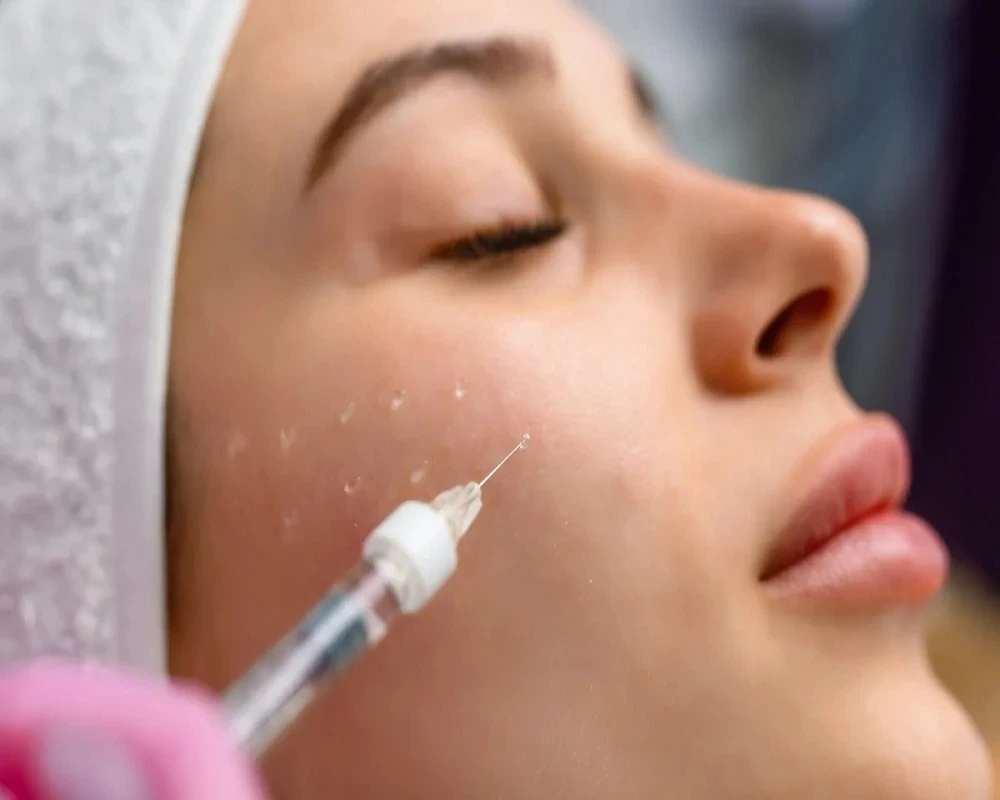
PDRN is most commonly delivered via microinjections (mesotherapy-style) into the dermis, though topical formulations also exist — particularly as part of post-procedure skincare regimens. The injection process typically involves a series of small, shallow injections across the treatment area. Discomfort is generally mild and brief.
After treatment, minor redness, swelling, or pinpoint marks at injection sites are normal and typically resolve within 24–48 hours. Results build over 3–6 weeks as cellular repair takes effect. Most practitioners recommend a course of 3–6 sessions for optimal outcomes, followed by maintenance treatments every 3–6 months.
PN Treatment Experience
PN injections follow a similar administration process. Depending on the formulation and concentration, PN may be injected more deeply — targeting the dermis or even the subdermal layer for lifting effects. Some patients describe a slight firmness or fullness in the skin immediately post-treatment, which evolves over 1–2 weeks.
PN topical products — serums, ampoules, and sheet masks — are increasingly available and offer a gentler, at-home entry point for those not yet ready for injectables.
Common Myths About PDRN and PN, Debunked
Myth 1: "PDRN and PN are the same ingredient with different names."
False. They share a molecular family but differ in chain length, purity specification, and mechanism of action. Using them interchangeably is scientifically inaccurate.
Myth 2: "Salmon DNA in skincare means you're allergic if you're allergic to fish."
Not necessarily. PDRN undergoes extensive purification that removes proteins — typically the components responsible for allergic reactions. However, if you have severe fish allergies, always disclose this to your practitioner before any treatment. [Individual consultation required — this is not medical advice.]
Myth 3: "More expensive always means better quality PN or PDRN."
Price reflects many factors beyond ingredient quality: branding, distributor margins, and clinic overhead. Look for transparency in sourcing, molecular weight specification, and concentration rather than relying on price as a quality proxy.
Myth 4: "These are just hydration treatments — any moisturizer can do the same."
This significantly underestimates the mechanism of PDRN in particular. Receptor-mediated cellular signaling is not replicated by a topical moisturizer. While hydration is one benefit, it's far from the full picture — especially for PDRN's tissue repair capabilities.
Final Thoughts
The PDRN vs. PN conversation is one of the most important — and most frequently oversimplified — discussions in modern aesthetic medicine and advanced skincare. They are related, but not interchangeable. They work through different mechanisms. They excel in different applications. And choosing between them (or combining them) should be based on your skin's actual needs, not on whichever ingredient is trending on social media this month.
What both PDRN and PN share is a legitimate, science-backed foundation. When formulated correctly and applied appropriately, both can deliver meaningful improvements in skin quality, regeneration, and long-term health.
The smartest approach is to work with a practitioner who understands the molecular difference — and can build a protocol around your skin's specific story, not a generic template.
FAQ
Q: Is PDRN the same as PN?
No. PDRN is a specific, purified type of polynucleotide with a defined molecular weight range (50–2,000 base pairs) and a precise mechanism of action via A2A adenosine receptor activation. PN is a broader category that includes longer, less specifically defined nucleotide chains. All PDRN is a polynucleotide; not all PN meets PDRN's specific standards.
Q: Which is better for anti-aging — PDRN or PN?
It depends on what aspect of aging you're targeting. For cellular repair, collagen stimulation, and reversing visible damage (scars, pigmentation, sun damage), PDRN tends to produce more targeted results. For overall hydration, texture improvement, and preventative skin quality maintenance, PN is often preferred. Many practitioners use both in combination for comprehensive anti-aging protocols.
Q: How many sessions of PDRN or PN do I need?
Most treatment protocols recommend 3–6 initial sessions spaced 1–3 weeks apart, followed by quarterly or biannual maintenance. The exact number depends on the severity of your skin concern, the formulation used, and your individual response. Results from PDRN are generally cumulative and most visible after completing a full course.
Q: Are PDRN and PN treatments safe?
Both ingredients have been used in clinical and aesthetic medicine with a well-established safety profile when administered correctly by qualified practitioners. Side effects are generally mild and temporary — minor swelling, redness, or bruising at injection sites. As with any injectable treatment, safety is closely tied to the skill of the practitioner and the quality of the product used. Always seek treatment from a licensed aesthetic professional.
Q: Can I use PDRN or PN skincare products at home?
Yes. Topical PDRN and PN products — including serums, essences, and ampoules — are available for at-home use. However, topical delivery has inherent limitations: molecules of this size have restricted penetration through the skin barrier compared to injectables. Topical products work best as complementary support between professional treatments, not as a direct substitute.
Q: How do I know if a product contains real PDRN vs. generic PN?
Look for transparency in the product's technical documentation. Legitimate PDRN products will specify the source (typically salmon or trout), the molecular weight range, the concentration (often expressed as mg/mL), and the purification standard. Vague claims of "DNA repair" or "polynucleotide complex" without specification should be treated with appropriate skepticism.
Other Blogs