Blog
Best HA Lip Filler for Your Goals: Natural Volume, Shape & Symmetry
Author
Ray
Published
Category
Tips
Find the best HA lip filler for natural volume, shape, and symmetry—plus what affects results, safety, longevity, and provider tips.


Author
Ray
An esteemed medical aesthetics expert with 40 years of profound experience in the field. With decades of expertise in non-invasive procedures, anti-aging science, and advanced dermatological solutions, the author is dedicated to sharing insights that connect clinical innovation with real-world patient results. Passionate about advancing safe, effective, and high-impact aesthetic treatments for a global clientele.
What’s better than insider perks, pro tips, and surprises?
Sign up to get the most recent blog articles in your email every week.
Join now.
Our company’s main product lines include HA (Hyaluronic Acid) fillers, CaHA (Calcium Hydroxylapatite) fillers, PLLA (Poly-L-Lactic Acid) biostimulators, and other advanced aesthetic solutions, all developed and manufactured by trusted partner facilities with whom we have maintained long-term, stable collaborations.
I help them with sales and export operations, while our company also provides sourcing and procurement services in China to help international clients solve supply-related challenges. If you need assistance with procurement, please feel free to contact us.
If you’re searching for the “best HA lip filler,” here’s the truth in one sentence: the best option is the one your provider selects to match your goal—natural volume, shape, and symmetry—using the right injection technique, appropriate filler behavior, and a plan built around your starting lip anatomy.
In practice, that means HA lip filler results depend less on the brand alone and more on the product’s handling characteristics (how it sits and moves), where it’s placed, and how the clinician balances the upper and lower lip.
Key Takeaways
“Best” HA lip filler is goal-based: hydration/plumping, contour definition, symmetry correction, or proportional volume.
Your outcome is driven by 4 variables: filler behavior, injection technique/placement, your anatomy, and the treatment plan (including micro-adjustments).
For safety, discuss reversibility (hyaluronidase) and what the clinic does if complications occur.
Expect swelling/bruising early and plan for touch-up/maintenance rather than one “perfect” session.

What “HA Lip Filler” Really Means (and why results vary)
HA lip filler (hyaluronic acid lip filler) is a dermal filler used to improve lip appearance—often for lip volume, lip contouring/definition, and lip hydration/plumping. HA is a gel-like substance that can add fullness and shape depending on how it is placed.
However, HA alone doesn’t determine the result. Two people can receive the “same” HA filler category and end up with very different outcomes because the clinician’s choices change the physics of the correction:
How the filler behaves once injected (how soft or structured it is)
Where it is placed (more superficial for certain aesthetic effects vs deeper placement for different structure goals)
How it’s layered (small, targeted deposits vs broad coverage)
How the clinician accounts for asymmetry and natural lip proportions
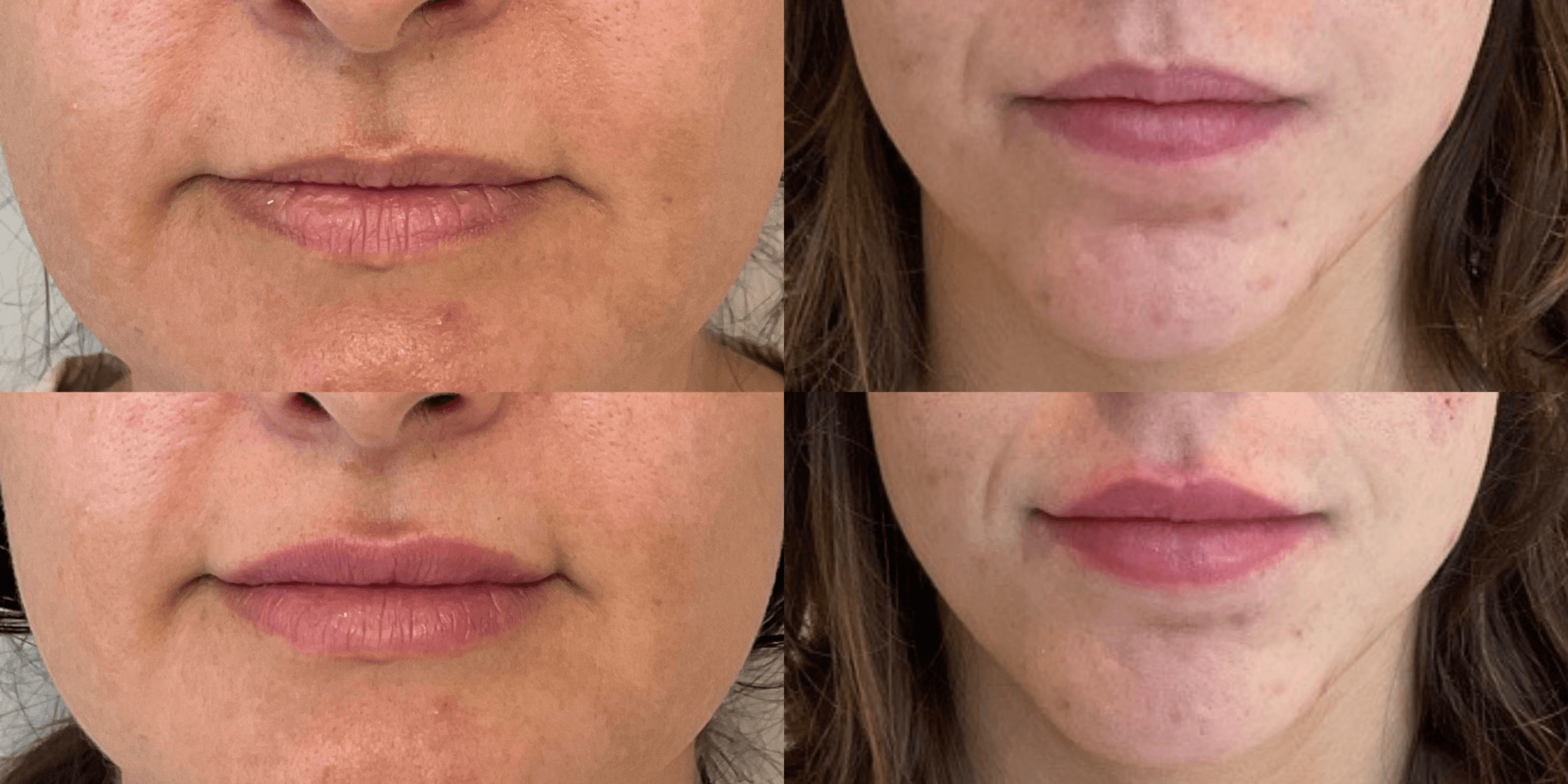
What Changes Outcomes? The 4 Variables That Matter Most
1) The HA filler’s behavior (softness vs structure)
HA fillers are formulated to behave differently once in tissue. Some are better suited for a softer, natural plumping effect; others are better for more structure and support—especially when you need definition or proportional volume.
Why it matters: If you use a filler that’s too structured for a hydration/softening goal, it can look heavy or less natural. If it’s too soft for a structural or contour goal, it may not provide the hold you want.
2) Injection technique and placement depth (definition vs volume)
The same filler can produce different aesthetics based on technique. Generally:
Definition and contouring rely on precise work around landmarks like the vermilion border and cupid’s bow.
Natural volume depends on balancing deposits across the upper and lower lip.
Symmetry often requires small, targeted adjustments rather than large “equal” amounts.
Clinicians use different approaches (needle vs cannula can be part of this conversation, depending on your market and clinic protocol), but the key theme is consistent: placement + layering drive aesthetic outcomes.
3) Your starting lip anatomy (proportions & symmetry)
Even when patients say they want “more volume,” the real goal is often proportion and harmony:
thin upper lip vs thin lower lip
uneven lip corners
asymmetry between left/right sides
vertical height changes with age
texture that makes the lips look less defined
Your anatomy determines the injection map. A plan that looks perfect on one face can look “off” on another.
4) Your treatment plan (micro-adjustments + touch-up strategy)
“Best” also means planning for reality. Most natural-looking results come from:
conservative initial enhancement
assessment after swelling settles
touch-up when needed
This approach helps avoid overcorrection and supports long-term lip balance.

Best HA Lip Filler by Goal (Natural Volume, Shape & Symmetry)
Below is a goal-based way to think about selection—useful for both patients and providers when aligning expectations.
Natural volume without looking “filled”
If your goal is natural volume, you typically want:
a result that looks like your lips, just more proportionate
gentle shaping rather than a uniform “pout” effect
What to ask your provider: “How will you keep my enhancement natural and avoid overfilling? What’s your plan for the first session and touch-up?”
Lip definition and contouring (cupid’s bow + vermilion border)
For lip definition, the emphasis is on contour precision—especially around the cupid’s bow definition and the vermilion border (lip border).
What to ask: “Will you focus on border definition first, or volume first? How do you prevent blurring or uneven edge results?”
Lip symmetry for uneven lips and mild asymmetry
Symmetry is rarely achieved by simply adding the same amount to both sides. A “symmetry correction” plan is usually subtle and depends on:
baseline asymmetry
how your lips move when smiling/speaking
how swelling changes perception in the short term
What to ask: “How do you measure asymmetry before injecting, and how do you decide the correction amount?”
Lip filler for thin upper vs thin lower lips
Thin upper lip: Often benefits from carefully proportioned enhancement to improve height and definition without flattening the border.
Thin lower lip: Often benefits from balanced volume that supports overall harmony and avoids heaviness.
What to ask: “What’s your approach to balancing upper and lower lip volume so my facial proportions stay natural?”
Lip hydration/plumping for a fresh look
When people say “lip hydration,” they usually mean plumpness, smooth appearance, and reduced dehydration-related roughness. Many HA strategies can support a hydrated look, but the aesthetic still depends on placement and product behavior.
What to ask: “For a ‘hydration/plumping’ goal, what’s your injection approach, and what will I notice in the first week?”
Lip filler for aging lips (texture + proportion changes)
Aging can change:
lip height and corner support
border definition
texture and the way light reflects on the vermilion
An age-focused plan should aim for renewed definition and proportion, not just “more volume.”
What to ask: “How will you restore proportion and definition in a way that still looks like me?”
Safety & Effectiveness: What to Ask Before You Treat
HA reversibility: hyaluronidase should be discussed
A major practical advantage of HA fillers is that they can often be dissolved using hyaluronidase if adjustment is needed (for example, if the result isn’t what you expected or if complications arise).
What to ask your provider:
“Do you discuss hyaluronidase reversibility as part of safety planning?”
“If something isn’t right, what is your corrective process?”
Common side effects vs red flags
Common, usually temporary effects include:
bruising
swelling
tenderness or firmness at injection sites
Red flags should be handled urgently and are clinic-specific, but broadly speaking, any severe, worsening, or unusual symptoms after an injection should be treated as a medical concern.
What to Expect (Timeline + “Lip Filler Before and After” Reality)
Swelling and bruising: when it settles
It’s normal for lips to appear larger initially due to swelling. Your “before and after” photo comparison is most meaningful after swelling stabilizes.
A realistic expectation framework:
First few days: swelling/bruising can affect appearance
1–2 weeks: many patients see meaningful settling
Follow-up/touch-up window: your provider evaluates whether symmetry and contour need refinement
When to schedule touch-up/maintenance
Longevity varies by product, metabolism, technique, and your treatment pattern. Rather than promising timelines, plan around your clinician’s follow-up schedule and your goals:
if you want subtle definition, you may prefer conservative dosing + maintenance
if you want more structure, you may need a more deliberate layering plan
Avoid booking “always the same amount” sessions—your lips change over time.
How to Choose a Provider (Top Doctor/Clinic Advice Checklist)
Use this as your conversation guide. A provider who can answer clearly is usually a safer choice.
Do you have a plan for natural results?
Ask how they decide volume vs contour vs symmetry.Can you explain your lip injection technique?
Look for clarity about how they approach the border, cupid’s bow, and balance.How do you handle asymmetry?
A good provider discusses measurement and small correction strategies.What safety process do you follow?
Ask about sterile technique and emergency/correction procedures.Do you discuss reversibility (hyaluronidase) and how it’s used?
This should be part of informed consent.What’s the follow-up/touch-up policy?
You want to know how they evaluate results after swelling settles.
Featured Snippet Block: Quick Checklist for Matching HA Filler to Your Goal
Choose the “best” HA lip filler based on your main goal:
Natural volume: prioritize proportional enhancement and conservative dosing; plan a follow-up.
Lip definition/contouring: focus on vermilion border/cupid’s bow precision, not just overall fullness.
Lip symmetry: expect small, targeted corrections based on your starting asymmetry (not equal amounts).
Thin upper lip: ask about border and height balance for a defined, natural look.
Thin lower lip: ask about volume support that avoids heaviness.
Hydration/plumping: clarify injection approach and what changes you’ll notice after swelling settles.
Safety must-haves: discuss risks, side effects, and whether hyaluronidase is part of corrective planning.
Conclusion
The best HA lip filler for your goals isn’t a universal “winner”—it’s a match between your desired outcome (natural volume, shape, symmetry), your lip anatomy, and your provider’s injection strategy.
If you want results that look like you (just refreshed), prioritize:
a goal-first plan,
conservative enhancement with follow-up,
precise contouring for definition,
and safety planning (including reversibility with hyaluronidase where applicable).
FAQ
1) Is HA lip filler safe?
For most patients, HA lip filler can be safe when performed by qualified professionals with appropriate patient screening and sterile technique. Safety depends heavily on product selection, injection technique, and emergency/correction readiness.
2) What’s the best HA lip filler for natural-looking results?
Usually the “best” choice is the HA filler and injection plan that supports your specific lip proportions and creates subtle, balanced changes—not the most dramatic option. Ask your provider how they prevent overfilling and how they plan touch-ups.
3) How long does HA lip filler last?
Longevity varies by product, technique, and individual metabolism. Instead of relying on one universal timeline, follow your clinician’s maintenance recommendations and plan follow-up evaluations.
4) What are common side effects of HA lip injections?
Common effects include swelling, bruising, and tenderness. Most are temporary. If you experience severe or worsening symptoms, contact your provider promptly.
5) Will HA lip filler look different at first?
Yes. Early appearance can be influenced by swelling. Many patients see the true shape after swelling settles—your “best view” is usually after the follow-up window.
6) What if I don’t like the results?
Discuss corrective options in advance. Because many HA fillers can be treated with hyaluronidase, reputable providers should explain the adjustment pathway as part of safety planning.
Other Blogs