Blog
Beyond Brand Names: An In-Depth Analysis of BDDE Crosslinking and Purification Standards for Imported Fillers
Author
Ray
Published
Category
Tips
For aesthetic distributors and medical directors, sourcing dermal fillers is no longer merely about finding the lowest price—it's about risk management. With the global market flooded with brands of injectable cross-linked sodium hyaluronate gel, the challenge lies not in finding a supplier, but in identifying one whose technical standards meet stringent regulatory requirements. Misconceptions about quality control (QC) often cause hesitation when considering direct sourcing from Asian manufacturers. Yet chemical facts speak for themselves. The distinction between premium fillers and substandard products stems not from country of origin, but from cross-linking technology and purification processes. As a company dedicated to manufacturing, we believe in complete transparency. Today, we lift the veil on our production process, detailing how we achieve the delicate balance of longevity, malleability, and safety.

Author
Ray
Drawing on my experience in the aesthetics industry and passion for innovation, I founded Aowita Biotech to support clinics, practitioners, and patients with reliable products and expertise. Every solution we develop embodies precision, quality, and a profound respect for the confidence of real patients—not merely following beauty trends.
What’s better than insider perks, pro tips, and surprises?
Sign up to get the most recent blog articles in your email every week.
Join now.
Our company’s main product lines include HA (Hyaluronic Acid) fillers, CaHA (Calcium Hydroxylapatite) fillers, PLLA (Poly-L-Lactic Acid) biostimulators, and other advanced aesthetic solutions, all developed and manufactured by trusted partner facilities with whom we have maintained long-term, stable collaborations.
I help them with sales and export operations, while our company also provides sourcing and procurement services in China to help international clients solve supply-related challenges. If you need assistance with procurement, please feel free to contact us.
1. The Core Chemistry: Why BDDE?
To understand safety, we must first address the primary ingredient used in the industry standard: BDDE (1,4-Butanediol Diglycidyl Ether).
Native Hyaluronic Acid (HA) is a miracle molecule for hydration, but it has a fatal flaw for aesthetic use: the body metabolizes it in 24 to 48 hours via the enzyme hyaluronidase. To create a dermal filler that lasts 9 to 18 months, we must stabilize the HA chains. This is where cross-linking comes in.
Think of native HA as loose strands of spaghetti. Cross-linking is the process of tying those strands together to form a robust, 3D woven net.
While there are other cross-linking agents (like DVS), BDDE remains the gold standard globally due to its lower toxicity profile and stability. However, the presence of BDDE is not the issue; the process is.
The "Goldilocks" Zone of Cross-Linking A common misconception is that "more cross-linking equals better duration." This is dangerous thinking.
Too little cross-linking: The filler degrades too quickly and offers no lift.
Too much cross-linking: The gel becomes too rigid, potentially causing lumps, granulomas, or an unnatural appearance.
Our proprietary manufacturing process focuses on Effective Cross-Linking Ratio. We don't just bombard the HA with chemicals; we optimize the reaction environment (temperature and pH) to ensure that the BDDE bridges the HA chains effectively, rather than just "decorating" them without providing structural support.
Key Takeaway: It is not just about using BDDE; it is about using it efficiently to create a gel that resists degradation while maintaining natural viscoelasticity.
2. The Safety Critical Step: Purification and "Zero Residue"
This is the most critical section for any buyer concerned with safety.
During the cross-linking process, not all BDDE molecules react. These unreacted, free-floating BDDE molecules are potentially toxic and carcinogenic. The safety of a dermal filler is defined by how well the manufacturer removes this residue.
The FDA and EU regulatory bodies set strict limits on residual BDDE (typically < 2 ppm). However, merely "meeting" the standard is not enough for premium export-grade products.
Our Dialysis and Washing Technology We employ a rigorous, multi-stage purification system that goes beyond standard industry practices:
Prolonged Dialysis: We utilize dynamic dialysis methods that run for extended cycles. This acts like a kidney, filtering out impurities continuously.
Solvent Washing: We use a specific gradient of solvents to wash the gel lattice, ensuring that unreacted chemicals trapped deep within the gel structure are released and removed.
The Result: Our internal batch testing consistently shows BDDE residue levels that are often below the limit of detection (Non-Detectable), and significantly lower than the strict 2 ppm international cap.
When you buy from us, you aren't just buying HA gel; you are buying the peace of mind that comes with the cleanest possible chemical profile.
Most Don't Know This About Hyaluronic Acid
Video acknowledgments:JT Jared Taylor
3. Rheology and Particle Uniformity: The Injector’s Experience
Safety is paramount, but performance is what keeps patients coming back. For the doctor or nurse injector, the "feel" of the product is everything.
Have you ever struggled with a plunger that requires excessive force, only to have the product shoot out suddenly? This is often caused by irregular particle sizes.
Grinding vs. Sieving Technology We utilize advanced Uniform Particle Technology. Instead of rough crushing, our gel undergoes a precise sieving and homogenization process.
Smooth Extrusion Force: This ensures that the gel flows through fine needles (even 27G or 30G) with consistent, low pressure. This reduces hand fatigue for the injector and pain for the patient.
Monophasic vs. Biphasic: Whether you require a Monophasic gel (smooth, cohesive, ideal for lips and fine lines) or a Biphasic gel (high G-Prime, granular, ideal for deep structural lifting), our manufacturing lines are equipped to produce both with exact rheological properties.
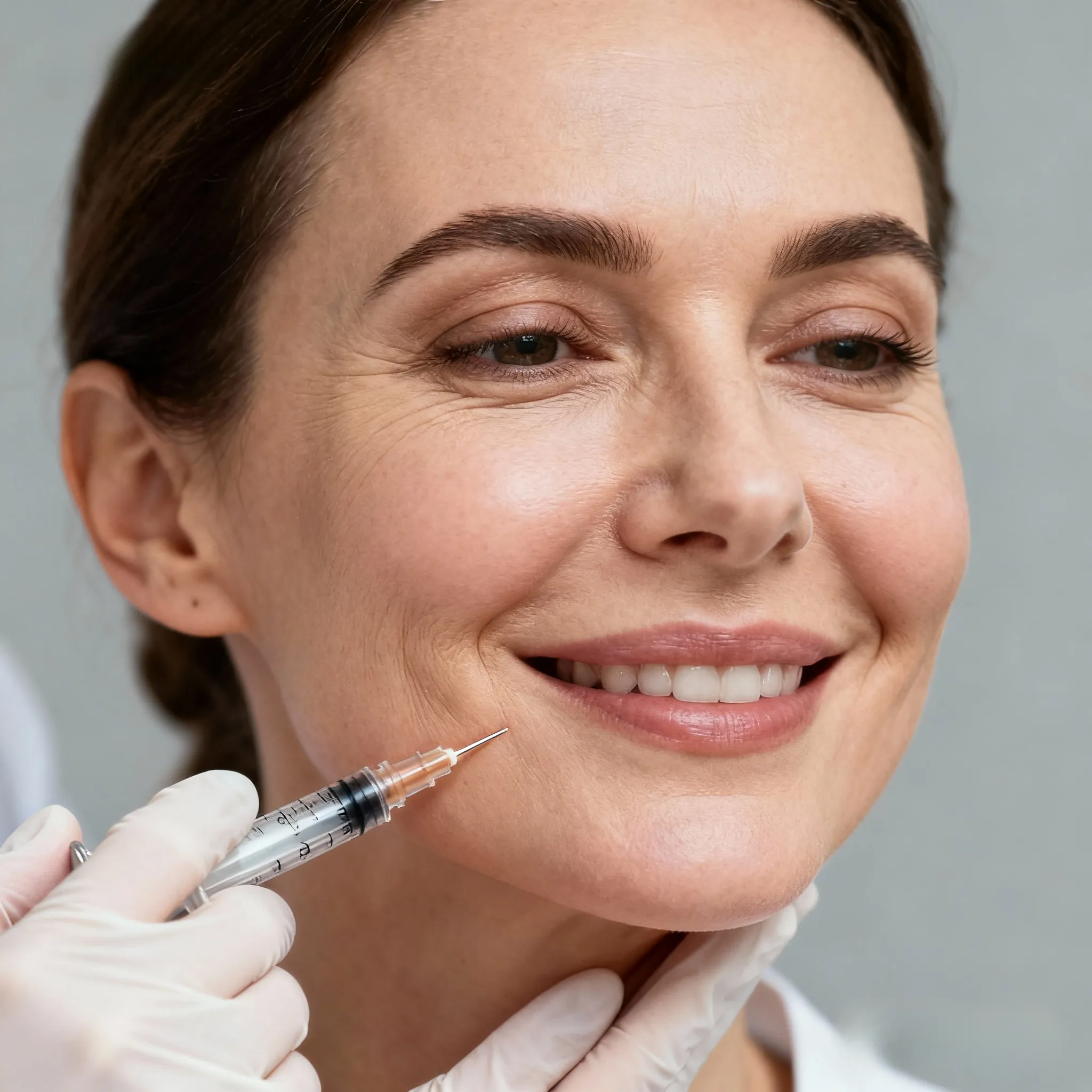
Visualizing G-Prime (Elasticity) For body contouring and chin/cheek augmentation, we engineer our gel to have a high G-Prime. This means the gel acts like a solid when at rest—holding the shape of the jawline or buttocks against gravity—but flows like a liquid when injected. This "Phase Transformation" is the hallmark of high-tech manufacturing.
4. Quality Control: The ISO 13485 Standard
Trust is good, but verification is better.
Our manufacturing facility in China is not just a factory; it is a biomedical campus operating under ISO 13485 certification (Medical Devices - Quality Management Systems).
The Cleanroom Standard Our production takes place in Class 10,000 (ISO Class 7) cleanrooms, with filling operations in Class 100 (ISO Class 5) environments—the same standard used for pharmaceutical injectables.
Biological Safety Testing Before any batch is released for shipment to the US or global markets, it undergoes a battery of tests:
Sterility Testing: Ensuring zero microbial growth.
Endotoxin Testing: We maintain endotoxin levels strictly below < 0.5 EU/ml. High endotoxins are the primary cause of post-injection redness, heat, and swelling. Our ultra-pure process minimizes these inflammatory reactions.
Biocompatibility: Verified safe for subcutaneous and deep dermal implantation.
5. Supply Chain Stability in a Volatile Market
Finally, technical safety extends to supply chain safety. In the post-pandemic era, US clinics have faced backorders and price hikes from European giants.
By partnering directly with a manufacturer that owns the entire production cycle—from raw material sourcing to final sterilization—you eliminate the risk of stock-outs. We provide Batch Consistency, meaning the viscosity and quality you get in January is exactly the same as what you receive in December.
Conclusion: Partner with Transparency
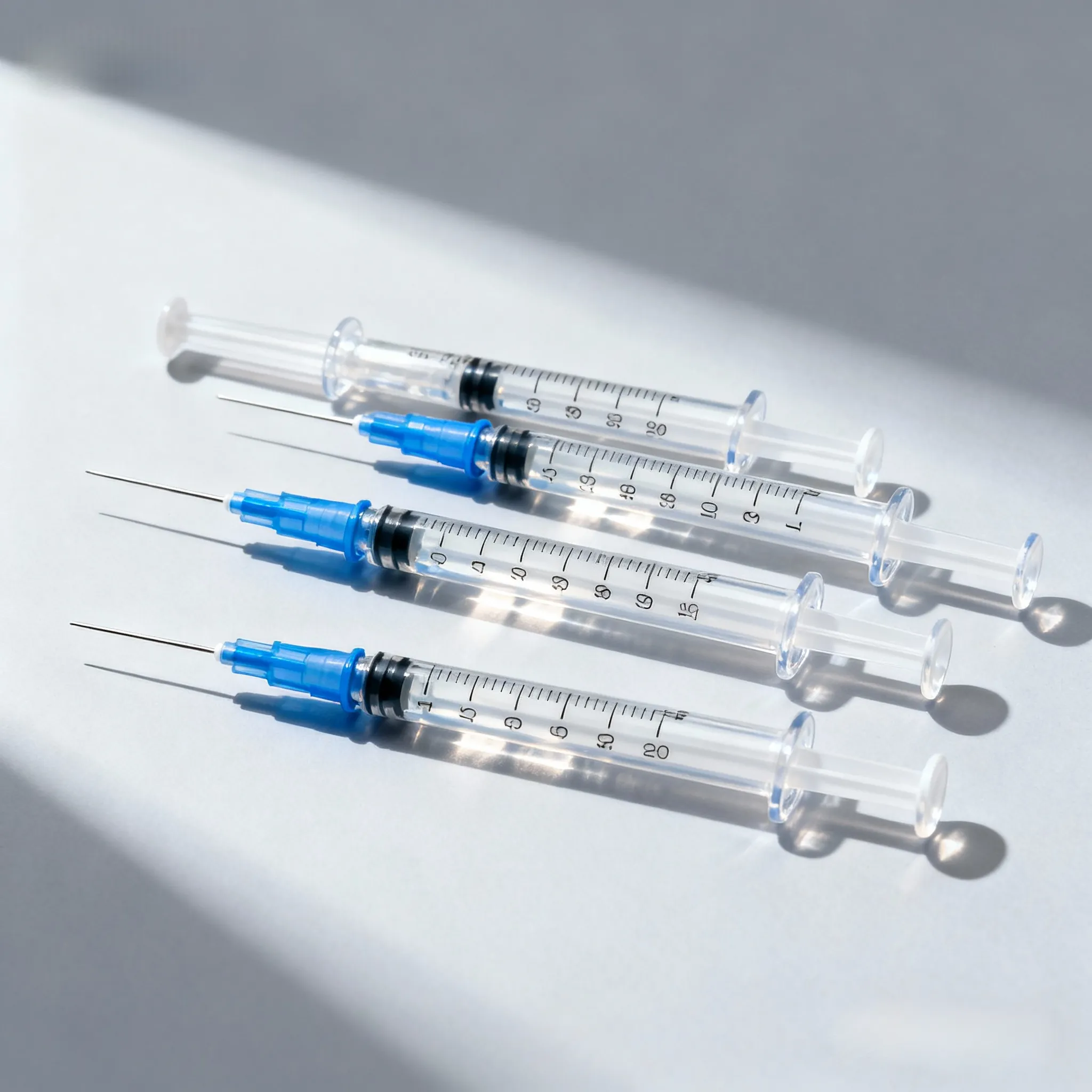
The era of obscure manufacturing is over. As a B2B buyer, you deserve to know exactly what is going into the syringes you sell or use.
We don't ask you to simply "trust us." We invite you to look at the data. We are confident that our Cross-linked Sodium Hyaluronate Gel stands toe-to-toe with the most expensive Western brands in terms of BDDE safety, rheological performance, and clinical longevity—at a fraction of the cost.
Frequently Asked Questions
Q1: What is the source of your Sodium Hyaluronate? Is it animal-based?
A: Absolutely not. Our HA is produced through bio-fermentation (non-animal origin). This eliminates the risk of transmitting animal diseases or viruses typically associated with avian-sourced HA (rooster combs). Furthermore, our bio-fermentation process ensures a high purity level, significantly reducing the risk of allergic reactions and ensuring full biocompatibility with human tissue.
Q2: How does your specific cross-linking process mitigate the risk of delayed-onset nodules or granulomas?
A: Delayed nodules are often caused by impurities or uneven cross-linking densities. Our technology minimizes this risk in two ways:
Uniform Cross-Linking: We ensure a homogeneous reaction, preventing "clumps" of highly cross-linked agents that the body might identify as foreign bodies.
Ultra-Low Endotoxin Levels: By keeping endotoxins strictly below 0.5 EU/ml (often approaching 0.01 EU/ml), we reduce the chronic inflammatory response that can trigger granuloma formation months after injection.
Q3: Is your HA gel fully dissolvable with Hyaluronidase in case of vascular occlusion or aesthetic correction?
A: Yes. Despite being a long-lasting, highly cross-linked gel, our product maintains the fundamental chemical structure of Hyaluronic Acid. It is 100% sensitive to Hyaluronidase. In the event of an emergency (such as vascular compromise) or for aesthetic adjustments, the gel can be rapidly and enzymatically degraded using standard medical protocols.
Q4: What is the difference in "Lift Capacity" (G-Prime) between your "Deep" and "Sub-Q" lines?
A: We engineer the rheology for specific indications.
Deep Line: Features a moderate G-Prime, balanced for mid-dermis injections (nasolabial folds/lips) to provide volume while maintaining dynamic movement.
Sub-Q/Body Line: Features our highest G-Prime and high viscosity. It acts as a structural anchor for supraperiosteal injection (chin/jawline) or body contouring, providing maximum projection and resistance to tissue deformation.
Q5: How do you ensure stability during international shipping to the US? Does it require cold chain?
A: Thanks to our sterile manufacturing and robust cross-linking stability, our HA gel is stable at room temperature (2°C - 30°C). It does not require strict cold chain logistics (refrigeration) during transport, which significantly lowers your shipping costs and storage complexity. However, it should be kept away from freezing temperatures and direct sunlight.
Q6: Can you provide the exact residual BDDE content for my specific batch?
A: Yes. We believe in total transparency. Every shipment includes a batch-specific Certificate of Analysis (COA). While the international standard limit is 2 ppm, our internal release specification is much stricter, and our typical production batches consistently test at non-detectable levels or significantly below 1 ppm.
Other Blogs