Blog
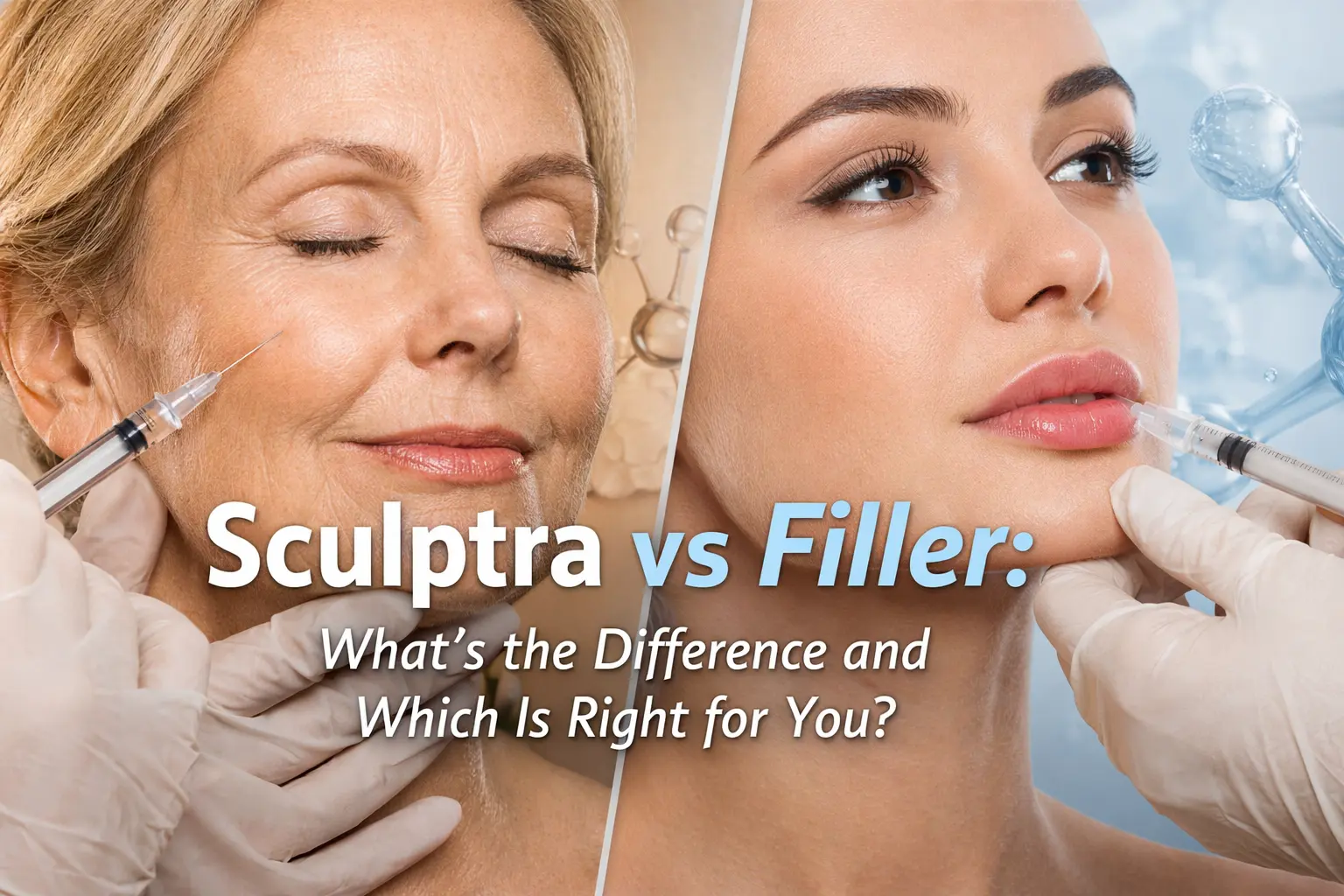
Sculptra vs Dermal Fillers: Which Is Better for Cheek Volume?
Author
Ray
Published
Category
Design & Inspiration
Compare Sculptra vs dermal fillers for cheek volume, including their mechanisms, results, treatment goals, longevity, and key factors for choosing an injectable.

Author
Ray
An esteemed medical aesthetics expert with 40 years of profound experience in the field. With decades of expertise in non-invasive procedures, anti-aging science, and advanced dermatological solutions, the author is dedicated to sharing insights that connect clinical innovation with real-world patient results. Passionate about advancing safe, effective, and high-impact aesthetic treatments for a global clientele.
What’s better than insider perks, pro tips, and surprises?
Sign up to get the most recent blog articles in your email every week.
Join now.
Our company’s main product lines include HA (Hyaluronic Acid) fillers, CaHA (Calcium Hydroxylapatite) fillers, PLLA (Poly-L-Lactic Acid) biostimulators, and other advanced aesthetic solutions, all developed and manufactured by trusted partner facilities with whom we have maintained long-term, stable collaborations.
I help them with sales and export operations, while our company also provides sourcing and procurement services in China to help international clients solve supply-related challenges. If you need assistance with procurement, please feel free to contact us.
Cheek volume plays an important role in overall facial contour and proportion. When the midface loses volume or appears less defined, injectable treatments can be used to improve facial contour and restore a fuller appearance.
Two commonly discussed options are Sculptra and dermal fillers. Although both are injectable aesthetic treatments, they work in different ways and are generally selected for different treatment objectives.
Sculptra is a poly-L-lactic acid (PLLA) injectable that is designed to stimulate the body's collagen production over time. Traditional dermal fillers, particularly hyaluronic acid (HA) fillers, are designed to add volume more directly to targeted areas.
So, which is better for cheek volume?
There is no single answer for every patient. The appropriate option depends on the desired degree of volume, treatment goals, facial anatomy, timing of results, product characteristics, and the assessment of a qualified medical professional.
What Is Sculptra?
Sculptra is an injectable treatment based on poly-L-lactic acid (PLLA). Rather than functioning primarily as a conventional volumizing gel, PLLA is used as a collagen-stimulating material.
After treatment, the material gradually interacts with the treated tissue and stimulates collagen production. The resulting improvement in facial fullness develops progressively rather than appearing entirely immediately after injection.
This makes Sculptra particularly relevant for people seeking a gradual improvement in facial volume and skin quality rather than a highly immediate volumizing effect.
Sculptra is commonly discussed in relation to areas such as the cheeks and midface, although treatment areas and techniques depend on the specific product, local regulatory requirements, and the treating professional's assessment.
Key Benefits of Sculptra
Gradual, natural-looking volume restoration
Long-lasting results (often up to 2 years or more)
Improves skin texture, firmness, and elasticity
Ideal for patients wanting subtle, progressive enhancement
Because Sculptra relies on collagen production, results typically appear over 4–12 weeks and continue to improve with each treatment session.
What Are Dermal Fillers?
Dermal fillers are injectable products used to add volume, improve contours, or soften the appearance of certain facial lines and depressions.
Hyaluronic acid (HA) fillers are among the most widely used types of dermal fillers. HA is a naturally occurring substance in the body and can be formulated with different physical properties for different aesthetic applications.
For cheek augmentation, an appropriately formulated filler can be injected into selected anatomical planes to provide targeted volume and contour enhancement.
Unlike collagen-stimulating treatments, many HA fillers provide a relatively immediate volumizing effect, although the final appearance may change as initial swelling subsides and the product settles.
Key Benefits of Cheek Fillers
Immediate results
Highly customizable contouring
Can lift and sculpt cheekbones
Reversible (HA fillers can be dissolved with hyaluronidase)
Most cheek fillers last 12–18 months, depending on the formula used, your metabolism, and the injection technique.
Sculptra vs Dermal Fillers for Cheek Volume
The key difference is how the two treatment approaches create the desired effect.
Feature | Sculptra | HA Dermal Filler |
|---|---|---|
Main material | Poly-L-lactic acid (PLLA) | Hyaluronic acid |
Primary approach | Collagen stimulation | Direct volume enhancement |
Onset of visible effect | Gradual | Generally more immediate |
Treatment objective | Progressive restoration of volume | Targeted volume and contour |
Customization | Depends on treatment plan and injection technique | Depends on product characteristics and injection technique |
Typical treatment approach | Often performed as a treatment series | May be performed as a targeted treatment |
Result development | Progressive | More immediate, with further settling |
Reversibility | Different from HA filler; does not have an HA-specific reversal mechanism | Some HA fillers can be treated with hyaluronidase by qualified professionals |
The table provides a general comparison. Individual products differ, and treatment protocols should always follow the manufacturer's instructions and applicable local regulations.
How Does Sculptra Work for Cheek Volume?
Sculptra does not primarily work by simply placing a traditional gel-like filler into the cheek.
Instead, PLLA acts as a collagen-stimulating injectable. The intended aesthetic effect develops gradually as the body produces new collagen in the treated area.
This characteristic can be useful when the treatment objective is a more progressive change in facial volume.
Patients should understand that the appearance immediately after treatment may not represent the eventual result. Early swelling or other temporary changes can also affect the initial appearance.
For this reason, Sculptra is generally considered a treatment that requires patience and an appropriate treatment plan.
How Do Dermal Fillers Add Cheek Volume?
Dermal fillers are designed to provide volume more directly.
With an appropriately selected cheek filler, a qualified injector can place the product in specific locations to modify facial projection, contour, or volume.
HA fillers can be manufactured with different characteristics, including differences in firmness, cohesivity, elasticity, and water interaction. These properties can influence how a particular filler behaves in tissue.
For cheek augmentation, product selection should therefore be based not only on the ingredient but also on the intended indication, anatomical area, product characteristics, and injector experience.
Which Provides Faster Results?
One of the clearest differences between the two approaches is the timing of visible results.
Dermal Fillers
HA dermal fillers generally provide visible volume shortly after injection. However, swelling and other temporary treatment-related effects can make the immediate post-treatment appearance different from the final result.
Sculptra
Sculptra is designed to produce a gradual improvement. The collagen-stimulating process takes time, so the desired change is not expected to appear entirely immediately.
Therefore, someone looking for immediate cheek volume and someone looking for gradual collagen-related improvement may have different treatment preferences.
Which Treatment Lasts Longer?
Longevity depends on many factors, including the specific product, treatment area, amount used, injection technique, metabolism, lifestyle, and individual response.
It is therefore not appropriate to assume that every Sculptra treatment or every dermal filler will last for the same amount of time.
Sculptra is intended to stimulate collagen and produce a progressive effect, while HA fillers gradually undergo breakdown and clearance by the body.
Manufacturers' official product information should be used when communicating specific longevity claims for a particular injectable.
Sculptra vs Filler: Which Is Better for Cheek Definition?
The answer depends on what "better" means for the treatment goal.
If the primary goal is targeted and relatively immediate volume, an appropriately selected dermal filler may be considered.
If the goal is gradual facial volume improvement associated with collagen stimulation, Sculptra may be considered.
There is also a difference in how the treatments are planned. Dermal filler can be used to make highly localized changes to facial contours, while Sculptra treatment generally focuses on progressive tissue changes.
Neither approach should automatically be considered superior. A qualified healthcare professional should assess facial anatomy, treatment goals, medical history, and product suitability before recommending an injectable treatment.
Can Sculptra and Dermal Fillers Be Used Together?
In some aesthetic treatment plans, different injectable products may be used at different times or for different objectives.
For example, a treatment plan could potentially combine a collagen-stimulating approach with targeted HA filler treatment. However, whether combination treatment is appropriate depends on the individual's anatomy, treatment history, products selected, injection sites, timing, and the clinician's assessment.
Combination treatment should not be interpreted as automatically producing a better result.
The safety and suitability of combining products should be determined by a qualified medical professional following applicable product labeling and clinical guidance.
What Are the Potential Risks?
Like other injectable medical procedures, both dermal fillers and collagen-stimulating injectables can involve risks.
Common temporary reactions may include:
Swelling
Redness
Tenderness
Bruising
Pain or discomfort
Itching at the injection site
More serious complications can occur with injectable treatments. Depending on the product and injection site, complications may include infection, inflammatory reactions, nodules, vascular complications, or tissue injury.
Facial injections require particular attention to anatomy because inadvertent injection into a blood vessel can result in serious complications.
Anyone considering treatment should discuss potential risks, contraindications, expected results, and aftercare with a qualified healthcare professional.
Sculptra vs HA Filler: A Simple Decision Framework
A simple way to understand the difference is to start with the treatment objective.
Consider the characteristics of HA dermal filler when the goal is:
Targeted cheek volume
More immediate visible correction
Defined facial contouring
Precise placement in a specific anatomical area
Consider the characteristics of Sculptra when the goal is:
Gradual improvement
Collagen stimulation
Progressive facial volume restoration
A treatment approach that develops over time
This is not a substitute for professional medical assessment. The appropriate treatment depends on the individual and the specific product being considered.
What About Sculptra vs Filler for Mature Skin?
Age-related facial changes are not limited to the loss of superficial volume.
Changes can occur in the skin, subcutaneous fat, connective tissue, and underlying facial structures. Because of this, treatment planning for mature patients may require a broader assessment rather than simply replacing lost volume.
Sculptra's collagen-stimulating mechanism may be relevant to treatment plans where gradual tissue improvement is desired, while dermal fillers can provide targeted correction where additional volume or projection is appropriate.
However, age alone should not determine which injectable is selected.
Conclusion
Sculptra and dermal fillers are not interchangeable treatments. They differ in composition, mechanism, timing of results, and how they are used to address facial volume.
Sculptra is a poly-L-lactic acid collagen-stimulating injectable designed for progressive improvement, while HA dermal fillers can provide more direct and targeted volume enhancement.
For cheek volume, the most appropriate option depends on the individual's anatomy, aesthetic objectives, desired timing of results, product characteristics, and professional medical assessment.
For clinics, distributors, and aesthetic medicine businesses, product quality, regulatory compliance, documentation, manufacturing standards, and supplier reliability should also be considered when selecting injectable products.
Always follow the manufacturer's official instructions for use and applicable local regulations, and ensure injectable treatments are performed by appropriately qualified healthcare professionals.
FAQ
Is Sculptra better than filler for cheek volume?
Neither treatment is universally better. Sculptra and dermal fillers use different mechanisms and are suited to different treatment objectives. Sculptra is a collagen-stimulating injectable, while HA dermal fillers are primarily used for direct volume enhancement.
Does Sculptra give immediate cheek volume?
Sculptra is designed to produce a gradual effect through collagen stimulation. The appearance immediately after treatment should not be considered the final result.
Do cheek fillers give immediate results?
HA dermal fillers generally provide visible volume relatively soon after injection, although swelling and other temporary effects can affect the initial appearance.
How long does Sculptra last?
The duration of effect varies between individuals and depends on factors such as treatment protocol, product, treatment area, and individual response. Specific duration claims should be based on the manufacturer's official product information.
Can Sculptra and HA filler be used together?
Different injectable treatments may be incorporated into the same overall treatment plan in some circumstances. Whether they should be combined depends on the patient, products, injection sites, timing, and professional assessment.
What is the main difference between Sculptra and dermal filler?
The fundamental difference is their mechanism. Sculptra uses poly-L-lactic acid to stimulate collagen production, while HA dermal fillers are designed to provide direct volume and contour enhancement.
Other Blogs


