博客
Sodium Hyaluronate Gel for Wrinkle Reduction: How Does It Work?
作者
Ray
已发布
类别
Facial Fillers
Discover how sodium hyaluronate gel reduces wrinkles through deep hydration, skin plumping, and collagen support. Science-backed mechanisms, application tips, and realistic timelines explained by skincare experts.

作者
Ray
一位享有盛誉的医学美学专家,在该领域拥有40年的深厚经验。凭借在非侵入性手术、抗衰老科学以及先进皮肤病学解决方案方面的数十年专业知识,作者致力于分享将临床创新与真实患者成果相结合的见解。热衷于为全球客户推进安全、有效且高影响力的美学治疗。
还有什么比内部优惠、专业建议和惊喜更好的呢?
注册可每周在您的电子邮件中接收最新的博客文章。
立即加入。
Our company’s main product lines include HA (Hyaluronic Acid) fillers, CaHA (Calcium Hydroxylapatite) fillers, PLLA (Poly-L-Lactic Acid) biostimulators, and other advanced aesthetic solutions, all developed and manufactured by trusted partner facilities with whom we have maintained long-term, stable collaborations.
I help them with sales and export operations, while our company also provides sourcing and procurement services in China to help international clients solve supply-related challenges. If you need assistance with procurement, please feel free to contact us.
Introduction
Wrinkles are one of the most visible signs of aging, and finding effective solutions has led millions to explore advanced skincare ingredients. Among these, sodium hyaluronate gel for wrinkles has emerged as a scientifically validated approach to reducing fine lines, plumping skin, and restoring a more youthful appearance.
Unlike temporary cosmetic fixes, sodium hyaluronate works by addressing the fundamental mechanisms of skin aging: moisture depletion, loss of volume, and compromised skin barrier function. This naturally occurring glycosaminoglycan penetrates multiple skin layers, delivering hydration where it's needed most while supporting the extracellular matrix that gives skin its structure and resilience.
The effectiveness of topical sodium hyaluronate gel depends on several factors—molecular weight, formulation technology, application method, and consistency of use. Products like AOWITA's advanced anti-wrinkle serums utilize bio-fermented sodium hyaluronate with varying molecular weights to target both surface-level fine lines and deeper expression wrinkles simultaneously.
In this comprehensive guide, we'll explore the science behind how sodium hyaluronate reduces wrinkles, the mechanisms that make it superior to standard hyaluronic acid formulations, practical application strategies, and what realistic results you can expect. Whether you're dealing with crow's feet, nasolabial folds, or under-eye creases, understanding how this powerhouse ingredient works will help you maximize its anti-aging benefits.
Understanding Sodium Hyaluronate and Its Role in Skin Health
What Is Sodium Hyaluronate?
Sodium hyaluronate is the sodium salt form of hyaluronic acid—a naturally occurring substance found abundantly in human skin, connective tissue, and eyes. While chemically related to hyaluronic acid, sodium hyaluronate offers distinct advantages for topical skincare applications.
This molecule belongs to a class of compounds called glycosaminoglycans (GAGs), which are essential components of the extracellular matrix (ECM). The ECM is the structural scaffolding that surrounds skin cells, providing support, facilitating nutrient exchange, and maintaining tissue architecture.
In youthful skin, sodium hyaluronate concentrations remain high, contributing to:
Exceptional moisture retention: One gram can hold up to 6 liters of water
Skin plumpness and volume: Fills intercellular spaces for smoother appearance
Barrier function support: Protects against environmental stressors
Cellular communication: Facilitates signals between fibroblasts and other skin cells
Unfortunately, natural sodium hyaluronate production declines with age. Studies show that by age 50, skin contains approximately half the sodium hyaluronate levels present in young adult skin. This depletion contributes directly to wrinkle formation, skin sagging, and loss of elasticity.
Sodium Hyaluronate vs Hyaluronic Acid: Key Differences for Wrinkle Treatment
While the terms are often used interchangeably in skincare marketing, understanding the difference between sodium hyaluronate and hyaluronic acid is crucial for evaluating anti-wrinkle products.
Molecular size matters: Sodium hyaluronate has a smaller molecular structure than standard hyaluronic acid, allowing for superior skin penetration. While hyaluronic acid molecules can be too large to pass through the epidermal barrier effectively, sodium hyaluronate's reduced molecular weight enables it to reach deeper skin layers where wrinkle formation actually occurs.
Stability in formulations: Sodium hyaluronate demonstrates greater stability in topical products, maintaining its efficacy across varying pH levels and formulation conditions. This translates to more consistent wrinkle-reducing performance throughout a product's shelf life.
Hygroscopic efficiency: Both substances attract and bind water molecules, but sodium hyaluronate's enhanced penetration means it delivers hydration within the skin rather than just sitting on the surface. This internal hydration is what creates the visible plumping effect that smooths wrinkles from underneath.
AOWITA's advanced skincare technology leverages these advantages by incorporating multi-molecular weight sodium hyaluronate in their anti-wrinkle formulations—combining high, medium, and low molecular weight variants to address different wrinkle depths simultaneously.
The Role of Molecular Weight in Anti-Aging Efficacy
Not all sodium hyaluronate gels are created equal. The molecular weight (size of the molecule) fundamentally determines where and how the ingredient works within skin structure:
High molecular weight sodium hyaluronate (1,000-2,000 kDa):
Remains primarily on skin surface
Forms protective film reducing transepidermal water loss (TEWL)
Provides immediate smoothing of fine surface lines
Offers environmental protection
Medium molecular weight (100-500 kDa):
Penetrates into upper dermal layers
Supports skin elasticity and firmness
Targets moderate expression lines
Enhances overall skin texture
Low molecular weight and hydrolyzed sodium hyaluronate (<50 kDa):
Achieves deep dermal penetration
Stimulates fibroblast activity and collagen synthesis
Addresses deep wrinkles and volume loss
Provides long-term anti-aging benefits
Premium formulations like AOWITA sodium hyaluronate gel combine these molecular weights to create a multi-dimensional approach to wrinkle reduction—immediate surface smoothing plus progressive deep-skin rejuvenation.
The Science Behind Sodium Hyaluronate Gel for Wrinkle Reduction
How Sodium Hyaluronate Plumps Fine Lines
The visible smoothing effect you see when using sodium hyaluronate gel stems from a straightforward but powerful mechanism: volumetric expansion through hydration.
When sodium hyaluronate molecules penetrate the skin, they immediately begin attracting water molecules from the surrounding environment and deeper skin layers. This creates a hydration reservoir within the dermis and epidermis.
As these molecules swell with moisture, they physically fill the microscopic depressions and collapsed areas that appear as fine lines and wrinkles on the skin surface. Think of it like plumping up a deflated cushion—the structure is still there, it just needs volumetric filling to smooth out the creases.
This mechanism works particularly well for:
Dehydration lines: Wrinkles caused primarily by moisture loss
Fine expression lines: Early crow's feet, forehead creases
Surface texture irregularities: Crepey skin appearance
Under-eye wrinkles: The delicate periorbital area responds especially well
The plumping effect is not merely cosmetic illusion—research published in the Journal of Clinical and Aesthetic Dermatology demonstrated that topical sodium hyaluronate application increased skin hydration by 96% and reduced wrinkle depth by 10-20% after just two weeks of consistent use.
Molecular Weight and Skin Penetration Depth
Understanding how different molecular weights penetrate skin explains why advanced formulations outperform single-molecule products in wrinkle reduction.
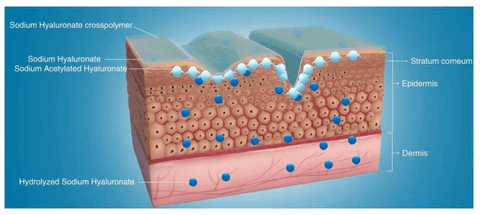
The stratum corneum (outermost skin layer) acts as a selective barrier. Its brick-and-mortar structure—corneocytes (bricks) surrounded by lipid matrices (mortar)—restricts penetration of large molecules while allowing smaller ones to pass through.
Low molecular weight sodium hyaluronate (below 50 kDa) can navigate between corneocytes and penetrate to the dermis, where:
Fibroblasts (collagen-producing cells) are stimulated
Elastin networks that provide skin snap-back are supported
Deep wrinkles originating from dermal volume loss can be addressed
Long-term structural improvements occur beyond temporary plumping
Research using fluorescent-labeled sodium hyaluronate molecules tracked penetration depth based on molecular size. Results showed that while 1,800 kDa molecules remained exclusively in the stratum corneum, 5 kDa molecules reached the papillary dermis within 60 minutes of application.
Moisture Retention and the Extracellular Matrix
Beyond simple hydration, sodium hyaluronate's interaction with the extracellular matrix (ECM) creates lasting anti-aging benefits that extend far beyond temporary plumping.
The ECM is the sophisticated network of proteins and polysaccharides surrounding skin cells. It provides structural support, facilitates nutrient delivery, and regulates cellular behavior. As we age, the ECM degrades, leading to:
Reduced skin thickness
Decreased elasticity
Impaired cellular communication
Accelerated wrinkle formation
Sodium hyaluronate helps restore ECM function through multiple mechanisms:
Cellular hydration optimization: By maintaining optimal moisture levels around fibroblasts and keratinocytes, sodium hyaluronate ensures these cells function efficiently, producing collagen, elastin, and other structural proteins at healthy rates.
Collagen synthesis stimulation: Low molecular weight sodium hyaluronate has been shown to upregulate genes associated with collagen production. A study in Skin Pharmacology and Physiology found that topical application increased Type I and Type III collagen expression by 14-18% over 60 days.
Preventing transepidermal water loss (TEWL): By forming a moisture-retaining layer and strengthening the lipid barrier, sodium hyaluronate reduces the constant water evaporation that accelerates skin aging and wrinkle deepening.
This comprehensive approach explains why consistent use of topical sodium hyaluronate gel produces cumulative anti-aging benefits—you're not just temporarily filling wrinkles, you're supporting the underlying skin architecture that prevents future wrinkle formation.
How Sodium Hyaluronate Gel Works at Different Wrinkle Depths
Surface-Level Fine Lines and Expression Wrinkles
Fine lines are the earliest visible signs of aging, typically appearing first around the eyes (crow's feet), mouth, and forehead. These shallow wrinkles result primarily from:
Repetitive facial expressions creating fold patterns
Surface dehydration reducing skin smoothness
Early collagen degradation in upper dermal layers
Environmental damage to the epidermal barrier
For these surface wrinkles, sodium hyaluronate gel provides rapid and noticeable improvement through several mechanisms:
Immediate hydration plumping: High and medium molecular weight sodium hyaluronate remains in the epidermis and upper dermis, where it attracts moisture and creates instant volumetric expansion. Users often notice visible smoothing of fine lines within 30-60 minutes of application.
Barrier repair: By supporting the lipid barrier and reducing TEWL, sodium hyaluronate prevents the chronic dehydration that makes fine lines appear more pronounced. This creates a self-reinforcing benefit—better moisture retention means sustained wrinkle reduction.
Expression line softening: While sodium hyaluronate cannot prevent facial movements, the enhanced skin hydration and elasticity it provides means the skin "bounces back" more effectively after expressions, reducing the depth of lines that remain at rest.
Deep Wrinkles and Volume Loss
Deep wrinkles—nasolabial folds, marionette lines, and pronounced forehead furrows—present a more complex challenge because they originate from dermal-level changes:
Significant collagen and elastin degradation
Loss of subcutaneous fat volume
Gravitational effects on aging skin structure
Years of accumulated UV damage and oxidative stress
Addressing these requires sodium hyaluronate that can penetrate beyond the epidermis to reach the dermis where structural damage has occurred.
Low molecular weight and hydrolyzed sodium hyaluronate (below 50 kDa) provides the deep penetration necessary for meaningful improvement:
Dermal volumization: Once low-MW sodium hyaluronate reaches the dermis, it attracts water into this deeper layer, creating volumetric expansion that pushes up from beneath the wrinkle. This is fundamentally different from surface smoothing—it's addressing the actual volume deficit causing the deep fold.
Fibroblast activation: Research demonstrates that low molecular weight sodium hyaluronate acts as a signaling molecule, binding to CD44 receptors on fibroblasts and triggering increased production of collagen, elastin, and the cell's own natural hyaluronic acid. This creates a regenerative cascade that progressively improves skin structure.
Extracellular matrix remodeling: By supporting the protein networks in the ECM, sodium hyaluronate helps restore the skin's internal scaffolding. While this process takes weeks to months rather than hours, the cumulative effect is visible reduction in deep wrinkle depth and improved skin firmness.
Realistic expectations matter: while topical sodium hyaluronate gel can significantly improve deep wrinkles, it won't completely eliminate severely established folds that would typically require injectable fillers. However, consistent use of quality formulations like AOWITA's can produce 20-40% improvement in deep wrinkle depth over 8-12 weeks—a clinically meaningful and visually noticeable change.
Clinical Benefits of Topical Sodium Hyaluronate Gel
Skin Elasticity Improvement
Skin elasticity—the ability to stretch and return to original shape—is fundamental to youthful appearance. Loss of elasticity directly correlates with wrinkle formation, sagging, and aged skin texture.
Sodium hyaluronate supports elasticity through multiple pathways:
Hydration-dependent elasticity: The dermis requires optimal hydration to maintain its gel-like consistency and elastic properties. Dehydrated dermis becomes stiff and loses resilience. By maintaining dermal moisture levels, sodium hyaluronate preserves the mechanical properties that allow skin to move without creasing.
Elastin fiber support: While sodium hyaluronate doesn't directly create elastin, it supports the extracellular environment where elastin fibers function. Proper hydration and ECM composition allow existing elastin to perform optimally.
Collagen organization: Research indicates that adequate sodium hyaluronate levels promote proper collagen fibril alignment and cross-linking. This organized collagen structure provides both tensile strength and elastic recoil—key properties for wrinkle-resistant skin.
Clinical measurements using cutometry (a device that measures skin elasticity) showed that topical application of sodium hyaluronate gel improved skin elasticity by 13-20% after 60 days of twice-daily use. Subjects reported visible improvement in skin firmness and reduction in skin sagging around the jawline and cheeks.
Reducing Transepidermal Water Loss
Transepidermal water loss (TEWL) is the continuous evaporation of water from skin to the environment. Excessive TEWL is both a cause and consequence of skin aging:
Chronic moisture depletion accelerates wrinkle formation
Compromised barrier function increases vulnerability to environmental damage
Dehydrated skin appears dull, crepey, and more lined
Elevated TEWL correlates with accelerated aging processes
Sodium hyaluronate gel addresses TEWL through two complementary mechanisms:
Film formation: High molecular weight sodium hyaluronate creates a breathable but moisture-retentive film on the skin surface. This isn't occlusive like petroleum jelly, but rather a humectant barrier that allows normal skin function while reducing water evaporation.
Barrier lipid support: By maintaining optimal hydration in the stratum corneum, sodium hyaluronate supports the production and organization of ceramides, cholesterol, and fatty acids—the lipid components that form the skin's primary moisture barrier.
Studies measuring TEWL before and after sodium hyaluronate application found reductions of 15-25% within hours of application, with further improvement (30-40% reduction) after several weeks of consistent use as barrier function normalized.
For wrinkle reduction, this matters because skin with normal TEWL appears 20-30% smoother than chronically dehydrated skin with elevated water loss. AOWITA's formulations are specifically designed to optimize this barrier-supporting function while delivering deep hydration.
Supporting Collagen Synthesis
The relationship between sodium hyaluronate and collagen production represents one of the most significant long-term anti-aging benefits, moving beyond temporary plumping to actual skin structure improvement.
Multiple research studies have documented sodium hyaluronate's pro-collagen effects:
Gene expression modulation: When low molecular weight sodium hyaluronate penetrates to the dermis, it interacts with fibroblast surface receptors (particularly CD44 and RHAMM). This receptor binding triggers intracellular signaling cascades that upregulate genes coding for:
Type I collagen (provides tensile strength)
Type III collagen (provides elasticity and supports Type I)
Procollagen processing enzymes
Protective antioxidant systems
Fibroblast proliferation: Beyond activating existing fibroblasts, sodium hyaluronate has been shown to promote fibroblast multiplication, increasing the total population of collagen-producing cells within the dermis.
ECM optimization: By maintaining the proper hydration and biochemical environment of the extracellular matrix, sodium hyaluronate ensures that newly synthesized collagen can properly organize into functional fibrils rather than being degraded or misfolded.
A notable study published in Clinical, Cosmetic and Investigational Dermatology tracked subjects using topical sodium hyaluronate gel for 12 weeks. Skin biopsy analysis revealed a 14% increase in dermal thickness and immunohistochemical staining showed significantly elevated collagen density in the papillary dermis—the layer most relevant to wrinkle formation.
This collagen-supporting effect explains why sodium hyaluronate gel produces progressive improvement over time rather than just immediate temporary effects. While you may see initial plumping within days, the maximum anti-wrinkle benefit typically emerges after 8-12 weeks of consistent use as new collagen accumulates.
How to Use Sodium Hyaluronate Gel for Maximum Wrinkle Reduction
Step-by-Step Application Guide for Optimal Results
Proper application technique significantly impacts the wrinkle-reducing effectiveness of sodium hyaluronate gel. Follow this dermatologist-recommended protocol:
Cleanse thoroughly but gently: Remove all makeup, sunscreen, and impurities with a mild, pH-balanced cleanser. Avoid harsh scrubbing that damages the barrier. Pat skin until slightly damp—not completely dry.
Apply to damp skin: This is crucial. Sodium hyaluronate works by attracting water molecules. Applying to slightly damp skin provides an immediate moisture source and enhances penetration. The ideal skin condition is 80% dry—no visible water droplets, but skin still feels cool and slightly moist.
Use the correct amount: For face and neck, 2-3 drops of AOWITA sodium hyaluronate serum is sufficient. More is not better—excessive product can actually sit on the surface rather than absorb, potentially leaving tackiness.
Application technique matters:
Dispense product onto fingertips
Gently press and pat into skin rather than rubbing
Focus on wrinkle-prone areas: forehead, crow's feet, nasolabial folds, under eyes
Use gentle upward and outward motions
Press gently into skin for 30-60 seconds to enhance absorption
Allow proper absorption time: Wait 60-90 seconds after application before applying additional products. Sodium hyaluronate needs time to penetrate and bind water molecules. Layering too quickly can interfere with this process.
Seal with appropriate moisturizer: While sodium hyaluronate attracts moisture, a complementary moisturizer containing occlusive ingredients (like squalane, ceramides, or plant oils) helps prevent the hydration from evaporating. This creates a moisture sandwich effect—hydration drawn in by sodium hyaluronate, then sealed by occlusive moisturizer.
Timing and frequency:
Morning application: Apply after cleansing, before sunscreen
Evening application: Apply after cleansing, before heavier night treatments
Twice-daily application produces optimal results
Consistency matters more than occasional intensive use
Don't forget the neck and décolletage: These areas show aging as readily as facial skin but are often neglected. Extend your sodium hyaluronate application to these areas for comprehensive anti-aging coverage.
Combining Sodium Hyaluronate with Other Anti-Aging Ingredients
One of sodium hyaluronate's greatest strengths is its compatibility with virtually all other skincare actives. Strategic layering can enhance wrinkle reduction beyond what any single ingredient achieves alone.
Sodium hyaluronate + Retinol/Retinoids:
This is perhaps the most powerful anti-aging combination. Retinoids stimulate collagen production and accelerate cell turnover, but can cause dryness and irritation. Sodium hyaluronate mitigates these side effects while complementing retinoid benefits.
Application sequence:
Evening only (retinoids are photosensitive)
Apply sodium hyaluronate gel first to damp skin
Wait 10-15 minutes for full absorption
Apply retinoid product
Follow with moisturizer
Expected results: This combination can reduce wrinkle depth by 30-50% over 12 weeks—significantly more than either ingredient alone.
Sodium hyaluronate + Vitamin C (L-Ascorbic Acid):
Vitamin C provides antioxidant protection and stimulates collagen synthesis, making it an ideal morning partner for sodium hyaluronate.
Application sequence:
Morning application
Vitamin C serum first (works best at low pH)
Wait 2-3 minutes
Apply sodium hyaluronate gel
Wait 60-90 seconds
Apply moisturizer and sunscreen
Synergistic benefit: Vitamin C's collagen-boosting effects are enhanced by sodium hyaluronate's hydrating and ECM-supporting properties.
Sodium hyaluronate + Peptides:
Peptides are amino acid chains that can signal skin cells to perform specific functions (collagen production, reduced inflammation, etc.). They work synergistically with sodium hyaluronate.
Application approach:
Can be applied simultaneously or sequentially
Many advanced formulations (including AOWITA anti-wrinkle serum) combine both
Both penetrate well and don't interfere with each other's mechanisms
Sodium hyaluronate + Niacinamide:
Niacinamide (Vitamin B3) improves barrier function, reduces inflammation, and supports ceramide production—all complementary to sodium hyaluronate's effects.
Application: These ingredients work well in the same formulation or can be layered in either order without concern.
What to avoid: Sodium hyaluronate is remarkably stable, but avoid applying immediately after:
Very low pH products (below 3.0) which may temporarily deactivate it
Heavy silicone-based primers that create an impermeable film preventing penetration
Best Practices for Different Skin Types
For dry, mature skin:
Apply sodium hyaluronate gel twice daily without exception
Layer with rich, occlusive moisturizers containing ceramides and fatty acids
Consider adding a facial oil on top of moisturizer at night for maximum moisture retention
Use a humidifier in dry climates to provide environmental moisture for sodium hyaluronate to attract
Look for formulations combining multiple molecular weights like AOWITA's multi-dimensional approach
For oily or combination skin:
Sodium hyaluronate is ideal because it's non-comedogenic and won't clog pores
Apply to damp skin, but use a lighter, gel-based moisturizer afterward
Morning application under sunscreen provides hydration without greasiness
Can be used alone in humid climates without additional moisturizer
Helps balance oil production by ensuring skin isn't dehydrated (which can trigger excess sebum)
For sensitive or reactive skin:
Sodium hyaluronate is generally excellent for sensitive skin due to its gentle, non-irritating nature
Choose fragrance-free, minimally formulated products like AOWITA's hypoallergenic options
Introduce gradually: once daily for a week, then twice daily
Patch test new products on the jaw line for 48 hours before full facial application
Avoid rubbing during application—use gentle pressing motions
For aging skin with deep wrinkles:
Prioritize formulations with low molecular weight and hydrolyzed sodium hyaluronate for deep penetration
Combine with retinoids for maximum collagen stimulation
Apply not just to face but also neck, chest, and hands
Be patient—deep wrinkle improvement requires 8-12 weeks of consistent use
Consider pairing topical application with professional treatments (microneedling can enhance penetration)
What to Expect: Timeline and Realistic Results from Sodium Hyaluronate Gel
Understanding the realistic timeline for wrinkle reduction helps set appropriate expectations and maintain the consistency necessary for optimal results.
Immediate to 30 minutes:
Visible plumping of fine surface lines
Skin appears more luminous and hydrated
Makeup applies more smoothly
Temporary smoothing effect from surface hydration
Days 1-7:
Cumulative hydration improvement
Skin texture becomes noticeably smoother
Fine dehydration lines show 10-20% reduction
Enhanced radiance and glow
Improved makeup wear
Weeks 2-4:
Expression lines (crow's feet, forehead wrinkles) show measurable improvement
Skin elasticity begins improving (subtle but noticeable when pressed)
Under-eye area appears less crepey
Overall skin tone becomes more even
TEWL normalizes, creating sustained smoothness
Weeks 5-8:
Moderate wrinkles show 15-25% depth reduction
Skin firmness noticeably improves
Nasolabial folds appear less pronounced
Collagen synthesis effects begin manifesting
Friends and family may notice your improved appearance
Weeks 9-12:
Maximum topical wrinkle-reduction benefits typically achieved
Deep wrinkles show 20-40% improvement
Skin thickness measurements show measurable increase
Overall facial contour appears more youthful
Benefits plateau—continued use maintains these improvements
Beyond 12 weeks:
Continued use maintains all achieved benefits
Progressive collagen improvement may continue at slower rate
Wrinkle prevention: new lines form more slowly than they would without treatment
Skin remains resilient to environmental stressors
Important reality check: While sodium hyaluronate gel produces significant, measurable wrinkle reduction, it cannot:
Completely eliminate very deep, established wrinkles (expect improvement, not erasure)
Replace the volumizing effects of injectable fillers for severe volume loss
Reverse all effects of decades of sun damage
Work miracles overnight (consistency over 8-12 weeks is essential)
The most satisfied users are those who understand that topical sodium hyaluronate is part of a comprehensive anti-aging strategy, not a standalone miracle cure. Combined with sunscreen, retinoids, healthy lifestyle, and professional treatments when appropriate, it produces genuinely impressive and sustainable results.
Common Mistakes When Using Sodium Hyaluronate Gel for Wrinkles
Applying to Completely Dry Skin
The mistake: Applying sodium hyaluronate gel to bone-dry skin immediately after cleansing and patting completely dry.
Why it's problematic: Sodium hyaluronate is a humectant that attracts water molecules. When applied to completely dry skin in a low-humidity environment, it may actually draw moisture from deeper skin layers to the surface, where it then evaporates. This can paradoxically increase dehydration rather than hydration.
The solution: Always apply sodium hyaluronate to slightly damp skin (about 80% dry after cleansing). This provides an immediate moisture source for the sodium hyaluronate to bind. In very dry climates, consider misting face with thermal water before application.
Using Insufficient or Excessive Product
The mistake: Either using too little product (thinking you'll save money by stretching the bottle) or applying excessive amounts (thinking more equals better results).
Why it's problematic:
Too little: Inadequate coverage means some wrinkle areas don't receive benefit; product may absorb too quickly before proper distribution
Too much: Excess product sits on skin surface without absorbing, can feel sticky, may pill under makeup, and wastes product without additional benefit
The solution: Follow the 2-3 drop rule for face and neck. AOWITA serums are formulated for optimal concentration—this amount provides adequate coverage when applied with pressing technique. A 30ml bottle should last approximately 60-90 days with twice-daily use.
Skipping the Occlusive Moisturizer Layer
The mistake: Using sodium hyaluronate gel alone without following with a moisturizer containing occlusive ingredients.
Why it's problematic: In low-humidity environments (air-conditioned offices, heated homes, winter conditions), the water that sodium hyaluronate attracts can evaporate from the skin surface if not sealed in. This is especially problematic overnight when humidity drops.
The solution: Always follow sodium hyaluronate with a moisturizer containing barrier-supporting ingredients:
Ceramides: Repair and strengthen the lipid barrier
Squalane: Lightweight occlusive that mimics skin's natural oils
Shea butter or plant oils: For drier skin types needing more occlusion
Dimethicone: For oily skin preferring silicone-based sealants
Think of it as a two-step hydration system: sodium hyaluronate attracts and binds moisture, moisturizer prevents that moisture from escaping.
Inconsistent Application
The mistake: Applying religiously for a week, seeing minimal results, then stopping—or applying sporadically when you remember.
Why it's problematic: As outlined in the timeline section, significant wrinkle reduction requires 4-12 weeks of consistent, twice-daily application. The collagen-stimulating and ECM-remodeling effects are cumulative. Sporadic use provides only temporary surface plumping without the deeper structural improvements.
The solution:
Integrate sodium hyaluronate into your non-negotiable skincare routine
Keep it visible on your bathroom counter as a reminder
Set phone reminders for first 2-3 weeks until it becomes habit
Track your routine with a skincare journal or app
Take progress photos every 2 weeks to see improvements that develop gradually
Expecting Overnight Miracles
The mistake: Buying sodium hyaluronate gel expecting to wake up with dramatically smoother skin after one application.
Why it's problematic: While you will see immediate plumping of fine lines, meaningful wrinkle reduction requires weeks of consistent use as collagen production increases and skin structure improves. Unrealistic expectations lead to premature disappointment and discontinuation before real benefits manifest.
The solution:
Understand the realistic timeline (detailed earlier)
Celebrate small wins: improved texture, better makeup application, subtle smoothing
Take photos on Day 1, Week 4, Week 8, and Week 12 for objective comparison
Remember that preventing future wrinkle deepening is as valuable as reducing existing ones
Recognize that topical skincare works progressively, not instantaneously
Neglecting Sun Protection
The mistake: Diligently applying sodium hyaluronate for wrinkle reduction while failing to use daily broad-spectrum sunscreen.
Why it's problematic: UV exposure is the primary cause of premature skin aging and wrinkle formation. Using anti-wrinkle products without sunscreen is like bailing water from a boat without plugging the leak—you're addressing existing damage while allowing new damage to accumulate.
The solution:
Apply broad-spectrum SPF 30+ sunscreen every morning as the final step of your routine
Sodium hyaluronate actually enhances sunscreen application by creating a smooth, hydrated base
Reapply sunscreen every 2 hours during sun exposure
Consider AOWITA's complete anti-aging system that includes both corrective serums and protective formulations
Storing Product Improperly
The mistake: Leaving sodium hyaluronate gel in hot bathrooms, direct sunlight, or using contaminated fingers to scoop product from jars.
Why it's problematic:
Heat and light can degrade sodium hyaluronate, reducing efficacy
Bacterial contamination from fingers introduces microorganisms that break down the formula
Oxidation from air exposure (in poorly designed packaging) reduces effectiveness
The solution:
Store in cool, dark location (medicine cabinet, bedroom drawer)
Choose products in airless pump bottles (AOWITA uses this protective packaging)
Always apply with clean, dry hands
Tightly close bottles immediately after use
Check expiration dates and discard after opening timeline (typically 6-12 months)
Comparing Sodium Hyaluronate Gel Formulations: What Makes AOWITA Different
Feature | Basic Sodium Hyaluronate | Premium Multi-Weight Formula (AOWITA) | Injectable Hyaluronic Acid |
|---|---|---|---|
Molecular Weight Variety | Single weight (usually high MW) | High, medium, and low MW combined | Low MW only |
Penetration Depth | Surface only | Surface to deep dermis | Deep dermis (injected directly) |
Wrinkle Types Addressed | Fine surface lines only | Fine lines + moderate + deep wrinkles | Deep wrinkles and volume loss |
Speed of Results | Immediate but temporary | Immediate plumping + progressive improvement | Immediate, lasts 6-18 months |
Collagen Stimulation | Minimal | Yes (from low MW component) | Yes (from low MW formulation) |
Skin Barrier Support | Limited | Yes (from high MW component) | No |
Application Method | Topical, twice daily | Topical, twice daily | Professional injection |
Downtime/Recovery | None | None | Possible bruising, swelling |
Cost | $15-30 | $40-70 | $500-1,500 per treatment area |
Maintenance Required | Daily application | Daily application | Repeat injections 2-4x yearly |
Best For | Basic hydration | Comprehensive wrinkle reduction | Severe volume loss/deep wrinkles |
The key differentiator of AOWITA's advanced sodium hyaluronate gel is the multi-molecular weight formulation combined with bio-fermented production methods that ensure exceptional purity and efficacy. While basic drugstore hyaluronic acid serums may provide temporary surface hydration, they lack the deep-penetrating low molecular weight components necessary for true wrinkle reduction.
Conclusion: Harnessing Sodium Hyaluronate Gel for Effective Wrinkle Reduction
Sodium hyaluronate gel for wrinkles represents one of the most scientifically validated and effective topical anti-aging strategies available. Its unique mechanism—combining immediate surface hydration with progressive deep-skin structural improvement—addresses wrinkles at multiple levels simultaneously.
The effectiveness stems from sodium hyaluronate's ability to attract and bind up to 1,000 times its weight in water, delivering this hydration to surface fine lines and, with proper molecular weight formulation, to the dermal layers where deep wrinkles originate. This volumetric expansion creates visible plumping while the molecule's interaction with fibroblasts triggers collagen synthesis and extracellular matrix remodeling—producing cumulative anti-aging benefits that extend far beyond temporary cosmetic effects.
The key factors determining success are:
Formulation quality: Multi-molecular weight products like AOWITA's advanced serum outperform single-weight alternatives
Proper application: Apply to damp skin, use correct amount, seal with moisturizer
Consistency: Twice-daily application for 8-12 weeks produces optimal results
Realistic expectations: Significant improvement, not complete elimination of deep wrinkles
Integration: Combine with retinoids, vitamin C, and sunscreen for maximum anti-aging impact
Whether you're addressing early fine lines, established expression wrinkles, or deep nasolabial folds, topical sodium hyaluronate gel provides measurable, clinically demonstrated wrinkle reduction. The progressive nature of results—immediate plumping plus long-term collagen support—makes it an essential component of any comprehensive anti-aging skincare routine.
Transform Your Skin with AOWITA's Advanced Sodium Hyaluronate Technology
Ready to experience the wrinkle-reducing power of multi-weight sodium hyaluronate formulated with cutting-edge skincare science?
AOWITA Anti-Wrinkle Serum combines high, medium, and low molecular weight bio-fermented sodium hyaluronate to target fine lines, expression wrinkles, and deep folds simultaneously. Our advanced formulation delivers:
✓ Immediate visible plumping of fine lines
✓ Progressive wrinkle depth reduction over 8-12 weeks
✓ Enhanced skin elasticity and firmness
✓ Collagen synthesis stimulation for long-term improvement
✓ Non-comedogenic hydration suitable for all skin types
✓ Fragrance-free, hypoallergenic formula for sensitive skin
Don't wait to start your wrinkle-reduction journey. Join thousands of satisfied customers who have discovered visible, measurable improvement in their skin's appearance and texture.
Frequently Asked Questions
How long does it take for sodium hyaluronate gel to reduce wrinkles?
You'll notice immediate plumping of fine lines within 30-60 minutes of application due to surface hydration. However, meaningful wrinkle reduction requires consistent use over time: 2-4 weeks for fine lines, 6-8 weeks for moderate wrinkles, and 10-12 weeks for deeper wrinkles to show maximum improvement. The progressive benefits occur as sodium hyaluronate stimulates collagen production and remodels the extracellular matrix—processes that take weeks to manifest visibly.
Can low molecular weight sodium hyaluronate penetrate deep wrinkles?
Yes, low molecular weight sodium hyaluronate (below 50 kDa) can penetrate to the dermis where deep wrinkles originate. Research using fluorescent-labeled molecules confirms that small sodium hyaluronate molecules cross the stratum corneum and reach dermal layers within 60-90 minutes of topical application. Once there, they hydrate from within, stimulate fibroblast activity, and support collagen synthesis—addressing the structural deficits causing deep wrinkles rather than just surface smoothing.
Is sodium hyaluronate gel better than standard hyaluronic acid for aging skin?
Yes, sodium hyaluronate offers advantages over standard hyaluronic acid for anti-aging applications. Its smaller molecular structure enables superior skin penetration, allowing it to deliver hydration within skin layers rather than just sitting on the surface. Sodium hyaluronate also demonstrates greater stability across various pH levels and formulation conditions, maintaining consistent efficacy. For wrinkle reduction, this means more effective delivery to the dermal layers where aging actually occurs.
Can you combine sodium hyaluronate gel with retinol for anti-aging?
Absolutely—sodium hyaluronate and retinol create one of the most effective anti-aging combinations. Retinol stimulates collagen production and accelerates cell turnover but can cause dryness and irritation. Sodium hyaluronate mitigates these side effects while complementing retinol's benefits. Apply sodium hyaluronate first to damp skin, wait 10-15 minutes, then apply retinol, followed by moisturizer. This combination can reduce wrinkle depth by 30-50% over 12 weeks—significantly more than either ingredient alone.
How do I use AOWITA sodium hyaluronate gel for under-eye wrinkles?
The under-eye area requires gentle technique due to delicate skin. Apply 1 drop of AOWITA sodium hyaluronate gel to your ring finger (weakest finger, prevents excessive pressure). Gently press and pat around the orbital bone—not directly on the eyelid—focusing on crow's feet and under-eye lines. Never rub or pull this sensitive skin. Apply to slightly damp skin after cleansing, allow 60-90 seconds to absorb, then follow with an eye cream containing peptides or ceramides. Twice-daily application produces visible improvement in under-eye wrinkles within 3-4 weeks.
What molecular weight of sodium hyaluronate is best for wrinkles?
The most effective wrinkle-reduction formulations contain multiple molecular weights working synergistically:
High MW (1,000-2,000 kDa): Surface hydration and immediate fine line smoothing
Medium MW (100-500 kDa): Targets moderate expression lines in upper dermal layers
Low MW (<50 kDa): Deep penetration for dermal hydration and collagen stimulation
AOWITA's multi-weight approach addresses all wrinkle depths simultaneously—you get immediate surface plumping plus progressive deep-wrinkle improvement. Single molecular weight products cannot achieve this comprehensive effect.
Is sodium hyaluronate gel safe for sensitive aging skin?
Yes, sodium hyaluronate is exceptionally safe for sensitive skin. It's a naturally occurring substance in human skin, making allergic reactions extremely rare. Unlike many anti-aging actives (retinoids, AHAs, vitamin C), sodium hyaluronate is non-irritating, non-comedogenic, and pH-neutral. It actually supports barrier function, which helps reduce sensitivity over time. Choose fragrance-free formulations like AOWITA's hypoallergenic options. If you have extremely reactive skin, patch test on the jawline for 48 hours before full facial application, though adverse reactions are exceptionally uncommon.
Does sodium hyaluronate work better in humid or dry climates?
Sodium hyaluronate works in both climates but requires slight application adjustments:
Humid climates: Sodium hyaluronate draws moisture from the air, working optimally. You may be able to use it without heavy occlusive moisturizers afterward.
Dry climates: Sodium hyaluronate can potentially draw moisture from deeper skin layers if no environmental moisture is available. Solutions: (1) Apply to damp skin always, (2) mist face with thermal water before application, (3) always follow with occlusive moisturizer, (4) use a bedroom humidifier at night. Despite needing these adjustments, sodium hyaluronate still provides excellent wrinkle reduction in dry climates—it just requires proper hydration support.
Can sodium hyaluronate gel prevent future wrinkles?
Yes, consistent use provides meaningful wrinkle prevention through several mechanisms:
Maintains optimal skin hydration, preventing dehydration-related wrinkle formation
Reduces transepidermal water loss (TEWL), keeping skin plump and resilient
Supports collagen and elastin production, maintaining structural integrity
Strengthens the skin barrier against environmental damage
Keeps the extracellular matrix healthy and functional
While it cannot prevent all aging effects (genetic aging and sun damage still occur), sodium hyaluronate significantly slows the rate of new wrinkle formation. Users who start in their 30s-40s often find they develop fewer and shallower wrinkles than peers who don't use it.
How much improvement can I realistically expect for deep nasolabial folds?
For deep nasolabial folds, realistic expectations are 20-35% improvement after 10-12 weeks of consistent twice-daily application of multi-weight sodium hyaluronate gel. You'll see:
Reduced depth (folds less pronounced)
Improved skin texture within the fold
Better hydration making the area appear less shadowed
Slightly improved skin firmness around the fold
However, topical sodium hyaluronate cannot completely eliminate very deep nasolabial folds that would typically require injectable fillers. The improvement is meaningful and visible—friends will notice—but deep structural volume loss requires dermal filling that topical products alone cannot achieve. Many dermatologists recommend combining topical sodium hyaluronate (AOWITA gel) with professional treatments for maximum improvement.
其他博客