博客
The Science Behind Sodium Hyaluronate Gel: How It Hydrates Your Skin | AOWITA
作者
Ray
已发布
类别
Hyaluronic acid filler
Learn how sodium hyaluronate gel hydrates your skin, supports moisture retention, improves skin comfort, and helps create a smoother, plump-looking appearance.


作者
Ray
一位享有盛誉的医学美学专家,在该领域拥有40年的深厚经验。凭借在非侵入性手术、抗衰老科学以及先进皮肤病学解决方案方面的数十年专业知识,作者致力于分享将临床创新与真实患者成果相结合的见解。热衷于为全球客户推进安全、有效且高影响力的美学治疗。
还有什么比内部优惠、专业建议和惊喜更好的呢?
注册可每周在您的电子邮件中接收最新的博客文章。
立即加入。
Our company’s main product lines include HA (Hyaluronic Acid) fillers, CaHA (Calcium Hydroxylapatite) fillers, PLLA (Poly-L-Lactic Acid) biostimulators, and other advanced aesthetic solutions, all developed and manufactured by trusted partner facilities with whom we have maintained long-term, stable collaborations.
I help them with sales and export operations, while our company also provides sourcing and procurement services in China to help international clients solve supply-related challenges. If you need assistance with procurement, please feel free to contact us.
Healthy-looking skin starts with one essential foundation: hydration. When the skin has enough water, it usually looks smoother, softer, fresher, and more comfortable. When it lacks water, it may feel tight, rough, dull, or more prone to the visible appearance of fine lines.
That is why sodium hyaluronate gel has become one of the most widely discussed hydration-focused ingredients in modern skincare and professional aesthetic formulations.
But how does it actually work?
Sodium hyaluronate gel hydrates the skin by acting as a humectant skincare ingredient. In simple terms, it helps attract and hold water on the skin’s surface, supporting skin moisture retention and improving the feel of dehydrated skin. This hydration effect can make the skin appear smoother, more elastic, and more plump-looking.
For AOWITA, sodium hyaluronate is more than a popular skincare term. It is part of a broader hyaluronic acid technology system used in topical skincare, professional aesthetic products, and cross-linked HA formulations. Understanding the science behind it helps consumers, clinics, distributors, and OEM/ODM skincare buyers make more informed decisions.

What Is Sodium Hyaluronate Gel?
Sodium hyaluronate gel is a water-based gel formula that contains sodium hyaluronate, a sodium salt form of hyaluronic acid. It is commonly used in skincare because it is compatible with water-based formulations and is known for its moisture-binding properties.
In daily skincare, sodium hyaluronate gel is often used as a hydrating gel for face care, especially for people who want lightweight hydration without a heavy or greasy finish.
What Sodium Hyaluronate Means
Sodium hyaluronate is closely related to hyaluronic acid, also known as HA or hyaluronan. It belongs to a family of water-loving molecules that naturally occur in the body, including in the skin, eyes, and connective tissues.
In cosmetic and aesthetic formulations, sodium hyaluronate is valued because it can help support:
Skin hydration
Moisture retention
Surface smoothness
Skin comfort
A plump-looking appearance
Lightweight skincare textures
The word “sodium” simply refers to the salt form of the ingredient. This form is commonly used in skincare because it is practical for formulation and works well in gels, serums, masks, and other water-based products.
Why Gel Texture Matters
The “gel” part is important.
A sodium hyaluronate gel is not just an ingredient; it is also a product format. Compared with heavy creams or rich balms, gel textures usually feel fresher, lighter, and faster-absorbing.
This makes sodium hyaluronate gel especially useful for:
Oily skin
Combination skin
Dehydrated skin
Humid climates
Layering under sunscreen
Post-treatment hydration support
People who dislike sticky serums or heavy moisturizers
A well-designed gel can deliver hydration while maintaining a clean, breathable skin feel.
How It Differs from an Ordinary Moisturizer
A traditional moisturizer usually contains a combination of humectants, emollients, and occlusives. Sodium hyaluronate gel is more focused on water-binding hydration.
That means it helps attract and hold water, but it may not always provide enough oil-based barrier support for very dry skin by itself.
A simple way to understand the difference:
Product Type | Main Function | Best For |
|---|---|---|
Sodium hyaluronate gel | Hydration and water retention | Dehydrated, oily, combination, or tight-feeling skin |
Cream moisturizer | Softening and sealing moisture | Dry, mature, or barrier-weakened skin |
Occlusive balm | Reducing water loss | Very dry or compromised skin |
Hydrating serum | Lightweight hydration layer | Most skin types, depending on formula |
For many people, the best routine is not choosing one over the other. It is using sodium hyaluronate gel first, then applying a moisturizer to help seal in hydration.
How Sodium Hyaluronate Gel Hydrates Skin
The science behind sodium hyaluronate gel is based on one key concept: water attraction.
Sodium hyaluronate is hydrophilic, meaning it has an affinity for water. When used in skincare, it helps support the skin’s hydration environment by binding water and improving the moisture feel of the outer skin layers.

Sodium Hyaluronate as a Humectant Skincare Ingredient
A humectant is an ingredient that helps attract water. Common humectants in skincare include glycerin, hyaluronic acid, sodium hyaluronate, panthenol, and certain sugars.
Sodium hyaluronate is a popular humectant because it has a strong association with hydration, skin comfort, and plump-looking skin.
When applied topically, it can help:
Improve the feeling of skin hydration
Reduce the look of dryness-related fine lines
Support a smoother skin surface
Make the skin feel softer and more flexible
Improve comfort after cleansing or drying treatments
This is why sodium hyaluronate for skin is often included in products designed for dry skin hydration, dehydrated skin treatment, and skin barrier hydration support.
Water-Binding and Skin Moisture Retention
The outermost layer of the skin, known as the stratum corneum, needs enough water to maintain a smooth and flexible appearance. When water levels are low, the skin may look flaky, dull, or rough.
Sodium hyaluronate gel helps by supporting skin moisture retention at the surface level. It does not work like an oil or wax. Instead, it helps create a hydrated environment by attracting water and improving the feel of the skin.
This is especially valuable when skin feels:
Tight after cleansing
Dry after sun exposure
Dehydrated from air conditioning
Uncomfortable after exfoliation
Rough from seasonal weather changes
Dry from active skincare ingredients
The result is not “instant skin repair” in a medical sense. Rather, the skin can feel more comfortable, hydrated, and visibly smoother when the product is used correctly and consistently.
Why Skin Looks Smoother and More Plump
Many people associate sodium hyaluronate gel benefits with a plump-looking skin effect.
This happens because hydrated skin reflects light more evenly and appears smoother. Fine lines caused by dryness may look less obvious when the skin surface is well hydrated.
This is why sodium hyaluronate gel is often used in products for:
Fine lines
Dryness lines
Rough texture
Dull skin
Dehydrated skin
Mature skin
Post-care hydration
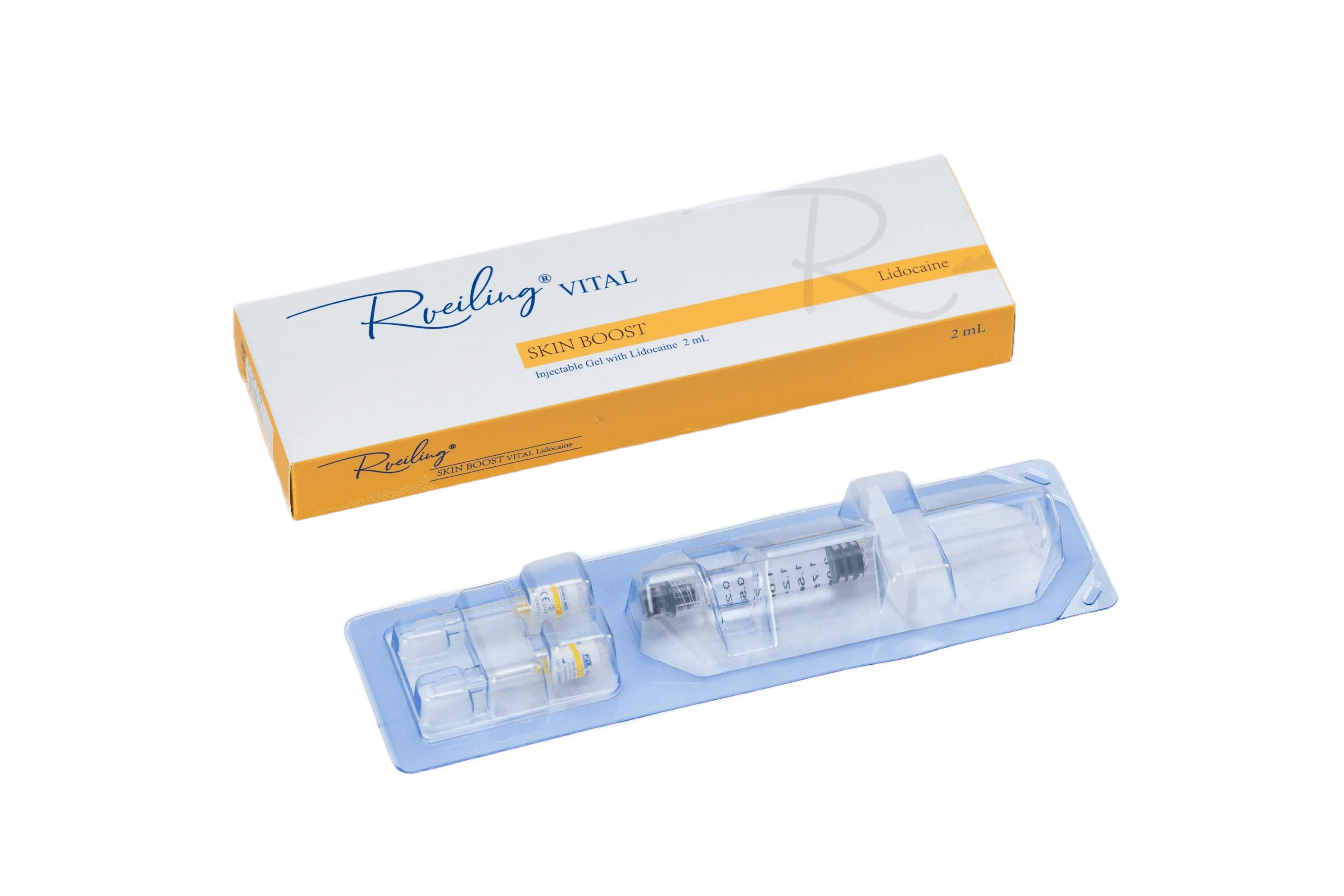
It is important to understand the limitation: topical sodium hyaluronate gel can help improve the look and feel of surface hydration, but it does not work like injectable HA dermal filler. Topical products support the skin surface, while injectable products are professional aesthetic treatments used by qualified practitioners.
Hyaluronic Acid vs Sodium Hyaluronate: What Is the Difference?
The terms “hyaluronic acid” and “sodium hyaluronate” are often used together, but they are not exactly the same.
Understanding hyaluronic acid vs sodium hyaluronate helps readers choose products more intelligently and avoid confusion created by marketing language.
Are Hyaluronic Acid and Sodium Hyaluronate the Same?
Hyaluronic acid is the broader molecule family. Sodium hyaluronate is the sodium salt form of hyaluronic acid.
In skincare, sodium hyaluronate is commonly used because it is stable, water-compatible, and suitable for different cosmetic textures, including gels, serums, masks, and creams.
A simple explanation:
Hyaluronic acid is the parent concept. Sodium hyaluronate is a practical form frequently used in skincare formulations.
Both are associated with hydration, but the final performance of any product depends on formula design, ingredient quality, molecular weight, and how the product is used.
Why Sodium Hyaluronate Is Used in Skincare
Sodium hyaluronate is used in skincare because it is highly compatible with water-based formulas. It can help create a pleasant, hydrated skin feel without making the product too oily.
This makes it suitable for:
Hydrating gels
Facial serums
Gel moisturizers
Sheet masks
Post-care skincare
Lightweight daily hydration products
Professional aesthetic support products
For AOWITA and other professional formulation-focused brands, sodium hyaluronate is valuable because it can serve multiple product directions, from consumer skincare education to advanced HA-based aesthetic solutions.
Formula Quality Matters More Than the Ingredient Name
Not every sodium hyaluronate gel performs the same way.
Two products can both contain sodium hyaluronate, but they may feel completely different on the skin. One may be elegant, fresh, and comfortable. Another may feel sticky, unstable, or poorly absorbed.
When evaluating a sodium hyaluronate gel, consider:
Sodium hyaluronate quality
Molecular weight selection
Gel texture and viscosity
pH compatibility
Stability testing
Preservative system
Supporting humectants
Irritation potential
Intended use: topical skincare or professional aesthetic product
This is especially important for distributors, clinics, and OEM/ODM skincare buyers who need consistent quality rather than just a trending ingredient name.
Why Molecular Weight Matters in Sodium Hyaluronate Gel
One of the more advanced topics in skin hydration science is molecular weight hyaluronic acid.
Molecular weight refers to the size of the HA molecule. Different molecule sizes can influence how the ingredient behaves in a skincare formula and how it feels on the skin.
High Molecular Weight Hyaluronic Acid
High molecular weight HA generally works more on the skin surface. It can form a light hydrating film that helps improve the feeling of softness and smoothness.
This type of HA is often associated with:
Surface hydration
Skin comfort
A smoother feel
Reduced tightness
A protective hydrating film
High molecular weight HA is useful when the goal is to improve immediate skin feel and support the outer moisture environment.
Low Molecular Weight Sodium Hyaluronate
Low molecular weight sodium hyaluronate has smaller molecule size. In skincare marketing, it is often associated with lightweight hydration and a more refined skin feel.
However, claims about “deep penetration” should be handled carefully. Skin absorption depends on formula design, molecular size, concentration, skin condition, and product system.
A responsible way to describe it is:
Low molecular weight sodium hyaluronate may support a lighter hydration feel and contribute to a more complete hydration strategy when used in a well-designed formula.
Multi-Weight Hyaluronic Acid Formulas
Some modern products use multi-weight hyaluronic acid, combining high, medium, and low molecular weight HA.
The purpose is to create a more balanced hydration profile.
HA Form | General Function | User Benefit |
High molecular weight HA | Surface hydration film | Smooth, soft skin feel |
Medium molecular weight HA | Balanced hydration support | Comfortable daily hydration |
Low molecular weight sodium hyaluronate | Lightweight hydration feel | Plump-looking, refreshed appearance |
Cross-linked HA | Gel network and structural properties | Used differently depending on topical or injectable format |
Multi-weight HA can be beneficial, but more is not always better. A simple, well-balanced formula can outperform a complex formula if it is more stable, more comfortable, and better suited to the user’s skin.
Sodium Hyaluronate Gel Benefits for Different Skin Needs
Sodium hyaluronate gel benefits are not limited to one skin type. Because hydration is a universal skin need, this ingredient can be useful across many skincare routines.
The key is matching the formula to the skin condition.
Sodium Hyaluronate Gel for Dry Skin
Sodium hyaluronate gel for dry skin can help improve the feeling of hydration, tightness, and roughness.
However, dry skin usually needs more than water-binding ingredients. It often benefits from a moisturizer that contains emollients and occlusives to help soften the skin and reduce moisture loss.
Best approach for dry skin:
Apply sodium hyaluronate gel to slightly damp skin.
Follow with a moisturizer.
Add a richer cream if the skin still feels dry.
Use sunscreen in the morning.
This helps combine hydration with moisture barrier support.
Sodium Hyaluronate Gel for Sensitive Skin
Sodium hyaluronate for sensitive skin can be suitable when the formula is simple and gentle.
Sensitive skin users should pay attention to the full ingredient list, not just the presence of sodium hyaluronate. A formula with fragrance, harsh alcohols, or too many active ingredients may still cause discomfort.
For sensitive skin, look for:
Fragrance-free positioning
Gentle supporting ingredients
Lightweight texture
Minimal unnecessary additives
Clear usage instructions
Patch-test guidance
Sodium hyaluronate gel can support skin comfort, but it should not be treated as a cure for inflammation, allergy, or medical skin conditions.
Sodium Hyaluronate Gel for Oily Dehydrated Skin
Oily skin can still be dehydrated.
This is one reason sodium hyaluronate gel for oily skin is popular. Many oily-skin users avoid moisturizers because they fear shine or clogged pores. But when the skin lacks water, it can feel tight, uncomfortable, or unbalanced.
A lightweight sodium hyaluronate gel can provide non-greasy hydration without the heavy feel of rich creams.
It is especially useful for people who want:
Fast-absorbing hydration
Lightweight gel texture
No greasy finish
Better comfort after acne treatments
Hydration under sunscreen
For oily dehydrated skin, sodium hyaluronate gel may be one of the most comfortable hydration formats.
Sodium Hyaluronate Gel for Mature Skin and Fine Lines
As skin matures, it often becomes drier, thinner-looking, and less resilient. Hydration becomes more important for maintaining a smoother and healthier-looking appearance.
Sodium hyaluronate gel for wrinkles should be positioned accurately. It can help reduce the look of fine dryness lines by improving surface hydration. It cannot replace medical aesthetic treatments for deeper folds, facial volume loss, or structural aging.
For mature skin, sodium hyaluronate gel works best as part of a complete routine that may include:
Gentle cleansing
Hydrating gel or serum
Barrier-supporting moisturizer
Sunscreen
Retinoids or peptides if tolerated
Professional consultation for aesthetic concerns
The goal is to support skin quality, not to overpromise dramatic wrinkle correction.
How to Use Sodium Hyaluronate Gel Correctly
Even the best formula can disappoint if it is used incorrectly.
Sodium hyaluronate gel works best when it is placed properly in the skincare routine and paired with the right supporting products.
Should Sodium Hyaluronate Gel Be Applied to Damp Skin?
Yes, in many routines, sodium hyaluronate gel works well when applied to slightly damp skin.
The skin should not be dripping wet. It should feel lightly moist after cleansing, toner, or facial mist. This gives the humectant product a hydrated environment to work with.
Do You Need Moisturizer After Sodium Hyaluronate Gel?
Most people should use a moisturizer after sodium hyaluronate gel.
Because sodium hyaluronate is a water-binding ingredient, it helps hydrate. But a moisturizer helps seal hydration and support the skin barrier.
This is especially important for:
Dry climates
Cold weather
Mature skin
Damaged skin barrier
Dry skin
Post-treatment skincare routines
For oily skin, a light lotion or gel-cream may be enough. For dry skin, a richer cream may be more suitable.
Step-by-Step Routine
Use this simple application method:
Cleanse your face with a gentle cleanser.
Leave your skin slightly damp.
Apply a thin layer of sodium hyaluronate gel.
Wait for the gel to settle into the skin.
Apply moisturizer to seal hydration.
In the morning, finish with sunscreen.
This routine is simple, practical, and suitable for most skin types.
Can You Use Sodium Hyaluronate Gel Every Day?
Yes, sodium hyaluronate gel can usually be used daily if the formula is suitable for your skin.
Many people use it:
In the morning before sunscreen
At night before moisturizer
After cleansing
After exfoliation days for hydration support
With retinol routines to improve comfort
During seasonal dryness
If irritation occurs, stop using the product and review the full formula. The issue may come from another ingredient, overuse, or an incompatible routine.
Can You Use Sodium Hyaluronate Gel with Retinol or Vitamin C?
Sodium hyaluronate gel can often be paired with retinol or vitamin C because it supports hydration and comfort.
With vitamin C, it can be used in the morning after vitamin C serum and before moisturizer or sunscreen.
With retinol, it can be used at night to help reduce dryness and tightness. Sensitive skin users may apply moisturizer before and after retinol to buffer irritation.
A simple evening routine may look like:
Cleanser
Sodium hyaluronate gel
Retinol
Moisturizer
Or, for sensitive skin:
Cleanser
Moisturizer
Retinol
Moisturizer again
The exact order depends on the product type and skin tolerance.
Topical Sodium Hyaluronate Gel vs Cross-Linked Injectable HA Gel
This section is especially important for AOWITA because sodium hyaluronate and hyaluronic acid are used in both topical skincare and professional medical aesthetic products.
These categories must be clearly separated.
Topical Sodium Hyaluronate Gel
Topical sodium hyaluronate gel is applied to the surface of the skin.
Its purpose is to support:
Skin hydration
Surface smoothness
Skin comfort
Moisture retention
A plump-looking appearance
Daily skincare routines
Topical skincare products should never be injected.
Cross-Linked Sodium Hyaluronate Gel
Cross-linked sodium hyaluronate gel is different. Cross-linking creates a gel network that may improve structure, durability, and viscoelastic properties for professional aesthetic applications.
In the medical aesthetic industry, cross-linked HA gel may be used in dermal filler products designed for professional use by trained practitioners.
This category may involve:
Injectable-grade hyaluronic acid
Sterile syringe systems
HA dermal filler technology
Specific injection depth design
Professional handling protocols
Regulatory and clinical considerations
Use by licensed or qualified providers
Why They Are Not Interchangeable
Topical sodium hyaluronate gel and injectable hyaluronic acid gel are not the same.
A simple distinction:
Topical sodium hyaluronate gel hydrates the skin surface. Injectable cross-linked HA gel is used in professional aesthetic procedures for structural support, contouring, or volume-related applications.
They have different formulas, different safety requirements, different manufacturing standards, and different intended uses.
For AOWITA, communicating this distinction is essential for building trust, educating buyers, and supporting responsible product positioning.
How to Choose a High-Quality Sodium Hyaluronate Gel
Choosing a sodium hyaluronate gel is not only about finding the word “HA” on the label. A high-quality product should be evaluated by formulation, texture, safety positioning, and intended use.
Consumer Selection Criteria
For daily skincare users, look for a sodium hyaluronate gel that fits your skin type and routine.
Important criteria include:
Lightweight, comfortable texture
Suitable for your skin type
Clear usage directions
Non-greasy finish if you have oily skin
Moisturizer compatibility
Low irritation potential
No unrealistic claims
Good brand transparency
A good hydrating gel should feel easy to use every day. If a product feels sticky, pills under sunscreen, or makes your skin uncomfortable, it may not be the right formula for you.
Professional Buyer Selection Criteria
For clinics, distributors, and OEM/ODM skincare partners, the evaluation should be more technical.
Professional buyers should consider:
Ingredient sourcing and quality control
Batch consistency
Viscosity and texture stability
Microbiological safety
Documentation support
Packaging compatibility
Product positioning
Regulatory category
Custom formulation capability
Manufacturer experience with HA products
AOWITA’s professional context is relevant here because buyers may be looking not only for a skincare ingredient, but also for a sodium hyaluronate gel supplier or hyaluronic acid manufacturer with broader formulation expertise.
Common Mistakes to Avoid
Avoid these mistakes when choosing or using sodium hyaluronate gel:
Believing a higher percentage always means better hydration
Using it without moisturizer in dry environments
Confusing topical gel with injectable HA filler
Choosing a product only by marketing claims
Ignoring skin type and climate
Applying too much product
Expecting topical HA to erase deep wrinkles
Combining too many active ingredients at once
The best sodium hyaluronate gel is not necessarily the most complicated formula. It is the formula that delivers stable hydration, good skin compatibility, and a pleasant user experience.
AOWITA Perspective: From Skin Hydration Science to Professional HA Formulation
AOWITA’s position in the sodium hyaluronate and hyaluronic acid space gives this topic a broader meaning.
For consumers, sodium hyaluronate gel is a daily hydration product. For professional aesthetic markets, HA technology also connects to cross-linked sodium hyaluronate gel, injectable hyaluronic acid gel, and HA dermal filler development.
This creates a valuable educational bridge.
Why This Topic Matters for Skincare Users
Skincare users need accurate information because hydration claims are everywhere.
A clear explanation helps users understand:
What sodium hyaluronate does
What it cannot do
How to use it properly
Why moisturizer still matters
How topical HA differs from injectable HA
How to choose products based on skin needs
This improves trust and helps readers make smarter decisions.
Why This Topic Matters for Professional Buyers
Professional buyers need more than general skincare education. They need to understand product category, formulation quality, and application context.
For OEM/ODM skincare brands, sodium hyaluronate gel may represent a lightweight hydration product opportunity. For medical aesthetic distributors, cross-linked HA technology belongs to a different product category with stricter professional requirements.
AOWITA can support this market by combining:
HA formulation knowledge
Sodium hyaluronate product education
Professional aesthetic product expertise
OEM/ODM development capability
Clear differentiation between topical and injectable products
This strengthens AOWITA’s authority across both consumer education and professional aesthetic search intent.
Conclusion
The science behind sodium hyaluronate gel is simple but powerful: it supports skin hydration by acting as a water-binding humectant. When used correctly, it can help improve skin moisture retention, reduce tightness, support a smoother texture, and create a more plump-looking appearance.
Its benefits depend on more than the ingredient name. Molecular weight, formula quality, gel texture, supporting ingredients, and correct application all influence the final skin experience.
For dry skin, sodium hyaluronate gel works best with a moisturizer. For oily or combination skin, it can provide lightweight hydration without heaviness. For sensitive skin, a gentle formula is essential. For mature skin, it can support surface hydration and soften the look of fine dryness lines.
Most importantly, topical sodium hyaluronate gel should not be confused with cross-linked injectable HA gel. One is a skincare hydration product; the other belongs to professional medical aesthetic applications.
By understanding this difference, readers can make safer, smarter, and more effective choices.
CTA Closing
Looking for advanced HA-based skincare and professional aesthetic formulation support?
AOWITA provides sodium hyaluronate and hyaluronic acid product expertise across skincare, professional aesthetic products, and OEM/ODM development. Whether you are exploring a lightweight sodium hyaluronate gel, a professional HA-based formulation, or cross-linked sodium hyaluronate gel solutions, AOWITA can help you understand the science, application, and product possibilities behind modern HA technology.
Contact AOWITA to learn more about sodium hyaluronate gel solutions, HA dermal filler products, and customized hyaluronic acid formulation development for your market.
FAQ: Sodium Hyaluronate Gel and Skin Hydration
How does sodium hyaluronate gel hydrate skin?
Sodium hyaluronate gel hydrates skin by acting as a humectant. It helps attract and hold water on the skin surface, supporting moisture retention and improving the feeling of softness, smoothness, and comfort.
What is sodium hyaluronate gel used for?
Sodium hyaluronate gel is commonly used for skin hydration, dryness relief, surface smoothness, plump-looking skin, and daily moisture support. It is often used in lightweight skincare routines and post-care hydration products.
Is sodium hyaluronate the same as hyaluronic acid?
Sodium hyaluronate is the sodium salt form of hyaluronic acid. They are closely related, but not chemically identical. In skincare, both are used for hydration-focused formulas.
Is sodium hyaluronate gel good for dry skin?
Yes, sodium hyaluronate gel can be good for dry skin, but it should usually be followed with a moisturizer. Dry skin often needs both water-binding hydration and barrier-supporting ingredients.
Is sodium hyaluronate gel good for sensitive skin?
It can be suitable for sensitive skin if the formula is gentle, simple, and free from unnecessary irritants such as heavy fragrance or harsh alcohols. Sensitive skin users should patch test first.
Can sodium hyaluronate gel help with wrinkles?
Sodium hyaluronate gel can help reduce the appearance of fine dryness lines by improving skin hydration. It does not replace injectable dermal fillers or professional treatments for deeper wrinkles and facial volume loss.
Should sodium hyaluronate gel be applied to damp skin?
In many routines, yes. Applying it to slightly damp skin can improve hydration feel and reduce stickiness. Follow with moisturizer to help seal hydration.
Do you need moisturizer after sodium hyaluronate gel?
Most people should apply moisturizer after sodium hyaluronate gel, especially in dry climates or if they have dry or mature skin. Moisturizer helps lock in hydration and support the skin barrier.
Can sodium hyaluronate gel be used every day?
Yes, many people can use sodium hyaluronate gel every day, morning and night. If irritation occurs, reduce use and check whether other ingredients in the routine may be causing sensitivity.
Is topical sodium hyaluronate gel the same as injectable HA filler?
No. Topical sodium hyaluronate gel is applied to the skin surface for hydration. Injectable HA filler is a professional aesthetic product used by qualified practitioners for volume, contouring, or correction. They are not interchangeable.
其他博客