Blog
Sodium Hyaluronate Gel vs Hyaluronic Acid Serum — Which Is Better?
Author
Ray
Published
Category
Hyaluronic acid filler
Compare sodium hyaluronate gel vs hyaluronic acid serum for hydration, dry skin, oily skin, sensitive skin, wrinkles, and skincare routine use. Learn which is better for your needs.


Author
Ray
An esteemed medical aesthetics expert with 40 years of profound experience in the field. With decades of expertise in non-invasive procedures, anti-aging science, and advanced dermatological solutions, the author is dedicated to sharing insights that connect clinical innovation with real-world patient results. Passionate about advancing safe, effective, and high-impact aesthetic treatments for a global clientele.
What’s better than insider perks, pro tips, and surprises?
Sign up to get the most recent blog articles in your email every week.
Join now.
Our company’s main product lines include HA (Hyaluronic Acid) fillers, CaHA (Calcium Hydroxylapatite) fillers, PLLA (Poly-L-Lactic Acid) biostimulators, and other advanced aesthetic solutions, all developed and manufactured by trusted partner facilities with whom we have maintained long-term, stable collaborations.
I help them with sales and export operations, while our company also provides sourcing and procurement services in China to help international clients solve supply-related challenges. If you need assistance with procurement, please feel free to contact us.
When people compare sodium hyaluronate gel vs hyaluronic acid serum, they usually want a simple answer: which product hydrates better, feels better, and fits their skincare routine more effectively?
The honest answer is: neither is automatically better for everyone. Sodium hyaluronate gel and hyaluronic acid serum are closely related hydration products, but they are not always the same in texture, formulation, skin feel, or ideal use case.
A sodium hyaluronate gel is often preferred by people who want lightweight hydration skincare, a fresh gel texture, and a non-greasy finish. A hyaluronic acid serum is usually chosen by people who want a flexible, easy-to-layer hydrating step that works well under moisturizers, sunscreen, or makeup.
For AOWITA, this comparison is especially important because sodium hyaluronate and hyaluronic acid are not just beauty buzzwords. They are core materials used across topical skincare, professional aesthetic products, and injectable-grade HA formulations. Understanding the difference helps consumers, clinics, distributors, and skincare buyers make smarter product decisions.
Sodium Hyaluronate Gel vs Hyaluronic Acid Serum: Quick Answer
If you are choosing between sodium hyaluronate gel and hyaluronic acid serum, start with your skin type and product goal.
Choose sodium hyaluronate gel if you want:
A fresh, lightweight gel texture
Non-greasy hydration for oily skin
A hydrating gel for face routines
A product that feels cooling and comfortable
A possible alternative to sticky HA serums
Choose hyaluronic acid serum if you want:
A classic facial serum texture
Easy layering with moisturizer
A flexible product for dry, normal, or combination skin
Hydration support before cream or sunscreen
A serum format that fits most skincare routines
In practical terms, sodium hyaluronate gel is often better for oily, combination, or dehydrated skin that dislikes heavy products. Hyaluronic acid serum may be better for people who already use serum-based routines and want a familiar hydration step.
However, the final result depends on the complete formula. Concentration, molecular weight, added humectants, preservatives, pH, texture system, and whether the product includes irritants all matter.
A simple rule:
The ingredient attracts water. The formula determines performance. The texture determines whether people keep using it.
What Is Sodium Hyaluronate Gel?
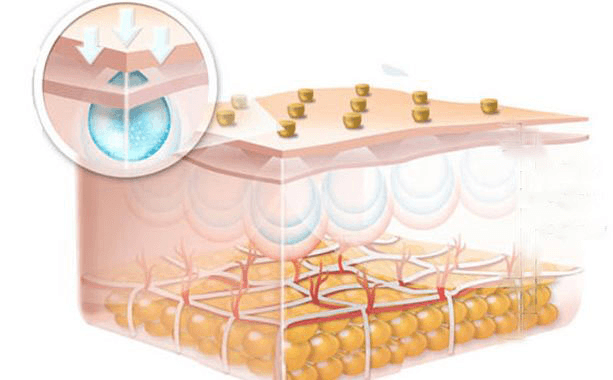
Sodium hyaluronate gel is a water-based skincare or aesthetic gel containing sodium hyaluronate, the sodium salt form of hyaluronic acid. Sodium hyaluronate is widely used as a humectant skincare ingredient because it can help bind water and support a hydrated skin feel.
In topical skincare, sodium hyaluronate gel is usually designed to deliver surface hydration, skin comfort, and a plump-looking finish without the heaviness of a rich cream.
Sodium Hyaluronate Gel Benefits
The main sodium hyaluronate gel benefits include:
Helps skin feel hydrated and smoother
Supports a plump-looking appearance
Offers a lightweight texture
Works well for oily or combination skin
Can reduce the tight feeling associated with dehydrated skin
Often layers well under moisturizer or sunscreen
Unlike heavy occlusive moisturizers, many gel formulas feel fresh and breathable. This makes sodium hyaluronate gel useful for people who want hydration but dislike greasy residue.
Sodium Hyaluronate for Skin: Why It Is Popular
Sodium hyaluronate for skin is popular because it supports one of the most common skincare needs: hydration.
Dehydrated skin can appear dull, rough, tight, or lined. Sodium hyaluronate helps improve the feel of the skin by attracting and holding moisture within the upper layers of the skin surface.
This is why it appears in:
Hydrating gels
Facial serums
Sheet masks
Gel moisturizers
Post-treatment skincare products
Professional aesthetic formulations
For brands and OEM/ODM buyers, sodium hyaluronate is also attractive because it can fit many textures, from watery serums to cushiony gels.
Who Should Consider Sodium Hyaluronate Gel?
Sodium hyaluronate gel is especially suitable for people looking for:
Non-greasy hydration for oily skin
A lightweight face gel for dehydrated skin
A hydrating gel for skin barrier support
A cooling product after cleansing
A simple hydration layer under moisturizer
It is also a strong option for combination skin because it hydrates without making the T-zone feel excessively oily.
What Is Hyaluronic Acid Serum?
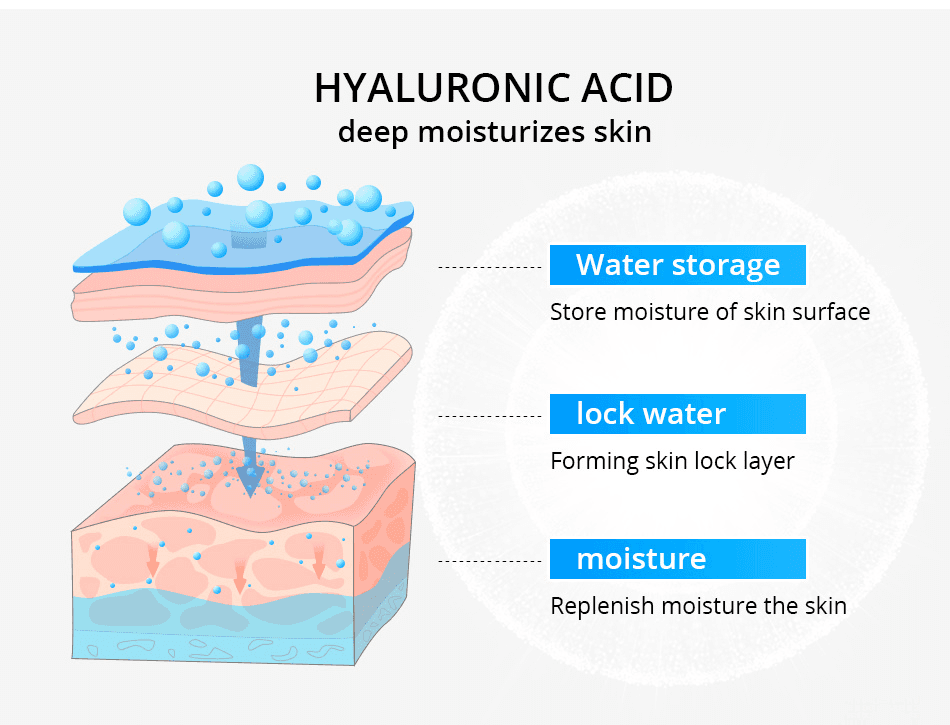
Hyaluronic acid serum is a lightweight liquid or gel-serum product designed to hydrate the skin. It typically contains hyaluronic acid, sodium hyaluronate, hydrolyzed hyaluronic acid, or a combination of different HA forms.
In daily skincare, HA serum is usually applied after cleansing and before moisturizer.
Hyaluronic Acid Serum Benefits
Common hyaluronic acid serum benefits include:
Helps increase skin hydration
Supports a smoother-looking texture
Helps reduce the appearance of dryness lines
Layers easily with other skincare products
Works for many skin types
Can support a plump-looking skin effect
A hyaluronic acid serum is not usually a stand-alone moisturizer. It works best when followed by a moisturizer or cream that helps seal in hydration.
Hyaluronic Acid for Dry Skin
Hyaluronic acid for dry skin can be helpful, but dry skin usually needs more than humectants.
Dry skin often lacks sufficient oil or barrier lipids. Dehydrated skin lacks water. A person can have oily but dehydrated skin, or dry and dehydrated skin at the same time.
For dry skin, a hyaluronic acid serum should usually be paired with:
A gentle cleanser
A hydrating serum or gel
A moisturizer with emollients
A cream or occlusive layer if needed
Daily sunscreen in the morning
This sequence helps hydrate the skin and reduce water loss.
Hyaluronic Acid for Wrinkles and Fine Lines
Hyaluronic acid for wrinkles is best understood as a hydration-support strategy.
Topical HA does not replace injectable fillers, and it does not restructure the face. Instead, it can help skin look smoother and more plump by improving surface hydration. This may soften the appearance of fine dehydration lines.
A plumping serum for fine lines works best when fine lines are partly caused by dryness or dehydration. For deeper wrinkles, facial volume loss, or structural changes, professional aesthetic treatment may be required.
Hyaluronic Acid vs Sodium Hyaluronate: What Is the Difference?
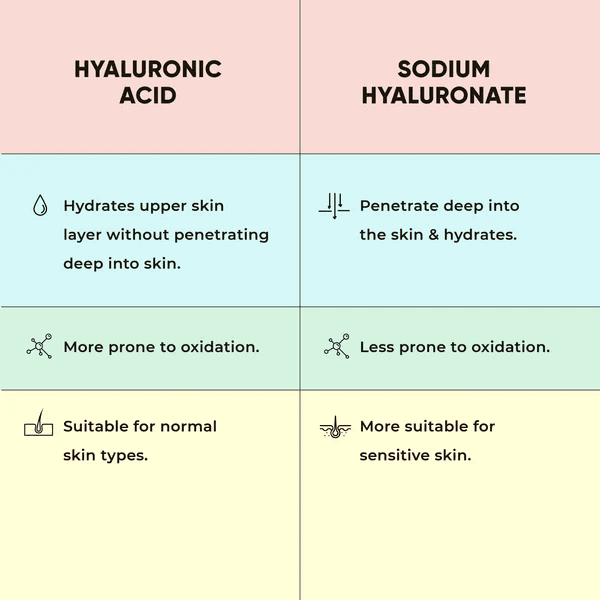
The phrase hyaluronic acid vs sodium hyaluronate can be confusing because the two ingredients are closely related.
Hyaluronic acid is a naturally occurring molecule found in the body, especially in the skin, joints, and eyes. Sodium hyaluronate is the sodium salt form of hyaluronic acid. In cosmetic ingredient lists, sodium hyaluronate is very common because it is stable, water-compatible, and effective in hydration-focused formulas.
Are They the Same?
They are not exactly identical in chemistry, but in skincare marketing they are often discussed together because both belong to the same HA family and both are used for hydration.
A simple explanation:
Hyaluronic acid is the broader molecule family. Sodium hyaluronate is a commonly used salt form of hyaluronic acid in skincare formulations.
Why Molecular Weight Hyaluronic Acid Matters
When comparing sodium hyaluronate gel vs hyaluronic acid serum, many people focus only on the ingredient name. But molecular weight hyaluronic acid is also important.
Different molecular weights may behave differently in a formula:
HA Type | General Role in Skincare | Typical User Benefit |
|---|---|---|
High molecular weight HA | Forms a hydrating film on the skin surface | Surface hydration and smoother feel |
Medium molecular weight HA | Supports balanced hydration feel | Comfort and improved texture |
Low molecular weight HA | Often used for more targeted hydration claims | Lightweight hydration and plumping effect |
Multi-weight hyaluronic acid | Combines several HA forms | Broader hydration support |
A multi-weight hyaluronic acid formula may offer a more complete hydration experience than a single-form formula. However, more types of HA do not automatically mean better results. Formula quality still matters.
Why Full Formulation Matters More Than the Name
A product labeled “hyaluronic acid serum” may contain mostly water, a small amount of HA, and a sticky texture system. Another product labeled “sodium hyaluronate gel” may have a more elegant texture, better stability, and a better user experience.
When evaluating any HA-based product, look at:
Texture
Ingredient list
Molecular weight strategy
Skin feel
Compatibility with moisturizer
Suitability for sensitive skin
Whether it is topical or injectable
Brand manufacturing standards
This is why buyers should not choose products by ingredient name alone.
Gel Moisturizer vs Serum: Texture, Feel, and Routine Fit
The comparison between gel moisturizer vs serum is one of the most practical parts of this topic.
Most users do not only ask, “Which ingredient is better?” They ask, “Which product will actually feel better on my skin every day?”
Sodium Hyaluronate Gel Texture
A sodium hyaluronate gel usually has a soft, cushiony, water-rich texture. It often spreads easily and absorbs with a fresh finish.
It may feel:
Cooling
Smooth
Lightweight
Less sticky than some serums
More comfortable for oily skin
This makes it useful in humid climates or for people who dislike heavy creams during the day.
Hyaluronic Acid Serum Texture
A hyaluronic acid serum is usually thinner than a gel. Some are watery, while others are slightly viscous or sticky.
It may feel:
Fluid
Fast-absorbing
Layerable
Slightly tacky depending on formula
Easy to combine with other actives
A serum works well for people who already use vitamin C, retinol, niacinamide, peptides, or moisturizer and want a hydration step that fits between cleansing and treatment.
Comparison Table: Sodium Hyaluronate Gel vs Hyaluronic Acid Serum
Factor | Sodium Hyaluronate Gel | Hyaluronic Acid Serum |
|---|---|---|
Main purpose | Lightweight hydration and skin comfort | Flexible hydration step |
Texture | Gel-like, fresh, cushiony | Watery to serum-like |
Best for | Oily, combination, dehydrated skin | Most skin types |
Dry skin use | Good with moisturizer | Good with moisturizer |
Oily skin use | Often excellent | Good if non-sticky |
Sensitive skin | Depends on formula simplicity | Depends on formula simplicity |
Wrinkle support | Helps soften dryness lines | Helps plump fine lines |
Routine placement | After cleansing, before cream | After cleansing, before cream |
Makeup compatibility | Often good if non-pilling | Good if lightweight |
Common mistake | Using it without sealing hydration | Applying too much serum |
Which Is Better for Your Skin Type?
The question “is sodium hyaluronate gel better than hyaluronic acid serum?” only makes sense when connected to skin type.
For Oily Skin
For oily skin, sodium hyaluronate gel is often the better choice.
People with oily skin may still experience dehydration, especially after using strong cleansers, exfoliating acids, retinoids, or acne treatments. A gel formula can provide hydration without adding a greasy finish.
Best choice: sodium hyaluronate gel vs HA serum for oily skin usually favors gel, especially if the serum feels sticky or heavy.
Look for:
Oil-free or lightweight formula
Non-greasy finish
Fragrance-free option if sensitive
Gel texture that layers under sunscreen
For Dry Skin
For dry skin, either product can work, but neither should be the only moisturizer.
If choosing sodium hyaluronate gel or hyaluronic acid serum for dry skin, the best answer is usually: use one as a hydration step, then follow with a moisturizer.
Dry skin needs:
Humectants for water-binding
Emollients for softness
Occlusives to reduce moisture loss
Barrier-supporting ingredients
Best choice: hyaluronic acid serum may feel easier to layer under a richer moisturizer, while sodium hyaluronate gel may feel more refreshing.
For Sensitive Skin
For sensitive skin, the formula matters more than whether the product is a gel or serum.
Sodium hyaluronate for sensitive skin can be suitable when the product is simple, gentle, and free from unnecessary irritants.
Avoid formulas with:
Heavy fragrance
Strong alcohol content
Excessive essential oils
Too many active ingredients at once
Harsh exfoliating acids in a hydration product
Best choice: choose the product with the cleanest, calmest formula and patch test first.
For Combination Skin
Sodium hyaluronate gel for combination skin is often a strong match because it hydrates without making oily areas feel overloaded.
A good routine may look like this:
Cleanse gently
Apply sodium hyaluronate gel on slightly damp skin
Use a light moisturizer on oily areas
Use a richer cream only on dry areas
Apply sunscreen during the day
This flexible approach avoids treating the entire face as one skin type.
For Acne-Prone Skin
Sodium hyaluronate gel for acne prone skin can be helpful when dehydration is caused by acne treatments. However, it does not treat acne directly.
The goal is to support skin comfort and reduce dryness from products such as benzoyl peroxide, salicylic acid, or retinoids.
Choose:
Lightweight gel texture
Non-comedogenic positioning if available
Fragrance-free formula
No heavy oils if your skin clogs easily
For Mature Skin
For mature skin, both sodium hyaluronate gel and hyaluronic acid serum can support a smoother, more hydrated appearance.
However, mature skin often benefits from a more complete routine that includes:
Hydrating HA or sodium hyaluronate
Barrier-supporting moisturizer
Sunscreen
Retinoids or peptides if tolerated
Professional treatment when appropriate
For visible volume loss or deeper folds, topical HA products should not be positioned as replacements for professional dermal filler treatments.
How to Use Sodium Hyaluronate Gel or Hyaluronic Acid Serum
Many users get poor results from HA products because they apply them incorrectly.
The most common mistake is applying a humectant product and then leaving it without a moisturizer in a dry environment. Humectants attract water, but they work best when supported by a complete routine.
Should Hyaluronic Acid Be Applied to Damp Skin?
In many routines, yes. Applying sodium hyaluronate gel or HA serum to slightly damp skin can improve the skin feel and reduce tackiness.
The skin should not be dripping wet. It should feel lightly hydrated after cleansing or misting.
How to Layer Hyaluronic Acid Serum and Moisturizer
Use this simple order:
Cleanse with a gentle cleanser.
Leave skin slightly damp or apply a hydrating mist.
Apply sodium hyaluronate gel or hyaluronic acid serum.
Wait until the product settles.
Apply moisturizer to seal hydration.
In the morning, finish with sunscreen.
This sequence works for most skin types.
Morning or Night: When to Use Sodium Hyaluronate Gel?
You can use sodium hyaluronate gel in the morning, at night, or both.
Morning use is helpful when you want:
Fresh hydration
Smoother makeup application
Comfortable skin under sunscreen
Night use is helpful when you want:
Recovery after cleansing
Hydration support with retinol
A comfortable layer before moisturizer
Can You Use Sodium Hyaluronate Gel with Retinol?
Yes, many users can use sodium hyaluronate gel with retinol because hydration support may improve comfort. Apply the gel before or after retinol depending on the product instructions and your skin tolerance.
For sensitive skin, a buffering routine may help:
Moisturizer
Retinol
Sodium hyaluronate gel or moisturizer layer
If irritation occurs, reduce frequency and consult a skincare professional.
Can You Use Hyaluronic Acid Serum with Vitamin C?
Yes, hyaluronic acid serum can usually be used with vitamin C. Vitamin C targets tone and antioxidant support, while HA supports hydration.
A common morning routine is:
Cleanser
Vitamin C serum
Hyaluronic acid serum or sodium hyaluronate gel
Moisturizer
Sunscreen
Can You Use Sodium Hyaluronate Gel and Hyaluronic Acid Serum Together?
Yes, you can use sodium hyaluronate gel and hyaluronic acid serum together, but most people do not need both in the same routine.
Using both may be useful if:
One product contains additional calming ingredients
One is a thin serum and the other is a gel moisturizer
Your skin is very dehydrated
Your routine is designed for post-treatment hydration support
However, layering too many humectant products can feel sticky or cause pilling.
A better approach is to choose one strong hydration product and pair it with a suitable moisturizer.
Best Hyaluronic Acid Serum Alternative
For people who dislike sticky serums, a sodium hyaluronate gel can be the best hyaluronic acid serum alternative.
It offers a similar hydration concept but with a different sensory experience. This is especially useful for:
Oily skin
Humid climates
Men’s skincare routines
Minimalist skincare routines
Lightweight hydration routines
Common Mistakes to Avoid
Avoid these mistakes when using HA-based products:
Applying too much product
Skipping moisturizer afterward
Using HA as a replacement for sunscreen
Expecting topical HA to work like injectable filler
Choosing based only on the highest concentration
Ignoring irritation from fragrance or additives
Applying too many products that pill under makeup
A well-formulated product used consistently is usually better than an overloaded routine.
Topical Sodium Hyaluronate Gel vs Injectable HA Gel
This distinction is critical.
A topical sodium hyaluronate gel and an injectable cross-linked sodium hyaluronate gel are not the same product. They may share related HA chemistry, but they are designed for completely different applications.
Topical Gel
A topical gel is applied to the surface of the skin.
Its purpose is usually to:
Support hydration
Improve skin feel
Reduce dryness-related tightness
Improve the look of smoothness
Fit into daily skincare routines
Topical products should not be injected.
Injectable Sodium Hyaluronate Gel
An injectable HA gel is a professional medical-aesthetic product. It is typically cross-linked to create structure, durability, and tissue support. Injectable HA fillers are used by qualified professionals for volume restoration, contouring, wrinkle correction, or other aesthetic indications depending on product design and local regulatory approval.
Professional injectable products may involve:
Cross-linked sodium hyaluronate gel
Sterile prefilled syringe systems
Lidocaine in some formulas
Specific injection depth guidance
Clinical handling requirements
Professional assessment by trained providers
Why This Matters for AOWITA
AOWITA operates in the HA and professional aesthetic product space, where the distinction between topical skincare education and injectable-grade hyaluronic acid is essential.
For readers, the key takeaway is simple:
Topical sodium hyaluronate gel hydrates the skin surface. Injectable cross-linked sodium hyaluronate gel is a professional aesthetic product used for tissue support and contouring by trained practitioners. They are not interchangeable.
This explanation builds trust because it prevents unrealistic expectations and supports safer product understanding.
How to Choose the Right Product
The best product depends on your skin, your routine, and your expectations.
Product Selection Checklist
Before choosing sodium hyaluronate gel or hyaluronic acid serum, consider:
Your skin type: oily, dry, sensitive, combination, or mature
Your climate: humid, dry, cold, or hot
Your texture preference: gel, serum, cream, or lotion
Your current routine: minimalist or multi-step
Your sensitivity level: fragrance-free may be better
Your hydration goal: daily comfort or post-treatment support
Your professional context: skincare retail, clinic use, OEM/ODM, or medical aesthetics
Decision Guide
Use this simple decision path:
If your skin is oily or combination, start with sodium hyaluronate gel.
If your skin is dry, choose either gel or serum, but always add moisturizer.
If your skin is sensitive, prioritize formula simplicity over product format.
If you dislike sticky products, try a gel texture.
If you already use multiple skincare actives, a serum may layer more easily.
If you are considering injectable HA, consult a qualified medical-aesthetic professional.
What Professionals and Brands Should Look For
For clinics, distributors, and private-label skincare buyers, selection criteria should go beyond consumer texture preference.
Look for:
Reliable raw material sourcing
Consistent viscosity and texture
Good stability testing
Clear ingredient documentation
Professional manufacturing standards
Appropriate regulatory positioning
OEM/ODM flexibility
Differentiation between topical and injectable applications
AOWITA’s brand positioning around hyaluronic acid series products makes this education valuable for both consumer-facing content and professional buyer confidence.
AOWITA Perspective: Hydration, Formulation, and Professional HA Expertise
From an AOWITA perspective, sodium hyaluronate is not just a trendy skincare ingredient. It is part of a broader HA-based formulation ecosystem that includes cosmetic-grade, professional aesthetic, and injectable-grade applications.
That broader expertise matters because HA products are not all created equal.
A well-designed sodium hyaluronate gel or hyaluronic acid serum should consider:
Ingredient purity
Molecular weight strategy
Texture elegance
Skin compatibility
Product stability
Intended use
Regulatory context
End-user experience
For consumers, this means choosing a hydration product that feels good and fits the skin. For professional buyers, it means choosing a manufacturer that understands both formulation science and real-world aesthetic applications.
AOWITA’s content strategy should continue connecting educational skincare topics with professional HA expertise. This builds authority across both informational search and commercial discovery.
Conclusion
When comparing sodium hyaluronate gel vs hyaluronic acid serum, the best choice depends on skin type, texture preference, and routine needs.
Sodium hyaluronate gel is often the better option for people who want lightweight, non-greasy hydration, especially oily, combination, or dehydrated skin. Hyaluronic acid serum is a flexible hydration step that works well for many skin types and layers easily with moisturizer.
The most important point is that ingredient names alone do not guarantee results. A well-formulated product with the right texture, molecular weight strategy, and skin compatibility will usually outperform a poorly designed formula, regardless of whether it is called a gel or serum.
For daily skincare, both formats can support hydrated, smoother, plumper-looking skin. For professional aesthetic applications, injectable cross-linked sodium hyaluronate gel belongs in a different category and should only be used by qualified professionals.
CTA Closing
Looking for advanced HA-based formulation expertise?
AOWITA provides professional knowledge and product solutions across sodium hyaluronate, hyaluronic acid, and medical aesthetic applications. Explore AOWITA’s sodium hyaluronate and HA-based product portfolio to learn how advanced hydration-focused and professional aesthetic formulations can support modern skincare, clinic, distributor, and OEM/ODM needs.
For professional aesthetic buyers, clinics, and distributors, contact AOWITA to learn more about cross-linked sodium hyaluronate gel solutions and customized HA product development.
FAQ: Sodium Hyaluronate Gel vs Hyaluronic Acid Serum
Is sodium hyaluronate gel better than hyaluronic acid serum?
Sodium hyaluronate gel may be better if you want lightweight, non-greasy hydration, especially for oily or combination skin. Hyaluronic acid serum may be better if you prefer a classic serum format that layers easily under moisturizer. The better choice depends on formula quality and skin type.
Is sodium hyaluronate the same as hyaluronic acid?
Sodium hyaluronate is the sodium salt form of hyaluronic acid. They are closely related and both are used in hydration-focused skincare, but they are not chemically identical.
Which is better for hydration: sodium hyaluronate or hyaluronic acid?
Both can support hydration. Sodium hyaluronate is commonly used in skincare formulas because it is stable and water-compatible. Hyaluronic acid is the broader ingredient family. The best hydration result depends on the full formula, not only the ingredient name.
Which is better for dry skin: sodium hyaluronate gel or HA serum?
For dry skin, both can help, but both should usually be followed by moisturizer. A serum may layer well under richer creams, while a gel may feel more refreshing. Dry skin usually needs humectants, emollients, and occlusives together.
Which is better for oily skin?
Sodium hyaluronate gel is often better for oily skin because it can provide hydration with a lighter, fresher, less greasy finish. However, a well-formulated HA serum can also work if it is lightweight and non-sticky.
Can I use sodium hyaluronate gel and hyaluronic acid serum together?
Yes, but most people do not need both at the same time. Using both may feel sticky or redundant unless each product has a different purpose. A better routine is often one hydration product plus a good moisturizer.
Do you need moisturizer after sodium hyaluronate gel?
Usually, yes. Sodium hyaluronate gel helps bind moisture, but a moisturizer helps seal hydration and support the skin barrier. This is especially important in dry climates or for dry skin.
Can sodium hyaluronate gel help with wrinkles?
Sodium hyaluronate gel can help soften the appearance of fine dehydration lines by improving skin hydration and plumpness. It does not replace injectable filler or professional treatments for deeper wrinkles and volume loss.
Is sodium hyaluronate gel good for sensitive skin?
It can be, especially when the formula is simple and fragrance-free. Sensitive skin users should patch test first and avoid formulas with unnecessary fragrance, harsh alcohols, or too many active ingredients.
Is topical sodium hyaluronate gel the same as injectable HA filler?
No. Topical sodium hyaluronate gel is applied to the skin surface for hydration. Injectable HA filler is a professional medical-aesthetic product used by trained practitioners for tissue support, contouring, or volume restoration. They are not interchangeable.
Other Blogs