博客
What is CaHA Filler and How does it work as collagen stimulator
作者
Ray
已发布
类别
CaHA Filler
Learn what CAHA filler (calcium hydroxylapatite) is, how it stimulates collagen, expected timeline, sessions, and key safety considerations.

作者
Ray
一位享有盛誉的医学美学专家,在该领域拥有40年的深厚经验。凭借在非侵入性手术、抗衰老科学以及先进皮肤病学解决方案方面的数十年专业知识,作者致力于分享将临床创新与真实患者成果相结合的见解。热衷于为全球客户推进安全、有效且高影响力的美学治疗。
还有什么比内部优惠、专业建议和惊喜更好的呢?
注册可每周在您的电子邮件中接收最新的博客文章。
立即加入。
Our company’s main product lines include HA (Hyaluronic Acid) fillers, CaHA (Calcium Hydroxylapatite) fillers, PLLA (Poly-L-Lactic Acid) biostimulators, and other advanced aesthetic solutions, all developed and manufactured by trusted partner facilities with whom we have maintained long-term, stable collaborations.
I help them with sales and export operations, while our company also provides sourcing and procurement services in China to help international clients solve supply-related challenges. If you need assistance with procurement, please feel free to contact us.
No headings found
What Is CAHA Filler and How Does It Work?
CAHA filler (often written as CAHA or calcium hydroxylapatite filler) is an injectable collagen stimulator made with calcium hydroxylapatite microspheres in a carrier. Instead of acting like a “fill-and-hold” product, CAHA is used to trigger collagen biostimulation, leading to gradual collagen production/remodeling over time—supporting skin rejuvenation and volume restoration in a slower, progressive way.
What Is CAHA Filler?
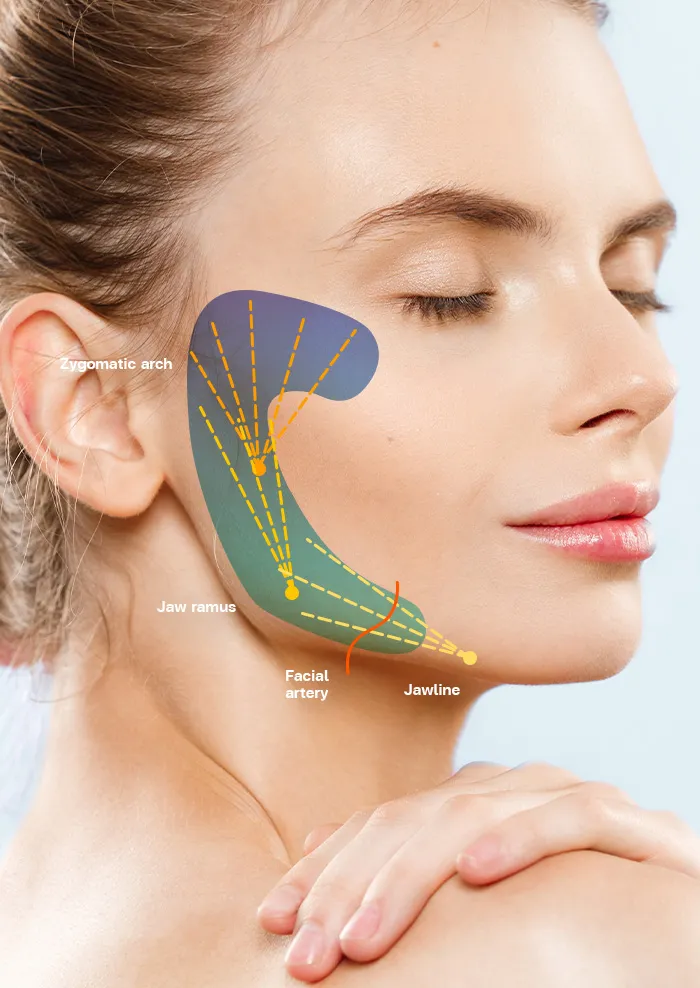
CAHA filler is a type of injectable that uses calcium hydroxylapatite (CaHA) microspheres suspended in a water-based carrier. In practice, it’s classified as a biostimulatory filler—meaning its purpose is to encourage the body’s own tissue response to improve structure gradually.
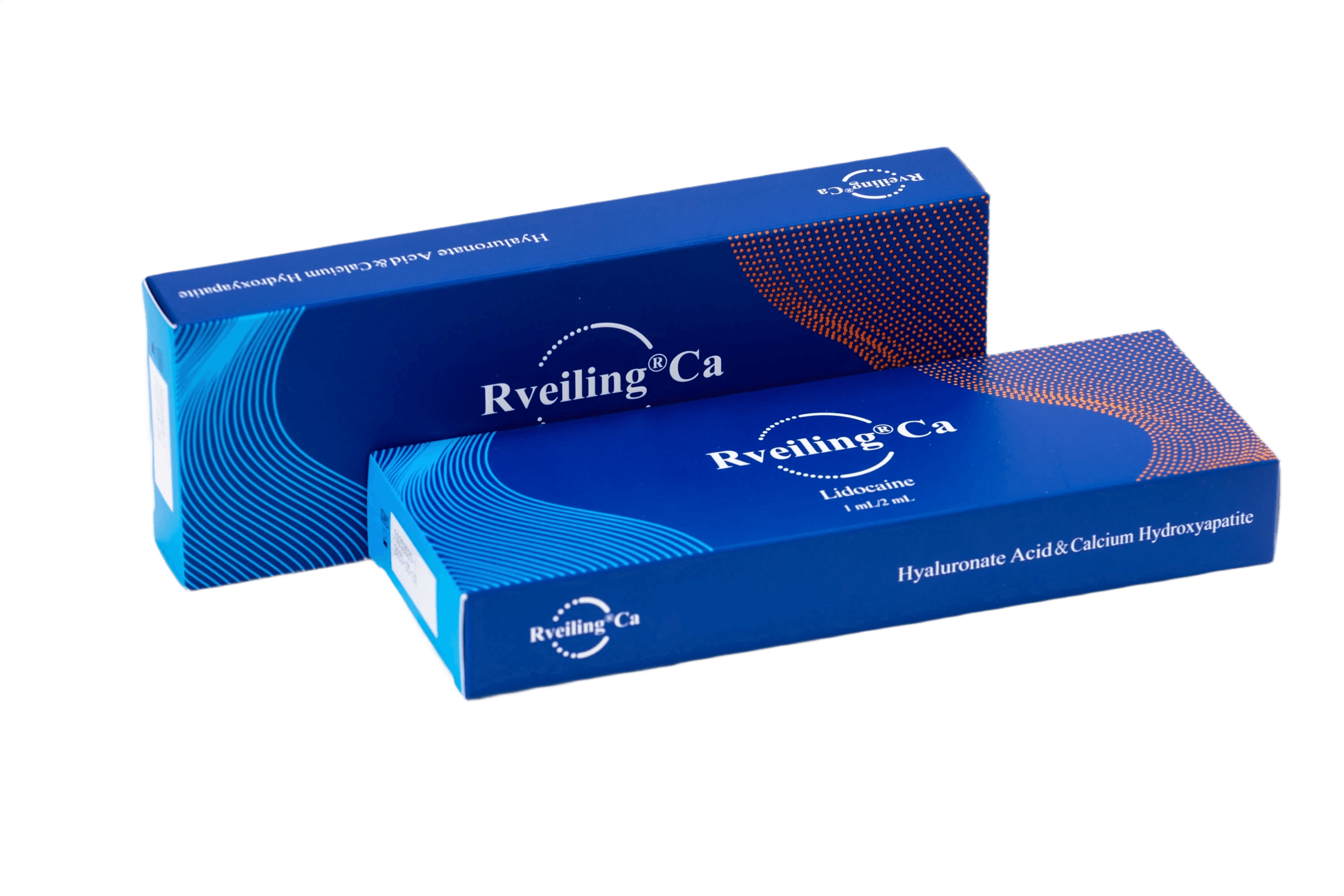
CAHA vs “traditional” fillers—what’s different
Many people compare injectables like CAHA vs hyaluronic acid (HA) fillers. A simple way to understand the difference:
HA fillers often provide more immediate volume/contour because they add gel-like substance that can be shaped right away.
CAHA fillers aim for gradual remodeling—the “visible change” tends to build as the tissue’s response evolves.
So the CAHA experience is often described as less instantaneous but more about longer-term tissue support.
How CAHA Filler Works as a Collagen Stimulator
Let’s break down the mechanism in plain language.
The ingredient: calcium hydroxylapatite microspheres
Calcium hydroxylapatite is a naturally occurring mineral found in bone. In CAHA fillers, the material is formulated into tiny microspheres designed to be injected into specific tissue layers.
A key concept: CAHA doesn’t behave like a simple soft “filler” that just occupies space. Instead, it acts as a stimulus that encourages a remodeling response.
The process: biostimulation → collagen remodeling
While exact biological pathways are complex, the clinically relevant explanation is straightforward:
After injection, the body recognizes the microspheres and initiates a controlled tissue response.
That response supports collagen remodeling—including changes in dermal structure over time.
As collagen quality improves and tissue reorganizes, you see gradual volume and skin quality enhancement.
This is why CAHA is commonly described as a collagen stimulator and collagen biostimulation treatment.
Why results are gradual (and what that means)
A collagen stimulator typically follows a “build over time” pattern:
early changes (if any) may be subtle,
visible improvements generally accumulate gradually,
the final or most noticeable results may take time to appear.
What it means for you: if your goal is “I want to look noticeably different tomorrow,” CAHA may not align with expectations. If your goal is “I want progressive skin rejuvenation and structural support,” the delayed timeline can be a feature, not a bug.
Important: Your actual timeline depends on your injection plan, tissue characteristics, and your body’s response.
What to Expect: Timeline, Sessions, and Results
This section is designed to be realistic—because disappointment often comes from assuming CAHA behaves like an instant filler.
When people typically notice early changes
People often report early signs such as:
improved skin “feel” or texture,
subtle smoothing of certain lines or roughness,
early changes in perceived firmness.
However, the intensity and timing are highly variable. If a clinic promises a very specific result by a certain day without accounting for your baseline, that’s a yellow flag.
How many sessions are commonly planned
CAHA is frequently planned in a series rather than a single session. The number of sessions depends on:
area treated (e.g., skin quality vs structural volume support),
severity of concerns,
dosing strategy and technique,
and your individual response.
Because dosing protocols vary by product formulation, region, and clinician approach, you should rely on the plan your provider proposes—and ask them to explain why that number of sessions fits your goals. [source needed for exact session counts]
Maintenance schedule: why it varies
Even when initial treatment is successful, collagen remodeling isn’t permanent. Maintenance varies based on:
age and baseline skin quality,
lifestyle factors,
sun exposure and skincare consistency,
and how your body sustains remodeling.
Clinicians typically recommend maintenance intervals tailored to results and patient goals.
CAHA Filler for Skin Rejuvenation vs Volume Restoration
CAHA is often discussed for both skin rejuvenation and volume restoration—but these goals are not identical.
Skin texture and dermal quality (what it can improve)
When used for skin rejuvenation, CAHA aims to enhance the dermal environment. Patients may seek improvements such as:
smoother-looking skin texture,
improved firmness,
gradual refinement of the quality of aging-related changes.
Your provider should be able to connect the injection plan to your specific skin issue (for example, texture vs fine superficial lines vs overall laxity).
Gradual volume support (where it’s often considered)
For volume restoration, CAHA is approached as structural support over time. Many people use it as part of a broader plan that may also include skincare, lifestyle adjustments, and possibly other aesthetic treatments depending on goals.
The most important expectation-setting point: CAHA is generally not “instant volume like a sculpting filler.” It’s “progressive support.”
CAHA vs Hyaluronic Acid (HA) Fillers
This is one of the most common decision points, so here’s a clear comparison.
Onset and look: gradual vs immediate
HA fillers: often show results immediately after injection.
CAHA fillers: results typically build gradually as collagen remodeling progresses.
If you need an immediate event-driven change (and understand potential risks), HA fillers may fit better. If you’re prioritizing longer-term tissue support and can wait for progressive changes, CAHA may be more aligned.
How to choose when your goal is texture vs lift
A practical way to decide:
If your primary complaint is skin quality/gradual rejuvenation, CAHA may be considered.
If your primary complaint is contour correction with immediate change, HA fillers are often used.
That said, many patients benefit from combined approaches under clinician guidance. The right answer depends on your anatomy, baseline, and risk tolerance.
CAHA vs Other Collagen Biostimulators (PLLA, Polynucleotides, etc.)
People search “CAHA vs PLLA” or “CAHA vs polynucleotides” because they want to know which collagen stimulator is “better.” The more useful framing is: they’re different products with different mechanisms, tissue behavior, and expectations.
Here’s how to think about categories:
CAHA (calcium hydroxylapatite): a mineral-based microsphere biostimulator associated with collagen remodeling.
PLLA (poly-L-lactic acid): another biostimulatory approach that works through a gradual remodeling process. (Exact behavior differs by protocol and product.)
Polynucleotides: often discussed as skin-focused treatments; mechanisms and expected timelines vary by formulation.
Editorial guidance: avoid choosing based only on marketing claims like “strongest collagen” or “fastest results.” Instead, compare:
the treatment plan (where it’s injected, how many sessions),
expected timeline,
and the clinician’s experience with your specific concern.
Safety, Side Effects, and Risks (What to Ask Before You Proceed)
This is essential. CAHA can be a valuable treatment, but it’s not risk-free.
Common temporary effects
Most people experience some combination of:
redness,
swelling,
tenderness,
bruising,
temporary lumps or firmness at injection sites.
These effects are typically short-lived, but the duration varies.
Potential complications (including nodules)
Like other injectables, CAHA can rarely lead to complications. One important risk category is nodule formation (or visible/feelable lumps). The likelihood can depend on multiple factors, including:
injection technique and depth,
product handling,
appropriate patient selection,
post-procedure care adherence.
If you’re prone to keloids/scarring or have had previous complications with injectables, discuss that openly during consultation.
Injection technique and patient selection matter
Biostimulators require good technique because they’re designed to interact with tissue over time. That means you should evaluate:
the injector’s training and experience,
whether they can explain a clear plan for your anatomy,
how they manage risk and side effects,
and whether they use appropriate product authenticity controls.
CAHA Filler Aftercare: Practical Guidance
Aftercare can influence comfort and how smoothly healing progresses.
What to do the first 24–72 hours
In general, follow your clinician’s instructions, which often include:
avoiding strenuous exercise for a short period (timing varies),
avoiding excessive heat/saunas if instructed,
keeping the treatment area clean,
monitoring for persistent/worsening symptoms.
Because aftercare instructions differ by protocol and product guidance, treat this as general direction—not a substitute for your provider’s plan.
Follow clinician instructions on massage/compression
Your keyword list includes “massaging technique for CAHA filler.” Here’s the safe, responsible rule:
Do not self-massage or apply unapproved pressure.
Instead, follow your clinician’s specific guidance. If your injector advises a particular massage approach, they should explain:
when to start,
how to do it,
what not to do,
and what symptoms require a follow-up.
How to Choose a Provider (Conversion-Aware Checklist)
If you’re considering CAHA filler, your best “decision tool” is not a viral before/after—it’s a clinician who can justify the plan.
Questions that quickly reveal experience
Bring these questions to your consultation:
What is the goal for my treatment—skin quality, volume restoration, or both?
How does CAHA work for that goal in my specific area?
What’s the planned timeline and session structure?
What risks are most relevant for me?
How will you address potential lumps/nodules if they occur?
How do you verify product authenticity and correct storage/handling?
A strong provider will answer clearly and without deflecting.
Red flags to avoid
“Guaranteed results” language.
No discussion of risks or expected variability.
Refusal to explain the plan (number of sessions, timeline, rationale).
Pressure to book immediately without time for questions.
Vague claims like “this is the same as everything else.”
Conclusion
CAHA filler (calcium hydroxylapatite filler) is best understood as a biostimulatory collagen stimulator rather than a quick contour product. Its value lies in gradual collagen remodeling, supporting skin rejuvenation and volume restoration over time.
If you’re considering it, the most important steps are:
set realistic expectations about timing,
confirm the session plan and maintenance approach,
prioritize safety by choosing an experienced injector,
and follow aftercare instructions precisely.
Done well, CAHA can fit naturally into a longer-term skin and structure strategy—where progress comes from biology, not instant volume.
FAQ
1) What is CAHA filler?
CAHA filler is a dermal biostimulatory injectable using calcium hydroxylapatite microspheres in a carrier. It’s used to support gradual collagen remodeling, often for skin rejuvenation and volume restoration over time.
2) How does CAHA filler work as a collagen stimulator?
CAHA works by triggering a controlled tissue response that supports collagen biostimulation and collagen remodeling. Over time, this can improve skin quality and provide gradual structural enhancement.
3) Does CAHA filler stimulate collagen?
Yes, CAHA is designed specifically to support gradual collagen production/remodeling as part of its biostimulatory effect. The visible outcome is typically progressive, not instant.
4) How long does CAHA filler last?
Duration varies by patient and treatment plan. Many patients plan for maintenance because collagen remodeling is gradual and not permanent. Ask your provider for a realistic range based on your goals and baseline.
5) How many sessions of CAHA filler are required?
CAHA is often administered as a series. The number of sessions depends on the area, severity, dosing strategy, and individual response. Your clinician should explain the rationale for your specific plan.
6) What are the side effects and risks of CAHA filler?
Common short-term effects include swelling, redness, bruising, and tenderness. Less commonly, complications can occur, including lumps/nodules. Technique, patient selection, and aftercare influence risk—so it’s important to choose an experienced provider and follow their instructions.
其他博客