博客
What Is Cross-linked Sodium Hyaluronate Gel for Injection? Professional Guide for Clinics and Distributors
作者
Ray
已发布
类别
Guide
Learn what cross-linked sodium hyaluronate gel for injection is, how it works, where it is used, safety considerations, and how clinics choose a reliable HA filler supplier.


作者
Ray
一位享有盛誉的医学美学专家,在该领域拥有40年的深厚经验。凭借在非侵入性手术、抗衰老科学以及先进皮肤病学解决方案方面的数十年专业知识,作者致力于分享将临床创新与真实患者成果相结合的见解。热衷于为全球客户推进安全、有效且高影响力的美学治疗。
还有什么比内部优惠、专业建议和惊喜更好的呢?
注册可每周在您的电子邮件中接收最新的博客文章。
立即加入。
Our company’s main product lines include HA (Hyaluronic Acid) fillers, CaHA (Calcium Hydroxylapatite) fillers, PLLA (Poly-L-Lactic Acid) biostimulators, and other advanced aesthetic solutions, all developed and manufactured by trusted partner facilities with whom we have maintained long-term, stable collaborations.
I help them with sales and export operations, while our company also provides sourcing and procurement services in China to help international clients solve supply-related challenges. If you need assistance with procurement, please feel free to contact us.
Cross-linked sodium hyaluronate gel for injection is one of the most important product categories in modern medical aesthetics. For clinics, distributors, and OEM/ODM buyers, it is not simply a “hyaluronic acid product.” It is a professional injectable HA dermal filler designed for tissue volume support, contour enhancement, wrinkle correction, and aesthetic soft tissue applications when used by qualified practitioners.
Unlike topical hyaluronic acid skincare products, cross-linked sodium hyaluronate gel for injection is placed beneath the skin through professional injection. Its performance depends on cross-linking technology, gel rheology, viscosity, cohesivity, elasticity, sterility, injection depth, product consistency, and correct clinical technique.
For aesthetic clinics, the main question is: how does this injectable HA filler behave in real treatment planning?
For distributors, the question is: how do we choose a reliable sodium hyaluronate gel supplier with consistent product quality, documentation, and market support?
This guide explains the product science, professional applications, safety considerations, and supplier evaluation standards that clinics and distributors should understand before choosing a cross-linked HA filler.
Professional Use Notice:
Cross-linked sodium hyaluronate gel for injection is an injectable medical-aesthetic product intended for qualified professionals only. It should not be purchased for self-injection or used outside appropriate clinical settings. Patient suitability, anatomical assessment, injection depth, dosage, product selection, sterile technique, and aftercare should be determined by trained practitioners according to local regulations and product instructions.
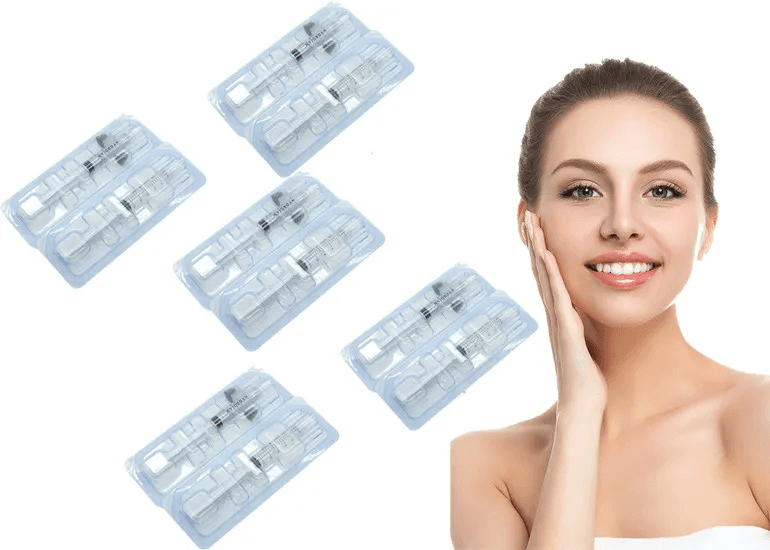
What Is Cross-linked Sodium Hyaluronate Gel for Injection?
Cross-linked sodium hyaluronate gel for injection is an injectable HA filler made from sodium hyaluronate, a salt form of hyaluronic acid. Through cross-linking technology, sodium hyaluronate is transformed into a more stable gel network that can provide structure, support, and aesthetic correction after professional injection.
It is commonly used in the broader category of HA dermal fillers, also called injectable HA fillers, hyaluronic acid fillers, or soft tissue fillers.
Sodium Hyaluronate Explained
Sodium hyaluronate is closely related to hyaluronic acid, also known as HA or hyaluronan. Hyaluronic acid is naturally found in the body, especially in the skin, joints, eyes, and connective tissues.
In aesthetic medicine, sodium hyaluronate is valued because it is:
Biocompatible
Water-binding
Gel-forming
Suitable for injectable hydrogel systems
Useful in soft tissue filler formulations
Adjustable through cross-linking technology
However, sodium hyaluronate alone is not enough to create a durable filler. Non-cross-linked HA can break down quickly. That is why cross-linking is used to improve gel stability and support.
What “Cross-linked” Means
Cross-linking is a process that connects HA chains together to form a stronger three-dimensional gel network. This gives the product better structure and helps it resist rapid degradation after injection.
In simple terms:
Non-cross-linked HA behaves more like a temporary hydration material. Cross-linked HA behaves more like a structured injectable filler.
Cross-linking influences several performance factors, including:
Gel hardness
Cohesivity
Elasticity
Viscosity
Shape retention
Degradation resistance
Injection smoothness
Tissue integration
For clinics, this matters because different treatment areas require different gel behaviors. A filler for superficial lines may not need the same support as a filler for deeper contour correction.
Why It Is Used as an Injectable HA Filler
Cross-linked sodium hyaluronate gel is used as an injectable HA filler because it can provide controlled soft tissue support. Depending on the product design and professional indication, it may be used for wrinkle correction, contour enhancement, facial shaping, tissue volume support, or selected body-area applications.
The goal is not simply to add volume. The goal is to create balanced, natural-looking aesthetic improvement with a product that has suitable rheology for the treatment area.
How Cross-linking Improves HA Filler Performance
The performance of an injectable HA filler depends heavily on its internal gel structure. This is why clinics and distributors should understand how cross-linking affects filler behavior.
A product may be labeled as HA filler, but its clinical feel, support, injection force, and longevity can vary significantly depending on cross-linking technology and formulation design.
Gel Network and Degradation Resistance
A cross-linked HA gel forms a network that is more resistant to enzymatic breakdown than ordinary non-cross-linked HA. This helps the filler maintain structure for a longer period after injection.
For professional aesthetic use, degradation resistance is important because it affects:
Result duration
Treatment planning
Product selection
Patient expectation management
Repeat treatment intervals
Commercial positioning for distributors
However, longer-lasting does not automatically mean better. The filler must still be suitable for the anatomical area and aesthetic goal. A gel that is too firm may not be appropriate for delicate areas, while a gel that is too soft may not provide enough support for deeper tissue applications.

HA Filler Rheology: Cohesivity, Viscosity, and Elasticity
HA filler rheology describes how the gel flows, stretches, resists pressure, and maintains shape. It is one of the most important technical topics for professional injectables.
Cohesivity refers to how well the gel holds together after injection. A cohesive gel may stay more integrated instead of spreading unpredictably.
Viscosity describes resistance to flow. A higher-viscosity filler may provide more support but may require different injection handling.
Elasticity refers to the gel’s ability to resist deformation and return toward its original shape. This is often connected with lifting capacity and structural support.
Gel hardness influences how firm the filler feels and how much support it may provide in tissue.
Extrusion force affects how smoothly the filler passes through a syringe, needle, or cannula.
For clinics, these properties affect injection control and product selection. For distributors, they affect training, product positioning, and customer satisfaction.
Cross-linked HA vs Non-cross-linked HA
The difference between cross-linked and non-cross-linked HA is central to understanding injectable filler performance.
Feature | Cross-linked HA Gel | Non-cross-linked HA |
|---|---|---|
Structure | Stable gel network | Looser HA structure |
Main use | Dermal filler and soft tissue support | Hydration-focused or skin quality support depending on product |
Duration | Generally longer-lasting | Usually shorter duration |
Support | Better structural support | Limited lifting or contour support |
Injection role | Volume, contour, wrinkle correction | Hydration or superficial support depending on formulation |
Professional use | Requires qualified injection | Also requires professional use when injectable |
Product behavior | Depends on rheology and cross-linking | Less structural and less durable |
This comparison helps clinics and buyers avoid confusing ordinary HA materials with professional cross-linked HA fillers.
Professional Aesthetic Applications of Cross-linked HA Gel
Cross-linked HA gel is used in professional aesthetic medicine for multiple applications. The exact use depends on product indication, gel properties, injection depth, local regulation, and practitioner assessment.
It should not be positioned as a universal solution for every patient or treatment area. A qualified injector must choose the right product for the right tissue condition.
Wrinkle Correction and Soft Tissue Support
One common use of HA dermal filler is wrinkle correction. In this context, the filler may help support areas where lines, folds, or volume loss contribute to visible aging.
Cross-linked sodium hyaluronate filler may be considered for selected wrinkles or folds where soft tissue support is appropriate.
Potential professional uses may include:
Static wrinkle correction
Fold softening
Line support
Skin appearance improvement
Localized volume support
Soft tissue contour adjustment
Treatment should always be individualized. Some wrinkles are better addressed with neuromodulators, energy devices, skin boosters, or other approaches.
Facial Contouring and Volume Restoration
Cross-linked HA filler is often used for facial contouring because different gel properties can support different anatomical needs.
Professional applications may include:
Cheek contour support
Chin shaping
Jawline definition
Lip enhancement
Midface volume support
Temple or facial hollow correction, depending on product suitability
The product must be chosen according to injection depth, tissue structure, desired projection, and safety considerations.
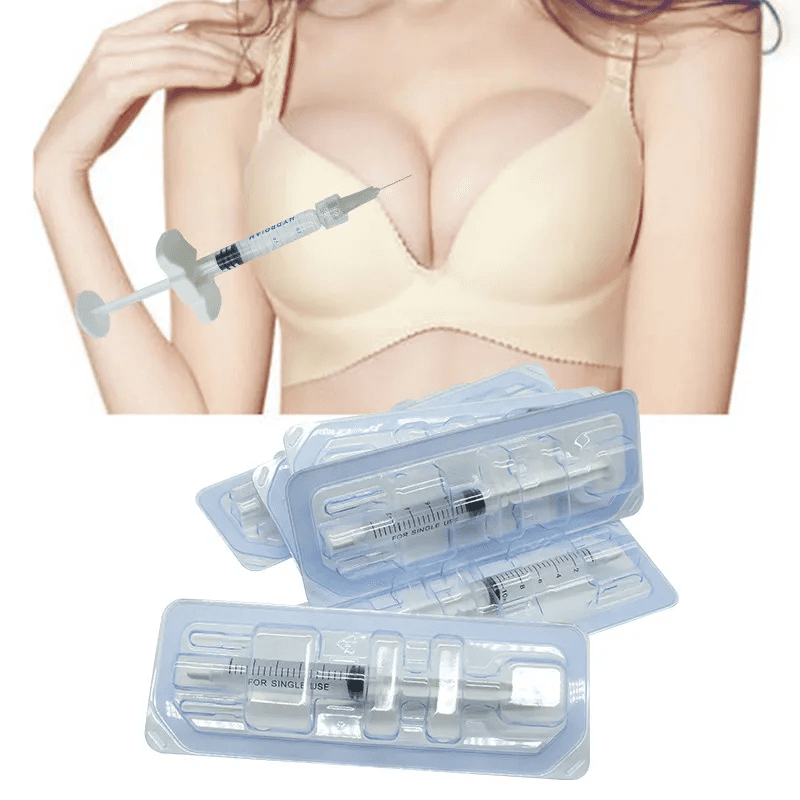
Chest, Décolletage, and Body Contour Applications
Some cross-linked HA gels are designed for broader soft tissue support, including chest, décolletage, buttocks, or other body contour applications depending on product design and local regulatory approval.
For chest and décolletage areas, the treatment goal may involve:
Chest line improvement
Décolletage rejuvenation
Tissue volume support
Contour enhancement
Skin appearance improvement
Shape correction in selected professional contexts
This category requires especially careful professional judgment because body areas may involve larger volumes, different anatomy, and stricter safety considerations.
Safety Considerations for Injectable Sodium Hyaluronate Gel
Safety is a core part of any discussion about sodium hyaluronate gel for injection. This product category belongs to medical aesthetics, not consumer skincare.
A strong safety framework includes professional training, sterile technique, anatomical knowledge, patient screening, product traceability, and complication management.
Professional Use Only
Injectable HA filler should only be administered by qualified medical-aesthetic professionals. It should not be sold or marketed for self-injection.
Professional injection requires knowledge of:
Facial and body anatomy
Injection planes
Vascular risk
Product rheology
Sterile handling
Dosage planning
Patient selection
Emergency response
Aftercare guidance
Self-injection is unsafe because consumers do not have the training, sterile environment, anatomical knowledge, or complication-management ability needed for filler procedures.
Patient Suitability and Anatomical Assessment
Not every patient is suitable for injectable HA filler. A professional consultation should include medical history, allergies, skin condition, prior procedures, expectations, and contraindications.
Before treatment, clinics should evaluate:
Medical history
Known allergies
Pregnancy or breastfeeding status
Active infection or inflammation
Prior filler or surgery
Skin thickness
Tissue quality
Vascular risk
Treatment expectations
Ability to follow aftercare
Anatomical assessment is especially important because injection depth and product selection directly affect safety and results.
Dermal Filler Side Effects and Complications
Like all injectable medical aesthetic procedures, HA fillers may cause side effects. Some are temporary and expected; others may be serious and require prompt treatment.
Possible reactions may include:
Swelling
Bruising
Redness
Tenderness
Lumps or nodules
Asymmetry
Infection
Inflammation
Delayed inflammatory reaction
Filler migration
Vascular compromise
Tissue ischemia or necrosis in rare serious cases
Clinics should provide informed consent and aftercare instructions before treatment.
Regulatory Note
Dermal filler approval status, indications, and permitted treatment areas vary by country and region. Clinics and distributors should confirm local regulatory requirements before importing, marketing, or using injectable HA filler products.
This is especially important for global distributors working across multiple markets.
Product Quality Factors Clinics and Distributors Should Evaluate
For clinics and distributors, product quality is directly connected with safety, performance, and commercial success. A professional HA dermal filler supplier should provide more than marketing claims.
Buyers should evaluate formulation, syringe quality, sterility, documentation, consistency, and supplier capability.
Formulation: Sodium Hyaluronate, Lidocaine, and Buffer System
A cross-linked sodium hyaluronate gel for injection may contain sodium hyaluronate as the core HA material. Some fillers also include lidocaine hydrochloride to improve patient comfort during injection.
Supporting components may include sodium chloride, water for injection, and phosphate buffer system, depending on the specific product formulation.
Clinics should understand whether the filler contains lidocaine, because some patients may have sensitivity or contraindications related to anesthetic agents.
For distributors, formulation transparency supports training, documentation, and market positioning.
Prefilled Syringe, Sterility, and Batch Consistency
A prefilled syringe HA filler offers convenience and controlled product handling for professional use. It can also improve dosage consistency and reduce preparation complexity in clinic settings.
Sterility is essential. Injectable products bypass the skin barrier and enter tissue, so sterile manufacturing and packaging are non-negotiable.
Professional buyers should evaluate:
Prefilled syringe quality
Single-use syringe design
Sterile packaging
Batch traceability
Product stability
Storage conditions
Shelf-life information
Clear labeling
Instructions for professional use
Post-market support
Batch consistency is also critical. Clinics need predictable gel behavior from syringe to syringe and batch to batch.
Shelf Life, Storage, and Product Documentation
For distributors, shelf life and storage conditions affect logistics, inventory planning, and market delivery.
Important documentation may include:
Product specification sheet
Ingredient information
Sterility documents
Quality certificates
Batch records
Storage instructions
Shelf-life information
Packaging details
Professional-use instructions
Market-specific regulatory documents where applicable
Without proper documentation, importers and distributors may face registration delays, compliance issues, or customer trust problems.
How to Choose a Reliable Sodium Hyaluronate Gel Supplier
Choosing a sodium hyaluronate gel for injection supplier is a strategic decision. Clinics and distributors need a partner that can support quality, compliance, documentation, and long-term supply.
A low price alone is not a reliable selection standard for injectable medical aesthetic products.
Manufacturing Capability and Quality System
A professional supplier should demonstrate strong manufacturing capability and a reliable quality system.
Important factors include:
Experience in injectable HA filler manufacturing
Cleanroom production environment
Sterile filling capability
Raw material traceability
Quality control procedures
Batch consistency testing
Stability testing
Product inspection standards
Professional documentation support
Clear communication with distributors
For injectable HA fillers, manufacturing discipline matters as much as formulation design.
OEM/ODM and Private Label Support
Many distributors and aesthetic brands need OEM HA dermal filler, ODM injectable HA filler, or private label HA filler solutions.
A capable manufacturer should support:
Product specification discussion
Packaging and labeling customization
Private label design support
Market documentation preparation
Product training materials
Bulk order planning
Distributor communication support
Long-term portfolio development
OEM/ODM support is especially useful for buyers building regional brands or expanding into new product categories.
Distributor Documents and Compliance Support
Distributors should request documentation before making purchasing decisions.
A professional buyer should ask for:
Product specifications
Ingredient list
Sterility information
Quality certificates
Shelf-life and storage details
Batch traceability system
Packaging and labeling files
Instructions for professional use
Regulatory support documents
Manufacturer profile and capability details
This process helps reduce risk and supports smoother market entry.
Common Mistakes Clinics and Distributors Should Avoid
Even experienced buyers can make mistakes when evaluating injectable HA filler products. Avoiding these mistakes can improve safety, trust, and commercial results.
Mistake 1: Confusing Topical HA with Injectable HA
Topical hyaluronic acid is used on the skin surface for hydration. Cross-linked sodium hyaluronate gel for injection is an injectable medical-aesthetic product.
They are not interchangeable.
Mistake 2: Choosing Only by Price
Injectable filler quality cannot be judged by price alone. Low-cost products without reliable documentation, sterility, and batch consistency may create significant clinical and commercial risk.
Mistake 3: Ignoring Rheology
A filler’s viscosity, elasticity, cohesivity, and gel hardness influence treatment planning. Clinics should not assume that all HA fillers behave the same.
Mistake 4: Overlooking Local Regulatory Requirements
Import rules, indications, labeling, and permitted treatment areas vary by market. Distributors should confirm local requirements before product launch.
Mistake 5: Marketing to DIY Users
Injectable HA fillers should never be promoted for self-injection. B2B content should target clinics, trained practitioners, and professional distributors.
AOWITA Perspective: Professional Injectable HA Solutions
AOWITA’s position in medical aesthetic products makes cross-linked sodium hyaluronate gel for injection a strong foundation topic for SEO, product education, and distributor trust building.
This topic connects product science with practical buyer needs: what the product is, how it works, where it may be used, what safety principles matter, and how professional buyers should evaluate suppliers.
Why AOWITA Fits This Search Intent
AOWITA can build topical authority by focusing on:
Injectable HA filler education
Cross-linked sodium hyaluronate gel technology
HA dermal filler product categories
Prefilled syringe quality
Sterile injectable HA gel standards
OEM/ODM HA filler support
Distributor-focused product documentation
Professional aesthetic product applications
This content direction helps attract clinics, importers, distributors, private label brands, and professional aesthetic buyers.
Recommended Internal Links
This article should link naturally to related AOWITA content and product pages, such as:
Cross-linked sodium hyaluronate gel for injection product page
Cross-linked hyaluronic acid gel for chest
HA dermal filler manufacturer page
HA filler with lidocaine product page
Chest HA filler safety article
HA filler vs PLLA comparison article
OEM/ODM HA filler solutions page
Contact page for distributor cooperation
Internal linking helps Google understand AOWITA’s topical authority and helps readers move from education to inquiry.
Conclusion
Cross-linked sodium hyaluronate gel for injection is a professional injectable HA dermal filler category designed for aesthetic soft tissue support, contour enhancement, wrinkle correction, and selected volume-related applications.
Its value comes from the combination of sodium hyaluronate material, cross-linking technology, gel rheology, sterile manufacturing, prefilled syringe design, batch consistency, and professional clinical use.
For clinics, the most important factors are patient suitability, anatomical assessment, product selection, injection depth, safety planning, and aftercare.
For distributors and OEM/ODM buyers, the most important factors are supplier capability, documentation, sterility, quality control, product consistency, private label support, and local regulatory compliance.
Most importantly, cross-linked sodium hyaluronate gel for injection is not a topical skincare gel and should never be used for self-injection. It belongs to the professional medical aesthetic category and should only be handled by qualified practitioners.
CTA Closing
Looking for a reliable sodium hyaluronate gel for injection supplier?
AOWITA provides professional injectable HA-based medical aesthetic solutions, including cross-linked sodium hyaluronate gel products, HA dermal filler solutions, and OEM/ODM support for clinics, distributors, and private label partners.
Contact AOWITA to learn more about professional HA filler products, prefilled syringe solutions, product documentation, distributor cooperation, and customized medical aesthetic product development.
FAQ: Cross-linked Sodium Hyaluronate Gel for Injection
What is cross-linked sodium hyaluronate gel for injection?
Cross-linked sodium hyaluronate gel for injection is an injectable HA dermal filler designed for professional aesthetic use. Cross-linking creates a stable gel network that helps provide tissue volume support, contour enhancement, and wrinkle correction when used by qualified practitioners.
What is sodium hyaluronate gel for injection used for?
It may be used for professional aesthetic applications such as wrinkle correction, facial contouring, tissue volume support, soft tissue correction, and selected body contour or chest applications depending on product design and local regulatory approval.
Is cross-linked sodium hyaluronate gel the same as hyaluronic acid filler?
It is closely related. Sodium hyaluronate is a salt form of hyaluronic acid, and cross-linked sodium hyaluronate gel is commonly used as an injectable HA filler material.
How does cross-linked HA filler work?
Cross-linked HA filler works by forming a stable viscoelastic gel network. After injection by a trained professional, the gel can support tissue volume, shape, contour, or wrinkle correction depending on the product and treatment plan.
What is the difference between cross-linked and non-cross-linked HA?
Cross-linked HA has a more stable gel network and is generally used for dermal filler applications. Non-cross-linked HA is usually less structural and may be used in hydration-focused injectable or topical products depending on formulation.
Is sodium hyaluronate gel for injection safe?
It may be used safely only when an appropriate product is used for a suitable patient by a qualified practitioner in a clinical setting. Like all injectable fillers, it carries possible risks and should never be self-injected.
Can injectable HA filler be self-injected?
No. Injectable HA filler should never be self-injected. It requires professional anatomical knowledge, sterile technique, treatment planning, and complication management.
Why do some HA fillers contain lidocaine?
Some HA fillers contain lidocaine hydrochloride to help reduce injection discomfort. However, patient suitability should be assessed because some individuals may have sensitivity or contraindications.
What is a prefilled syringe HA filler?
A prefilled syringe HA filler is supplied in a ready-to-use syringe format for professional injection. It can support dosage consistency, clinical convenience, and controlled product handling.
How should clinics choose an HA dermal filler supplier?
Clinics should evaluate product quality, sterility, product documentation, batch consistency, supplier reputation, professional-use instructions, and technical support.
What documents should distributors request from a sodium hyaluronate gel supplier?
Distributors should request product specifications, ingredient information, sterility documentation, batch traceability, shelf-life and storage details, quality certificates, packaging files, and local compliance support where applicable.
Does AOWITA provide OEM/ODM HA filler solutions?
AOWITA supports professional HA-based medical aesthetic product development and supplier cooperation. Clinics, distributors, and private label partners can contact AOWITA to discuss HA dermal filler solutions, OEM/ODM support, and market collaboration.
其他博客