Blog
What Is Deoxycholic Acid Injection and How Is It Used in Aesthetic Clinics?
Author
Ray
Published
Category
Design & Inspiration
Learn what deoxycholic acid injection is, how it works, who it treats, common side effects, recovery, and clinic safety considerations.


Author
Ray
An esteemed medical aesthetics expert with 40 years of profound experience in the field. With decades of expertise in non-invasive procedures, anti-aging science, and advanced dermatological solutions, the author is dedicated to sharing insights that connect clinical innovation with real-world patient results. Passionate about advancing safe, effective, and high-impact aesthetic treatments for a global clientele.
What’s better than insider perks, pro tips, and surprises?
Sign up to get the most recent blog articles in your email every week.
Join now.
Our company’s main product lines include HA (Hyaluronic Acid) fillers, CaHA (Calcium Hydroxylapatite) fillers, PLLA (Poly-L-Lactic Acid) biostimulators, and other advanced aesthetic solutions, all developed and manufactured by trusted partner facilities with whom we have maintained long-term, stable collaborations.
I help them with sales and export operations, while our company also provides sourcing and procurement services in China to help international clients solve supply-related challenges. If you need assistance with procurement, please feel free to contact us.
Deoxycholic acid injection is a clinician-administered injectable treatment used to reduce submental fat—the fullness below the chin that many people call a double chin. In the U.S., the FDA-approved use is limited to improving the appearance of moderate to severe fullness associated with submental fat in adults, and the safe and effective use outside the submental region has not been established. The treatment works by breaking down fat cells at the injection site, which is why it is often described as a fat dissolving injection or injectable lipolysis treatment.
Key Takeaways
Deoxycholic acid injection is not a general body-contouring injection. It is a targeted treatment for submental fat, typically performed in a medical aesthetic setting by a qualified healthcare professional.
The most important safety issues are correct patient selection, correct injection placement, and avoidance of high-risk anatomy around the jaw, salivary glands, and other vulnerable structures.
Swelling, bruising, pain, numbness, and firmness are common after treatment; more serious risks such as nerve injury, dysphagia, ulceration, or infection are uncommon but clinically important.
Most patients need more than one session, and treatment planning should be individualized rather than based on a fixed “one-and-done” promise. The FDA label allows up to 6 treatments spaced at least 1 month apart.
What Deoxycholic Acid Actually Is
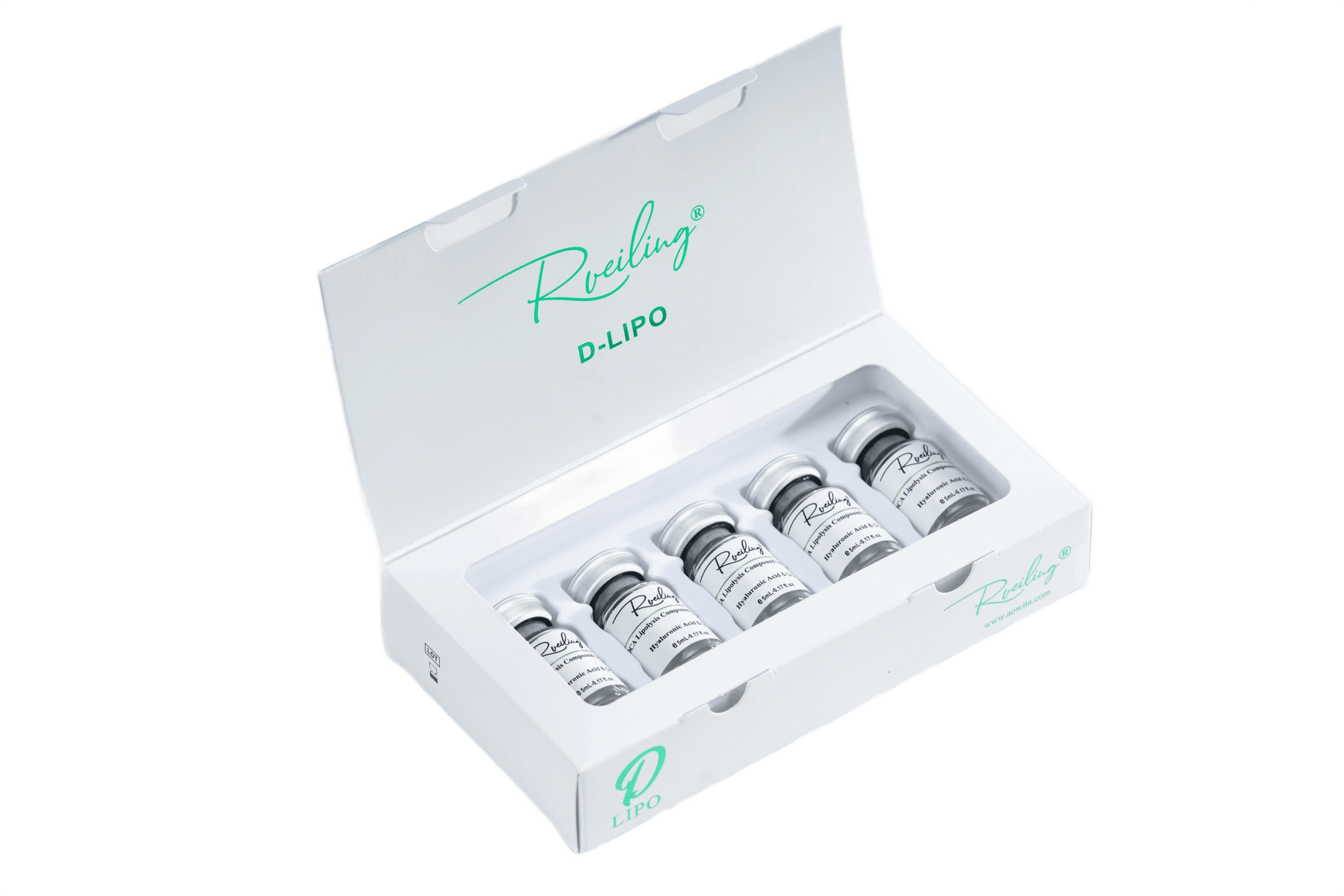
Deoxycholic acid is a bile acid that the body naturally produces. In clinical aesthetics, the injectable form is used for localized fat reduction rather than digestion. FDA review documents describe deoxycholic acid as an endogenous bile acid with detergent-like properties, and the clinical treatment uses that property in a controlled way at the site of injection.
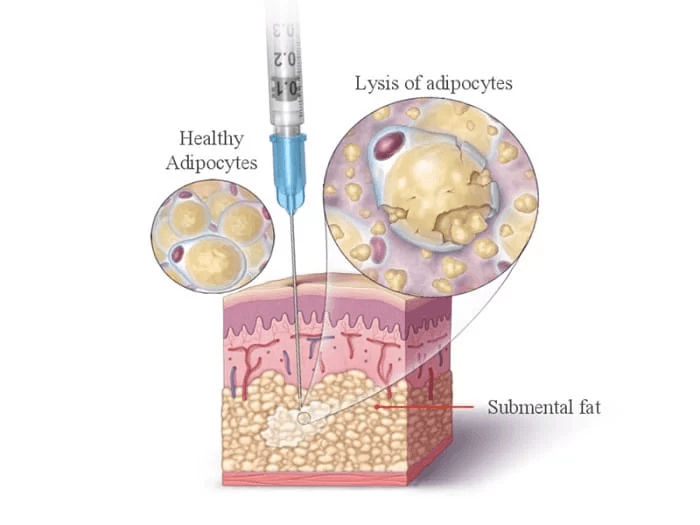
In simple terms, it is a cytolytic treatment: it disrupts fat-cell membranes at the injected site, leading to fat-cell destruction and a gradual inflammatory cleanup response. That is why the category is often described as injectable lipolysis or adipocytolysis.
This matters because the treatment is localized. It is designed for a specific anatomical area, not for broad weight loss or whole-body fat reduction.
How Deoxycholic Acid Injection Works
When injected into subcutaneous fat, deoxycholic acid damages adipocyte membranes. The treated fat cells break down, and the body gradually clears the cellular debris over time. That is the mechanism behind the visible contour change.
Clinically, that means results are not immediate in the way filler placement can be. The aesthetic change tends to emerge gradually across treatment sessions and recovery periods, because the body is responding to a controlled local tissue effect rather than simply filling or smoothing a surface.
This also explains why proper technique matters so much. If the injection is placed too superficially, the FDA label warns that skin ulceration and necrosis may occur. If it is placed too close to vulnerable structures, nerve injury or swallowing difficulty can occur.
Where It Is Used in Aesthetic Clinics
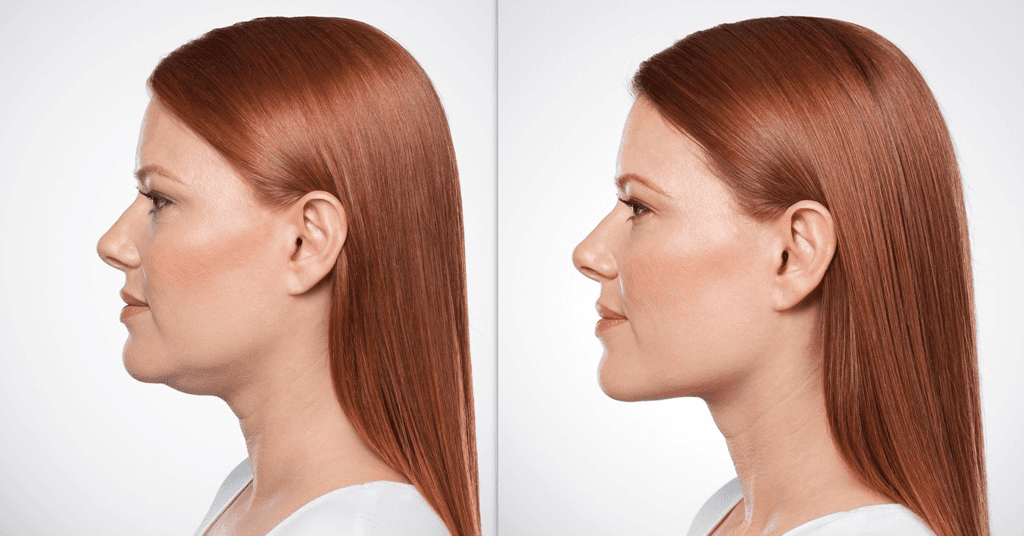
The main evidence-based use is submental fat treatment—the area under the chin. The FDA-approved indication is improvement in the appearance of moderate to severe convexity or fullness associated with submental fat in adults.
In aesthetic clinics, patients commonly seek treatment for:
a fuller under-chin profile
contour refinement of the chin and jawline
a non-surgical alternative to more invasive fat reduction approaches
That said, the FDA label is explicit that safe and effective use outside the submental region has not been established and is not recommended. So while some people use broad phrases like “chin/jawline fat injection,” the clinically supported use is specifically the submental region.
Submental fat treatment
This is the core use case. The goal is to reduce localized fullness below the chin and improve profile definition. It is especially relevant when the concern is stubborn submental fullness rather than overall facial volume.
Chin and jawline contouring
Clinics often discuss the treatment in contouring language because the visible benefit is not just “less fat,” but a sharper transition from chin to neck. The treatment is best understood as a contouring procedure rather than a general slimming treatment.
What the Procedure Usually Involves
Consultation and patient screening
A responsible clinic starts with screening, not injection. The FDA label says clinicians should screen patients for other causes of submental fullness, such as thyromegaly or cervical lymphadenopathy, and should use caution in patients with prior surgical or aesthetic treatment in the area because altered anatomy or scar tissue can affect safety and results.
That means a consultation should assess:
whether the fullness is actually submental fat
whether the anatomy is suitable for injection
whether there is infection in the treatment area
whether the patient has bleeding risk, swallowing issues, or prior neck/chin procedures
Aesthetic clinics should treat this as a patient screening and risk assessment exercise, not a cosmetic upsell conversation.
Injection pattern and treatment sessions
The FDA label describes an area-adjusted dose of 2 mg/cm² in the submental area, with injections spaced 1 cm apart. A single session may include up to 50 injections or a total of 10 mL, and up to 6 treatments may be given at intervals of no less than 1 month apart.
That dosing structure is important for both safety and expectation setting. It tells patients that the treatment is usually a series, not a single appointment. It also tells clinics that technique is standardized around the treatment grid, not improvised on the day of treatment.
Comfort measures and aftercare
The label notes that ice or cold packs, topical anesthesia, or injectable local anesthesia may improve comfort during treatment. In practical terms, this supports the common clinical reality that many patients feel temporary discomfort during and after the procedure.
Aftercare should be simple, conservative, and clinician-directed. The expected short-term reaction is swelling, bruising, redness, pain, numbness, and firmness in the treatment area. Those effects are common enough that they should be discussed before consent is signed, not after the procedure.

Side Effects, Risks, and Recovery
Common side effects
The FDA label identifies the most common side effects as:
swelling
redness
pain
areas of hardness in the treatment area
numbness
In the clinical trial data summarized in the label, injection-site reactions were very common, and the listed reaction profile included edema/swelling, hematoma/bruising, pain, numbness, erythema, and induration.
This is why patients researching deoxycholic acid injection side effects often read that the treatment is “downtime-heavy but manageable.” The downtime is usually driven less by pain alone and more by the visible and tactile inflammatory response.
Less common but more serious risks
The FDA label warns about several clinically important risks:
marginal mandibular nerve injury
dysphagia
bruising or hematoma
ulceration, necrosis, and infection
injury to nearby vulnerable structures if injected too close to them
The label also states that injections should not be placed above the inferior border of the mandible and should avoid proximity to the marginal mandibular nerve. It further warns against injecting near salivary glands, lymph nodes, and muscles. These are not minor technicalities; they are the main reason this treatment should be delivered only by trained clinicians who understand submental anatomy.
Patients with current or prior dysphagia were excluded from clinical trials, and the label advises avoiding use in these patients because the condition may worsen. The label also contraindicates use when there is infection at the injection site.
Recovery timeline
Recovery is usually variable, but the label and clinical trial experience make one thing clear: swelling and bruising can be expected, and they may persist long enough to matter in work and social scheduling. Dysphagia reported in trials resolved spontaneously in a median of 3 days, while marginal mandibular nerve injury resolved spontaneously in reported cases over a broader time range.
For clinic planning, this means the treatment is best suited to patients who can tolerate temporary visible inflammation and do not need an instant-event result. It is a recovery process, not a same-day contour fix.
Who Is a Better Candidate and Who Is Not
The best candidates are adults with localized submental fullness who want a non-surgical contouring option and who understand that improvement is usually gradual and may require more than one session. The FDA label also notes that the number of injections and number of treatments should be tailored to the individual patient’s fat distribution and treatment goals.
Poor candidates include patients with:
infection in the treatment area
current or prior dysphagia
unclear anatomy from prior neck/chin procedures
bleeding concerns or anticoagulant/antiplatelet use that increases bruising risk
excessive skin laxity or prominent platysmal bands where fat reduction alone may not produce a desirable aesthetic result
That last point matters. Not every double chin is just a fat problem. Sometimes the right plan is not more injection, but better patient selection or a different contouring strategy. The FDA label explicitly advises careful consideration when excess skin laxity or prominent platysmal bands could make fat reduction aesthetically undesirable.
Deoxycholic Acid Injection vs Other Fat Reduction Options
Compared with surgical liposuction, deoxycholic acid injection is a non-surgical injectable approach. FDA materials describe injection lipolysis as a nonsurgical procedure that uses a series of injections under the skin to break down fat cells.
Compared with cryolipolysis, it is a different noninvasive pathway to contouring, and sequential approaches have been studied in patients with more extreme submental fullness. That does not make one universally superior; it means treatment selection depends on anatomy, tolerance for downtime, and the degree of contour change needed.
Compared with biostimulators such as Sculptra, deoxycholic acid is not designed to stimulate collagen or restore volume. It is specifically a fat-reduction treatment. That distinction is important because patients sometimes confuse “aesthetic injections” as if they all do the same thing. They do not.
The cleanest decision rule is this:
use deoxycholic acid when the problem is localized submental fat, not generalized laxity, not volume loss, and not a need for immediate dramatic change.
What Aesthetic Clinics Should Look for in a Protocol
A well-run aesthetic clinic deoxycholic acid protocol should include four layers:
1) Screening
Confirm the fullness is appropriate for treatment and rule out infection, dysphagia risk, bleeding concerns, and anatomy that may raise complication risk.
2) Technique
Use the correct treatment zone, correct depth, and correct spacing. Avoid proximity to the marginal mandibular nerve and other vulnerable structures.
3) Consent
Explain the expected recovery honestly: swelling, bruising, pain, numbness, and temporary firmness are common, not exceptional.
4) Follow-up
Track outcomes over multiple sessions rather than judging the result too early. The treatment is gradual, and the number of sessions should be individualized.
For clinics, that is the difference between a procedure that is merely available and one that is responsibly delivered.
Conclusion
Deoxycholic acid injection is a targeted, clinician-administered treatment for reducing submental fat and refining under-chin contour. It works by damaging fat cells in the injected area, and its clinical value comes from precision: correct patient selection, correct anatomy, correct technique, and realistic expectations.
Used well, it can be a strong non-surgical option for adults with localized chin fullness. Used casually, it can create avoidable swelling, bruising, and more serious complications. That is why the safest clinics treat it as a medical procedure first and an aesthetic service second.
For patients and clinic teams alike, the right question is not simply “Does it reduce fat?” The better question is: Is this the right anatomy, the right candidate, and the right protocol for a safe and predictable result?
FAQ
1) What does deoxycholic acid injection do?
It reduces the appearance of submental fat by breaking down fat cells at the injection site. In the U.S., the approved use is for moderate to severe fullness below the chin in adults.
2) How is deoxycholic acid injection administered?
A healthcare professional injects it into the submental fat area using a mapped treatment grid. The FDA label describes injections spaced 1 cm apart and up to 6 sessions at least 1 month apart.
3) How long does recovery take?
Recovery varies, but swelling, bruising, pain, numbness, and firmness are common after treatment. Some effects resolve within days, while others can last longer.
4) Is deoxycholic acid injection safe?
It can be used safely when properly selected and performed, but it has important risks, including nerve injury, dysphagia, bruising, and injection-site injury. It should be administered by a trained healthcare professional.
5) How many sessions are usually needed?
The FDA label allows up to 6 treatments, but the exact number depends on the patient’s anatomy, response, and goals.
6) Who should not receive it?
Patients with infection at the injection site should not receive treatment, and the label advises avoiding use in people with current or prior dysphagia. Caution is also needed in patients with bleeding risk or prior surgery in the area.
Other Blogs