Blog
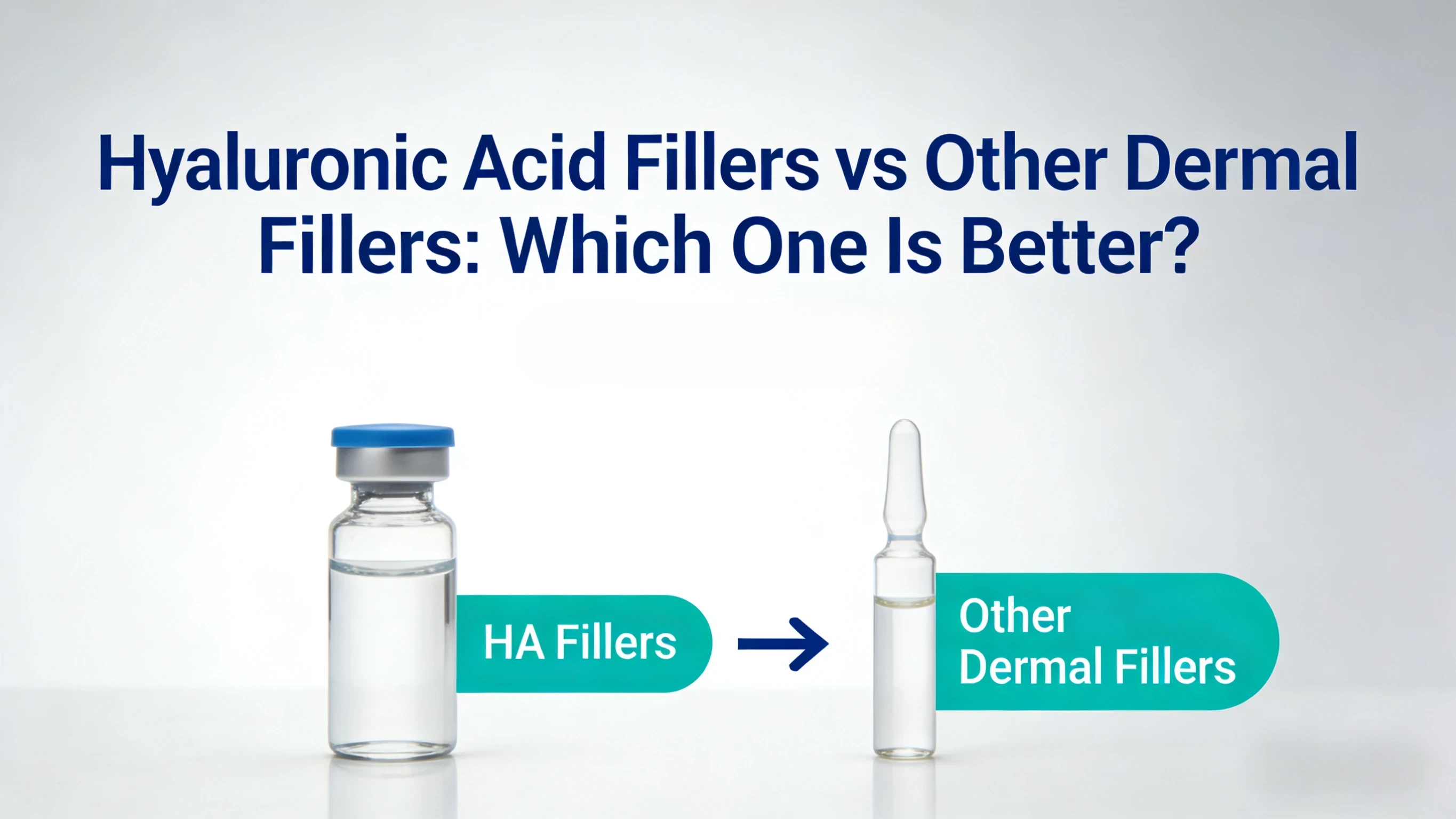
Hyaluronic Acid Fillers vs Other Dermal Fillers: Which One Is Better?
Author
Ray
Published
Category
Design & Inspiration
Compare hyaluronic acid fillers with other dermal fillers by longevity, reversibility, treatment area, and ideal use cases.

Author
Ray
An esteemed medical aesthetics expert with 40 years of profound experience in the field. With decades of expertise in non-invasive procedures, anti-aging science, and advanced dermatological solutions, the author is dedicated to sharing insights that connect clinical innovation with real-world patient results. Passionate about advancing safe, effective, and high-impact aesthetic treatments for a global clientele.
What’s better than insider perks, pro tips, and surprises?
Sign up to get the most recent blog articles in your email every week.
Join now.
Our company’s main product lines include HA (Hyaluronic Acid) fillers, CaHA (Calcium Hydroxylapatite) fillers, PLLA (Poly-L-Lactic Acid) biostimulators, and other advanced aesthetic solutions, all developed and manufactured by trusted partner facilities with whom we have maintained long-term, stable collaborations.
I help them with sales and export operations, while our company also provides sourcing and procurement services in China to help international clients solve supply-related challenges. If you need assistance with procurement, please feel free to contact us.
Choosing a filler is not just about picking the “best” product. It is about matching the filler to the anatomy, treatment area, aesthetic goal, and risk tolerance of the patient.
For many patients, hyaluronic acid fillers are the better choice because they are versatile, reversible, and well-suited to common treatment areas like the lips, nasolabial folds, under-eyes, and midface. But that does not mean they are always superior. Other dermal fillers may be more appropriate when the goal is firmer structural support, longer-lasting correction, or collagen stimulation rather than immediate soft volume.
In other words, the better filler is the one that best fits the indication. Hyaluronic acid fillers often win on flexibility and safety management. Other filler categories can win on durability, lift, or biostimulatory effect.
The Short Answer
If the question is, “Which filler is better for most patients starting cosmetic injectables?” the answer is usually hyaluronic acid fillers. They are easier to tailor, easier to refine, and can generally be dissolved if correction is needed.
If the question is, “Which filler performs best for every indication?” there is no single winner. Some non-hyaluronic acid fillers may be more effective in select cases involving deep support, facial contouring, or collagen-focused treatment planning. The best choice is contextual, not universal.
1.What Are Hyaluronic Acid Fillers?
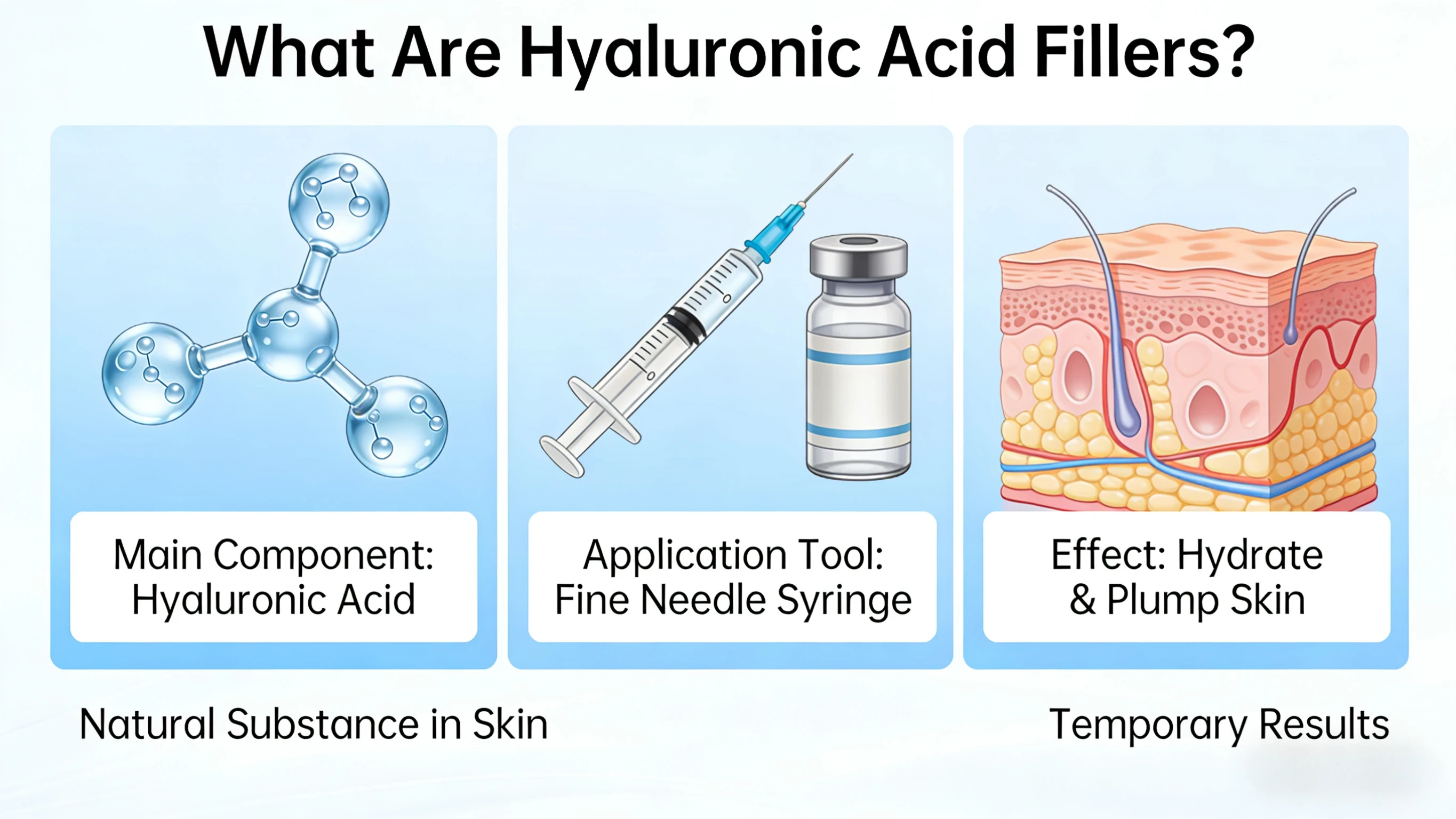
Hyaluronic acid fillers are injectable gels made with hyaluronic acid, a substance naturally found in the body. In aesthetic medicine, these fillers are used to restore volume, smooth lines, enhance contour, and improve facial balance.
Their main advantage is not just popularity. It is control.
A skilled injector can often use hyaluronic acid fillers with a high degree of precision, especially in mobile or delicate areas of the face. They also come in different textures and densities, which allows providers to select a softer or firmer product depending on the treatment goal.
Another important point is reversibility. Hyaluronic acid fillers can generally be adjusted or dissolved with hyaluronidase when clinically appropriate. That makes them especially attractive for first-time patients and for areas where overcorrection can be difficult to camouflage.
2.What Counts as “Other Dermal Fillers”?
When people compare hyaluronic acid fillers with “other dermal fillers,” they are usually referring to non-hyaluronic acid injectable fillers used for volume, contour, or collagen stimulation.
Calcium hydroxylapatite fillers
These fillers are typically used for deeper injection planes and structural support. They are often discussed in the context of facial contouring and more robust correction. Their feel, lift profile, and treatment use cases differ from many hyaluronic acid fillers.
Poly-L-lactic acid fillers
These are generally considered biostimulatory rather than simple space-occupying fillers. Instead of acting mainly as a gel that adds immediate volume, they are often used in treatment plans designed to support collagen production over time. Results may appear more gradually.
PMMA and longer-lasting filler categories
Some filler types are designed for long-term correction and may be used in specific cases by experienced providers. These products can appeal to patients seeking durability, but they also require greater selectivity because “longer lasting” is not the same as “easier to manage.”
Reprinted from West End Plastic Surgery
3.Hyaluronic Acid Fillers vs Other Dermal Fillers: The Core Differences
The most helpful way to compare fillers is across a few practical dimensions.
1. Reversibility
This is where hyaluronic acid fillers usually have the strongest advantage.
Because they can often be dissolved, hyaluronic acid fillers provide a margin of flexibility that other filler classes generally do not. That matters for first-time patients, for subtle aesthetic work, and for areas where exact proportions are critical.
For many people, reversibility lowers the psychological barrier to treatment. It also gives providers more room to fine-tune outcomes over time.
2. Texture and flexibility
Hyaluronic acid fillers are often chosen for areas that require softness, movement, and natural integration. That is one reason they are so commonly used in the lips and other expressive facial zones.
Other fillers may offer a firmer or more structural feel, which can be useful in deeper support zones but less ideal in areas where softness matters more than projection.
3. Longevity
Many patients assume the longest-lasting filler is automatically the best filler. That is not always true.
Longevity can be an advantage, but only when the result remains aesthetically appropriate over time. Faces change. Preferences change. Weight fluctuates. Aging continues. A filler that lasts longer may be appealing, but it can also be less forgiving if placement or product selection was not ideal.
In general terms, some non-hyaluronic acid fillers are selected partly because they may offer longer-lasting effects or collagen stimulation. Hyaluronic acid fillers may not always last as long in every area, but they often offer more flexibility as the face evolves.
4. Precision in delicate areas
Hyaluronic acid fillers are usually favored when the treatment requires subtle shaping, contour control, or fine adjustment.
That makes them highly relevant for lip enhancement, tear trough work in carefully selected patients, and nuanced line correction. Even in areas where other fillers can perform well, hyaluronic acid products are often preferred when adaptability matters more than sheer persistence.
5. Biostimulation
This is one area where some non-hyaluronic acid fillers may have a meaningful advantage.
Biostimulator fillers are often chosen when the treatment plan is less about immediate shaping and more about encouraging collagen-related improvement over time. For the right patient, that can be a compelling benefit. It is simply a different therapeutic objective from the usual “fill and contour” mindset.
4.Comparison Table: How the Main Filler Types Stack Up
Factor | Hyaluronic Acid Fillers | Other Dermal Fillers |
|---|---|---|
Reversibility | Usually the strongest advantage | Often limited or not reversible in the same way |
Precision | Excellent for subtle shaping and refinement | Varies by product and treatment depth |
Softness and flexibility | Often ideal for mobile facial areas | Some are firmer and more structural |
Longevity | Moderate, varies by product and area | Some may last longer or stimulate collagen |
Best for first-time patients | Often yes | More selective |
Best for lips | Commonly yes | Usually less preferred |
Best for collagen stimulation | Limited relative advantage | Some categories are specifically chosen for this |
Risk management flexibility | Often higher because adjustment may be possible | Usually lower once placed |
5.When Hyaluronic Acid Fillers Are Usually the Better Choice
Hyaluronic acid fillers are often the better option when the priority is control, refinement, and adaptability.
They are especially strong choices in these situations:
The patient is new to fillers and wants a conservative starting point.
The treatment area needs softness and movement, such as the lips.
The injector wants the option to make future adjustments.
The patient prefers a gradual, customizable approach rather than a longer-term commitment.
The treatment goal is subtle enhancement rather than dramatic structural change.
The area being treated demands precise balance and proportion.
For these reasons, hyaluronic acid fillers are often considered the most versatile category in modern aesthetic medicine.
6.When Other Dermal Fillers May Be Better
Non-hyaluronic acid fillers may be the better choice when the clinical goal extends beyond immediate volumization.
They may be worth considering when:
The treatment requires deeper structural support.
The patient is a strong candidate for collagen-stimulating treatment planning.
The provider is addressing broader age-related volume loss rather than a single focal area.
The patient values longer-lasting correction and understands the tradeoffs.
The injector believes the tissue characteristics and facial architecture favor a more structural or biostimulatory product.
This does not make these fillers “better” in absolute terms. It makes them better for certain treatment strategies.
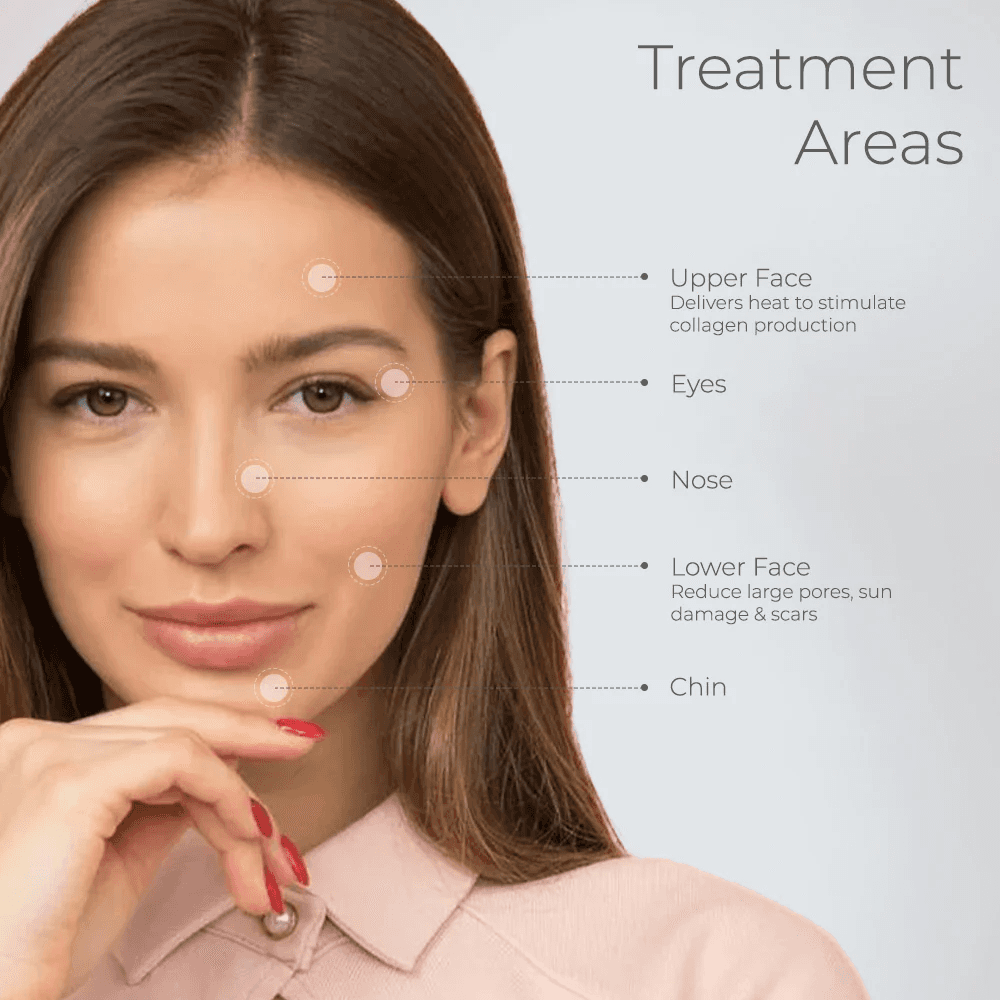
7.Which Filler Is Better by Treatment Area?
The answer changes depending on where the filler is going.
Lips
Hyaluronic acid fillers are usually the preferred option for lip enhancement because they offer softness, control, and the ability to refine shape without committing to a long-term structural result.
For most readers asking this question, the lips are the clearest category where hyaluronic acid fillers usually come out ahead.
Nasolabial folds and marionette lines
These areas can often be treated effectively with hyaluronic acid fillers, especially when the goal is direct correction and natural movement. In some treatment plans, however, a provider may address the midface first or consider broader structural support depending on the cause of the fold rather than the fold alone.
Cheeks and midface
This area is more nuanced.
Hyaluronic acid fillers can work very well for cheek enhancement and midface volume restoration, especially when the injector wants defined shaping and reversibility. But some non-hyaluronic acid fillers may also be considered when stronger support or collagen-focused rejuvenation is part of the plan.
Jawline and chin
Both categories may be relevant here. Hyaluronic acid fillers can be effective for contouring and balance, while some other filler types may be considered when the goal is firmer projection or durable structural support.
Temples
Temple correction often requires careful product selection and a high degree of anatomical understanding. Hyaluronic acid fillers may still be used, but this is an area where product choice is highly technique-dependent and should be individualized by an experienced injector.
8.The Most Important Decision Factors Before Choosing a Filler
Patients often fixate on brand names, but the better decision framework is simpler.
1. What is the actual aesthetic goal?
Do you want softness, projection, structural support, or gradual collagen-related improvement? Those are not the same goal, and they should not default to the same filler category.
2. Is reversibility important to you?
If the thought of being “stuck” with the result makes you uneasy, hyaluronic acid fillers may be the more comfortable starting point.
3. Which area is being treated?
The lips are different from the cheeks. The cheeks are different from the jawline. A filler that performs well in one zone may not be ideal in another.
4. Are you looking for immediate refinement or a longer arc of improvement?
Some fillers are favored for immediate visible shaping. Others fit longer-range collagen-stimulation strategies.
5. How experienced is the injector with that specific filler type?
A technically appropriate filler in the wrong hands is still the wrong choice. Product selection and injector judgment are inseparable.
9.Common Mistakes Patients Make When Comparing Fillers
One of the biggest mistakes is asking, “Which filler lasts longest?” before asking, “Which filler best matches my face and goals?”
Another mistake is assuming that all fillers behave the same once injected. They do not. They vary in softness, lift, spread, precision, and suitability for different tissue environments.
Patients also often compare treatments based only on social media before-and-afters. That can be misleading because the visible result is influenced by anatomy, injection depth, amount used, treatment plan design, and photo conditions, not just filler type.
Finally, many people underestimate the importance of reversibility. A filler that can be adjusted may offer real value, especially for highly expressive areas or first-time cosmetic patients.
10.How to Talk to Your Provider About the Right Filler
A more productive consultation starts with better questions.
Ask:
Which filler category fits my treatment goal best?
Why are you recommending this filler for this specific area?
Is this result intended to be soft, structured, or collagen-stimulating?
How adjustable is the outcome if I want refinement later?
What are the tradeoffs between reversibility and longevity?
Are there alternative fillers you would consider for my anatomy?
Those questions shift the conversation from marketing language to treatment logic.
11.Featured Snippet-Ready Summary
Are hyaluronic acid fillers better than other dermal fillers?
Hyaluronic acid fillers are often better for first-time patients and for treatment areas that need softness, precision, and reversibility, such as the lips and many facial lines. Other dermal fillers may be better for deeper support, longer-lasting correction, or collagen stimulation. The best filler depends on the treatment area, aesthetic goal, and provider judgment.
12.Final Verdict: Which One Is Better?
Hyaluronic acid fillers are usually the better all-around choice for versatility, control, and patient-friendly flexibility. That is why they are often the starting point in aesthetic medicine and why they remain dominant in many of the most requested treatment areas.
But “better” is not universal.
Other dermal fillers can be the better option when the treatment requires firmer structure, longer-term correction, or a biostimulatory approach. The strongest articles on this topic do not pretend there is one winner for every face. They explain the decision clearly: hyaluronic acid fillers are often the best general option, while other fillers may outperform them in selected clinical scenarios.
For readers in the U.S. aesthetic medicine market, that is the decision framework worth remembering.
If you are evaluating treatment options, the smartest next step is not asking for the most popular filler. It is asking for the most appropriate one for your anatomy, goals, and comfort level. For brands like aowita, that means creating educational content that helps patients understand the logic behind filler selection, not just the names of products.
13. FAQ Section
1. Are hyaluronic acid fillers safer than other dermal fillers?
They are often considered more forgiving because they can generally be dissolved when appropriate, which gives providers more flexibility in managing results. That does not mean any filler is automatically safe in the wrong hands. Injector skill and anatomical judgment remain critical.
2. Do hyaluronic acid fillers last as long as other fillers?
Not always. Some other filler categories may offer longer-lasting effects or collagen stimulation over time. However, longer duration is only an advantage when the product is well matched to the area and treatment goal.
3. Why are hyaluronic acid fillers so common for lips?
Because they typically provide softness, shape control, and adjustability. The lips are a highly mobile area, so filler behavior matters as much as filler longevity.
4. Which filler is better for cheeks: hyaluronic acid or another type?
It depends on the goal. Hyaluronic acid fillers are often excellent for contouring and reversible cheek enhancement. Other filler categories may be considered when deeper support or a broader rejuvenation strategy is needed.
5. Are non-hyaluronic acid fillers better for anti-aging?
They can be beneficial in some anti-aging treatment plans, especially when collagen stimulation or structural support is a priority. But they are not automatically superior. Many anti-aging outcomes are still effectively achieved with hyaluronic acid fillers.
6. How do I know which dermal filler is right for me?
The best choice depends on your anatomy, treatment area, desired look, tolerance for maintenance, and comfort with reversibility. A qualified provider should explain not just what they recommend, but why that filler fits your case.
Other Blogs