博客
How to Buy Hyaluronic Acid Dermal Fillers in Bulk: A B2B Procurement Guide
作者
Ray
已发布
类别
设计与灵感
A practical B2B guide to buying hyaluronic acid dermal fillers in bulk. Learn how to compare manufacturers, HA specifications, rheology, documentation, MOQ, samples and OEM options.


作者
Ray
一位享有盛誉的医学美学专家,在该领域拥有40年的深厚经验。凭借在非侵入性手术、抗衰老科学以及先进皮肤病学解决方案方面的数十年专业知识,作者致力于分享将临床创新与真实患者成果相结合的见解。热衷于为全球客户推进安全、有效且高影响力的美学治疗。
还有什么比内部优惠、专业建议和惊喜更好的呢?
注册可每周在您的电子邮件中接收最新的博客文章。
立即加入。
Our company’s main product lines include HA (Hyaluronic Acid) fillers, CaHA (Calcium Hydroxylapatite) fillers, PLLA (Poly-L-Lactic Acid) biostimulators, and other advanced aesthetic solutions, all developed and manufactured by trusted partner facilities with whom we have maintained long-term, stable collaborations.
I help them with sales and export operations, while our company also provides sourcing and procurement services in China to help international clients solve supply-related challenges. If you need assistance with procurement, please feel free to contact us.
For distributors, aesthetic brands and professional procurement teams, price per syringe is only one part of the purchasing decision. Buyers also need to evaluate the formulation, cross-linking technology, rheological properties, quality system, regulatory status, batch documentation, packaging, minimum order quantity and long-term manufacturing capability.
Two products may both be described as “20 mg/mL cross-linked hyaluronic acid filler” while having substantially different gel structures and mechanical properties because HA fillers can differ in manufacturing process, molecular characteristics, cross-linking and rheology.
For this reason, professional sourcing should begin with product specifications and regulatory suitability — not simply the lowest quotation.
This guide explains what B2B buyers should evaluate before purchasing HA dermal fillers in bulk.
1. Define Exactly What Type of HA Filler You Need
Before contacting manufacturers, establish a clear product requirement.
Sending a supplier a message such as:
“Please quote your hyaluronic acid filler.”
is usually not enough.
HA fillers can differ considerably in formulation and physical characteristics.
A more useful purchasing specification should identify the type of product your market requires.
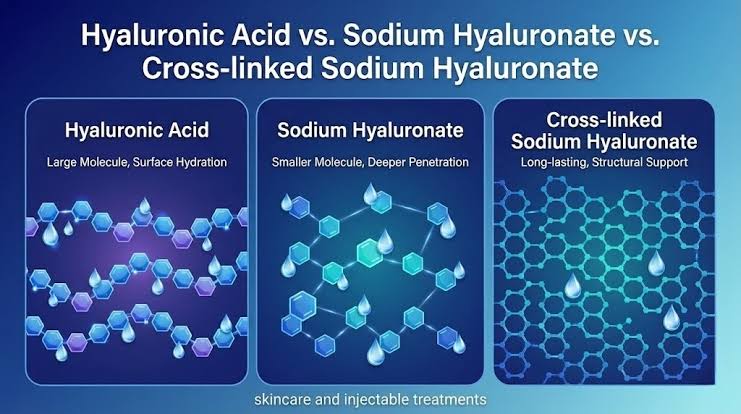
HA Gel Structure
Common options may include:
Monophasic HA filler
Biphasic HA filler
Highly cross-linked HA
Micro-cross-linked HA
Other proprietary HA gel technologies
Monophasic and biphasic products are produced using different processing approaches, and manufacturing technology can significantly influence the final rheological properties.
Buyers should therefore understand the gel technology rather than treating every HA filler as interchangeable.
HA Concentration
Suppliers may offer formulations with different HA concentrations.
However:
Higher HA concentration does not automatically mean better filler.
HA concentration is only one component of the formulation.
Mechanical behavior also depends on:
HA molecular weight
Cross-linking technology
Degree of modification
Gel architecture
Particle characteristics
Rheological properties
Published research confirms that HA fillers with different manufacturing technologies can demonstrate substantially different physicochemical and rheological characteristics.
Lidocaine or Non-Lidocaine
Determine whether your target product requires:
HA filler without lidocaine
The regulatory status and labeling requirements for a particular formulation depend on the destination market, so this decision should be made before finalizing an order.
Syringe Volume
Possible product configurations may include different prefilled syringe volumes.
Rather than choosing a size purely according to price, confirm that the configuration matches:
Product registration
Intended market
Product positioning
Packaging
Professional-use requirements
2. Start With the Intended Product Positioning
One mistake B2B buyers make is selecting an HA filler first and deciding how to position it afterward.
A better process is:
Market requirement → product specification → formulation → supplier
For example, a product intended to emphasize stronger structural properties may require a different rheological profile from a softer HA gel.
Research on injectable HA hydrogels shows that different anatomical environments and product objectives can require different rheological characteristics.
Therefore, before requesting a quotation, determine what type of product range you are building.
Questions can include:
How many SKUs do we need?
What gel characteristics do we need?
Do we require monophasic or biphasic technology?
Do we require lidocaine?
What syringe volume is required?
Are we selling the manufacturer's brand or developing a private label?
Which country will the product enter?
What documentation will be required?
This dramatically improves supplier comparison.
3. Compare the HA Formulation, Not Just the Label
A package may tell you:
Cross-linked sodium hyaluronate gel — 20 mg/mL
but that information alone does not tell you how the filler behaves.
Professional buyers should request more detailed technical information.
Important HA Parameters to Compare
Where relevant to the product and available from the manufacturer, consider:
HA concentration
HA molecular weight
Cross-linking technology
Gel structure
Lidocaine concentration
Rheological data
Syringe specification
Needle specification
Shelf life
Storage conditions
The purpose is not to collect the largest possible technical file.
The purpose is to verify that the product you are buying is clearly defined and consistently manufactured.
4. Understand the Cross-Linking Technology
Natural, non-cross-linked HA is relatively rapidly degraded and does not provide the same persistent gel structure as cross-linked HA.
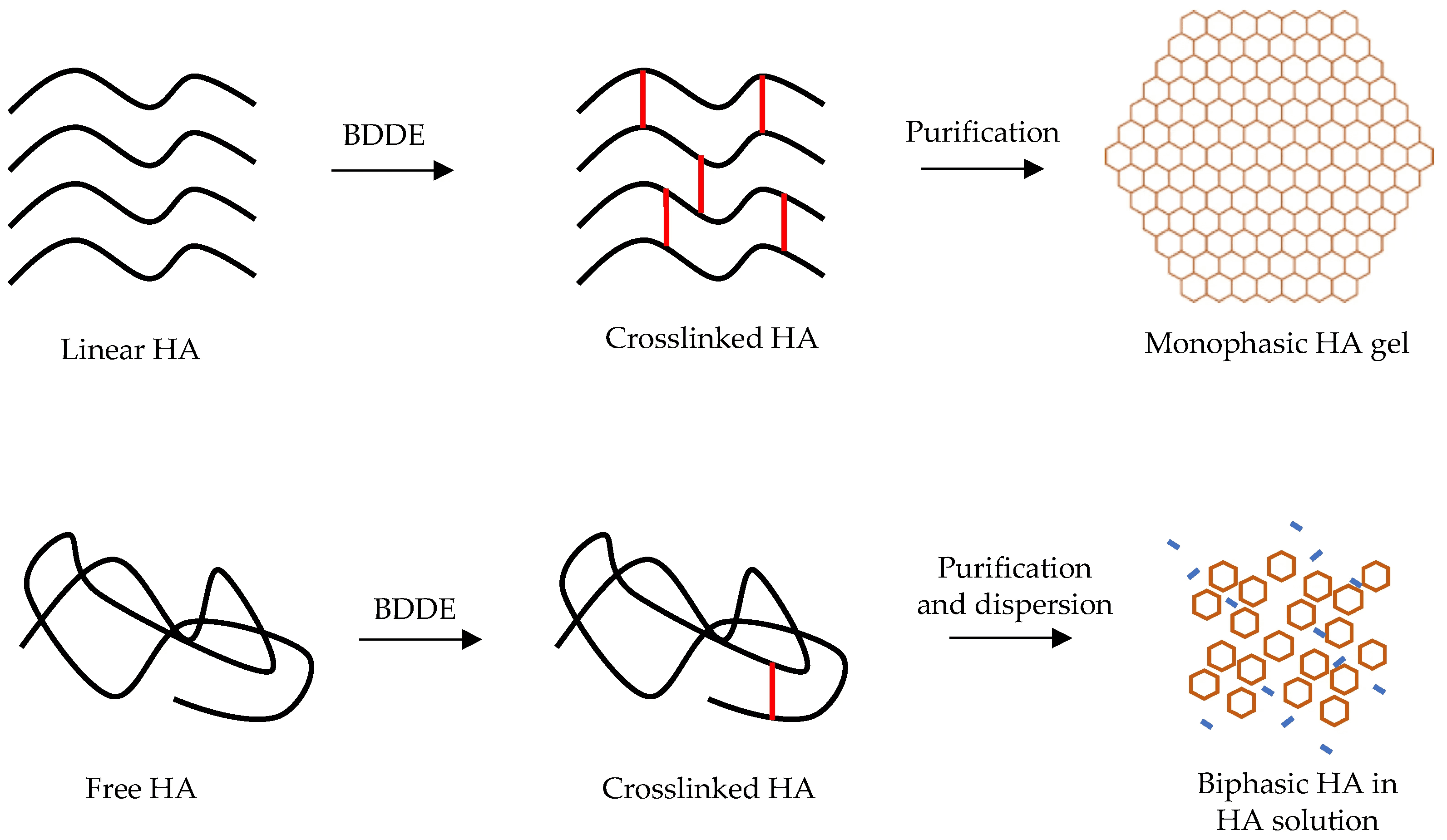
Cross-linking connects HA chains into a three-dimensional hydrogel network.
This can influence:
Resistance to degradation
Gel stability
Elastic behavior
Viscosity
Cohesivity
BDDE is one of the established cross-linkers used in HA dermal filler manufacturing.
However, buyers should avoid assuming:
More cross-linking = better filler.
The quality of an HA gel depends on achieving the appropriate balance between structural stability, rheology and injectability.
A technically capable supplier should be able to explain its HA platform beyond simply stating that the product is “cross-linked.”
5. Ask for Rheological Data
For serious B2B sourcing, rheology can provide much more information than marketing descriptions such as:
“Soft”
“Medium”
“Deep”
or
“Hard.”
HA dermal fillers are viscoelastic hydrogels, and their physical behavior can be evaluated using parameters such as G′, G″ and viscosity. Research has shown significant differences between fillers even within the same broad product category.
G′ — Storage Modulus
G′ represents the elastic component of the gel.
It helps describe the material's resistance to deformation.
However:
Higher G′ does not automatically mean higher quality.
The appropriate value depends on the product design.
G″ — Loss Modulus
G″ describes the viscous contribution during oscillatory deformation.
It should not be confused with viscosity itself.
Cohesivity
Cohesivity describes how strongly the gel tends to remain internally integrated when subjected to deformation.
Viscosity
Viscosity relates to resistance to flow.
Together, these parameters provide a more useful picture of filler characteristics than HA concentration alone.
When comparing technical data from different suppliers, also ask for the testing conditions and methodology, because reported rheological values can vary depending on how measurements are performed.
6. Verify the Manufacturer's Quality Management System
Once the formulation looks appropriate, evaluate the company manufacturing it.
Do not rely solely on:
Website claims
Factory photographs
Sales presentations
Exhibition booths
Low quotations
A manufacturer should operate under a quality-management system appropriate to the product and relevant regulatory framework.
For medical-device manufacturers, ISO 13485:2016 is an internationally recognized quality-management-system standard covering medical-device design and manufacture.
However, buyers should understand an important distinction:
A quality-management certificate is not the same as authorization to sell a specific product in every country.
Supplier qualification and product regulatory status need to be evaluated separately.
7. Verify Product Regulatory Status for Your Market
This is one of the most important steps when buying dermal fillers.
A product that can legally be marketed in one jurisdiction may not automatically be permitted in another.
Do not ask only:
“Do you have certification?”
Ask:
“What is the regulatory status of this exact product in my destination market?”
Requirements can vary significantly between:
United States
European Union
Middle East
Southeast Asia
Latin America
Africa
Other markets
For example, the U.S. FDA treats dermal fillers as medical devices, and approved products have specific indications and labeling. The FDA also warns against fillers sold directly to the public and states that FDA-approved fillers are supplied for administration by licensed healthcare professionals.
Therefore, professional buyers should verify requirements with the competent authority or qualified regulatory professional in their target market before importing or distributing a product.
8. Request Product-Specific Documentation
One of the strongest ways to distinguish professional manufacturers from weak suppliers is documentation.
Instead of asking:
“Do you have certificates?”
ask:
“Please send the documents applicable to this exact product and batch.”
Depending on jurisdiction and transaction stage, relevant documentation may include:
Product specification
Certificate of Analysis (COA)
Quality-system certificates
Sterility-related documentation
Stability information
Packaging specification
Instructions for Use (IFU)
Labeling information
Lot or batch information
Applicable regulatory documents
Manufacturing information
Not every document is required for every product or every country.
The key is that documents should:
match the actual product being purchased.
A certificate belonging to another product, another company or an expired registration provides little value.
9. Check Batch and Lot Traceability
Bulk purchasing creates additional responsibility because a problem can involve hundreds or thousands of units rather than one syringe.
Ask the manufacturer how it manages:
Batch numbers
Manufacturing dates
Expiry dates
Finished-product testing
Batch release
Complaint records
Traceability
If your first order is successful and you reorder six months later, you should be able to identify exactly which manufacturing batch supplied each shipment.
Traceability becomes particularly important when working with distributors or private-label products.
10. Request Samples Before a Large Commercial Order
For a new supplier relationship, moving immediately from a quotation to a large bulk order creates unnecessary risk.
A more controlled process is:
Supplier qualification
↓
Documentation review
↓
Product/sample evaluation where legally appropriate
↓
Final specification confirmation
↓
Commercial order
↓
Batch inspection
↓
Shipment
A sample should not be treated as proof of regulatory authorization or clinical suitability.
Instead, it can help professional buyers verify practical details such as:
Packaging
Syringe configuration
Label quality
Product presentation
Needle packaging
Branding quality
Documentation consistency
Any clinical evaluation must follow applicable laws, approvals and professional-use requirements.
11. Compare MOQ Carefully
MOQ means Minimum Order Quantity.
When sourcing HA fillers, a low MOQ may appear attractive, particularly for a new distributor or brand.
However, MOQ should be considered together with customization requirements.
For example:
Manufacturer-Brand Product
Often requires less customization.
Private Label
May require additional quantities because the manufacturer must produce:
Custom cartons
Labels
Instructions
Printed materials
Full OEM/ODM Development
May involve greater development and production requirements because formulation, packaging or other specifications need to be customized.
Therefore, ask whether the quotation MOQ applies to:
existing product
or
customized private-label product.
They may be very different.
12. Understand OEM, ODM and Private Label Options
These terms are often used interchangeably, but they can represent different levels of customization.
Private Label
A buyer uses an existing manufacturer formulation with customized branding and packaging.
This is often the fastest route for brands entering a market.
OEM
The manufacturer produces according to agreed buyer specifications.
Customization can include:
Branding
Packaging
Product configuration
Certain specifications
depending on the manufacturer's capabilities and regulatory constraints.
ODM
The manufacturer may provide greater involvement in product design and development.
For serious brand development, ask exactly which elements can legally and technically be modified.
Do not assume every specification can simply be changed without affecting product validation or regulatory requirements.
13. Evaluate Packaging Before Ordering
Packaging becomes especially important for private-label projects.
Review:
Syringe labeling
Inner blister
Outer carton
Product information
Lot number location
Expiry information
Storage information
Needle configuration
Tamper-evident features where applicable
Shipping carton
For export markets, buyers should also evaluate whether required information must appear in a specific language.
Poor packaging can create regulatory, logistical and brand problems even when the underlying product is acceptable.
14. Confirm Shelf Life and Storage Conditions
Never place a bulk HA filler order without confirming:
Manufacturing date
Expiry date
Storage range
Transportation requirements
This becomes particularly important when buying inventory for distribution.
Imagine purchasing 5,000 units at a low price but discovering that the remaining shelf life is unsuitable for your sales cycle.
The cheapest unit price can quickly become the most expensive purchasing decision.
Ask suppliers to specify the minimum remaining shelf life expected at shipment.
15. Evaluate Production Capacity
The first order is only one part of B2B procurement.
Ask:
Can this manufacturer support us if our demand increases?
Important considerations include:
Monthly production capacity
Typical lead time
Peak-season lead time
Raw-material availability
Packaging capacity
OEM production scheduling
Repeat-order consistency
A supplier capable of delivering 500 units once may not necessarily be capable of supplying 20,000 units consistently.
For distributors building a market, supply continuity matters.
16. Understand Lead Time
Ask manufacturers to separate lead time into different stages.
For example:
Existing Product
Production/stock preparation
Quality release
Shipping
Private Label
Artwork confirmation
Packaging production
Product manufacturing
Quality release
Shipping
New OEM Project
Product development
Specification confirmation
Packaging development
Validation/testing as applicable
Commercial production
The cheapest supplier can become expensive if inconsistent lead times repeatedly create stockouts.
17. Compare Total Procurement Cost, Not Just Unit Price
Suppose:
Supplier A: $X per syringe
Supplier B: slightly higher per syringe
At first glance, Supplier A appears cheaper.
But total purchasing cost can include:
Product
Packaging
Custom printing
Samples
Freight
Insurance
Import duties
Regulatory work
Customs handling
Warehousing
Quality inspection
Replacement costs
Rework caused by incorrect packaging
Therefore, professional purchasing decisions should compare:
Total landed cost + compliance + quality + supply reliability
rather than factory price alone.
18. Do Not Choose a Supplier Only Because It Is the Cheapest
Extremely low pricing should trigger additional due diligence.
It does not automatically mean the product is unacceptable.
But ask:
Why is the price lower?
Possible reasons can include:
Larger production scale
Standardized packaging
Lower distribution margin
Different formulation
Different documentation
Different testing
Different service level
Lower customization
Buyers should compare equivalent products and equivalent supplier responsibilities.
A $10 product and a $15 product may not actually represent the same purchasing proposition.
19. Questions to Ask an HA Filler Manufacturer Before Ordering
Use this checklist when communicating with potential suppliers.
Product
What is the exact HA concentration?
Is the HA cross-linked?
What cross-linking technology is used?
Is the gel monophasic or biphasic?
Does the formulation contain lidocaine?
What syringe volumes are available?
What needle or cannula configuration is supplied?
Technical
What rheological data are available?
Can you provide G′ data?
How is product consistency evaluated?
What are the storage conditions?
What is the shelf life?
Quality
What quality-management system does the factory operate?
What product-specific testing documents are available?
Can you provide batch documentation?
How is lot traceability managed?
Regulatory
What is the regulatory status of the exact product?
Which markets currently accept or authorize the product?
What regulatory documentation can you provide?
Does labeling meet the requirements of my destination market?
Commercial
What is the MOQ?
What is the MOQ for private label?
What is the production lead time?
What is the monthly manufacturing capacity?
What payment terms are available?
OEM
Can the packaging be customized?
Can the brand and logo be customized?
What elements of the product specification can be customized?
What is the development process?
Who owns the artwork and packaging files?
A supplier that answers these questions clearly gives a buyer much more useful information than one that simply sends a price list.
20. Red Flags When Buying HA Dermal Fillers in Bulk
B2B buyers should investigate carefully when they encounter:
No verifiable manufacturer information
Unclear factory identity
Certificates that do not match the product
Missing batch information
No product specification
Unusually low price without explanation
Inconsistent answers from sales representatives
Refusal to provide reasonable technical documentation
Regulatory claims that cannot be independently verified
Pressure to place a large order immediately
Packaging that does not identify the responsible manufacturer
Claims that one product is automatically legal in every country
Another major warning sign is a supplier presenting medical-device documentation as if it guarantees universal market access.
Regulatory requirements are jurisdiction specific.
21. Manufacturer vs Distributor: Which Should You Buy From?
Both models can be appropriate.
Buy From a Distributor When:
You need smaller quantities
You require local inventory
You need faster regional delivery
You prefer local customer support
You do not require extensive customization
Buy Directly From a Manufacturer When:
You require bulk quantities
You are building your own brand
You need private-label packaging
You require OEM support
You want closer access to technical documentation
You require long-term product development
For established distributors and aesthetic brands, direct manufacturer relationships can provide greater control over specifications and branding.
However, they also place more responsibility on the buyer for supplier qualification, regulatory compliance and inventory planning.
22. How to Compare Two HA Filler Suppliers
A practical supplier comparison can use the following scorecard:
Category | Supplier A | Supplier B |
|---|---|---|
Product Specification | /10 | /10 |
HA Technology | /10 | /10 |
Rheological Data | /10 | /10 |
Quality System | /10 | /10 |
Product Documentation | /10 | /10 |
Regulatory Suitability | /10 | /10 |
Batch Traceability | /10 | /10 |
OEM Capability | /10 | /10 |
MOQ | /10 | /10 |
Lead Time | /10 | /10 |
Production Capacity | /10 | /10 |
Communication | /10 | /10 |
Total Cost | /10 | /10 |
This prevents procurement teams from allowing unit price to dominate the entire decision.
23. A Practical HA Filler Procurement Workflow
A structured procurement process can look like this:
Step 1 — Define target market
↓
Step 2 — Confirm regulatory requirements
↓
Step 3 — Define HA specifications
↓
Step 4 — Shortlist manufacturers
↓
Step 5 — Review quality systems
↓
Step 6 — Review product documentation
↓
Step 7 — Compare rheology and specifications
↓
Step 8 — Evaluate samples where appropriate
↓
Step 9 — Confirm MOQ and commercial terms
↓
Step 10 — Approve packaging
↓
Step 11 — Place production order
↓
Step 12 — Verify batch documentation
↓
Step 13 — Arrange compliant importation and distribution
This process takes more effort than comparing quotations, but it substantially improves supplier selection.
Aowita Hyaluronic Acid Filler Manufacturing Solutions
Aowita develops and manufactures hyaluronic acid dermal filler solutions for aesthetic brands and professional distributors.
The company's HA portfolio includes different gel technologies, including:
Monophasic HA fillers
Biphasic HA fillers
Cross-linked sodium hyaluronate gels
Highly cross-linked HA formulations
Micro-cross-linked HA formulations
For B2B customers developing their own aesthetic product portfolio, Aowita also provides OEM/ODM support involving areas such as:
Product selection
Branding
Packaging customization
Formula-related development where applicable
Production
Commercial-scale supply
Professional buyers should still evaluate the regulatory suitability of each specific product for their destination market before commercialization.
Conclusion
Buying hyaluronic acid dermal fillers in bulk requires much more than finding the lowest wholesale price.
Professional buyers should evaluate four areas together:
Product
Understand HA concentration, cross-linking technology, gel structure, rheological characteristics and product configuration.
Manufacturer
Evaluate quality systems, manufacturing capability, batch consistency and production capacity.
Compliance
Confirm product documentation and regulatory suitability for the destination market.
Commercial Terms
Compare MOQ, lead time, OEM capability, packaging, shelf life and total landed cost.
The strongest procurement strategy is therefore not:
Find the cheapest HA filler.
It is:
Find the right HA formulation from a qualified manufacturing partner, supported by appropriate documentation for the intended market.
For distributors and aesthetic brands building a long-term HA filler portfolio, that distinction can determine whether a sourcing relationship remains a one-time purchase or becomes a scalable product business.
References
Hong GW, et al. Manufacturing Process of Hyaluronic Acid Dermal Fillers. Reviews HA filler manufacturing, cross-linking, monophasic and biphasic technologies and their impact on product properties.
Virno A, et al. Rheologic and Physicochemical Characteristics of Hyaluronic Acid Fillers: Overview and Relationship to Product Performance. Reviews the major properties used to characterize HA fillers and differences resulting from manufacturing technologies.
Perera GGG, Argenta DF, Caon T. The Rheology of Injectable Hyaluronic Acid Hydrogels Used as Facial Fillers: A Review. International Journal of Biological Macromolecules, 2024. Reviews HA concentration, molecular weight, cross-linking, particle size and rheological design.
International Organization for Standardization. ISO 13485:2016 — Medical Devices — Quality Management Systems — Requirements for Regulatory Purposes.
U.S. Food and Drug Administration. Dermal Fillers (Soft Tissue Fillers). Provides current U.S. regulatory and safety information for dermal filler products and professional use.
Frequently Asked Questions
What should I check before buying HA dermal fillers in bulk?
Start with the exact product specification, intended market, regulatory status, manufacturing quality system, batch documentation, HA formulation, cross-linking technology, rheology, shelf life, MOQ and supplier capacity.
How do I choose a hyaluronic acid filler manufacturer?
Evaluate the manufacturer rather than relying solely on price. Review manufacturing capability, quality systems, product documentation, technical knowledge, batch consistency, OEM capability and regulatory support.
Does higher HA concentration mean better quality?
No. HA concentration is only one variable. Cross-linking, molecular weight, gel architecture and rheological properties can all influence the characteristics of the finished filler.
Should I ask for G′ when purchasing an HA filler?
It can be useful. G′ provides information about the elastic component of the gel, but it should be evaluated together with other characteristics rather than treated as a standalone quality score.
What is the difference between OEM and private-label dermal fillers?
Private label typically uses an existing manufacturer product with customized branding, while OEM projects can involve broader customization according to agreed specifications. Exact definitions vary between manufacturers.
Can I import the same HA filler into any country?
Not automatically. Dermal-filler regulation differs between jurisdictions. Buyers should verify the exact product's regulatory status and applicable import requirements for the destination market.
Is ISO 13485 enough to import a dermal filler?
No. ISO 13485 relates to medical-device quality-management systems. It should not be interpreted as automatic market authorization for every product or country. Product-specific regulatory requirements must also be evaluated.
What documents should an HA filler supplier provide?
Depending on the jurisdiction and procurement stage, these may include product specifications, quality certificates, batch documentation, COA, labeling information, applicable testing reports and relevant regulatory documents.
Should I buy directly from a manufacturer or distributor?
Distributors can be suitable for smaller quantities and local supply. Direct manufacturers may be more appropriate for higher volumes, private label, OEM projects and buyers requiring closer technical and manufacturing support.
What is the biggest mistake when buying dermal fillers wholesale?
One of the biggest mistakes is selecting a supplier primarily on unit price without verifying the exact product, manufacturer, documentation and regulatory suitability.
其他博客