博客
Sculptra Explained: How It Works, Benefits, Results, and Treatment Process
作者
Ray
已发布
类别
设计与灵感
Learn what Sculptra is, how poly-L-lactic acid stimulates collagen, its benefits, treatment process, results, recovery, safety considerations, and how it compares with dermal fillers.


作者
Ray
一位享有盛誉的医学美学专家,在该领域拥有40年的深厚经验。凭借在非侵入性手术、抗衰老科学以及先进皮肤病学解决方案方面的数十年专业知识,作者致力于分享将临床创新与真实患者成果相结合的见解。热衷于为全球客户推进安全、有效且高影响力的美学治疗。
还有什么比内部优惠、专业建议和惊喜更好的呢?
注册可每周在您的电子邮件中接收最新的博客文章。
立即加入。
Our company’s main product lines include HA (Hyaluronic Acid) fillers, CaHA (Calcium Hydroxylapatite) fillers, PLLA (Poly-L-Lactic Acid) biostimulators, and other advanced aesthetic solutions, all developed and manufactured by trusted partner facilities with whom we have maintained long-term, stable collaborations.
I help them with sales and export operations, while our company also provides sourcing and procurement services in China to help international clients solve supply-related challenges. If you need assistance with procurement, please feel free to contact us.
Introduction
Sculptra is an injectable poly-L-lactic acid (PLLA) treatment designed to work differently from conventional dermal fillers. Instead of relying primarily on an immediate volumizing effect, PLLA is used as a collagen-stimulating material, with visible changes developing progressively as the treated tissue remodels. This distinction is central to understanding why Sculptra treatments are planned differently from many hyaluronic acid (HA) fillers.
Sculptra Aesthetic is a branded injectable containing PLLA microparticles along with sodium carboxymethylcellulose and non-pyrogenic mannitol. In the United States, its FDA-approved aesthetic indications include correction of shallow to deep nasolabial fold contour deficiencies, other facial wrinkles appropriate for the approved injection approach, and, following a 2023 supplement, fine lines and wrinkles in the cheek region. Regulatory indications can differ between countries, so healthcare professionals and distributors should always refer to the applicable local labeling.
For patients, the main attraction is the possibility of a gradual, natural-looking improvement rather than an immediately obvious change. For aesthetic clinics, distributors, and product developers, the more important question is broader: how does a PLLA injectable function, what determines its clinical performance, and what should be evaluated when selecting this type of aesthetic product?
This guide explains the science, benefits, treatment process, expected results, safety considerations, comparison with HA fillers, and practical evaluation criteria for PLLA-based aesthetic injectables.
Medical note: This article is for educational purposes and does not replace an assessment by a qualified healthcare professional. Product indications, contraindications, injection techniques, and aftercare requirements should always follow the applicable product labeling and local regulations.
What Is Sculptra?
Sculptra and Poly-L-Lactic Acid
Sculptra® is a brand-name injectable poly-L-lactic acid product. PLLA is a synthetic, biodegradable polymer that has a long history of biomedical use. In Sculptra Aesthetic, the active particulate component is PLLA, which is supplied as a sterile preparation intended to be reconstituted before injection according to its instructions for use.
It is useful to distinguish three terms:
Term | Meaning | Role |
|---|---|---|
Sculptra® | A specific branded product | A commercially marketed PLLA injectable |
PLLA | Poly-L-lactic acid | The polymer used as the collagen-stimulating component |
Collagen biostimulator | A broader product category | Describes injectables intended to stimulate biological tissue response rather than only provide immediate volume |
This distinction matters when comparing aesthetic injectables. Not every PLLA product is Sculptra, and products containing the same broad material should not automatically be assumed to have identical formulations, regulatory status, reconstitution instructions, clinical evidence, packaging, or injection indications.
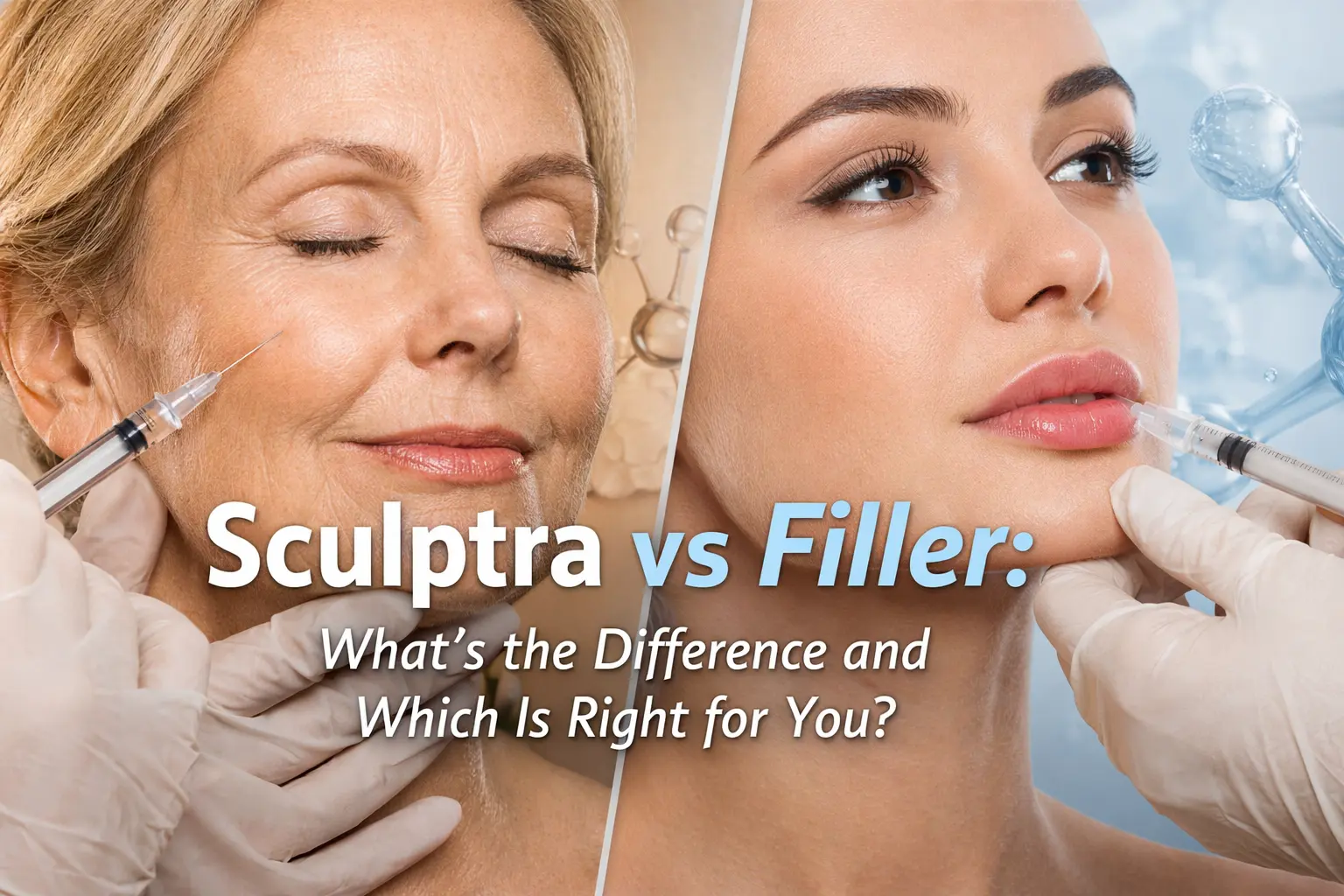
Why Is Sculptra Different From a Traditional Filler?
A conventional volumizing filler is generally intended to add volume to tissue directly. Sculptra's mechanism is different: the injected PLLA particles act as a biostimulatory scaffold or stimulus, with tissue response and subsequent collagen deposition contributing to the longer-term correction. Research on PLLA describes its effect as progressive rather than purely immediate.
That means a treatment plan must take into account time, tissue characteristics, treatment area, product formulation, injection technique, and patient expectations rather than focusing only on the amount of immediate volume created.
How Does Sculptra Work?
How Does Sculptra Stimulate Collagen?
The central question behind Sculptra is simple: how does an injectable made with PLLA produce an aesthetic effect if it is not simply acting as a conventional filler?
After injection, PLLA particles interact with surrounding tissue and initiate a biological response. Published research describes a sequence involving cellular activity and subsequent collagen deposition. Over time, the treated tissue can develop increased structural support as new collagen is produced and remodeled.
The process can be understood in broad stages:
PLLA is placed in the targeted tissue.
The body responds to the biodegradable polymer particles.
Fibroblast-related activity contributes to collagen formation.
New collagen develops progressively around the treated area.
The tissue gradually remodels, contributing to changes in volume, firmness, and skin appearance.
The exact biological pathway is more complex than this simplified sequence. Recent reviews describe mechanisms involving macrophage activity, fibroblast activation, transforming growth factor beta signaling, extracellular-matrix remodeling, and neocollagenesis.
Why Are Results Gradual?
One of the most important differences between Sculptra and many HA fillers is the treatment timeline.
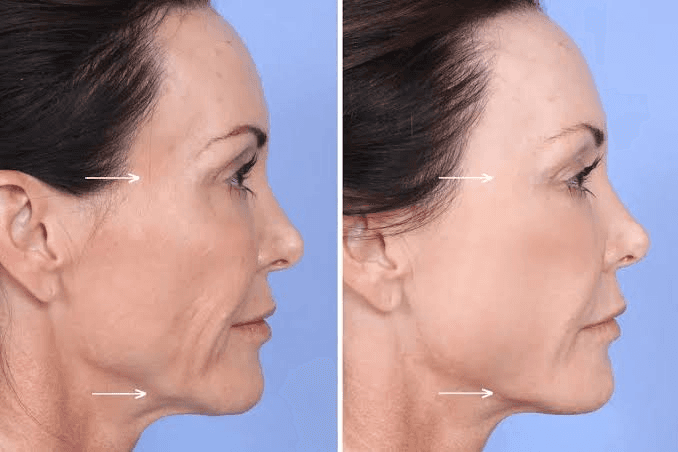
Immediately after injection, swelling and the fluid used during preparation can temporarily alter the appearance of the treated area. That initial appearance should not be confused with the eventual collagen-mediated result. As the immediate injection effects settle and collagen remodeling progresses, the aesthetic correction becomes more apparent. The FDA patient labeling specifically notes that the original skin depression may initially reappear before gradually improving over the following weeks.
This gradual mechanism is one reason Sculptra is often selected when the treatment objective is progressive facial rejuvenation rather than an instant contour change.
What Does the Research Say About Durability?
Clinical studies and reviews have reported sustained aesthetic effects with PLLA. A systematic review published in 2024 found that several randomized studies reported improvements sustained for at least 25 months, although the authors also noted that the overall evidence quality was limited and that more robust research is needed.
A newer systematic review covering PLLA and calcium hydroxyapatite found that PLLA-based treatments showed improvements in facial volume, wrinkle appearance, and skin elasticity, with effects reported for up to approximately 25 months in the included studies. The review also emphasized the need for further standardization and long-term research.
Therefore, claims such as “two years” should be understood as evidence-based treatment durability reported in specific studies and product materials, not as a guaranteed result for every patient.

What Are the Benefits of Sculptra?
Gradual Facial Volume Restoration
One of the principal applications of PLLA in facial aesthetics is addressing changes associated with soft-tissue volume loss.
Facial aging can involve reduced subcutaneous volume, changes in connective tissue, declining skin elasticity, and alterations in facial proportions. PLLA approaches these changes by stimulating tissue response rather than simply placing a static volume depot.
For appropriate patients, the resulting change may appear more gradual than the correction typically associated with a traditional volumizing filler.
Improvement in the Appearance of Wrinkles
Sculptra is used for certain facial wrinkles and contour deficiencies. Its mechanism means that the treatment is not best understood as simply “filling a wrinkle.” Instead, collagen stimulation can contribute to improved dermal support and tissue structure over time.
The FDA's 2023 supplement specifically expanded the U.S. indication to include correction of fine lines and wrinkles in the cheek region.
Skin Quality and Firmness
Research on PLLA has also examined changes beyond visible volume. Published studies have reported improvements in parameters such as skin elasticity, dermal thickness, and skin quality following treatment.
This is why the term collagen stimulator is often more informative than thinking of PLLA as a conventional filler alone.
Natural-Looking Progression
Another potential benefit is the gradual nature of the result.
Rather than creating the full aesthetic change immediately, the treatment effect can develop over time. For patients who prefer a less abrupt transformation, this may be an important consideration.
However, “natural-looking” is not determined by the injectable alone. Patient selection, anatomy, product characteristics, treatment planning, and injector expertise all influence the final appearance.

What Areas Can Sculptra Treat?
Common Facial Treatment Areas
The appropriate treatment area depends on the product labeling, the patient's anatomy, and the healthcare professional's treatment plan.
In the United States, Sculptra's FDA-approved aesthetic uses include facial wrinkles and contour deficiencies, with a specific indication for fine lines and wrinkles in the cheek region. The product's labeling also specifies certain areas where it should not be injected, including the red portion of the lip and peri-orbital area.
Commonly discussed treatment goals include:
Improvement in the appearance of facial wrinkles
Correction of certain facial contour deficiencies
Restoration of volume associated with facial aging
Improvement in selected areas of facial skin quality
Gradual facial rejuvenation
The phrase “where can Sculptra be injected?” therefore does not have a universal answer. Product labeling and local regulatory status matter, and an injector should determine whether a particular area is appropriate.
Sculptra for Wrinkles vs. Sculptra for Volume Loss
These goals overlap but are not identical.
A patient may present with visible wrinkles but have little actual volume deficiency. Another may have significant facial volume loss with comparatively modest wrinkle depth.
The treatment plan should therefore begin with an assessment of facial anatomy and the underlying cause of the aesthetic concern, rather than treating the visible wrinkle or depression in isolation.
What Is the Sculptra Treatment Process?
1. Consultation and Assessment
A professional consultation should evaluate:
Treatment objectives
Facial anatomy
Skin condition
Existing volume loss
Previous aesthetic treatments
Medical history and relevant contraindications
Current medications and treatment considerations
Expectations regarding the rate and degree of improvement
This stage is especially important because a collagen stimulator is not designed to provide the same type of result as every HA filler.
2. Treatment Planning
The practitioner determines the treatment area, product preparation, treatment schedule, and injection strategy according to the approved product instructions and professional judgment.
The U.S. FDA labeling emphasizes that Sculptra has specific injection requirements and should be administered by a healthcare professional who is trained in its use.
3. Product Preparation and Injection
Sculptra is supplied as a sterile, freeze-dried preparation and must be reconstituted before use. The product's instructions specify the materials and preparation procedure; these details are not interchangeable with the instructions for other PLLA products.
The injection itself is a professional medical procedure. Exact injection depth, dilution, product volume, needle or cannula choice, and injection pattern should follow the applicable product instructions and the injector's training rather than a generic online recipe.
4. Observation and Aftercare
Temporary redness, swelling, bruising, tenderness, and related injection-site effects can occur.
The product's U.S. instructions recommend post-treatment care that includes cooling the area and specific massage guidance following treatment. Patients should follow the exact aftercare instructions given by their healthcare provider.
5. Follow-Up
Because the treatment effect develops progressively, follow-up is an important part of the process.
The practitioner evaluates how the tissue has responded and determines whether additional treatment is appropriate based on the patient's clinical situation and the relevant product protocol.
How Long Does Sculptra Take to Work?
When Do You See Results From Sculptra?
Sculptra is not designed around an immediate final result.
The initial post-injection appearance may be influenced by swelling and the reconstituted product. These effects settle, while the biological response develops more slowly. The FDA patient labeling explains that the original depression may initially return before gradual improvement occurs over several weeks.
The exact timeline varies between individuals.
Factors that may influence the visible result include:
Baseline tissue characteristics
Degree of volume loss
Treatment area
Number and spacing of sessions
Injection technique
Individual biological response
Post-treatment care
This means “How long does Sculptra take to work?” should be answered with a treatment window rather than a single guaranteed day.
How Many Sculptra Treatments Are Needed?
There is no universal number that applies to every patient.
Historical clinical protocols have involved multiple treatment sessions, and the FDA labeling describes regimens involving a series of sessions for particular indications. The appropriate schedule depends on the indication, treatment objective, individual response, and the current product instructions.
A qualified practitioner should determine the number and spacing of sessions rather than applying a fixed formula to every face.
Sculptra Recovery and Side Effects
Common Short-Term Effects
The FDA patient information reports common injection-site effects including:
Swelling
Redness
Pain or tenderness
Bruising
Itching
Lumps or bumps
Many temporary reactions reported in clinical studies were mild to moderate and resolved within approximately one to two weeks, although duration can vary.
This does not mean every patient will experience the same reaction or recovery period.
Why Can Lumps or Nodules Occur?
Small palpable papules or nodules can occur after PLLA treatment. The product instructions associate early nodule risk with factors such as improper dilution, superficial injection, over-correction, and insufficient distribution of the product. Delayed nodules have also been reported and may require professional management.
This is one of the clearest examples of why product quality and injector technique cannot be separated when evaluating aesthetic outcomes.
A professional clinic should have an established process for:
Patient assessment
Appropriate product selection
Correct preparation
Trained administration
Patient education
Follow-up
Documentation and adverse-event management
Sculptra Safety Considerations
Sculptra should be administered only by appropriately trained healthcare professionals.
The U.S. safety information states that it should not be used in people with known allergies to its ingredients or a history of keloid formation or hypertrophic scarring. Safety has not been established in pregnant or breastfeeding patients or people younger than 18. The product should also not be injected into blood vessels, and treatment should be postponed when certain active skin conditions or infections are present.
Patients should seek professional medical assessment if symptoms are worsening, prolonged, unusual, or concerning rather than attempting to self-manage a suspected complication.
Sculptra vs. Hyaluronic Acid Fillers
How Does Sculptra Compare With Dermal Fillers?
Sculptra and HA fillers can both be used in facial aesthetics, but they have different material properties and treatment philosophies.
The most useful comparison is not “which is better?” but which mechanism is appropriate for the clinical objective.
Consideration | Sculptra / PLLA | Hyaluronic Acid Filler |
|---|---|---|
Main material | Poly-L-lactic acid | Hyaluronic acid |
Primary concept | Collagen stimulation | Direct volumization |
Onset | Gradual | Generally more immediate |
Result development | Progressive | Typically visible soon after injection |
Typical planning | Often staged | Often more immediately adjustable |
Reversibility | Not simply dissolved with an HA-dissolving enzyme | HA can often be degraded with hyaluronidase |
Key focus | Tissue remodeling and gradual correction | Shape, volume, contour, and projection |
Suitable choice depends on | Anatomy, goals, tissue response, product labeling | Anatomy, goals, filler rheology, location, and injector judgment |
HA fillers have an important practical characteristic: hyaluronidase can degrade HA, providing a way to reduce unwanted HA filler deposits in clinical practice. This reversibility is one reason HA products are treated differently from non-HA injectables.
That does not make HA fillers universally preferable. It simply illustrates that material selection changes the clinical management strategy.
Sculptra vs. HA: Which Treatment Goal Fits?
A simplified decision framework is:
Need immediate volume or contour adjustment? An HA filler may be considered depending on the area and product.
Want gradual collagen-mediated improvement? A PLLA treatment may be considered.
Need an easily adjustable HA-based treatment? HA has a distinct advantage because hyaluronidase can reduce injected HA.
Need a staged rejuvenation strategy? PLLA may be incorporated where appropriate and supported by the relevant labeling and clinical plan.
There is also increasing interest in combining different aesthetic modalities, but treatment combinations should be planned by qualified professionals based on anatomy, safety, product compatibility, and evidence.
What Determines Sculptra Treatment Results?
Patient Factors
Two patients receiving the same treatment may experience different results.
Baseline collagen characteristics, degree of facial aging, soft-tissue structure, metabolic and biological factors, skin quality, and previous treatments can all influence the outcome.
Clinical literature has also emphasized that the amount of product and work required can vary according to the tissue characteristics present at the beginning of treatment.
Practitioner Expertise
PLLA treatment is particularly dependent on appropriate injection technique.
The FDA labeling explicitly states that Sculptra has unique injection requirements and should be used by practitioners trained in the appropriate technique.
For clinics evaluating practitioners or expanding their injectable portfolio, training and technical competency should therefore be considered alongside the product itself.
Product Quality and Documentation
For aesthetic professionals and distributors, product evaluation should go beyond marketing language.
Important documentation can include:
Product specification
Intended use and indications
Ingredient information
Sterility documentation
Batch or lot traceability
Certificate of analysis where applicable
Shelf-life and storage requirements
Packaging integrity
Instructions for use
Regulatory documentation relevant to the target market
Adverse-event reporting procedures
These documents help distinguish a professionally managed injectable supply chain from a purely commercial product listing.
How to Evaluate a PLLA Injectable for Clinical or Distribution Use
The growing collagen biostimulator market means clinics and distributors may encounter multiple products using similar terminology. Product selection should be based on verifiable documentation rather than the phrase “PLLA collagen stimulator” alone.
A practical evaluation sequence is:
Verify the legal manufacturer and product identity.
Confirm the formulation and active material.
Review the target-market regulatory status and approved indications.
Check sterility, packaging, storage, and traceability documentation.
Review the manufacturer's instructions for preparation and use.
Assess available clinical evidence and post-market information.
Confirm supply consistency, batch management, and technical support.
Evaluate whether the supplier can provide the documentation required by the clinic, distributor, or local authority.
For distributors, the last three points are particularly important. A product may have an attractive formulation yet still create operational problems if documentation, batch consistency, delivery conditions, or regulatory support are inadequate.
For clinics, product sourcing and clinical protocol should be treated as separate but connected decisions. The product must be appropriate for the market and indication, while the practitioner must also be trained to use it according to the applicable instructions.
Common Mistakes When Considering Sculptra
Expecting Immediate Final Results
One of the most common misunderstandings is treating PLLA like a conventional immediate volumizer.
Because collagen formation takes time, the first few days are not an accurate representation of the final treatment outcome.
Comparing Products Only by Ingredient
Two products may both contain PLLA but still differ in formulation, manufacturing controls, regulatory clearance, evidence base, packaging, and instructions for use.
The ingredient name is only the starting point.
Using Marketing Claims as Clinical Evidence
Statements such as “permanent,” “instant collagen,” “zero downtime,” or “works for everyone” should be examined carefully.
Current systematic reviews support the potential of PLLA-based treatments but also point out evidence limitations and the need for better standardized research.
Ignoring Regulatory Differences
An indication approved in one market should not automatically be presented as an approved indication in another.
This is especially important for manufacturers, exporters, and distributors working across multiple countries.
Treating Product and Technique as Separate
A high-quality injectable cannot compensate for unsuitable patient selection or inappropriate administration.
Conversely, a highly experienced practitioner still needs a product with reliable manufacturing, traceability, correct labeling, and appropriate regulatory documentation.
What Should Clinics and Distributors Look for in a Sculptra Alternative or PLLA Injectable?
When comparing branded Sculptra with other PLLA-based injectable products, the evaluation should remain evidence-based.
Consider the following matrix:
Evaluation Factor | Key Question |
|---|---|
Composition | What is the exact formulation and concentration? |
Manufacturing | Is the manufacturing process controlled and documented? |
Sterility | What sterility controls and release testing are used? |
Packaging | Is the vial/container system suitable for the intended product? |
Stability | What are the storage conditions and shelf life? |
Regulatory status | What markets and indications are supported? |
Clinical evidence | What studies support efficacy and safety? |
Instructions for use | Are preparation and administration instructions clearly documented? |
Traceability | Can batches be tracked from production through distribution? |
Supplier support | Are technical, regulatory, and product documents available? |
For a B2B buyer, these details often matter more than headline marketing claims.
AOWITA and the Professional Injectable Market
For clinics, medical aesthetic providers, distributors, and international buyers evaluating injectable products, supplier selection should focus on documented product quality, regulatory readiness, traceability, and long-term supply capability.
AOWITA operates in the professional aesthetic injectable sector and can be evaluated alongside other suppliers based on the buyer's target market, product requirements, documentation needs, and business model.
Rather than comparing suppliers only by price, professional buyers should request the technical and regulatory information needed to verify whether a product is appropriate for the intended market.
For private-label, distributor, or OEM-oriented projects, the most useful discussions typically involve product specifications, packaging requirements, regulatory documentation, target-market needs, and supply arrangements.
Conclusion
Sculptra is best understood as a PLLA-based collagen biostimulator rather than simply another conventional dermal filler. Its key distinction is the way the treatment uses a biological tissue response and progressive collagen formation to contribute to facial rejuvenation.
The most important concepts are straightforward: results develop gradually, treatment planning matters, product labeling must be followed, and injector expertise has a major role in safety and outcomes. Clinical literature supports the potential for durable improvements in facial volume, wrinkles, skin elasticity, and skin quality, while systematic reviews also emphasize that evidence quality and treatment protocols are not completely standardized.
For patients, the appropriate treatment decision should be made after professional assessment rather than based solely on before-and-after photographs or marketing claims.
For clinics and distributors, evaluating a PLLA injectable requires a broader perspective: formulation, sterility, manufacturing controls, regulatory status, documentation, clinical evidence, traceability, and supplier support all deserve attention.
Most importantly, Sculptra® is one specific branded PLLA product, while PLLA is a broader injectable material category. Keeping that distinction clear helps patients, clinicians, distributors, and manufacturers make more accurate comparisons and communicate about these products responsibly.
Explore Professional Injectable Solutions With AOWITA
AOWITA provides a professional platform for businesses evaluating aesthetic injectable products for clinical, distribution, and international-market requirements.
For product sourcing or partnership discussions, buyers can evaluate requirements such as product specifications, packaging, regulatory documentation, target-market compliance, and supply arrangements before moving to commercial cooperation.
Contact AOWITA to discuss your professional injectable product requirements and request product and regulatory information for your target market.
Frequently Asked Questions About Sculptra
What is Sculptra and how does it work?
Sculptra® is a branded injectable containing poly-L-lactic acid (PLLA). Its aesthetic effect is associated with stimulation of the body's collagen response and progressive tissue remodeling rather than relying solely on immediate volumization.
How does Sculptra stimulate collagen?
PLLA particles trigger a tissue response that involves cellular activity and fibroblast-related collagen production. Over time, new collagen contributes to changes in tissue structure and volume. Recent reviews describe this process as involving broader extracellular-matrix remodeling and neocollagenesis.
What are the benefits of Sculptra?
Potential benefits include gradual facial volume restoration, improvement in the appearance of certain wrinkles and contour deficiencies, and changes in skin quality and elasticity. Clinical evidence suggests that effects can persist for an extended period, although individual outcomes vary and evidence quality is not uniform.
How long does Sculptra take to work?
Sculptra does not generally provide its final aesthetic effect immediately. Initial swelling may change the appearance temporarily, while collagen-mediated improvement develops progressively over subsequent weeks and months.
How long do Sculptra results last?
Published studies have reported effects lasting approximately 25 months or longer in some treatment populations, and the FDA cheek-wrinkle study followed patients for 24 months. However, duration varies between patients and should not be interpreted as a guaranteed result.
How many Sculptra treatments are needed?
Treatment schedules vary according to the indication, facial anatomy, treatment objectives, product labeling, and individual response. Sculptra clinical protocols have commonly involved multiple sessions rather than a single standardized appointment.
What should you expect after Sculptra injections?
Temporary swelling, redness, tenderness, pain, bruising, itching, and lumps or bumps may occur at the injection site. Many temporary reactions reported in studies were mild to moderate, but persistent or unusual symptoms should be discussed with the treating healthcare professional.
Is Sculptra safe?
Sculptra has an established regulatory history, including FDA approval in the United States for specified indications. However, like other injectable aesthetic treatments, it has contraindications, warnings, and potential adverse events. It should be administered only by appropriately trained healthcare professionals and according to the applicable product information.
Is Sculptra good for wrinkles?
Sculptra is indicated for certain facial wrinkles, including fine lines and wrinkles in the cheek region under the current U.S. labeling. Whether it is appropriate for a particular wrinkle depends on its cause, location, depth, surrounding tissue, and the patient's overall treatment plan.
Can Sculptra restore facial volume?
PLLA has been extensively studied for facial volume restoration associated with aging and soft-tissue loss. Its approach is based on progressive collagen stimulation and tissue remodeling rather than simply depositing an immediately visible volume of filler.
What is the difference between Sculptra and hyaluronic acid fillers?
Sculptra uses PLLA as a collagen-stimulating material, while HA fillers primarily provide direct soft-tissue volume. HA fillers also have the distinctive characteristic that hyaluronidase can be used clinically to degrade HA, giving them a different degree of adjustability.
其他博客