博客
PDRN vs Retinol for Wrinkles: A Comprehensive Review of Molecular Mechanisms, Clinical Efficacy, and Tolerability
作者
Ray
已发布
类别
设计与灵感
Compare PDRN vs retinol for wrinkles, including molecular mechanisms, clinical efficacy, collagen effects, tolerability, and the latest research evidence.


作者
Ray
一位享有盛誉的医学美学专家,在该领域拥有40年的深厚经验。凭借在非侵入性手术、抗衰老科学以及先进皮肤病学解决方案方面的数十年专业知识,作者致力于分享将临床创新与真实患者成果相结合的见解。热衷于为全球客户推进安全、有效且高影响力的美学治疗。
还有什么比内部优惠、专业建议和惊喜更好的呢?
注册可每周在您的电子邮件中接收最新的博客文章。
立即加入。
Our company’s main product lines include HA (Hyaluronic Acid) fillers, CaHA (Calcium Hydroxylapatite) fillers, PLLA (Poly-L-Lactic Acid) biostimulators, and other advanced aesthetic solutions, all developed and manufactured by trusted partner facilities with whom we have maintained long-term, stable collaborations.
I help them with sales and export operations, while our company also provides sourcing and procurement services in China to help international clients solve supply-related challenges. If you need assistance with procurement, please feel free to contact us.
Introduction
Skin aging is a progressive biological process involving alterations in the epidermis, dermis, extracellular matrix, vascular system, and cellular signaling environment. Although chronological aging contributes to these changes, chronic ultraviolet exposure is a major driver of extrinsic skin aging, or photoaging. Clinically, photoaging is associated with fine lines, wrinkles, laxity, uneven pigmentation, and changes in skin texture. At the tissue level, UV exposure can disrupt fibroblast function, accelerate extracellular matrix degradation, alter collagen organization, and affect elastin-associated structures.
Topical retinoids are among the best-studied interventions for photoaging. Retinol is a nonprescription cosmetic retinoid and a precursor of retinoic acid. Its activity depends on metabolic conversion within the skin and subsequent retinoid signaling. Clinical studies have reported improvements in wrinkles, elasticity, firmness, pigmentation, and other signs of photodamage after repeated topical use.
PDRN represents a different biological concept. Rather than acting primarily through retinoid signaling, PDRN has been investigated as a tissue-repair and regenerative biomaterial. Experimental literature has linked PDRN activity to the purine salvage pathway and adenosine A2A receptor signaling, while more recent work has examined extracellular matrix responses, fibroblast signaling, and topical delivery.
The comparison between PDRN and retinol has become particularly relevant following a 2026 randomized split-face study of a specific topical PDRN formulation, PDRN-850K. The study compared a 0.1% PDRN-850K eye cream directly with a 0.1% retinol eye cream and reported greater improvement in several periocular endpoints over 28 days.
However, a direct comparison between two formulations does not establish that one ingredient is universally superior. The strength of evidence depends on study design, sample size, duration, formulation characteristics, population, treatment site, and outcome measures. This review therefore evaluates the two ingredients within those broader methodological limits.
Review Objective
The objective of this review is to compare PDRN and retinol for wrinkle-related skin aging with particular attention to four domains: molecular mechanism, clinical efficacy, tolerability, and evidence quality.
The review also addresses an important distinction between early comparative findings and established long-term evidence. A 28-day head-to-head trial can provide useful information about short-term clinical change, but it cannot by itself establish long-term equivalence, superiority, or durability.
Skin Aging and the Biological Basis of Wrinkle Formation
Intrinsic Aging
Intrinsic aging is associated with gradual reductions in cellular activity and structural changes within the skin. Dermal collagen content and organization change over time, while skin thickness, elasticity, and regenerative capacity can decline.
Fibroblasts are particularly important because they synthesize components of the extracellular matrix, including collagen and other structural proteins. Changes in fibroblast behavior can therefore influence dermal support and the formation of visible lines and wrinkles.
Extrinsic Aging and Photoaging
Extrinsic aging results from environmental exposures and lifestyle-associated factors. Among these, chronic UV exposure is a central contributor to photoaging. UV radiation can alter extracellular matrix homeostasis and promote pathways associated with collagen degradation and abnormal elastic-fiber remodeling. These changes contribute to loss of dermal support and the development of wrinkles.
Photoaged skin is therefore not simply "older skin." It displays characteristic structural and molecular alterations, including changes to collagen, fibrillin-containing microfibrils, glycosaminoglycans, and the dermal-epidermal interface.
Why Collagen and Extracellular Matrix Remodeling Matter
Wrinkle reduction is often discussed in terms of surface appearance, but dermal structure is also important. A treatment that changes wrinkle appearance may act through multiple mechanisms, including hydration, epidermal remodeling, dermal matrix changes, skin thickness, and biomechanical properties.
For this reason, clinical trials increasingly combine visual wrinkle assessments with instrumental measurements such as elasticity, firmness, ultrasound-derived dermal thickness, or three-dimensional imaging.
Molecular Mechanisms of PDRN
What Is PDRN?
Polydeoxyribonucleotide is a DNA-derived polymeric material composed of nucleotide fragments. PDRN has been studied in tissue repair and regenerative medicine, including wound-healing applications. A systematic review of PDRN literature identified evidence across in vitro, in vivo, and clinical models supporting its tissue-repair potential.
PDRN should not automatically be treated as synonymous with every product described as a polynucleotide or PN. Although the terms are related and overlap in regenerative dermatology, individual materials may differ in source, molecular size, concentration, formulation, route of administration, and intended biological activity.

The Adenosine A2A Receptor Pathway
One of the most frequently discussed mechanisms of PDRN is activation of adenosine A2A receptor-related signaling.
Earlier mechanistic literature has proposed that PDRN can supply nucleosides and bases through the salvage pathway while also promoting A2A receptor-dependent effects. These processes have been associated with tissue repair, cellular survival, angiogenesis, and modulation of inflammatory responses.
This mechanism differs fundamentally from retinoid signaling and provides a biological rationale for investigating PDRN in regenerative rather than purely resurfacing-oriented skin applications.
PDRN and Fibroblast Function
Fibroblasts are central to dermal extracellular matrix production and organization. Experimental PDRN studies have investigated fibroblast proliferation, survival, signaling, and matrix-related gene expression.
A 2026 topical PDRN study reported that PDRN-850K activated PI3K–Akt, TGF-β/Smad, and autophagy-related signaling in cultured human dermal fibroblasts. Pharmacological inhibition of these pathways reduced extracellular-matrix gene induction, providing mechanistic support for the proposed relationship between PDRN signaling and matrix remodeling.
PDRN and Extracellular Matrix Remodeling
The extracellular matrix is composed of multiple interacting structural and signaling components. Collagen provides tensile support, while elastic-fiber-associated proteins contribute to tissue recoil and biomechanical behavior.
In a UV-irradiated human ex vivo skin model, PDRN-850K was associated with increases in several collagen types, elastic-fiber-associated proteins, and YAP expression. These findings suggest a coordinated tissue-level response rather than a single collagen endpoint.
However, ex vivo results should not be interpreted as direct evidence of equivalent clinical effects in living human skin. Ex vivo models are valuable for mechanism and tissue-response research but cannot reproduce the complete biological environment of long-term human treatment.
Topical PDRN Delivery
One historical question surrounding topical PDRN has been whether a relatively large DNA-derived polymer can reach biologically relevant skin compartments.
The 2026 PDRN-850K investigation used confocal Raman spectroscopy in a reconstructed epidermal model and supplementary ex vivo and pilot in vivo approaches. The researchers reported time-dependent PDRN-associated signal distribution into viable epidermal regions.
This finding is important because it provides experimental evidence that topical delivery is possible under the tested conditions. It does not, however, establish that every commercial PDRN formulation will exhibit the same penetration profile or that penetration alone predicts clinical efficacy.
Molecular Mechanisms of Retinol
What Is Retinol?
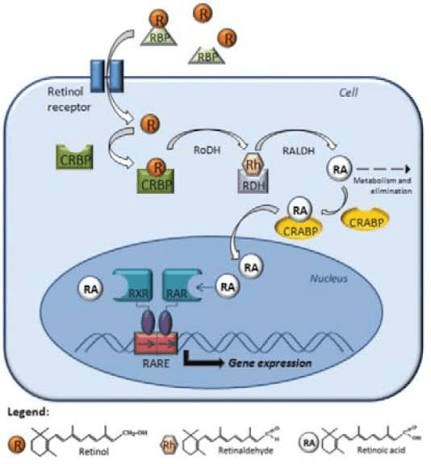
Retinol is a vitamin A derivative used in cosmetic formulations for skin aging and photoaging. Unlike retinoic acid, retinol itself is not the terminal active retinoid receptor ligand. It undergoes enzymatic conversion within the skin, first to retinaldehyde and subsequently to retinoic acid.
This metabolic sequence contributes to both its activity and its generally lower potency compared with direct retinoic-acid treatment.
Retinol and Retinoid Signaling
Once converted to active retinoid metabolites, retinoids influence gene transcription through nuclear retinoid receptors. These pathways regulate processes involved in epidermal differentiation and dermal remodeling.
A recent review of cosmetic retinoids concluded that retinol, retinaldehyde, and related retinoid derivatives can improve signs of photoaging through remodeling of the epidermis and dermis, while their efficacy, stability, and tolerance vary by compound and formulation.
Retinol and Collagen
Collagen remodeling is a major component of the anti-aging literature surrounding topical retinoids.
In a 52-week controlled trial of stabilized 0.1% retinol, the treatment group showed significant improvement in photodamage throughout the study. At week 52, the investigators reported a 44% improvement in crow's-feet fine lines and increased expression of type I procollagen, hyaluronan, and Ki67 compared with vehicle.
These findings are relevant because they connect visible clinical improvement with biological changes rather than relying solely on subjective appearance.
Retinol and Epidermal Remodeling
Retinoids can influence keratinocyte differentiation and epidermal renewal. These effects may contribute to smoother skin texture and improvement in superficial signs of photoaging.
The clinical effect of topical retinol therefore reflects multiple biological processes rather than a single "wrinkle-filling" mechanism.
Clinical Evidence for PDRN

Evidence From Randomized Trials
The clinical evidence for PDRN and PN in aesthetic medicine is newer than the evidence for topical retinoids.
A 2026 systematic review of randomized clinical trials searched PubMed, Embase, and the Cochrane Central Register of Controlled Trials through January 2026. Seven randomized trials involving 183 participants met the inclusion criteria; four involved skin rejuvenation, while the remaining studies addressed postoperative scars or wound healing. Across the included studies, PN/PDRN interventions were associated with improvements in wrinkle-related outcomes, scar quality, wound-healing metrics, and patient-reported satisfaction.
The same review emphasized important limitations, including small sample sizes and heterogeneity among treatment protocols and outcome measurements. These limitations reduce the certainty with which results can be generalized across products and clinical settings.
Evidence From Polynucleotide Studies
A separate 2024 systematic review examined polynucleotide applications in aesthetic medicine. Nine studies involving 219 patients were included, and the authors reported promising improvements in wrinkles, skin texture, and elasticity. However, the evidence was judged to be low or moderate quality, with considerable variation in injection sites and techniques.
These findings are relevant to the broader regenerative-medicine literature but should not be conflated with evidence for every topical PDRN formulation.
Injectable PN studies and topical PDRN studies differ in:
molecular material characteristics
delivery route
concentration
anatomical depth
dosing
treatment frequency
tissue exposure
Consequently, evidence should be interpreted at the formulation and treatment level whenever possible.
Clinical Evidence for Retinol

Eight-Week Controlled Evidence
A double-blind, randomized, split-face clinical study examined a stabilized 0.1% retinol moisturizer in women with moderate facial photodamage. Thirty-six subjects received the retinol treatment, while 28 were included in the vehicle comparison. After eight weeks, the retinol treatment significantly improved lines and wrinkles, pigmentation, elasticity, firmness, and overall photodamage compared with vehicle.
The study is useful because it included a vehicle-controlled design and multiple established clinical outcomes.
Twelve-Week Pooled Evidence
A 2024 integrated analysis combined six vehicle-controlled studies of 0.1% stabilized bioactive retinol, including 237 retinol-treated and 234 vehicle-treated participants. The investigators reported greater improvements in signs of photoaging from week 4 through week 12. Few participants experienced irritation, and reported irritation events were mild to moderate and transient.
Although this evidence relates specifically to stabilized 0.1% formulations, it demonstrates that retinol has accumulated a relatively broad controlled clinical literature.
Fifty-Two-Week Evidence
Longer-term data are particularly important when evaluating an anti-aging treatment.
In the 52-week stabilized 0.1% retinol trial, improvements continued throughout the study and included clinical changes in crow's-feet fine lines and mottled pigmentation. Histochemical findings included increased type I procollagen, hyaluronan, and Ki67 expression.
Long-term evidence of this kind is one reason retinoids remain central to discussions of topical photoaging therapy. Reviews continue to describe retinoids as core components of topical photoaging treatment, while also noting that stronger retinoids can be limited by irritation.
Direct Comparison of PDRN and Retinol
Study Design
The most directly relevant study to the keyword "PDRN vs Retinol for Wrinkles" was published in PLOS ONE in July 2026.
The study used a prospective, randomized, double-blind, split-face, self-controlled design. Thirty-one healthy Chinese women aged 35–55 years, with self-reported sensitive skin and bilateral periocular fine lines or wrinkles, were enrolled. One side of the periocular region received a 0.1% PDRN-850K eye cream and the contralateral side received an identically based 0.1% retinol eye cream. Both products were applied twice daily for 28 days.
Periocular wrinkle number and area were assessed using VISIA-based imaging. Dermal thickness and density were measured using high-frequency ultrasound, while elasticity and firmness were evaluated using Cutometer measurements. Three-dimensional imaging was also used for periocular volume-related parameters.
Periocular Wrinkle Outcomes
At day 28, the PDRN-850K formulation produced larger reductions in crow's-feet wrinkle area and number than the tested retinol formulation.
The reported reduction was approximately 20% to 23% for PDRN-850K compared with approximately 6% to 7% for retinol on the corresponding endpoints. Similar differences were reported for infraorbital wrinkle parameters. Improvements on the PDRN-treated side were detectable by day 14 for several endpoints.
These findings provide direct comparative evidence, but the correct interpretation is formulation-specific: the study demonstrated a difference between the tested PDRN-850K eye cream and the tested retinol eye cream. It did not compare every PDRN product with every retinol product.
Dermal Thickness and Density
High-frequency ultrasound showed approximately two-fold greater increases in dermal thickness and dermal density on the PDRN-850K-treated side than on the retinol-treated side.
This is potentially important because dermal thickness and density provide structural information that complements surface wrinkle analysis.
At the same time, the investigators noted that 28 days is a relatively short timeframe for mature dermal remodeling. Early ultrasound changes may partly reflect transient hydration or tissue-plumping effects in addition to genuine matrix remodeling.
Elasticity and Firmness
Biomechanical testing also favored the PDRN-850K side within the study. The reported improvements in elasticity and firmness were approximately 1.8-fold greater than those observed with the tested retinol formulation.
Again, these findings should be understood as a short-term comparative result under the specific study conditions.
Eye-Bag and Tear-Trough Parameters
Three-dimensional imaging indicated approximately two-fold greater reductions in eye-bag volume and tear-trough depression on the PDRN-850K-treated side than on the retinol-treated side.
These endpoints are clinically interesting because periocular aging involves more than wrinkles alone. Apparent eye-bag volume and tear-trough changes can reflect both tissue structure and short-term changes in skin hydration or contour.
Tolerability of PDRN and Retinol
PDRN Tolerability
Existing PN/PDRN literature generally reports favorable short-term tolerability, although the evidence remains heterogeneous.
The 2026 systematic review found that randomized PN/PDRN studies generally reported acceptable tolerability, but the limited number of studies makes it difficult to characterize long-term safety across all products and indications.
Retinol Tolerability
Retinol has a well-recognized potential for irritation, particularly during initiation or with stronger formulations.
Potential reactions can include:
erythema
dryness
scaling
peeling
stinging
However, tolerability varies considerably with concentration, stabilization, vehicle, application frequency, and individual skin characteristics.
In the 2024 pooled analysis of six 0.1% stabilized bioactive retinol studies, few participants experienced irritation and reported events were mild to moderate and transient.
Tolerability in the Direct PDRN vs Retinol Study
In the 2026 split-face study, both the 0.1% PDRN-850K eye cream and the 0.1% retinol eye cream were reported to be well tolerated, with no adverse reactions reported during the 28-day study period.
However, absence of adverse reactions in a 31-person, 28-day study should not be interpreted as proof of long-term safety for all PDRN products or retinol formulations.
PDRN vs Retinol: Evidence Comparison
Evidence Domain | PDRN | Retinol |
|---|---|---|
Molecular evidence | Growing | Extensive |
Tissue-repair rationale | Strong mechanistic basis | Secondary to retinoid signaling |
A2A-related signaling | Reported | Not the primary mechanism |
ECM remodeling | Emerging clinical and experimental evidence | Established clinical and experimental evidence |
Wrinkle studies | Limited but expanding | Broader evidence base |
Direct head-to-head evidence | One recent formulation-specific study | One recent formulation-specific comparator |
Long-term clinical evidence | Limited | Available |
Periocular evidence | Emerging | Established but formulation-dependent |
Tolerability data | Generally favorable in available studies | More extensive, with known irritation potential |
Evidence heterogeneity | High | Lower overall, although formulations vary |
Research maturity | Emerging | More mature |
The key point is that clinical efficacy and evidence maturity are not the same variable.
A treatment can produce an interesting short-term result in a direct trial while still having a smaller overall evidence base than a more established treatment.
Critical Interpretation of the 2026 Head-to-Head Study
What the Study Supports
The 2026 study provides direct clinical evidence that the tested 0.1% PDRN-850K eye cream produced greater short-term improvement than the tested 0.1% retinol eye cream across several periocular measurements after 28 days. The findings are supported by a combination of subjective and instrumental assessments, including wrinkle imaging, ultrasound, three-dimensional imaging, and biomechanical analysis.
The study also contributes mechanistic information through fibroblast experiments, tissue-level ex vivo experiments, and topical-delivery assessments, creating a translational chain from molecular activity to tissue response and clinical observation.
What the Study Does Not Establish
The results do not establish that PDRN is universally more effective than retinol.
Several distinctions are essential:
First, the research tested one specific PDRN preparation, PDRN-850K.
Second, the comparison involved one 0.1% retinol formulation.
Third, the treatment period was only 28 days.
Fourth, the participants were 31 Chinese women aged 35–55 years with sensitive skin.
Fifth, treatment focused on periocular skin rather than the entire face.
Therefore, the conclusions should be generalized cautiously.
Sample Size and Duration
A major limitation is the small sample size.
Thirty-one participants are sufficient for detecting signals within a controlled split-face design, but a study of this size cannot establish broad population-level efficacy with the same confidence as larger randomized trials.
Duration is another major limitation. Retinol has clinical evidence extending to 52 weeks, whereas the direct PDRN comparison lasted four weeks.
Consequently, short-term comparative efficacy and long-term evidence maturity should be evaluated separately.
Population and Anatomical Limitations
The trial included healthy Chinese women with self-reported sensitive skin and focused on periocular wrinkles.
This population is clinically relevant but relatively specific.
The results should therefore not automatically be extrapolated to:
men
younger or older populations
other ethnic groups
non-sensitive skin
severe generalized photoaging
areas outside the periocular region
Additional trials are needed to determine whether the findings remain consistent across broader populations and treatment sites.
Formulation-Specific Effects
Another limitation is the role of formulation.
A topical anti-aging product is not defined only by its headline active ingredient. The vehicle, stability, concentration, delivery system, molecular characteristics, product application schedule, and anatomical site can all influence performance.
Accordingly, comparing "PDRN" with "retinol" at the ingredient-name level can be misleading unless the individual formulations and concentrations are clearly specified.
PDRN vs Retinol for Sensitive Skin
Sensitive skin is especially relevant when evaluating tolerability.
Retinol is biologically active and can cause irritation, especially in poorly tolerated regimens or when introduced too rapidly. However, formulation technology and stabilized retinol preparations may reduce tolerability problems, and controlled studies of 0.1% stabilized retinol have reported relatively low rates of clinically significant irritation.
PDRN has generated interest partly because current studies have generally reported favorable tolerability. In the 2026 PDRN-850K trial, the formulation was tested specifically in participants with self-reported sensitive skin, and no adverse reactions were reported during the 28-day observation period.
Nevertheless, the available PDRN evidence is too limited to conclude that all PDRN formulations are inherently better tolerated than all retinol formulations.
PDRN vs Retinol for Periocular Wrinkles
The periocular region has distinct biological and clinical characteristics.
Skin around the eyes is relatively thin and is frequently exposed to repetitive mechanical movement. Crow's feet are therefore influenced not only by photoaging but also by repeated muscle activity and structural changes in the dermis.
The 2026 PDRN-850K trial is particularly relevant because its primary clinical evaluation focused on periocular skin. The reported reductions in crow's-feet and infraorbital wrinkles, along with changes in dermal thickness and biomechanical properties, suggest that topical PDRN warrants further investigation in this anatomical region.
Retinol also has evidence for improving periocular lines as part of broader photoaging studies, although tolerability may be an important consideration in the eye area.
PDRN vs Retinol for Collagen and Dermal Remodeling
The two ingredients may be best understood as acting through partially different biological frameworks.
Retinol primarily operates through retinoid metabolism and signaling, leading to changes in epidermal differentiation and dermal remodeling. Clinical retinol studies have demonstrated improvements in photoaging together with increases in type I procollagen and other tissue markers.
PDRN is being investigated through a regenerative framework involving adenosine-related signaling, fibroblast responses, and extracellular matrix repair. The 2026 PDRN-850K study provides evidence for PI3K–Akt and TGF-β/Smad pathway activation and changes in multiple collagen and elastic-fiber-associated proteins.
The mechanistic distinction is therefore meaningful:
Retinol: retinoid-mediated remodeling.
PDRN: proposed tissue-repair and regenerative signaling.
This does not mean that the biological effects are mutually exclusive. Both may ultimately influence extracellular matrix behavior and visible skin aging through different upstream pathways.
Limitations of the Current PDRN Evidence
Small Clinical Samples
The number of randomized PDRN/PN studies remains limited, and many individual trials involve relatively small participant groups.
Heterogeneous Products
PDRN and PN products can vary in molecular properties, concentration, source material, formulation, and administration route.
This creates challenges when attempting to combine data from different studies.
Heterogeneous Endpoints
Clinical trials may assess wrinkles using different scoring systems, imaging platforms, grading scales, or investigator-defined outcomes.
This makes direct cross-study comparison difficult.
Limited Long-Term Data
Compared with retinol, PDRN has relatively little long-term clinical evidence for cosmetic wrinkle reduction.
This is particularly important for anti-aging interventions because durability and cumulative benefit may require months rather than weeks to assess.
Limited Head-to-Head Evidence
The 2026 trial is important precisely because direct comparisons have been scarce. At present, the evidence base should not be treated as though there were numerous high-powered trials establishing a universal difference between PDRN and retinol.
Limitations of the Retinol Evidence
Retinol has a more mature evidence base, but it is not without limitations.
Formulation Variability
Retinol is sensitive to formulation and stability. Different products can therefore behave differently despite having the same nominal concentration.
Cosmetic Retinol Is Not Identical to Prescription Retinoids
Retinol should not be equated with tretinoin.
Tretinoin is retinoic acid itself and has substantially more direct retinoid receptor activity. Retinol requires metabolic conversion before exerting its downstream effects.
A 2024 systematic review of topical anti-aging treatments notes that tretinoin remains a reference standard in prescription photoaging therapy, while cosmetic retinoids such as retinol have differing efficacy and tolerance profiles.
Irritation
Retinol can cause irritation, particularly during initiation. However, modern stabilized formulations can have substantially improved tolerability, as shown in controlled studies of 0.1% stabilized retinol.
Can PDRN and Retinol Be Used Together?
The biological mechanisms of PDRN and retinol are sufficiently different that combination use is scientifically plausible.
However, plausibility is not equivalent to clinical proof.
At present, direct clinical evidence evaluating long-term combined topical PDRN and retinol regimens remains limited. Research specifically designed to test combination therapy would be needed to determine whether the ingredients produce additive, synergistic, neutral, or antagonistic effects.
Future trials should compare:
PDRN alone
retinol alone
PDRN plus retinol
vehicle control
using standardized concentrations and clearly defined clinical endpoints.
Future Research Directions
Larger Randomized Controlled Trials
Future PDRN studies should recruit substantially larger and more diverse participant populations.
Longer Follow-Up
Studies lasting 3, 6, and 12 months would be particularly valuable for distinguishing transient cosmetic changes from durable dermal remodeling.
Standardized PDRN Characterization
Researchers should report:
source
molecular characteristics
molecular-weight distribution
concentration
purity
formulation system
delivery technology
This would improve comparability across trials.
Broader Populations
Research should include different:
ethnic populations
age groups
skin types
sexes
degrees of photoaging
Objective Measurement
Future studies could standardize:
three-dimensional wrinkle analysis
ultrasound-derived dermal thickness
skin elasticity
firmness
collagen biomarkers
histological endpoints
patient-reported outcomes
Direct Comparative Research
More head-to-head studies comparing PDRN with retinol, retinaldehyde, tretinoin, and placebo would help establish where PDRN fits within the broader landscape of evidence-based skin rejuvenation.
Practical Interpretation of the Current Evidence
The current evidence supports a differentiated interpretation rather than a simple winner-versus-loser model.
Retinol has a longer-established clinical record for photoaging and wrinkles. Controlled studies have demonstrated benefits within 8–12 weeks, and longer studies have demonstrated continued improvement over 52 weeks.
PDRN has a growing mechanistic and clinical evidence base. The strongest recent development is the 2026 direct comparison study of 0.1% PDRN-850K and 0.1% retinol, which found greater short-term changes in several periocular endpoints with the PDRN formulation.
The appropriate scientific conclusion is therefore not that PDRN has definitively replaced retinol. Rather, the findings suggest that topical PDRN is an increasingly credible regenerative approach that deserves further comparative investigation.
Conclusion
PDRN and retinol represent two biologically distinct approaches to wrinkle-related skin aging.
Retinol has a comparatively mature evidence base and is supported by randomized controlled studies demonstrating improvements in wrinkles, pigmentation, elasticity, firmness, and other signs of photoaging. Longer-term research also provides evidence of dermal biological changes, including increased type I procollagen and hyaluronan expression.
PDRN has a different mechanistic foundation centered on tissue repair and regenerative signaling. Experimental evidence supports involvement of the adenosine A2A pathway, while newer research has linked topical PDRN-850K to PI3K–Akt, TGF-β/Smad, extracellular matrix, and elastic-fiber-associated responses.
The most important recent evidence is the July 2026 randomized, double-blind, split-face trial comparing 0.1% PDRN-850K with 0.1% retinol in 31 women with sensitive skin. Over 28 days, PDRN-850K produced larger improvements in several measures of periocular wrinkles, dermal thickness, dermal density, elasticity, firmness, and eye-bag-related parameters, while both treatments were reported to be well tolerated.
However, this study should be interpreted within its methodological boundaries. It examined a specific PDRN formulation, a specific retinol formulation, a small sample, a short treatment period, a particular demographic group, and the periocular area. It therefore provides promising comparative evidence rather than definitive proof that PDRN is universally more effective than retinol.
Overall, the current literature supports retinol as a more established topical photoaging ingredient, while PDRN should be regarded as an emerging regenerative technology with encouraging mechanistic and early clinical evidence. The next stage of research should focus on larger, longer, standardized, formulation-specific randomized trials capable of determining the durability, reproducibility, and generalizability of PDRN's reported wrinkle-reducing effects.
References
Key Clinical and Review Evidence
Ye R, Wang Q, Du L, Li L, Hu F. Topical medium-length PDRN enhances dermal extracellular matrix repair in photodamaged skin via PI3K–Akt/TGF-β–regulated pathways. PLoS One. 2026;21(7):e0350905.
Polynucleotides and Polydeoxyribonucleotides for Skin Rejuvenation, Postoperative Scar Prevention, and Wound Healing: A Systematic Review of Randomized Clinical Trials. 2026.
The Effectiveness of Polynucleotides in Esthetic Medicine: A Systematic Review. 2024.
Farris P, Berson D, Bhatia N, et al. Efficacy and Tolerability of Topical 0.1% Stabilized Bioactive Retinol for Photoaging: A Vehicle-Controlled Integrated Analysis. J Drugs Dermatol. 2024;23(4):209–215.
Randhawa M, Rossetti D, Leyden JJ, et al. One-year topical stabilized retinol treatment improves photodamaged skin in a double-blind, vehicle-controlled trial. J Drugs Dermatol. 2015;14(3):271–280.
A stabilized 0.1% retinol facial moisturizer improves the appearance of photodamaged skin in an eight-week, double-blind, vehicle-controlled study. 2009.
Cosmetic retinoid use in photoaged skin: A review of the compounds, their use and mechanisms of action. 2024.
The effects of polydeoxyribonucleotide on wound healing and tissue regeneration: a systematic review of the literature. 2020.
Photoaging and Topical Rejuvenation. Clin Plast Surg. 2023;50(3):381–390.
PDRN vs Retinol FAQ
Is PDRN better than retinol for wrinkles?
Current evidence does not establish that PDRN is universally better than retinol for wrinkles. A 2026 randomized split-face study found that a specific 0.1% PDRN-850K eye cream produced greater short-term improvements than the tested 0.1% retinol eye cream across several periocular endpoints after 28 days. However, the study included only 31 participants and evaluated one specific formulation, so the findings cannot be generalized to all PDRN and retinol products. Retinol also has a substantially larger body of long-term clinical evidence for photoaging.
How does PDRN work on wrinkles?
PDRN is thought to support skin repair and extracellular matrix remodeling through biological pathways involving adenosine A2A receptor signaling and nucleotide salvage mechanisms. Recent experimental research has also linked topical PDRN with PI3K-Akt and TGF-β/Smad signaling, fibroblast activity, and changes in collagen- and elastic-fiber-associated proteins. These mechanisms may contribute to improvements in skin structure and the appearance of wrinkles.
Does PDRN increase collagen production?
Available experimental and early clinical evidence suggests that PDRN may promote collagen-related extracellular matrix activity. Studies of topical PDRN have reported changes in collagen-associated genes and dermal structural markers, while broader PDRN research has investigated fibroblast activity and tissue repair. However, the clinical evidence remains limited compared with retinol, and more standardized human trials are needed to determine the magnitude and durability of collagen-related effects.
What is the difference between PDRN and retinol?
PDRN and retinol work through different biological mechanisms. Retinol is a vitamin A derivative that is converted to retinaldehyde and then retinoic acid, influencing retinoid signaling involved in epidermal and dermal remodeling. PDRN is a DNA-derived polymer that has been investigated primarily for tissue repair, regenerative signaling, and extracellular matrix responses. Retinol currently has a more established clinical evidence base for photoaging, while PDRN is an emerging approach with growing regenerative and aesthetic research.
Can you use PDRN and retinol together?
PDRN and retinol have different mechanisms, so combined use is biologically plausible. However, direct clinical evidence evaluating long-term topical PDRN and retinol combination regimens remains limited. A combination should therefore be evaluated based on the specific formulations, skin tolerance, application frequency, and professional or product-specific guidance rather than assuming that combining the two will necessarily produce an additive effect.
其他博客