博客
Hyaluronic Acid Filler With Lidocaine vs Without Lidocaine: What Buyers Should Know
作者
Ray
已发布
类别
设计与灵感
Compare hyaluronic acid fillers with and without lidocaine, including injection comfort, efficacy, longevity, safety, formulation and B2B sourcing considerations.


作者
Ray
一位享有盛誉的医学美学专家,在该领域拥有40年的深厚经验。凭借在非侵入性手术、抗衰老科学以及先进皮肤病学解决方案方面的数十年专业知识,作者致力于分享将临床创新与真实患者成果相结合的见解。热衷于为全球客户推进安全、有效且高影响力的美学治疗。
还有什么比内部优惠、专业建议和惊喜更好的呢?
注册可每周在您的电子邮件中接收最新的博客文章。
立即加入。
Our company’s main product lines include HA (Hyaluronic Acid) fillers, CaHA (Calcium Hydroxylapatite) fillers, PLLA (Poly-L-Lactic Acid) biostimulators, and other advanced aesthetic solutions, all developed and manufactured by trusted partner facilities with whom we have maintained long-term, stable collaborations.
I help them with sales and export operations, while our company also provides sourcing and procurement services in China to help international clients solve supply-related challenges. If you need assistance with procurement, please feel free to contact us.
Introduction
When comparing hyaluronic acid dermal fillers, buyers often focus first on HA concentration, cross-linking technology, G′, cohesivity or syringe volume.
Another formulation variable is equally important:
Does the filler contain lidocaine?
Many modern hyaluronic acid fillers incorporate lidocaine directly into the prefilled syringe to reduce discomfort associated with injection. Other formulations are supplied without lidocaine.
From a B2B sourcing perspective, the difference matters for more than patient comfort.
The presence of lidocaine can affect:
Product formulation
Labeling
Regulatory documentation
Target-market suitability
Product positioning
Practitioner preference
Supplier qualification
Clinical evidence also helps clarify an important question: whether adding lidocaine changes the performance of an HA filler.
A 2024 systematic review and meta-analysis found that HA fillers containing lidocaine produced significantly lower injection-pain scores than HA fillers without lidocaine, while overall wrinkle-correction outcomes and most evaluated adverse-event rates were not significantly different.
For distributors, clinics, aesthetic brands and OEM buyers, the correct question is therefore not simply:
“Is lidocaine better?”
It is:
“Which formulation is appropriate for the product, target market and intended professional use?”
What Is Lidocaine?
Lidocaine is a local anesthetic widely used in medical procedures to temporarily reduce sensation in a targeted area.
When incorporated into an injectable dermal filler, its primary purpose is to reduce pain or discomfort associated with the injection procedure.
The U.S. FDA specifically notes that some dermal fillers contain lidocaine for this purpose.
In many HA filler formulations that contain lidocaine, a concentration of approximately 0.3%, equivalent to 3 mg/mL, is commonly encountered.
However, buyers should never assume that every product uses the same concentration.
The exact formulation must be checked on:
Product specifications
Labeling
Instructions for Use
Regulatory documents
What Is a Hyaluronic Acid Filler With Lidocaine?
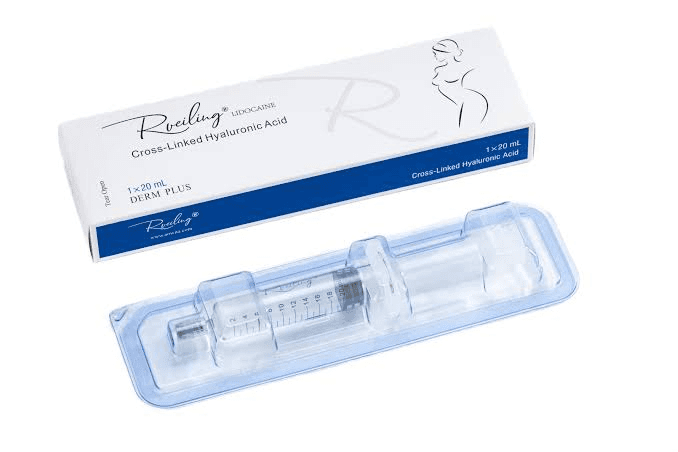
An HA filler with lidocaine combines a cross-linked hyaluronic acid gel with a controlled quantity of lidocaine hydrochloride within the finished formulation.
A simplified formulation may contain:
Hyaluronic acid gel
+
Lidocaine hydrochloride
+
Sodium chloride
+
Buffer system
+
Water for injection
Depending on the manufacturer, additional formulation details and cross-linking technology may vary.
The lidocaine is already incorporated into the product before use rather than being added separately during the procedure.
This allows the manufacturer to control the concentration and formulation during production.
What Is an HA Filler Without Lidocaine?
A hyaluronic acid filler without lidocaine contains no pre-incorporated local anesthetic.
Its core formulation may still contain:
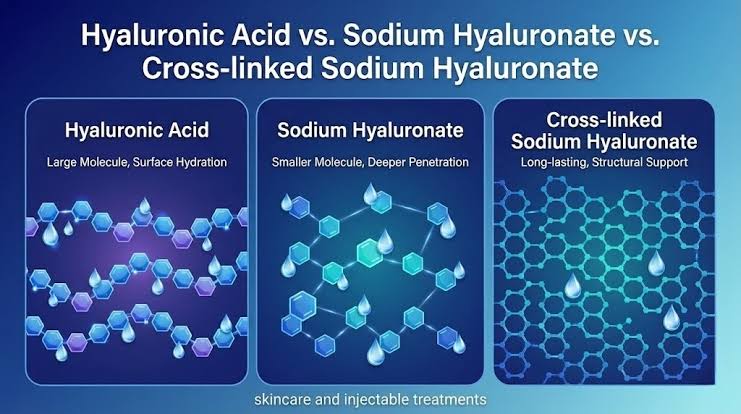
Cross-linked sodium hyaluronate
Physiological salts
Buffer system
Water for injection
depending on the product.
Pain management, if required, may therefore need to be addressed separately by the practitioner according to the product labeling, local regulations and clinical protocol.
It is important not to conclude that a filler without lidocaine is an outdated or inferior product.
Some markets, practitioners and patient populations may have specific reasons for requiring a non-lidocaine formulation.
HA Filler With Lidocaine vs Without Lidocaine: Key Differences
Feature | HA Filler With Lidocaine | HA Filler Without Lidocaine |
|---|---|---|
Local anesthetic | Included in formulation | Not included |
Injection discomfort | Generally reduced | May be greater |
Common lidocaine concentration | Often around 0.3%, product-dependent | None |
Core HA performance | Depends primarily on HA gel technology | Depends primarily on HA gel technology |
Product longevity | Lidocaine itself has not been shown to necessarily reduce longevity | Depends on HA formulation |
Allergy consideration | Lidocaine sensitivity must be considered | Useful where lidocaine must be avoided |
Labeling | Must identify lidocaine where required | No lidocaine component |
Regulatory evaluation | Exact lidocaine-containing formulation must be verified | Exact non-lidocaine formulation must also be verified |
B2B positioning | Comfort-focused professional product | Alternative for specific market or user needs |
The key point is that the lidocaine component should be evaluated separately from the underlying HA gel technology.
Does Lidocaine Reduce Injection Pain?
This is where the evidence is comparatively clear.
An updated 2024 systematic review and meta-analysis of randomized controlled trials comparing HA fillers with and without lidocaine in nasolabial-fold treatment found a statistically significant reduction in pain scores with lidocaine-containing HA.
Earlier randomized and split-face studies have also evaluated this question and reported improved injection comfort with pre-incorporated lidocaine formulations.
Therefore, one of the primary commercial and clinical reasons for incorporating lidocaine into an HA filler is:
improved injection comfort.
For clinics and aesthetic brands, this can be an important product-positioning feature.
Does Adding Lidocaine Make the Filler More Effective?
Not necessarily.
Lidocaine is primarily included as a local anesthetic.
It is not the component responsible for the volumizing properties of the HA gel.
In the 2024 meta-analysis, there was no statistically significant difference in overall wrinkle-severity outcomes between the lidocaine and non-lidocaine groups, while pain scores favored the lidocaine formulations.
Therefore, professional buyers should separate two concepts:
Lidocaine → injection comfort
from
HA gel technology → structural and rheological performance
A filler should not be considered technically superior simply because it contains lidocaine.
Does Lidocaine Make HA Filler Last Less Time?
This is another common concern.
Available comparative evidence does not indicate that properly formulated pre-incorporated lidocaine necessarily reduces the longevity of an HA filler.
One clinical study comparing a 24 mg/mL HA filler with pre-incorporated lidocaine against an equivalent non-lidocaine formulation followed patients for up to 76 weeks and reported that the inclusion of 0.3% lidocaine did not appear to reduce filler longevity.
That does not mean every lidocaine-containing filler has identical durability.
Longevity still depends on multiple variables, including:
HA concentration
Molecular weight
Cross-linking
Gel architecture
Rheological properties
Injection site
Individual biological factors
Lidocaine concentration alone should therefore not be used to predict how long an HA filler will persist.
What Actually Determines HA Filler Performance?
For a professional buyer, this is more important than the lidocaine question itself.
The performance of an HA dermal filler is primarily determined by the properties of the HA gel.
Important variables include:
HA Concentration
Usually expressed in mg/mL.
However, higher concentration does not automatically mean better product performance.
HA Molecular Weight
The molecular-weight strategy can affect polymer entanglement, processing and rheological behavior.
Cross-Linking Technology
Cross-linking transforms HA into a more stable three-dimensional network and increases resistance to degradation.
Degree of Modification
The extent and efficiency of chemical modification can influence the final network.
Rheology
Important parameters include:
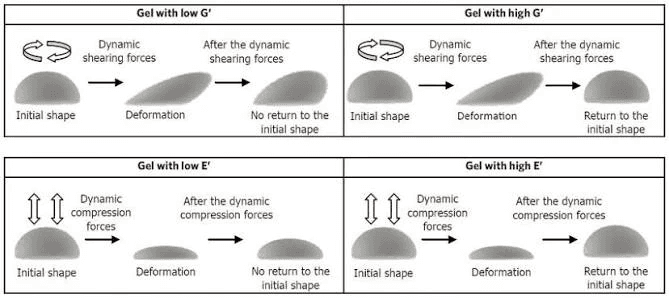
G′
G″
Complex modulus
Complex viscosity
Cohesivity
Gel Architecture
Monophasic, biphasic and other processing technologies can produce substantially different gel characteristics.
Therefore:
Lidocaine should be treated as one formulation component—not as the primary measure of filler quality.
Does Lidocaine Change HA Filler Rheology?
This requires a more careful answer than simply saying yes or no.
When lidocaine is incorporated into a commercial HA filler, the manufacturer must formulate and validate the complete product rather than simply adding anesthetic to an existing gel without further consideration.
Properties that may need to be evaluated include:
G′
G″
Viscosity
Cohesivity
Extrusion force
Stability
pH
Osmolality
A properly developed commercial formulation should therefore be assessed as a complete system.
Buyers should avoid assuming that two products are identical merely because one appears to be the “same HA filler plus lidocaine.”
Different formulations may involve different processing conditions or specifications.
0.3% Lidocaine in Dermal Fillers: What Does It Mean?
Many lidocaine-containing dermal fillers use approximately 0.3% lidocaine hydrochloride.
In concentration terms:
0.3% = approximately 3 mg/mL
when expressed as a mass-per-volume concentration in the usual formulation context.
However, this should not be generalized to every HA filler.
Always verify the exact product specification.
With Lidocaine vs Topical Anesthetic: Are They the Same?
No.
Pre-incorporated lidocaine and topical anesthetic serve related comfort objectives but are not the same product feature.
Pre-Incorporated Lidocaine
The local anesthetic is already contained within the filler formulation.
Topical Anesthetic
A separate anesthetic product may be applied to the skin before injection, depending on the procedure and applicable clinical protocol.
A practitioner may also use other pain-management approaches depending on:
Product labeling
Anatomical area
Patient requirements
Local medical practice
Applicable regulations
For B2B purchasing, the important distinction is that pre-incorporated lidocaine is part of the medical-device formulation itself and therefore needs to be reflected in product documentation and labeling.
Are There Situations Where a Non-Lidocaine Filler May Be Preferred?
Yes.
A lidocaine-containing formulation is not appropriate for every situation.
The FDA advises patients to inform healthcare professionals about allergies to local anesthetics such as lidocaine because some dermal fillers contain it.
A non-lidocaine formulation may therefore be relevant when:
The target market requires a specific non-lidocaine product
A practitioner needs an alternative formulation
Lidocaine is contraindicated for a particular patient
The registered or authorized product configuration does not include lidocaine
These decisions belong within appropriate professional and regulatory frameworks.
For a manufacturer or distributor, offering both configurations can potentially broaden product-portfolio flexibility, provided each formulation meets the relevant regulatory requirements.
Is Lidocaine Allergy Important for Dermal Filler Buyers?
Yes.
Although serious allergic reactions to lidocaine are not the most common issue associated with dermal filler use, allergy and hypersensitivity considerations are still clinically relevant.
The FDA includes allergy to local anesthetics such as lidocaine among the conditions patients should disclose to their healthcare provider before receiving a filler containing the ingredient.
For manufacturers and distributors, this means labeling should clearly identify formulation components according to applicable rules.
For clinics, patient screening remains important.
For B2B buyers, the lesson is simple:
Never treat the presence of lidocaine as only a marketing feature.
It is an active formulation component.
Does Lidocaine Change Dermal Filler Safety?
Available comparative research should be interpreted carefully.
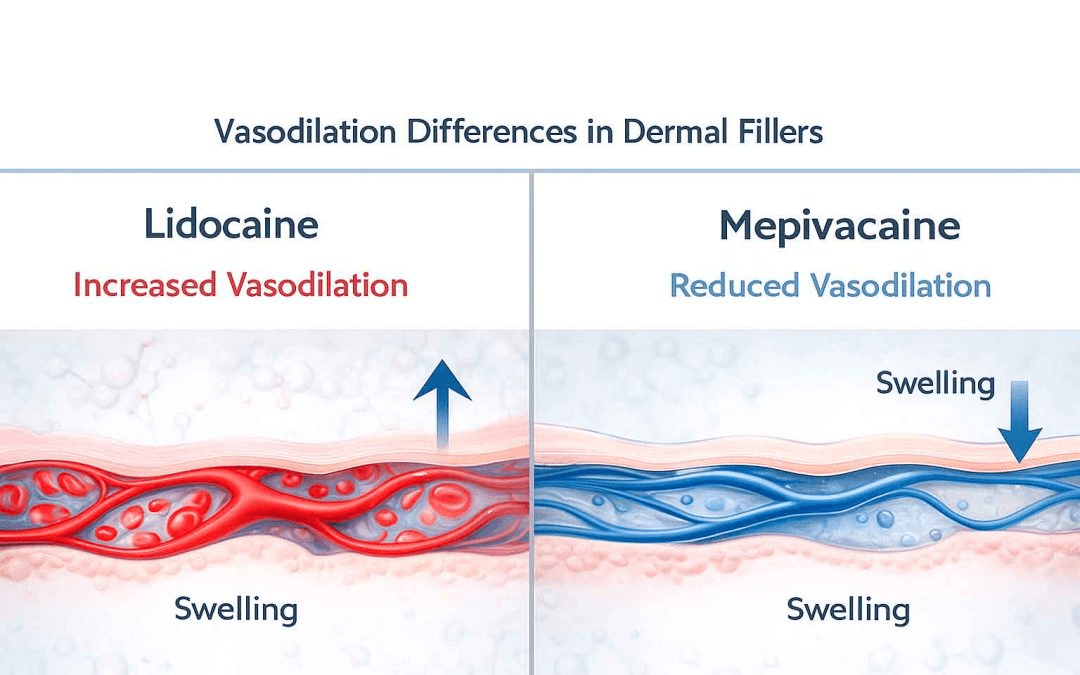
The 2024 systematic review found no significant difference between HA with and without lidocaine for several evaluated adverse-event outcomes, including swelling, erythema, bruising, itching and induration.
However, the authors also noted limitations in the available evidence and stated that further research is needed.
This means the responsible conclusion is not:
“Lidocaine makes fillers safer.”
Nor is it:
“Lidocaine makes fillers more dangerous.”
Rather:
The available comparative studies suggest that properly formulated lidocaine-containing HA fillers can provide reduced injection pain without clear evidence of worse overall effectiveness in the studied indications, but individual product safety must still be evaluated through its own data and labeling.
Why Buyers Should Not Add Lidocaine Themselves
Professional B2B buyers should distinguish between:
manufacturer-integrated lidocaine
and
unvalidated modification of a finished product.
Adding another substance to a finished filler can alter:
Concentration
Viscosity
Sterility
pH
Product volume
Mechanical characteristics
and may also conflict with the product labeling or applicable regulations.
Commercial HA fillers containing lidocaine should therefore be formulated and validated by the manufacturer as complete products.
Lidocaine and Extrusion Force
Extrusion force describes the force needed to push an HA filler through its syringe and needle or cannula.
It can be influenced by:
Gel viscosity
Gel homogeneity
Syringe design
Needle diameter
Needle length
Temperature
Formulation
For product developers, the complete HA-plus-lidocaine formulation should therefore be evaluated together with its delivery system.
A low-pain product that is excessively difficult to extrude would not represent an optimized system.
Likewise, easy extrusion alone does not establish product quality.
What Should B2B Buyers Compare?
When purchasing an HA filler with lidocaine, do not ask only:
“Does this contain 0.3% lidocaine?”
A more professional comparison includes several layers.
HA Gel Technology
Ask about:
HA concentration
Molecular-weight strategy
Cross-linking
Monophasic or biphasic structure
Rheological profile
Lidocaine
Confirm:
Exact concentration
Chemical form
Product labeling
Documentation
Syringe Configuration
Verify:
1 mL, 2 mL or other specification
Needle or cannula configuration
Prefilled syringe design
Quality
Evaluate:
Manufacturing quality system
Sterility
Batch consistency
Stability
Traceability
Regulatory Status
Confirm whether the exact formulation is suitable for the destination market.
Why the Exact Formulation Matters for Regulatory Compliance
A common sourcing mistake is assuming that if a manufacturer has one HA filler registration, every similar HA formulation is automatically covered.
That should never be assumed.
A change such as:
HA filler without lidocaine
to
HA filler with lidocaine
can represent a materially different product configuration from a regulatory standpoint.
The U.S. FDA, for example, evaluates dermal fillers according to specific products and indications, and maintains product-specific information for approved fillers.
Therefore, B2B buyers should ask:
Is this exact HA + lidocaine formulation covered by the documentation you are providing?
not simply:
Do you have a certificate?
How to Evaluate a Manufacturer's HA + Lidocaine Product
A professional manufacturer should be able to provide clear answers about the finished formulation.
Useful questions include:
What is the sodium hyaluronate concentration?
What is the lidocaine concentration?
What cross-linking technology is used?
Is the HA gel monophasic or biphasic?
What syringe volumes are available?
What rheological data are available?
What is the shelf life?
What are the storage conditions?
How is sterility controlled?
What batch documentation is supplied?
Which regulatory documents apply to this exact formulation?
Are non-lidocaine versions also available?
The quality of the manufacturer's answers is often more informative than a simple price comparison.
With Lidocaine vs Without Lidocaine for Private Label Brands
For an OEM or private-label project, this decision should be made early.
Changing it late in product development can affect:
Formulation
Documentation
Artwork
Labeling
Market positioning
Regulatory pathway
A private-label brand should therefore define its product specification before packaging design begins.
A basic product brief could include:
HA Technology: Cross-linked HA
Structure: Monophasic or biphasic
HA Concentration: X mg/mL
Lidocaine: 0.3% / none
Syringe: 1 mL / 2 mL / other
Target Market: Country or region
Branding: Private label / OEM
This creates a much clearer sourcing process.
Does Every Market Prefer HA Fillers With Lidocaine?
No universal preference applies across all countries or professional markets.
Demand can vary according to:
Existing product registrations
Practitioner habits
Local regulations
Competitive products
Distributor positioning
Patient expectations
This is why product development should begin with market research rather than simply copying a competitor's formulation.
A formulation that performs commercially well in one country may not be the appropriate product configuration for another.
Aowita's HA Filler With Lidocaine Platform
Aowita currently manufactures Rveiling® cross-linked sodium hyaluronate gel formulations containing lidocaine hydrochloride.
Its current product portfolio lists cross-linked HA products containing sodium hyaluronate, lidocaine hydrochloride, sodium chloride, water for injection and a phosphate-buffer system.
For its 20 mL cross-linked HA formulation, the current specification lists:
Sodium Hyaluronate: 25 mg/mL
Lidocaine Hydrochloride: 3 mg/mL
together with BDDE, sodium chloride, water for injection and a phosphate-buffer system.
The product page positions lidocaine as a component intended to reduce injection discomfort, while the HA gel technology provides the structural and rheological properties of the filler.
For distributors and OEM/private-label partners, this distinction is important:
Lidocaine supports injection comfort.
The HA gel architecture determines the core filler behavior.
HA Filler With Lidocaine vs Without Lidocaine: Which Should Buyers Choose?
There is no universal winner.
Choose based on the complete product requirement.
Consider HA With Lidocaine When
The intended commercial product prioritizes reduced injection discomfort and the formulation is appropriate for the target market.
Consider HA Without Lidocaine When
A non-lidocaine formulation is specifically required by the market, practitioner or product strategy.
In either case, evaluate:
HA technology + formulation + quality + regulatory status + documentation
together.
Choosing a filler simply because it “contains lidocaine” is no better than choosing one simply because it has the highest HA concentration.
Conclusion
The difference between hyaluronic acid filler with lidocaine and without lidocaine is straightforward at the formulation level but more important at the product-development level.
Lidocaine is included primarily to reduce injection-related discomfort.
Current comparative evidence indicates that lidocaine-containing HA fillers can reduce pain while showing broadly comparable wrinkle-correction outcomes to non-lidocaine formulations in the studied nasolabial-fold trials.
Frequently Asked Questions
What does lidocaine do in hyaluronic acid fillers?
Lidocaine is a local anesthetic included in some HA filler formulations to reduce discomfort associated with injection. The FDA also describes lidocaine in dermal fillers as being intended to decrease injection-related pain or discomfort.
What percentage of lidocaine is commonly used in HA fillers?
Many commercial formulations use approximately 0.3% lidocaine hydrochloride, equivalent to about 3 mg/mL, although specifications differ between products.
Is HA filler with lidocaine better?
Not universally. Lidocaine can improve injection comfort, but the underlying HA gel technology determines most of the filler's structural characteristics.
Does HA filler with lidocaine hurt less?
Comparative clinical evidence indicates that HA formulations containing lidocaine can significantly reduce injection-pain scores compared with formulations without lidocaine.
Does lidocaine reduce filler longevity?
A comparative study of pre-incorporated 0.3% lidocaine reported no apparent negative effect on HA filler longevity in the studied product. This should not be generalized to every formulation without product-specific evidence.
Does lidocaine affect filler results?
The 2024 meta-analysis found no significant difference in overall wrinkle-severity outcomes between the HA-with-lidocaine and HA-without-lidocaine groups in the analyzed nasolabial-fold trials.
Can someone allergic to lidocaine receive filler containing lidocaine?
This requires professional medical assessment. The FDA specifically advises people with allergy to local anesthetics such as lidocaine to inform their healthcare provider because some dermal fillers contain it.
Is 0.3% lidocaine the same as 3 mg/mL?
In the typical mass-per-volume formulation context, 0.3% corresponds to approximately 3 mg/mL.
Can a dermal filler manufacturer offer both lidocaine and non-lidocaine formulations?
Manufacturing capability varies. However, each finished formulation needs appropriate development, quality control, documentation and regulatory assessment rather than treating lidocaine addition as a simple packaging option.
What should distributors check before buying HA filler with lidocaine?
Check the exact HA and lidocaine concentrations, cross-linking technology, rheological characteristics, syringe specification, batch documentation, shelf life, quality system and regulatory status for the destination market.
其他博客