博客
What Is BDDE Cross-Linking in Hyaluronic Acid Dermal Fillers?
作者
Ray
已发布
类别
Hyaluronic acid filler
Learn how BDDE cross-linking improves hyaluronic acid dermal fillers, including gel stability, rheological properties, manufacturing process and quality control.


作者
Ray
一位享有盛誉的医学美学专家,在该领域拥有40年的深厚经验。凭借在非侵入性手术、抗衰老科学以及先进皮肤病学解决方案方面的数十年专业知识,作者致力于分享将临床创新与真实患者成果相结合的见解。热衷于为全球客户推进安全、有效且高影响力的美学治疗。
还有什么比内部优惠、专业建议和惊喜更好的呢?
注册可每周在您的电子邮件中接收最新的博客文章。
立即加入。
Our company’s main product lines include HA (Hyaluronic Acid) fillers, CaHA (Calcium Hydroxylapatite) fillers, PLLA (Poly-L-Lactic Acid) biostimulators, and other advanced aesthetic solutions, all developed and manufactured by trusted partner facilities with whom we have maintained long-term, stable collaborations.
I help them with sales and export operations, while our company also provides sourcing and procurement services in China to help international clients solve supply-related challenges. If you need assistance with procurement, please feel free to contact us.
No headings found
Introduction
Hyaluronic acid (HA) dermal fillers have become one of the most widely used injectable aesthetic products due to their excellent biocompatibility, versatility and ability to restore facial volume.
However, naturally occurring hyaluronic acid has limited stability after injection because it can be rapidly degraded by enzymes such as hyaluronidase.
To improve the durability and performance of HA-based products, manufacturers use cross-linking technology to create a stable three-dimensional gel network.
BDDE (1,4-butanediol diglycidyl ether) is one of the most commonly used cross-linking agents in modern hyaluronic acid filler manufacturing.
For aesthetic brands, distributors and OEM buyers, understanding BDDE cross-linking technology is essential when evaluating HA filler quality, product performance and manufacturing capability.
Why Does Hyaluronic Acid Need Cross-Linking?
Natural Hyaluronic Acid Characteristics
Hyaluronic acid is a naturally occurring polysaccharide found in human skin, connective tissues and extracellular matrix.
It has several beneficial properties:
High water-binding ability
Good biocompatibility
Natural compatibility with human tissues
However, unmodified HA is rapidly degraded in the body.
For aesthetic applications, manufacturers need to modify HA into a more stable gel structure while maintaining safety and injectability.
The Purpose of HA Cross-Linking
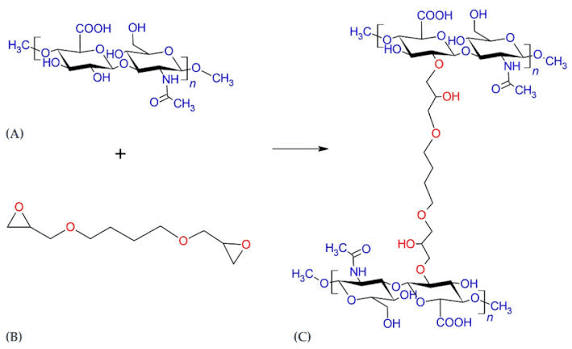
Cross-linking creates chemical bonds between HA polymer chains.
These connections form a three-dimensional network that improves the physical stability of the gel.
The cross-linking process can influence:
Resistance to degradation
Elasticity
Cohesivity
Viscosity
Gel stability
Tissue-supporting ability
A high-quality HA filler is not simply highly cross-linked. The goal is to achieve the right balance between stability, flexibility and product performance.
What Is BDDE?
BDDE stands for 1,4-Butanediol Diglycidyl Ether.
It is a bifunctional cross-linking molecule used to connect hyaluronic acid chains during filler manufacturing.
Because BDDE contains reactive epoxy groups, it can create bridges between HA molecules and transform linear HA chains into a three-dimensional gel structure.
This allows manufacturers to develop HA fillers with different mechanical characteristics, including:
Soft and flexible gels
Medium-support fillers
Highly structured volumizing fillers
The final product performance depends on the complete formulation design, not only the use of BDDE.
How Does BDDE Cross-Linking Work?
Preparation of Hyaluronic Acid
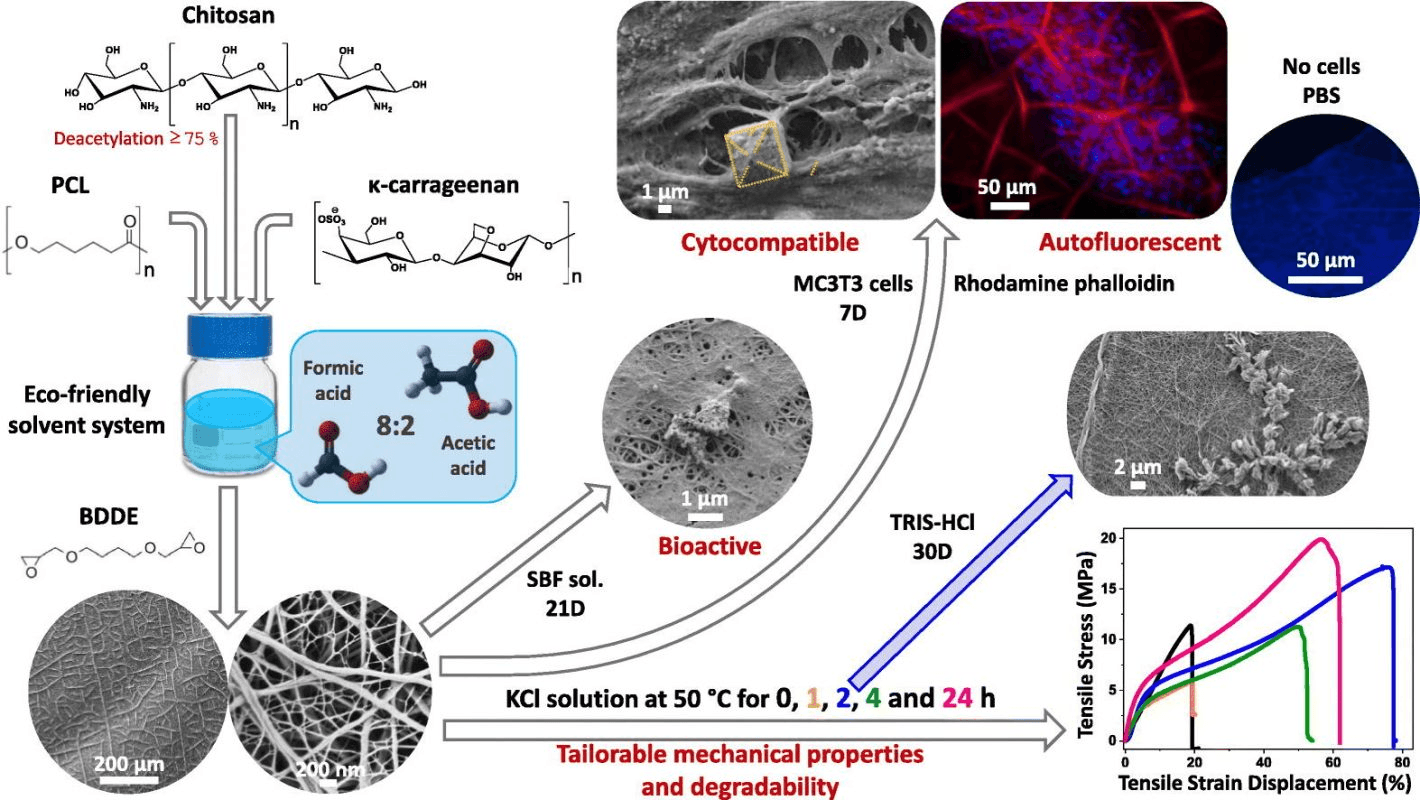
The manufacturing process begins with purified hyaluronic acid, commonly produced through microbial fermentation.
Before the cross-linking reaction, manufacturers evaluate important raw material characteristics, including:
HA molecular weight
Purity
Concentration
Chemical properties
These factors influence the final gel performance.
BDDE Cross-Linking Reaction
During manufacturing, BDDE is added to the HA solution under controlled conditions.
The BDDE molecules react with HA chains and create connections between polymer molecules.
Manufacturers carefully control:
BDDE ratio
Reaction temperature
Reaction time
pH conditions
Mixing parameters
Small changes in these factors can influence the final:
Gel structure
Elasticity
Cohesivity
Viscosity
Purification Process
After cross-linking, the HA gel undergoes purification.
This stage is critical for removing unwanted reaction-related substances and maintaining product quality.
Professional manufacturers apply strict controls to ensure:
Product purity
Batch consistency
Chemical stability
Safety requirements
Final Gel Processing
After purification, the cross-linked HA gel is processed according to the intended product design.
Manufacturers may develop different HA filler platforms, including:
Monophasic HA fillers
Biphasic HA fillers
Highly cross-linked HA fillers
Micro-cross-linked HA formulations
Different processing technologies allow manufacturers to create products with different rheological profiles.
How Does BDDE Affect HA Filler Properties?
Elasticity (G′)
G′ represents the elastic component of a viscoelastic material.
In HA fillers, it indicates how strongly the gel resists deformation.
A controlled cross-linking structure can improve:
Structural support
Projection capability
Resistance to external forces
However, excessive elasticity may reduce flexibility and natural movement.
Cohesivity
Cohesivity describes how well the gel maintains its internal structure when external forces are applied.
A cohesive HA filler can maintain its integrity while adapting to surrounding tissue.
Cohesivity influences:
Tissue integration
Gel behavior after injection
Handling characteristics
Viscosity
Cross-linking also affects the internal resistance of the HA gel.
Viscosity influences:
Injection force
Syringe extrusion performance
Gel flow characteristics
Manufacturers must balance viscosity to achieve both stability and ease of injection.
Swelling Behavior
Hyaluronic acid naturally attracts water molecules.
After implantation, cross-linked HA fillers may absorb water, and the degree of swelling depends on:
Cross-linking density
HA concentration
Gel structure
Controlled swelling is important for predictable product performance.

Does More BDDE Mean a Better HA Filler?
Not necessarily.
A common misconception is that a higher level of cross-linking automatically creates a better filler.
In reality, excessive cross-linking may lead to:
Increased stiffness
Reduced flexibility
Changes in injection characteristics
Insufficient cross-linking may result in:
Lower stability
Faster degradation
Reduced structural performance
The objective of professional HA filler development is controlled optimization.
Manufacturers must balance:
Gel strength
Flexibility
Cohesivity
Longevity
Injection performance
Relationship Between BDDE Cross-Linking and HA Filler Types
BDDE technology can be used in different HA filler structures.
Monophasic HA Fillers
Monophasic fillers generally contain a more homogeneous gel structure.
Common characteristics include:
Smooth gel consistency
Integrated HA network
Strong cohesivity
Biphasic HA Fillers
Traditional biphasic fillers contain cross-linked HA gel particles dispersed within a carrier phase.
Their properties are influenced by:
Particle size
Particle distribution
Cross-linking degree
Carrier composition
Therefore, BDDE is only one factor affecting the final performance of an HA filler.
How Manufacturers Control BDDE Cross-Linking Quality
Professional HA filler manufacturing requires strict process control.
Raw Material Control
Manufacturers evaluate:
HA source
Molecular weight
Purity
Microbial quality
Reaction Parameter Control
Manufacturing teams monitor:
BDDE amount
Reaction conditions
Processing parameters
to maintain consistent product characteristics.
Rheological Testing
Quality evaluation may include:
G′ measurement
G″ measurement
Viscosity testing
Cohesivity analysis
Extrusion force testing
These tests help verify product consistency.
Safety and Quality Testing
Finished HA fillers require appropriate quality verification, including:
Sterility testing
Stability testing
Chemical analysis
Batch evaluation
Why BDDE Technology Matters for OEM and Private Label Buyers
For companies developing their own aesthetic product lines, understanding cross-linking technology helps evaluate potential suppliers.
Before selecting an HA filler manufacturer, buyers should consider:
Manufacturing Experience
Does the supplier have experience producing different HA gel technologies?
Technical Capability
Can the manufacturer provide:
Product specifications
Quality documentation
Technical data
Testing information
Customization Support
OEM customers may require:
Customized HA formulations
Lidocaine options
Packaging design
Private labeling
Product portfolio development
A reliable manufacturer should provide both production capability and technical expertise.
Aowita's Hyaluronic Acid Filler Manufacturing Capability
Aowita develops and manufactures hyaluronic acid dermal filler solutions for professional aesthetic markets.
The HA filler portfolio includes:
Monophasic HA fillers
Biphasic HA fillers
Highly cross-linked HA fillers
Micro-cross-linked HA formulations
With formulation development expertise and OEM/ODM manufacturing support, Aowita helps aesthetic brands and distributors create customized injectable aesthetic products.
From formulation selection and product customization to packaging and production support, Aowita provides solutions for companies seeking a professional HA filler manufacturing partner.
Conclusion
BDDE cross-linking is one of the key technologies behind modern hyaluronic acid dermal fillers.
By creating connections between HA polymer chains, BDDE helps manufacturers develop stable injectable gels with controlled mechanical properties.
However, the quality of an HA filler depends on much more than the cross-linking agent itself.
A successful formulation requires precise control of:
HA characteristics
Cross-linking degree
Purification process
Rheological properties
Manufacturing quality systems
For aesthetic brands, distributors and OEM buyers, understanding BDDE cross-linking provides valuable insight when selecting HA filler products and evaluating manufacturing partners.
Frequently Asked Questions
What is BDDE in hyaluronic acid fillers?
BDDE is a cross-linking agent used to connect HA polymer chains and create a stable injectable gel structure.
Why is BDDE used in HA fillers?
BDDE improves gel stability and allows manufacturers to control important properties such as elasticity, cohesivity and viscosity.
Does BDDE make HA fillers last longer?
Cross-linking can improve resistance to degradation compared with non-cross-linked hyaluronic acid.
Is a higher BDDE level always better?
No. The best formulation requires a balance between stability, flexibility, cohesivity and injectability.
Are all HA fillers made with BDDE?
No. Different cross-linking technologies exist, but BDDE remains one of the most widely used approaches in HA filler manufacturing.
其他博客