博客
PLLA-PEG vs Traditional PLLA Fillers: Clinical Benefits, Duration, and Patient Outcomes
作者
Ray
已发布
类别
设计与灵感
Poly-L-lactic acid (PLLA) fillers, as collagen-stimulating fillers, have been widely used in facial volume restoration and anti-aging treatments. In recent years, the upgraded PLLA-PEG Freeze-Dried Powder Facial Implant Filler has shown significant advantages in terms of safety, durability, and clinical predictability by introducing PEG copolymers and freeze-dried microsphere technology on the basis of PLLA.

作者
Ray
一位享有盛誉的医学美学专家,在该领域拥有40年的深厚经验。凭借在非侵入性手术、抗衰老科学以及先进皮肤病学解决方案方面的数十年专业知识,作者致力于分享将临床创新与真实患者成果相结合的见解。热衷于为全球客户推进安全、有效且高影响力的美学治疗。
还有什么比内部优惠、专业建议和惊喜更好的呢?
注册可每周在您的电子邮件中接收最新的博客文章。
立即加入。
Our company’s main product lines include HA (Hyaluronic Acid) fillers, CaHA (Calcium Hydroxylapatite) fillers, PLLA (Poly-L-Lactic Acid) biostimulators, and other advanced aesthetic solutions, all developed and manufactured by trusted partner facilities with whom we have maintained long-term, stable collaborations.
I help them with sales and export operations, while our company also provides sourcing and procurement services in China to help international clients solve supply-related challenges. If you need assistance with procurement, please feel free to contact us.
1. What is PLLA-PEG Freeze-Dried Powder Facial Implant Filler?
PLLA-PEG Freeze-Dried Powder Facial Implant Filler is a freeze-dried powder facial implant filler composed of Poly(L-lactic acid)-PEG copolymer microspheres and a carrier. It is aseptically diluted and reconstituted before injection.
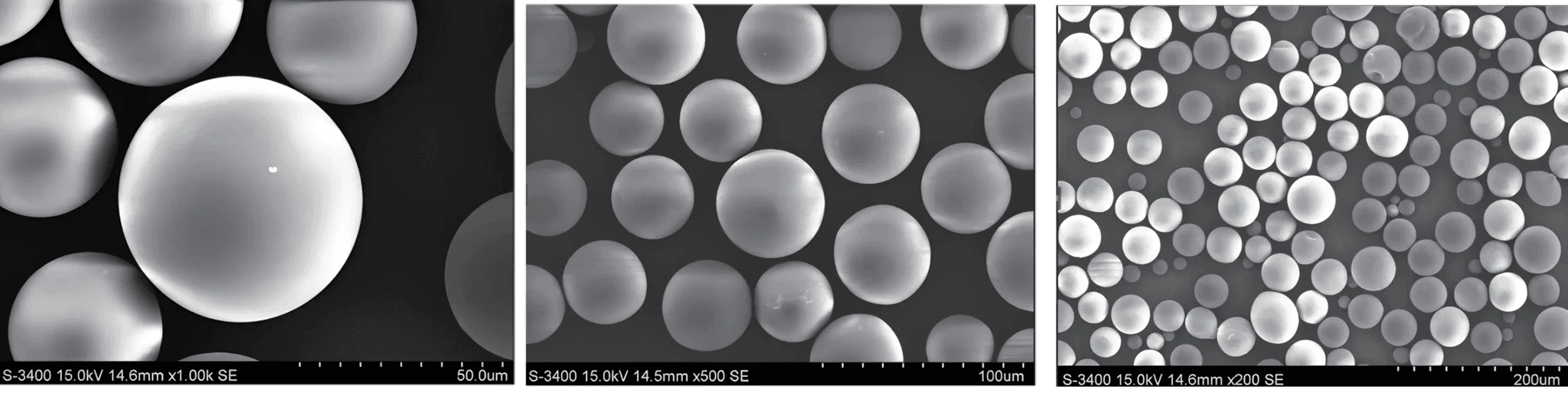
This formulation improves biocompatibility, reduces nodule incidence, and continuously induces collagen regeneration in the dermis and subcutaneous tissues by optimizing microsphere size (typically 20–65 μm) and surface hydrophilicity.
2. PLLA-PEG vs Traditional PLLA Fillers: Materials and Technology Upgrades
Traditional PLLA fillers are usually lyophilized PLLA granules, which require a long reconstitution time and thorough shaking. If not handled properly, problems such as particle aggregation and uneven distribution are more likely to occur.
The new generation PLLA-PEG Freeze-Dried Powder Facial Implant Filler incorporates a PEG segment into its molecular structure, which significantly improves hydrophilicity and dispersibility. The microspheres are more rounded and uniform, making them easier to spread evenly in tissues during injection.
I. Mechanism – Collagen biostimulator with PEG-enhanced safety
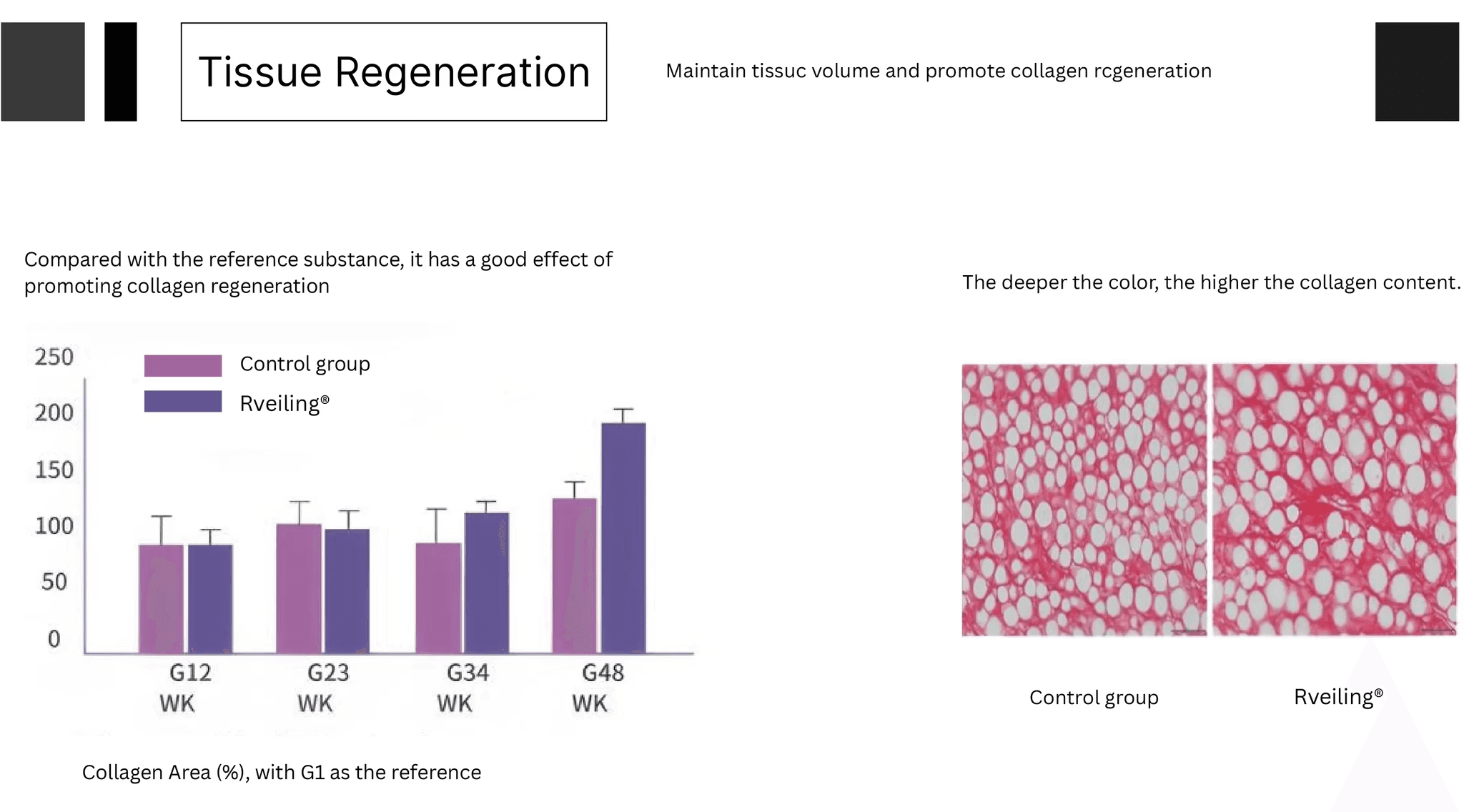
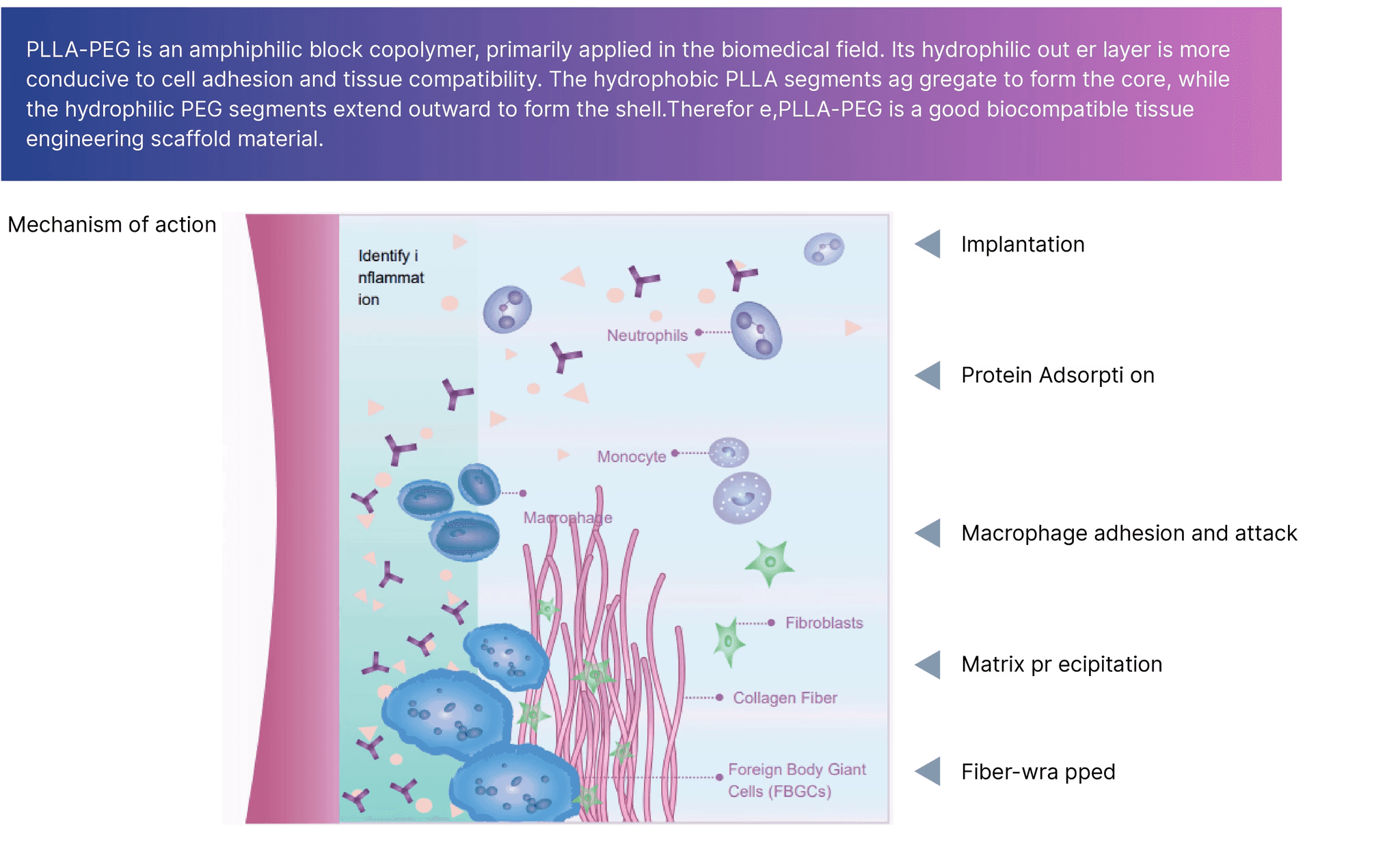
PLLA induces a mild inflammatory response, stimulating fibroblasts to produce type I and type III collagen, thereby achieving volume remodeling by "replacing fillers with new collagen".
In PLLA-PEG Freeze-Dried Powder Facial Implant Filler, the PEG segment results in lower surface energy and better hydrophilicity, which helps collagen fibers form a uniform "spider web" scaffold on the surface of microspheres, thus achieving a smoother and more natural volume transition.
II. Clinical benefits of PLLA-PEG Freeze-Dried Powder Facial Implant Filler
Traditional PLLA is effective but can sometimes be difficult to reconstitute or may lead to uneven distribution. The addition of PEG and HA (Hyaluronic Acid) changes the physical behavior of the filler.
Feature | Traditional PLLA | PLLA-PEG / HA Microspheres |
Hydration | Requires long reconstitution times | Rapid "freeze-dried" reconstitution |
Texture | Can feel granular if not prepared well | Smooth, spherical, and uniform |
Mechanism | Mechanical stimulation of fibroblasts | Dual Stimulation: Volumizing + Biochemical signaling |
Risk Profile | Potential for nodules if over-clumped | Lower risk of displacement and stiffness |
The shift toward PLLA-PEG (Poly-L-Lactic Acid - Polyethylene Glycol) microspheres represents a significant evolution in regenerative aesthetics. By integrating PEG, the traditional PLLA framework is enhanced to be more "biocompatible" and easier to manage clinically.
Here is a breakdown of why these materials are gaining traction for facial contouring and skin quality.
1. The Science of the "Upgrade"
Traditional PLLA is effective but can sometimes be difficult to reconstitute or may lead to uneven distribution.1 The addition of PEG and HA (Hyaluronic Acid) changes the physical behavior of the filler.
Feature | Traditional PLLA | PLLA-PEG / HA Microspheres |
Hydration | Requires long reconstitution times | Rapid "freeze-dried" reconstitution |
Texture | Can feel granular if not prepared well | Smooth, spherical, and uniform |
Mechanism | Mechanical stimulation of fibroblasts | Dual Stimulation: Volumizing + Biochemical signaling |
Risk Profile | Potential for nodules if over-clumped | Lower risk of displacement and stiffness |
2. Targeting Specific Facial Concerns
The "freeze-dried" PLLA-PEG technology is particularly effective for structural hollowing because it doesn't just "fill"—it rebuilds the scaffold.
Mid-face & Temples: Instead of the "pillowy" look caused by some gels, PLLA-PEG creates a firm, natural-feeling foundation by stimulating the body’s own Type I and Type III collagen.
Jawline Laxity: Because the microspheres stay where they are placed (low displacement), they provide a "lifting" effect as the collagen matrix thickens over 3–6 months.
Skin Radiance: The addition of HA provides immediate hydration, while the PLLA-PEG ensures long-term elasticity and "glow" from within.
3. Why Patients Prefer This Approach
The primary goal of modern aesthetics is to avoid the "frozen" or "overfilled" look. PLLA-PEG achieves this through:
Gradual Results: Changes happen over months, making the transition look natural to others.
Tissue Integration: The microspheres integrate into the skin’s architecture rather than sitting on top of it as a foreign mass.
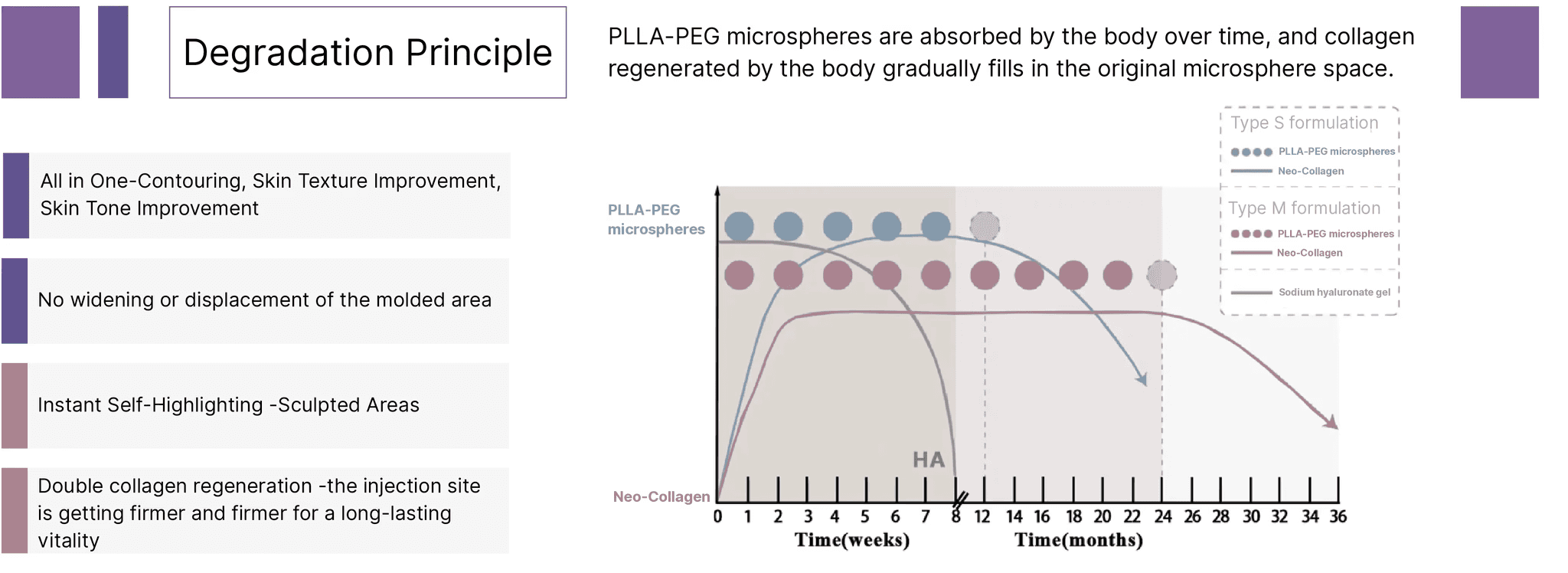
Longevity: While the PEG/HA components may settle or absorb, the collagen stimulated by the PLLA can last up to 2 years or more.
3. Duration – How Long Does PLLA Filler Last?
PLLA fillers work through a biostimulatory mechanism, stimulating the body’s natural collagen production rather than providing only temporary volume.
As a result, treatment longevity is influenced by multiple variables, including product formulation, injection protocol, and individual metabolic response.
I. PLLA-PEG vs. Traditional PLLA Filler Longevity
Traditional PLLA fillers
Typical duration: 18–24 months
Longevity depends on:
Injection depth and technique
Total dosage and treatment layering
Patient metabolism and collagen response
PLLA-PEG Freeze-Dried Powder Facial Implant Filler
Enhanced microsphere stability
Promotes a more uniform collagen regeneration network
Reported duration: 18–25+ months
Benefits include:
Fewer touch-up sessions
More consistent long-term aesthetic outcomes
This improved durability makes PLLA-PEG fillers well-suited for patients seeking long-lasting collagen stimulation with reduced maintenance frequency.
II. Patient Outcomes and Maintenance Protocols
Clinical outcomes
With standardized injection techniques and fractionated treatment plans:
80–90% of patients report satisfaction or high satisfaction
Improvements observed in:
Wrinkle reduction
Volume restoration
Skin firmness and texture
Recommended treatment protocol
2–3 treatment sessions
Intervals of several weeks to several months
Maintenance treatments every 18–24 months, based on:
Aging progression
Desired aesthetic goals
This structured regimen supports PLLA-based fillers as a long-term anti-aging solution, rather than a one-time corrective filler.
4. Is PLLA Better Than Hyaluronic Acid?
PLLA and hyaluronic acid (HA) fillers serve different clinical purposes. The choice depends on whether the treatment goal is immediate volume correction or long-term collagen stimulation.
I. PLLA-PEG Collagen Stimulator vs. Hyaluronic Acid Volumizer
Hyaluronic Acid (HA) Fillers
Mechanism: Instant volumization through water absorption
Onset: Immediate visible results
Duration: 6–18 months
Reversibility: Can be dissolved with hyaluronidase
Best suited for:
Precise contouring
Superficial wrinkle correction
Short-term aesthetic needs
PLLA & PLLA-PEG Freeze-Dried Powder Facial Implant Fillers
Mechanism: Biostimulation of collagen production
Onset: Gradual improvement over 6–12 weeks
Duration: 18–24 months or longer
Key advantages:
Natural-looking, progressive rejuvenation
Long-term structural skin support
Fewer frequent maintenance treatments
PLLA-based fillers are ideal for patients seeking subtle, natural, and long-lasting anti-aging results, rather than immediate volume correction.
II. When to Choose PLLA-PEG Freeze-Dried Powder Facial Implant Filler
PLLA-PEG is often preferred when patients present with:
Generalized facial sagging
Temple and midface hollowing
Loss of jawline definition
A desire to “look younger gradually” without abrupt changes
Combination therapy considerations
For patients requiring:
Precise shaping (e.g., nasal bridge)
Correction of fine, superficial wrinkles
Results for upcoming short-term events
A combined HA + PLLA-PEG treatment strategy can be employed, delivering:
Immediate contour correction (HA)
Sustained collagen regeneration and long-term support (PLLA-PEG)
This approach balances short-term aesthetic needs with long-term facial rejuvenation goals.
5. FAQ – PLLA-PEG Freeze-Dried Powder Facial Implant Filler
Q1:How long does PLLA filler last?
Most studies and clinical experience show that the effects of PLLA fillers can last for about 18–24 months, and some PLLA-PEG formulations can even last longer with proper maintenance.
Q2:Is PLLA better than hyaluronic acid?
PLLA (including PLLA-PEG Freeze-Dried Powder Facial Implant Filler) is more suitable as a long-term, gradual anti-aging treatment, while HA is more suitable for immediate filling and short-term touch-ups. It is not that one is "better" than the other, but rather that they are suitable for different scenarios.
Q3:What is the difference between PLLA and fillers?
PLLA is a "biodegradable collagen stimulant" that fills by stimulating the body's own collagen production. In contrast, most common fillers (such as HA) mainly rely on the material itself to occupy space and absorb water to create volume. Their mechanisms and durations of action are different.
Q4:How much does PLLA cost?
While the price per PLLA treatment is typically higher than that of HA, the overall cost-effectiveness is often better due to the longer duration of the treatment, which lasts from 18 to 24 months. Specific prices vary depending on the city and clinic.
其他博客