博客
PDRN Serum vs Exosome Serum: What Is the Difference for Aesthetic Clinics?
作者
Ray
已发布
类别
设计与灵感
Compare PDRN serum and exosome skincare products for aesthetic clinics. Learn the differences, supplier factors, and how to choose the right option.


作者
Ray
一位享有盛誉的医学美学专家,在该领域拥有40年的深厚经验。凭借在非侵入性手术、抗衰老科学以及先进皮肤病学解决方案方面的数十年专业知识,作者致力于分享将临床创新与真实患者成果相结合的见解。热衷于为全球客户推进安全、有效且高影响力的美学治疗。
还有什么比内部优惠、专业建议和惊喜更好的呢?
注册可每周在您的电子邮件中接收最新的博客文章。
立即加入。
Our company’s main product lines include HA (Hyaluronic Acid) fillers, CaHA (Calcium Hydroxylapatite) fillers, PLLA (Poly-L-Lactic Acid) biostimulators, and other advanced aesthetic solutions, all developed and manufactured by trusted partner facilities with whom we have maintained long-term, stable collaborations.
I help them with sales and export operations, while our company also provides sourcing and procurement services in China to help international clients solve supply-related challenges. If you need assistance with procurement, please feel free to contact us.
Understanding PDRN and Exosome-Based Skincare Products
Aesthetic clinics and skincare brands are constantly evaluating new ingredients to create products that match changing customer expectations. PDRN and exosome-based skincare products are two concepts that have attracted attention in the regenerative skincare market, but they represent different approaches to product development.
For clinics deciding which type of product to introduce, the question is not simply which ingredient is more popular. The more important considerations include:
Product positioning
Target customers
Manufacturing capability
Market requirements
Long-term brand strategy
Both PDRN and exosome-based products require careful evaluation before being added to a professional skincare portfolio.
What Is PDRN in Aesthetic Skincare?
PDRN (Polydeoxyribonucleotide) is a DNA-derived ingredient used in certain skincare and aesthetic product formulations.
In skincare products, PDRN is commonly positioned as an ingredient associated with skin-conditioning and regenerative skincare concepts. It has gained attention among clinics and brands because of its connection with professional aesthetic treatments and advanced skincare formulations.
For product developers, PDRN is not only about the ingredient itself. The final product experience depends on the complete formulation, including:
Supporting ingredients
Product texture
Delivery system
Packaging
Intended use
A PDRN serum designed for daily skincare may have different formulation goals from a professional clinic-oriented product.
Why Clinics and Brands Are Interested in PDRN Products
The interest in PDRN-based skincare has grown because many consumers are looking for products positioned beyond basic hydration.
For aesthetic businesses, PDRN products may fit into broader skincare strategies such as:
Premium skincare lines
Clinic retail products
Professional-inspired home care
Ingredient-focused product collections
However, clinics and brands should evaluate products based on the complete formula and supporting information rather than relying only on ingredient popularity.
A strong product strategy requires understanding how the ingredient fits into the target market and customer expectations.
What Are Exosome-Based Skincare Products?
Exosome-based skincare products are developed around exosomes, which are small extracellular vesicles involved in cell communication processes.
In skincare discussions, exosomes have gained attention because of their association with advanced biotechnology and regenerative skincare concepts.
For brands and clinics, exosome-based products represent a different product development direction compared with traditional active ingredients.
When evaluating exosome-based skincare products, buyers should consider:
Source information
Product formulation
Documentation
Manufacturing process
Intended market positioning
Because exosome-related products can vary significantly depending on formulation and manufacturing approach, buyers should carefully review supplier information before making purchasing decisions.
Why Exosome Products Are Attracting Attention in Aesthetic Skincare
Exosome-based products appeal to brands looking for premium and technology-focused skincare concepts.
They are often positioned around:
Advanced skincare innovation
Professional aesthetic concepts
Premium product categories
For businesses, this creates opportunities to differentiate product offerings. However, a premium ingredient concept alone does not guarantee product success.
Brands still need to consider:
Customer understanding
Product claims
Market acceptance
Regulatory requirements
Supplier transparency
PDRN vs Exosome: Different Product Development Directions
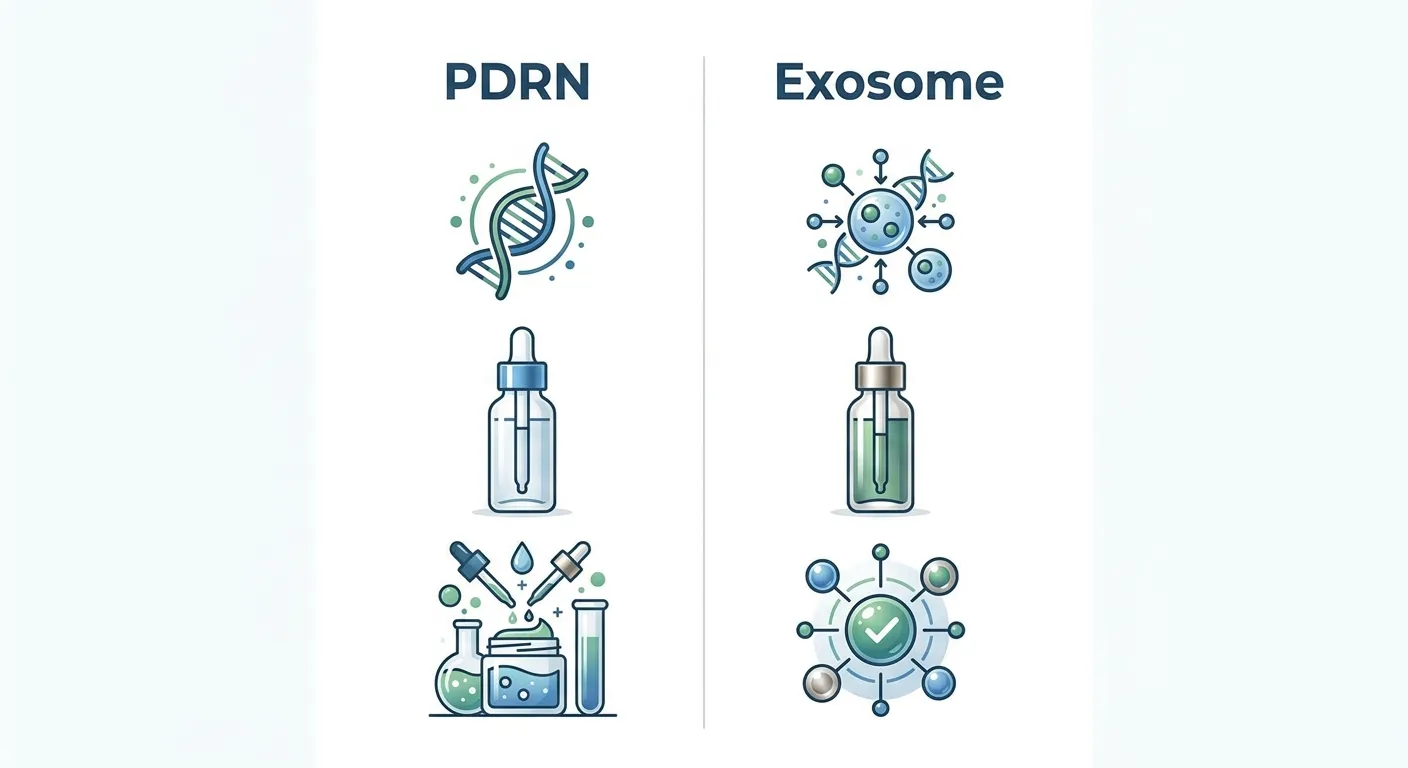
Although PDRN and exosome-based products are often discussed together, they represent different approaches.
PDRN is an ingredient-based skincare concept with established recognition among many aesthetic consumers.
Exosome-based skincare represents a biotechnology-oriented approach that focuses on a different type of ingredient concept.
For clinics and brands, the decision should be based on business goals rather than choosing one ingredient as universally better.
Key questions include:
Who is the target customer?
Is the product positioned as daily skincare or premium professional care?
What level of education does the market require?
What documentation can the supplier provide?
How does the product fit into the existing portfolio?
Key Factors Clinics Should Consider Before Choosing Between PDRN and Exosome Products
Before selecting a product direction, clinics should evaluate several practical factors.
Target Customer Expectations
Different customers may respond differently to ingredient concepts.
Some customers may already recognize PDRN because of its growing presence in aesthetic skincare discussions, while others may be attracted to newer biotechnology-based concepts.
Understanding customer expectations helps determine which product positioning is more suitable.
Product Positioning and Brand Strategy
The ingredient should support the overall brand direction.
For example:
A clinic-focused skincare line may prioritize professional familiarity and customer education.
A premium beauty brand may focus on innovation and differentiation.
The best choice depends on how the product fits into the broader portfolio.
PDRN vs Exosome: Key Differences for Aesthetic Businesses
For aesthetic clinics and skincare brands, comparing PDRN and exosome products requires looking beyond ingredient trends.
Both ingredients are often associated with advanced skincare concepts, but they differ in terms of product positioning, development considerations, supplier evaluation, and customer communication.
The right choice depends on the business model, target market, and product strategy.
Evaluation Factor | PDRN-Based Products | Exosome-Based Products |
|---|---|---|
Ingredient concept | DNA-derived ingredient used in skincare and aesthetic formulations | Extracellular vesicle-based skincare concept associated with biotechnology |
Market positioning | Often positioned around professional skincare and skin-conditioning concepts | Often positioned around advanced and technology-focused skincare |
Product development focus | Formula balance, texture, supporting ingredients, and user experience | Source transparency, formulation approach, documentation, and product positioning |
Buyer considerations | Ingredient information, product specifications, manufacturing consistency | Ingredient source, documentation, supplier transparency, and market requirements |
Brand positioning | Suitable for brands building ingredient-focused skincare collections | Often considered by brands targeting premium or innovation-focused categories |
The table does not indicate that one ingredient is universally better. Instead, it highlights that they may serve different product strategies.
Ingredient Concept and Formulation Approach
PDRN Product Development Considerations
For PDRN serums, the ingredient is usually incorporated into a broader skincare formula.
Product developers need to consider:
Supporting ingredients
Texture and application experience
Packaging compatibility
A PDRN serum is not defined only by the presence of PDRN. The overall formula determines how the product feels, how it is presented, and which customer segment it targets.
For example, a lightweight serum designed for daily skincare may require different formulation priorities compared with a premium clinic retail product.
Exosome Product Development Considerations
Exosome-based products require careful evaluation because the term can represent different product approaches depending on the formulation and supplier.
For buyers, important questions include:
What is the source information?
How is the ingredient described in product documentation?
What testing information is available?
How does the manufacturer ensure product consistency?
Brands should avoid evaluating exosome products based only on marketing descriptions. Clear technical information is important when developing products for professional customers.
Documentation and Supplier Evaluation
For both PDRN and exosome products, supplier evaluation is an important part of the purchasing decision.
A reliable manufacturer should be able to provide appropriate product information and explain how the product is developed and controlled.
What Should Buyers Verify for PDRN Products?
For PDRN products, buyers may evaluate:
Ingredient information
Formula specifications
Manufacturing process
Product consistency
This information helps brands understand what they are purchasing and how the product fits into their portfolio.
What Should Buyers Verify for Exosome Products?
For exosome-based products, buyers may need to pay additional attention to:
Ingredient source transparency
Product documentation
Manufacturing process
Supporting information for product claims
Because exosome-related terminology can vary between suppliers, buyers should confirm exactly what the product contains and how it is positioned.
Product Positioning and Market Considerations
The decision between PDRN and exosome products is often related to brand strategy rather than ingredient performance alone.
Different markets may respond differently depending on:
Customer awareness
Price positioning
Brand image
Education requirements
Competitive environment
When PDRN May Be Suitable for Aesthetic Clinics
PDRN products may be considered by clinics that want to offer:
Professional-inspired home care
Premium serum collections
PDRN may also fit brands that already have customers familiar with aesthetic skincare concepts and want to expand their product range.
When Exosome-Based Products May Be Considered
Exosome-based products may appeal to brands looking for:
Advanced skincare positioning
Technology-focused product concepts
Premium market differentiation
However, brands should ensure they have sufficient product information and supplier support before introducing these products.
Premium positioning requires strong communication and clear documentation.
How Clinics Should Evaluate PDRN and Exosome Suppliers

Regardless of the ingredient choice, supplier quality remains one of the most important factors.
Clinics and brands should evaluate:
Product Transparency
A supplier should clearly explain:
Product composition
Ingredient information
Intended application
Manufacturing Capability
Buyers should consider whether the manufacturer can support:
Stable production
Consistent quality
Repeat orders
Product customization
Compliance and Documentation Support
Before launching products in a specific market, buyers should confirm what documentation is available and whether additional requirements apply.
Certificates, test reports, product specifications, and regulatory documents serve different purposes and should not be treated as interchangeable.
Which Is Better for Aesthetic Clinics?
The question of whether PDRN or exosome-based products are better does not have a universal answer.
For aesthetic clinics and skincare brands, the better choice depends on the purpose of the product, target customers, supplier capability, and overall business strategy.
Instead of choosing an ingredient based only on market popularity, clinics should evaluate how each option fits into their product portfolio and customer expectations.
Choosing Based on Product Goals, Not Ingredient Trends
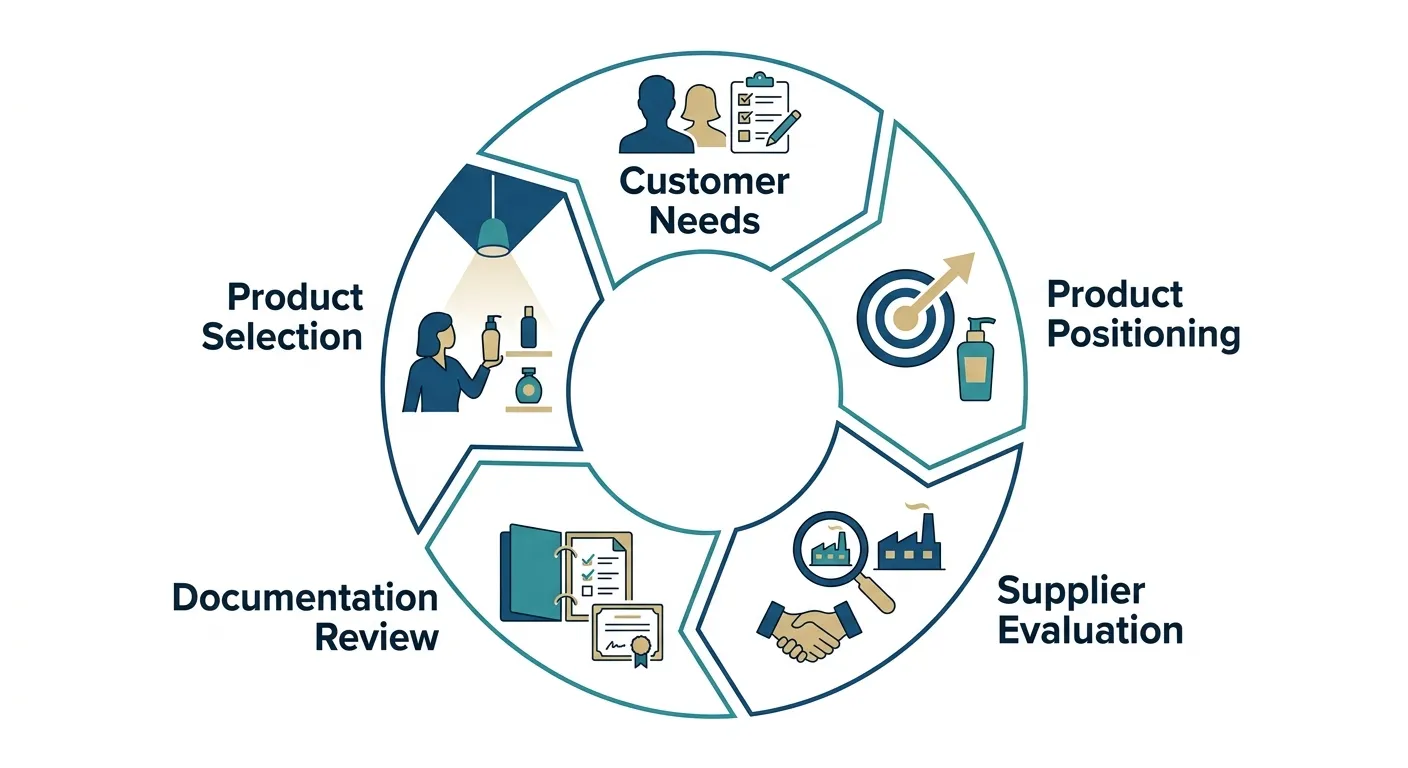
Aesthetic businesses should first define what they want the product to achieve from a commercial perspective.
Important questions include:
Is the product designed for retail skincare sales or professional use?
Is the goal to expand an existing skincare range?
Does the brand need a familiar ingredient concept or a more technology-focused positioning?
Can the supplier provide sufficient product information and support?
For example, a clinic building a skincare retail line may prioritize customer recognition and easy communication, while a premium skincare brand may focus more on differentiation and innovation.
The ingredient itself is only one part of the product strategy.
Building a Balanced Aesthetic Skincare Portfolio

Many successful skincare businesses do not rely on a single hero ingredient.
Instead, they create product portfolios that address different customer needs and market segments.
A balanced portfolio may include products focused on:
Hydration
Skin conditioning
Premium anti-aging positioning
PDRN, exosome-based concepts, hyaluronic acid, peptides, and other ingredients may each play different roles depending on the product strategy.
The goal is not to select the ingredient with the strongest marketing appeal, but to develop products that create clear value for customers.
Common Mistakes When Comparing PDRN and Exosome Products
Choosing Based Only on Ingredient Popularity
Ingredient trends can influence customer interest, but they should not be the only factor in product decisions.
A popular ingredient does not automatically guarantee:
Better customer satisfaction
Stronger brand positioning
Easier market acceptance
Brands should evaluate the complete product, including formulation quality, supplier reliability, and documentation.
Ignoring Supplier Transparency
Advanced skincare products require clear communication between brands and manufacturers.
Before cooperation, buyers should understand:
What ingredients are used
How products are developed
What documentation is available
How quality is controlled
A supplier that cannot clearly explain its product information may create challenges during marketing, distribution, or customer communication.
Comparing Products Without Considering the Target Market
Different markets may have different expectations.
A product that performs well in one region may require adjustments in another because of differences in:
Consumer preferences
Pricing expectations
Regulatory requirements
Competition
Brands should evaluate products based on their own market rather than copying another brand’s strategy.
Making Unsupported Product Claims
Both PDRN and exosome products are often discussed with strong marketing language.
However, brands should ensure that product claims match:
Available documentation
Product formulation
Applicable market requirements
Clear and accurate communication helps build long-term customer trust.
Practical Checklist Before Choosing Between PDRN and Exosome Products
Before adding either product category to an aesthetic portfolio, buyers can evaluate:
Product Evaluation
Is the ingredient information clearly provided?
Does the product match the intended customer group?
Is the formula suitable for the planned market positioning?
Supplier Evaluation
Does the manufacturer have relevant experience?
Can they provide product documentation?
Can they support repeat production?
Business Evaluation
Does the product fit the current portfolio?
Is there a clear customer demand?
Can the brand communicate the product value effectively?
A structured evaluation process helps businesses make decisions based on long-term strategy rather than short-term trends.
Frequently Asked Questions
Q1: Is PDRN better than exosome skincare?
A: PDRN and exosome-based skincare products serve different product concepts, and neither should be considered universally better. The suitable choice depends on factors such as product positioning, target customers, supplier capability, and market requirements.
Q2: What is the main difference between PDRN and exosome products?
A: PDRN is a DNA-derived ingredient used in certain skincare formulations, while exosome-based products are built around extracellular vesicle-related concepts. They represent different approaches to advanced skincare product development.
Q3: Are PDRN and exosome products used for the same purpose?
A: They may overlap in how they are positioned in aesthetic skincare markets, but they are different ingredient concepts. Brands should evaluate each product based on its formula, documentation, and intended use.
Q4: Which ingredient is more suitable for aesthetic clinics?
A: The suitable choice depends on the clinic’s business goals, customer expectations, and product strategy. Clinics should consider factors such as market positioning, supplier support, and product information before choosing.
Q5: Can PDRN and exosome ingredients be combined in skincare products?
A: The possibility of combining ingredients depends on the specific formulation and manufacturer capability. Brands should evaluate formula feasibility with qualified product developers.
Q6: What should brands check when sourcing PDRN or exosome products?
A: Brands should review ingredient information, product specifications, documentation, manufacturing capability, quality control processes, and supplier transparency.
Q7: Are exosome skincare products regulated differently?
A: Regulatory requirements depend on the product category, claims, and target market. Brands should confirm applicable requirements for their specific sales region.
Q8: Is PDRN suitable for private label skincare brands?
A: PDRN can be considered by brands developing ingredient-focused skincare products. Suitability depends on the formula, supplier capability, target market, and overall product strategy.
Q9: What affects the cost of PDRN and exosome products?
A: Costs may vary depending on ingredients, formulation complexity, packaging, production requirements, documentation needs, and order quantity.
Q10: How should clinics choose between different regenerative skincare products?
A: Clinics should evaluate products based on customer needs, product positioning, supplier reliability, documentation, and long-term business goals rather than choosing only based on ingredient popularity.
Conclusion
PDRN and exosome-based skincare products represent two different directions within the growing advanced skincare market.
For aesthetic clinics and brands, the right choice depends on more than the ingredient itself. Product positioning, customer expectations, manufacturing capability, documentation, and long-term business strategy all influence the decision.
Before adding a new product category, buyers should carefully evaluate suppliers, understand the product details, and choose solutions that align with their brand goals.
A well-planned product strategy can help clinics and skincare brands create stronger portfolios and build more sustainable customer relationships.
Frequently Asked Questions
Q1: Is PDRN better than exosome skincare?
A: PDRN and exosome-based skincare products serve different product concepts, and neither should be considered universally better. The suitable choice depends on factors such as product positioning, target customers, supplier capability, and market requirements.
Q2: What is the main difference between PDRN and exosome products?
A: PDRN is a DNA-derived ingredient used in certain skincare formulations, while exosome-based products are built around extracellular vesicle-related concepts. They represent different approaches to advanced skincare product development.
Q3: Are PDRN and exosome products used for the same purpose?
A: They may overlap in how they are positioned in aesthetic skincare markets, but they are different ingredient concepts. Brands should evaluate each product based on its formula, documentation, and intended use.
Q4: Which ingredient is more suitable for aesthetic clinics?
A: The suitable choice depends on the clinic’s business goals, customer expectations, and product strategy. Clinics should consider factors such as market positioning, supplier support, and product information before choosing.
Q5: Can PDRN and exosome ingredients be combined in skincare products?
A: The possibility of combining ingredients depends on the specific formulation and manufacturer capability. Brands should evaluate formula feasibility with qualified product developers.
Q6: What should brands check when sourcing PDRN or exosome products?
A: Brands should review ingredient information, product specifications, documentation, manufacturing capability, quality control processes, and supplier transparency.
Q7: Are exosome skincare products regulated differently?
A: Regulatory requirements depend on the product category, claims, and target market. Brands should confirm applicable requirements for their specific sales region.
Q8: Is PDRN suitable for private label skincare brands?
A: PDRN can be considered by brands developing ingredient-focused skincare products. Suitability depends on the formula, supplier capability, target market, and overall product strategy.
Q9: What affects the cost of PDRN and exosome products?
A: Costs may vary depending on ingredients, formulation complexity, packaging, production requirements, documentation needs, and order quantity.
Q10: How should clinics choose between different regenerative skincare products?
A: Clinics should evaluate products based on customer needs, product positioning, supplier reliability, documentation, and long-term business goals rather than choosing only based on ingredient popularity.
其他博客