Blog
PLLA-PEG Powder vs Injectable PLLA-PEG: Which Is Right for You?
Author
Ray
Published
Category
PLLA-PEG Filler
Compare PLLA-PEG powder vs injectable PLLA-PEG by use case, convenience, consistency, and treatment goals to choose the right format.

Author
Ray
An esteemed medical aesthetics expert with 40 years of profound experience in the field. With decades of expertise in non-invasive procedures, anti-aging science, and advanced dermatological solutions, the author is dedicated to sharing insights that connect clinical innovation with real-world patient results. Passionate about advancing safe, effective, and high-impact aesthetic treatments for a global clientele.
What’s better than insider perks, pro tips, and surprises?
Sign up to get the most recent blog articles in your email every week.
Join now.
Our company’s main product lines include HA (Hyaluronic Acid) fillers, CaHA (Calcium Hydroxylapatite) fillers, PLLA (Poly-L-Lactic Acid) biostimulators, and other advanced aesthetic solutions, all developed and manufactured by trusted partner facilities with whom we have maintained long-term, stable collaborations.
I help them with sales and export operations, while our company also provides sourcing and procurement services in China to help international clients solve supply-related challenges. If you need assistance with procurement, please feel free to contact us.
If you are comparing PLLA-PEG Powder vs Injectable PLLA-PEG, the key difference usually comes down to format, preparation, and treatment workflow, not just the ingredient name. In simple terms, PLLA-PEG powder typically refers to a product form that may require preparation before use, while injectable PLLA-PEG suggests a format intended to be administered in a more ready-to-use or treatment-oriented way. For patients, that can affect convenience, consistency, consultation planning, and how the treatment fits into a provider’s preferred protocol.
The better choice is not automatically the newer, easier, or more technical-sounding option. It is the format that best aligns with your treatment goals, your provider’s expertise, and the level of predictability you want from the experience.
Key Takeaways
PLLA-PEG powder and injectable PLLA-PEG may share a core material concept, but they differ in product form and practical use.
Powder formats are often discussed in terms of preparation, flexibility, and formulation handling.
Injectable formats are often framed around convenience, workflow efficiency, and treatment readiness.
The real decision is not just ingredient-based. It is about how the format affects consistency, customization, and patient suitability.
A consultation should focus on treatment goals, provider technique, preparation protocol, and expected experience, not just product labels.
If specific claims about longevity, safety profile, or efficacy are not tied to product documentation or clinical evidence, they should be treated cautiously.
PLLA-PEG Powder vs Injectable PLLA-PEG: The Short Answer
The simplest answer is this: PLLA-PEG powder and injectable PLLA-PEG are not necessarily “better” or “worse” than one another. They are different product formats, and those differences may influence how a treatment is prepared, delivered, and experienced.
A powder format may offer more flexibility in preparation depending on the product design and provider protocol. An injectable format may appeal to clinics and patients looking for a more streamlined treatment flow. In practice, the right option depends on what is being treated, how the provider works, and whether the priority is customization, convenience, or standardized handling.
What Is PLLA-PEG Powder?
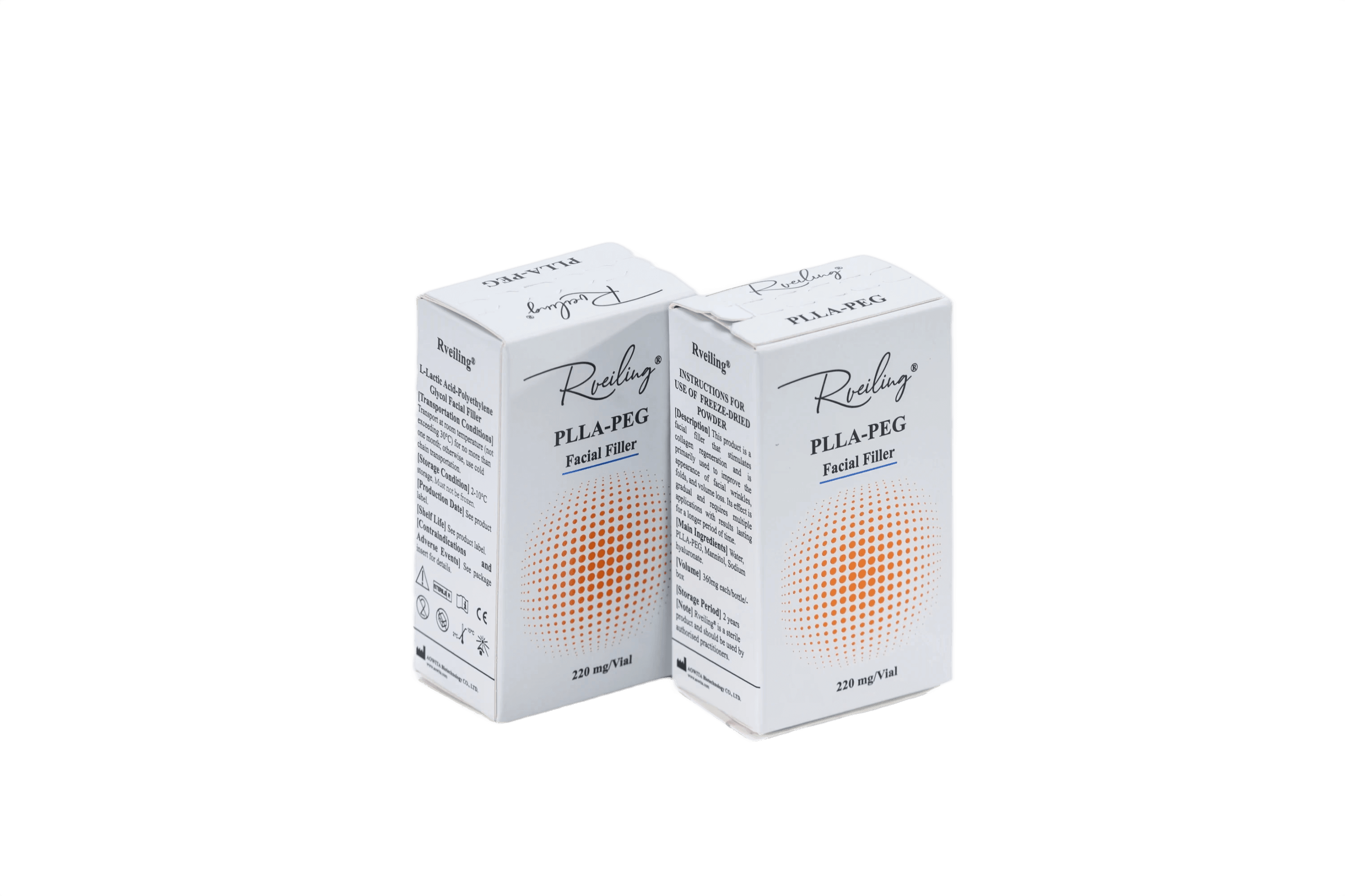
PLLA-PEG powder generally refers to a powder-form product associated with PLLA-PEG-based aesthetic treatment. In a practical sense, this type of format may require some level of preparation before it is used in a clinical setting.
For readers researching treatment options, the most important thing to understand is that a powder format is not just a packaging difference. It can shape the treatment process in several ways:
how the product is prepared before administration
how much handling is involved
how standardized the treatment process feels
how closely the final protocol depends on the provider’s method
That does not make powder inherently more advanced or less convenient. It simply means there may be an additional preparation step between product and treatment. Depending on the product and provider workflow, some clinicians may value that flexibility, while others may prefer a more directly treatment-ready option.
Because PLLA-PEG formulations can vary across products and manufacturers, any claim about exact preparation requirements, injection behavior, or results should be confirmed through official product documentation.

What Is Injectable PLLA-PEG?
Injectable PLLA-PEG generally refers to a treatment-ready or administration-oriented format intended for injection in an aesthetic setting. From a patient perspective, the key appeal is often simplicity: the product is framed as something designed to fit more directly into the injection workflow.
That can matter for several reasons:
it may reduce complexity in preparation
it may support a more consistent clinic process
it may make the treatment experience feel more straightforward
it may appeal to providers who prioritize efficiency and standardization
Again, this does not automatically make injectable PLLA-PEG better. In aesthetics, convenience is only one piece of the decision. A format can be easier to handle but still not be the ideal choice for every treatment philosophy or every provider technique.
The better question is not “Is injectable PLLA-PEG superior?” It is “Does this format support the result and treatment approach I actually want?”
PLLA-PEG Powder vs Injectable PLLA-PEG: Key Differences
Format and preparation
This is the clearest point of difference.
PLLA-PEG powder is usually understood as a product form that may require preparation before use.
Injectable PLLA-PEG is usually understood as a treatment-oriented format designed for administration.
That difference matters because product format can shape not just handling, but also the clinic workflow and patient experience.
A more preparation-heavy format may allow for a different type of provider control, depending on the product. A more injection-ready format may reduce process complexity.
Convenience and workflow
For many readers, this is the most practical distinction.
A powder format may involve extra steps before treatment begins. An injectable format may reduce that friction. In a busy clinic environment, that difference can matter operationally. From the patient side, it may affect how streamlined the appointment feels.
Still, convenience should not be confused with superiority. In aesthetics, what matters more is whether the chosen protocol supports safe, thoughtful, goal-oriented treatment.
Consistency and standardization
One of the strongest perceived benefits of an injectable format is consistency. A more standardized format may help create a more repeatable treatment process, especially across providers or clinic settings.
A powder format, by contrast, may be perceived as more technique-sensitive, depending on how it is prepared and used. That can be an advantage or a drawback depending on the product and the clinician.
For patients, the takeaway is simple: if you value a highly standardized workflow, an injectable format may sound appealing. If your provider has a strong rationale for a powder-based protocol, that deserves attention too.
Treatment planning
Aesthetic treatment is rarely about the product alone. It is about the treatment plan.
Some providers think in terms of flexibility and tailored preparation. Others think in terms of predictable systems and efficient delivery. That means your provider’s preference may influence whether PLLA-PEG powder vs injectable PLLA-PEG feels like a meaningful distinction in your case.
This is why the best consultation does not stop at naming the product. It explains the logic behind the format being recommended.
Who each format may suit
Broadly speaking:
PLLA-PEG powder may appeal to:
patients whose provider prefers a more customized preparation workflow
treatment plans where formulation handling matters
readers comparing different PLLA-PEG product forms
Injectable PLLA-PEG may appeal to:
patients who value treatment simplicity
clinics seeking efficiency and standardization
people who want a more straightforward PLLA-PEG treatment experience
These are directional observations, not absolute rules. Product-specific evidence should always guide final decisions.
Benefits of PLLA-PEG Powder
A fair comparison should acknowledge why someone might choose the powder format.
1. It may support more flexible preparation
Depending on the product and protocol, powder forms may allow providers to work within a preparation framework they trust and understand.
2. It may align with established clinician habits
In many aesthetic practices, treatment preference is shaped by familiarity and workflow confidence. A provider who is experienced with powder-based preparation may feel that it offers better control within their method.
3. It may fit certain product strategies
Sometimes the preferred format is not about convenience at all. It is about how a brand or clinician structures the treatment experience.
This is especially relevant in dermal filler comparison content, because readers often assume all injectable aesthetics products are interchangeable. They are not. Product form can meaningfully affect how treatment is delivered.
Benefits of Injectable PLLA-PEG
Injectable formats have a different kind of appeal.
1. Greater convenience
For patients and clinics alike, a more injection-ready format can simplify the appointment flow.
2. A more streamlined treatment experience
Some readers are not comparing ingredients as much as they are comparing process. Injectable formats may feel more accessible because they sound clearer and more direct.
3. Perceived standardization
In consumer psychology, ready-to-use or treatment-ready products often feel more predictable. Whether that perception reflects the actual clinical reality depends on the product and provider, but it remains a meaningful decision factor.
4. Easier communication
From a marketing and education standpoint, “injectable PLLA-PEG” may be easier for patients to understand than a powder-based formulation concept. Clearer language often reduces hesitation at the consultation stage.
How to Choose Between PLLA-PEG Powder and Injectable PLLA-PEG
If you are asking which is better, PLLA-PEG powder or injectable PLLA-PEG, the answer depends less on the label and more on the treatment context.
Consider your treatment goal
Start with the real objective.
Are you looking for:
support in a facial rejuvenation plan?
treatment for facial volume loss?
a collagen-stimulating or biostimulatory approach?
a treatment format that feels simpler and more direct?
The more clearly you define the goal, the easier it becomes to evaluate the format.
Think about provider preference
This is one of the most overlooked factors.
A product can look ideal on paper, but results in aesthetics depend heavily on the provider’s familiarity, planning, and technique. A highly experienced clinician using a format they trust is often a better choice than a theoretically appealing option used without strong protocol confidence.
Match the format to your timeline
Some patients want a treatment plan that feels efficient and easy to schedule. Others are comfortable with a more preparation-dependent workflow if they believe it supports a better overall approach.
Ask yourself:
Do I value speed and simplicity?
Am I comfortable with more customization if it is clinically justified?
Do I want the most straightforward appointment experience possible?
Focus on predictability, not hype
This is where many comparison articles fail.
The best format is not the one with the most technical marketing language. It is the one that produces a treatment experience and outcome your provider can explain clearly and deliver confidently.
When comparing PLLA-PEG powder vs injectable PLLA-PEG for facial rejuvenation, predictability matters more than novelty.
Common Misunderstandings About PLLA-PEG Product Forms
“If the ingredient is similar, the treatment is basically the same.”
Not necessarily. Product format can affect preparation, administration, clinic workflow, and patient expectations.
“Injectable always means better.”
Not true. Injectable may mean more convenient, but convenience is not the same as clinical superiority.
“Powder means outdated.”
Also not true. Some powder-based formats remain relevant because they suit specific protocols or provider preferences.
“The easier option is always the safer option.”
That is too simplistic. Safety depends on product design, indication, provider training, patient selection, and treatment technique. [source needed]
“You can choose the format without thinking about the provider.”
In aesthetic medicine, provider experience is central. The same product category can feel very different depending on who is using it and why.
Questions to Ask Before Choosing a PLLA-PEG Treatment
A good consultation should make the choice clearer, not more confusing. Ask questions like:
Why are you recommending PLLA-PEG powder instead of injectable PLLA-PEG for me?
What difference does the format make in the actual treatment process?
Does one format offer a more standardized protocol in your practice?
How does this choice affect convenience, preparation, or follow-up?
What should I expect during the appointment with this format?
What are the limitations of this option for my treatment goals?
These questions shift the conversation from marketing language to treatment logic, which is exactly where it belongs.
Final Thoughts
The comparison between PLLA-PEG Powder vs Injectable PLLA-PEG is not really about choosing a winner. It is about understanding how product form affects treatment experience, provider workflow, and decision-making.
A powder format may be more closely associated with preparation flexibility and clinician-driven protocol choices. An injectable format may be more attractive for convenience, standardization, and a smoother patient journey. Neither is automatically right for everyone.
The best choice depends on your goals, your provider’s expertise, and how much weight you place on convenience versus customization. If you are evaluating PLLA-PEG powder vs injection, focus on the practical questions: How is it used? Why is this format being recommended? And does that recommendation make sense for your face, your timeline, and your expectations?
That is the kind of decision framework that leads to smarter consultations and better treatment choices.
FAQ
1. What is the difference between PLLA-PEG powder and injectable PLLA-PEG?
The main difference is product format. PLLA-PEG powder usually suggests a form that may require preparation before treatment, while injectable PLLA-PEG suggests a format intended for direct administration in a clinical setting.
2. Which is better: PLLA-PEG powder or injectable PLLA-PEG?
Neither is universally better. The right choice depends on the treatment goal, the provider’s preferred protocol, the value placed on convenience, and how the specific product is designed to be used.
3. Is PLLA-PEG powder the same as injectable PLLA-PEG?
Not exactly. They may be related in ingredient concept, but the format can change preparation steps, workflow, and how the treatment is delivered in practice.
4. Is injectable PLLA-PEG more convenient than PLLA-PEG powder?
In general, an injectable format may feel more convenient because it sounds more treatment-ready, but the actual experience depends on the product and clinic protocol.
5. How do I choose between PLLA-PEG powder and injectable PLLA-PEG for facial rejuvenation?
Start with your treatment goal, then ask how the product format affects preparation, provider handling, standardization, and overall treatment planning.
6. Does product format matter in a PLLA-PEG treatment?
Yes. Even when ingredient families sound similar, product form can affect handling, consistency, appointment flow, and patient experience.
Other Blogs