Blog
HA Filler vs PLLA for Chest Rejuvenation: Which Is Better for Décolletage Lines? | AOWITA
Author
Ray
Published
Category
Guide
Compare HA filler vs PLLA for chest rejuvenation, including décolletage lines, volume support, collagen stimulation, safety, treatment goals, and clinic selection.


Author
Ray
An esteemed medical aesthetics expert with 40 years of profound experience in the field. With decades of expertise in non-invasive procedures, anti-aging science, and advanced dermatological solutions, the author is dedicated to sharing insights that connect clinical innovation with real-world patient results. Passionate about advancing safe, effective, and high-impact aesthetic treatments for a global clientele.
What’s better than insider perks, pro tips, and surprises?
Sign up to get the most recent blog articles in your email every week.
Join now.
Our company’s main product lines include HA (Hyaluronic Acid) fillers, CaHA (Calcium Hydroxylapatite) fillers, PLLA (Poly-L-Lactic Acid) biostimulators, and other advanced aesthetic solutions, all developed and manufactured by trusted partner facilities with whom we have maintained long-term, stable collaborations.
I help them with sales and export operations, while our company also provides sourcing and procurement services in China to help international clients solve supply-related challenges. If you need assistance with procurement, please feel free to contact us.
Chest rejuvenation has become an important topic in professional aesthetic medicine. Many patients pay close attention to the face, neck, and hands, but the chest and décolletage area can also show visible signs of aging, including fine lines, wrinkles, skin thinning, sun damage, texture changes, and loss of soft tissue support.
For clinics and distributors, two injectable options often appear in professional discussions: HA filler and PLLA.
Both can be used in aesthetic treatment planning, but they work in very different ways. HA filler provides more immediate tissue volume support and contour improvement, while PLLA is a collagen-stimulating injectable that works gradually over time.
So, when comparing HA filler vs PLLA for chest rejuvenation, which option is better for décolletage lines?
The professional answer is: it depends on the patient’s skin condition, treatment goal, timeline, anatomy, product selection, and practitioner expertise. HA filler may be better when immediate volume support or contour correction is needed. PLLA may be considered when the goal is gradual collagen stimulation and skin quality improvement.
This guide explains the differences between HA filler and PLLA for chest rejuvenation, helping clinics, distributors, and professional aesthetic buyers understand treatment logic, safety considerations, and product selection.
Professional Use Notice:
HA filler and PLLA are injectable medical-aesthetic products intended for qualified professionals only. They should not be purchased for self-injection or used outside appropriate clinical settings. Patient suitability, anatomical assessment, injection planning, product selection, dosage, and aftercare should be determined by trained practitioners according to local regulations and product instructions.
What Causes Chest and Décolletage Aging?
The chest and décolletage area is often exposed to sunlight, clothing friction, sleep compression, and repeated movement. Over time, these factors can contribute to visible lines, wrinkles, pigmentation changes, skin laxity, and uneven texture.
Unlike the face, the chest area is often neglected in daily skincare. Many patients apply sunscreen and anti-aging products to the face but forget the neck and chest. This can make décolletage aging more noticeable.

Common Signs of Chest Aging
Chest aging may appear as:
Horizontal chest lines
Vertical sleep lines
Crepey skin texture
Loss of elasticity
Thin or dry-looking skin
Sun damage and uneven tone
Wrinkles between the breasts
Reduced soft tissue support
Dull or rough skin appearance
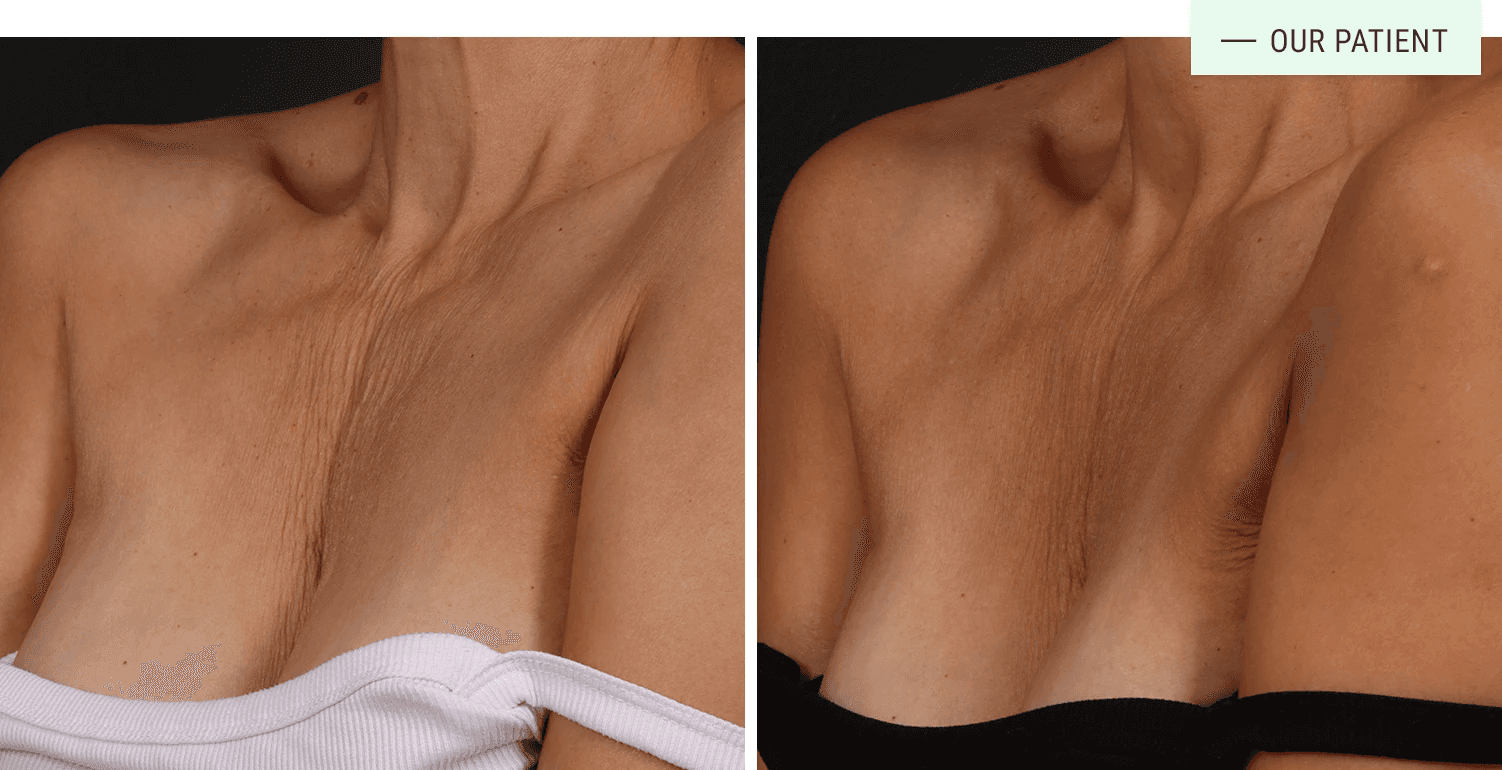
Different signs require different treatment strategies. A patient with deep folding lines may not need the same approach as a patient with thin, crepey skin. This is why proper assessment matters before choosing HA filler or PLLA.
Why the Décolletage Is Difficult to Treat
The décolletage is a delicate area. It can be highly visible, thin-skinned, and sensitive to overcorrection. The goal is usually not dramatic enlargement or artificial fullness. Instead, professional chest rejuvenation often focuses on subtle improvement, skin quality, line softening, and natural-looking contour support.
Clinics should evaluate:
Skin thickness
Degree of wrinkling
Tissue laxity
Prior treatments
Sun damage
Patient expectations
Medical history
Product suitability
Local regulatory requirements
This professional evaluation helps determine whether HA filler, PLLA, or another treatment may be appropriate.
HA Filler for Chest Rejuvenation: How It Works
HA filler is based on hyaluronic acid, a biocompatible molecule widely used in dermal filler products. In injectable aesthetics, HA is often cross-linked to create a gel structure that can support tissue volume, contour, and shape.
For chest rejuvenation, HA filler may be considered when the treatment goal involves immediate volume support, soft tissue contour improvement, or line correction.
Cross-linked HA Filler Explained
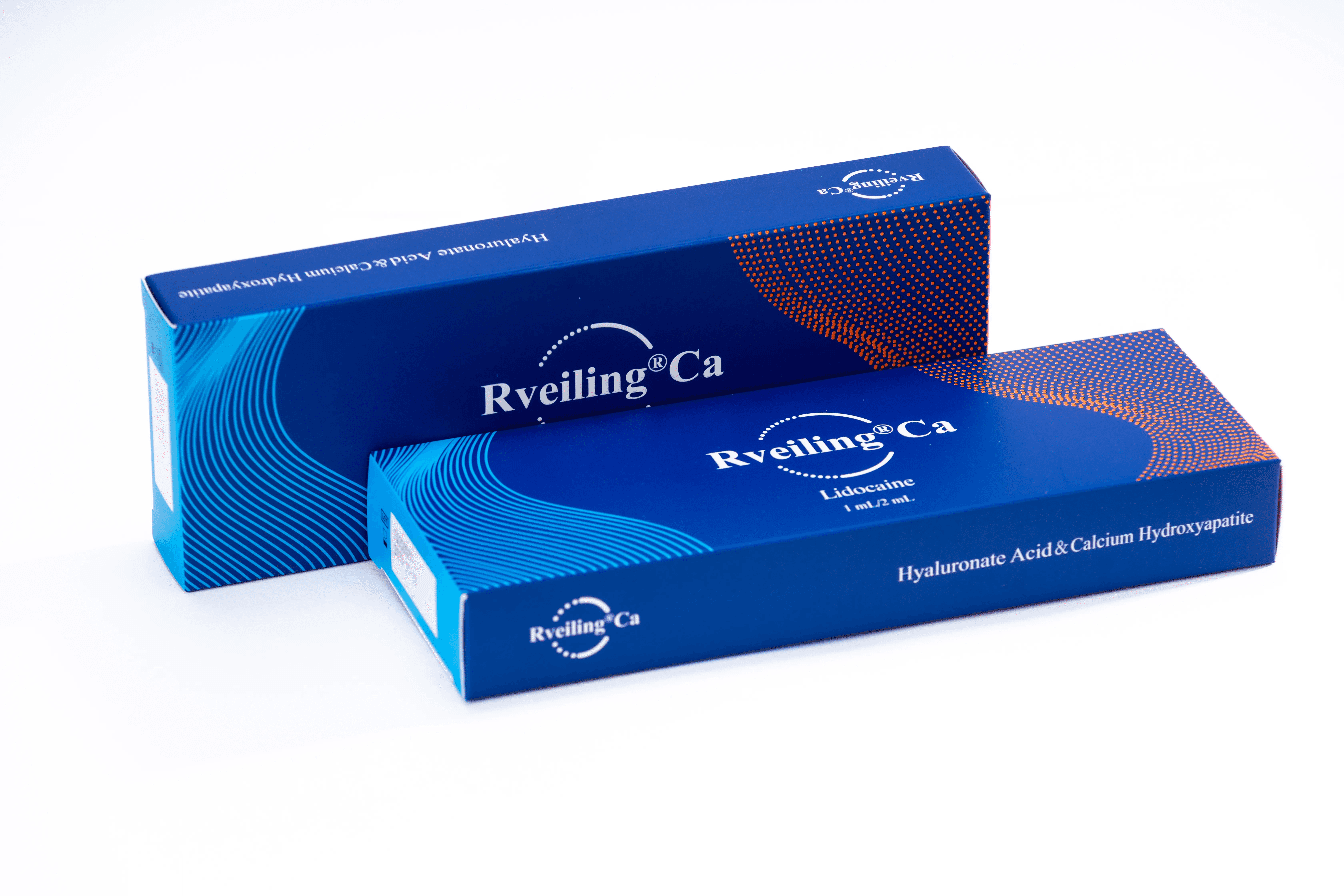
Cross-linked HA filler is designed to maintain structure after injection. Cross-linking helps create a more stable gel network compared with non-cross-linked HA, allowing the product to provide support in selected tissue layers.
In professional chest or décolletage applications, HA filler may support:
Chest line improvement
Soft tissue volume support
Skin appearance enhancement
Contour refinement
Natural-looking fullness
Structural support in selected areas
AOWITA’s product positioning around cross-linked sodium hyaluronate gel for injection fits this professional aesthetic category, especially for clinics and distributors seeking injectable HA-based solutions.
Advantages of HA Filler for Décolletage Lines
HA filler is often valued because it can provide visible support relatively quickly. For patients who want more immediate improvement in selected lines or contour concerns, HA may be easier to explain than gradual collagen stimulators.
Potential advantages include:
More immediate visible effect
Adjustable volume support
Smooth contour enhancement
Familiar filler category for many clinics
Suitable for selected line correction
Can be selected by gel properties and treatment area
Often available in prefilled syringe format
However, HA filler is not suitable for every chest concern. If the main issue is widespread skin laxity or poor skin quality, HA alone may not be enough.
Limitations of HA Filler
HA filler has limitations that clinics should explain clearly.
It may not be ideal for:
Severe skin laxity
Very thin skin without adequate support
Patients expecting surgical-level changes
Patients seeking permanent results
Cases where collagen stimulation is the primary goal
Patients unsuitable for injectable HA products
Overcorrection can also create unnatural fullness, visible irregularity, or unevenness. Chest HA filler should be used conservatively and professionally.
PLLA for Chest Rejuvenation: How It Works
PLLA stands for poly-L-lactic acid. It is a biostimulatory injectable material used in aesthetic medicine to support gradual collagen production. Unlike HA filler, PLLA does not primarily work by immediately filling space with gel volume.
Instead, PLLA encourages a gradual tissue response over time.
PLLA as a Collagen Stimulator
PLLA particles are injected into selected areas where they trigger a controlled biological response. Over time, this may support collagen formation and improve skin quality, firmness, and structure.
In chest rejuvenation, PLLA may be discussed when the goal is:
Gradual improvement
Skin firmness support
Crepey texture improvement
Collagen stimulation
Longer-term skin quality enhancement
Subtle rejuvenation rather than immediate filling
This makes PLLA different from HA filler in both mechanism and patient experience.

Advantages of PLLA for Décolletage Rejuvenation
PLLA may be attractive for patients who prefer gradual, natural-looking improvement rather than immediate volume correction.
Potential advantages include:
Collagen-stimulating mechanism
Gradual improvement over time
Useful for skin quality concerns
May be suitable for broader treatment areas
Often chosen for subtle rejuvenation
Can support firmness and texture over time
For clinics, PLLA can be useful when a patient’s main concern is skin thinning or crepey texture rather than a specific line that needs immediate volume support.
Limitations of PLLA
PLLA also has limitations.
It does not provide the same immediate visible filling effect as HA filler. Patients need to understand that results develop gradually and may require multiple sessions.
PLLA may not be ideal for:
Patients wanting immediate correction
Isolated deep folds requiring direct support
Patients unwilling to wait for collagen response
Patients who cannot commit to follow-up sessions
Cases where precise volume correction is required
PLLA technique also matters. Improper product preparation, dilution, placement, or aftercare may increase the risk of nodules or uneven results.
HA Filler vs PLLA for Chest Rejuvenation: Key Differences
Both HA filler and PLLA can have a role in professional chest rejuvenation, but they should not be treated as identical solutions.
The best choice depends on the clinical goal.
Factor | HA Filler | PLLA |
|---|---|---|
Main mechanism | Provides gel-based tissue support | Stimulates gradual collagen production |
Result timeline | More immediate | Gradual over weeks to months |
Best for | Selected lines, contour support, volume-related concerns | Skin quality, firmness, crepey texture |
Treatment style | Direct volume or contour correction | Biostimulatory rejuvenation |
Number of sessions | May vary by correction goal | Often requires multiple sessions |
Feel and appearance | Depends on gel rheology and placement | Develops gradually through tissue response |
Reversibility | HA may be adjusted with hyaluronidase in certain situations, depending on product and clinical context | Not reversed the same way as HA |
Risk profile | Swelling, bruising, lumps, vascular risk, infection, asymmetry | Swelling, bruising, nodules, inflammation, uneven collagen response |
Best user | Patients needing immediate support | Patients accepting gradual collagen stimulation |
Professional requirement | Qualified injector required | Qualified injector required |
Which Is Better for Chest Lines?
For visible, localized chest lines where volume support is needed, HA filler may be more suitable because it provides more immediate structural correction.
However, if the lines are caused mainly by thin skin, crepey texture, and collagen loss, PLLA may be considered as part of a longer-term rejuvenation strategy.
In some professional settings, clinics may combine approaches, but this requires advanced clinical judgment and should follow product instructions and local regulations.
Which Is Better for Décolletage Skin Quality?
For overall décolletage skin quality, PLLA may be attractive because of its collagen-stimulating mechanism. It may be discussed when the patient wants gradual improvement in firmness, texture, and skin thickness appearance.
HA filler may still be useful if there are specific lines, folds, or contour concerns that need targeted support.
Which Is Better for Immediate Results?
HA filler is usually the better choice when the patient wants more immediate visible improvement.
PLLA is generally not positioned as an instant correction product. Its value comes from gradual biological response.
How Clinics Should Choose Between HA Filler and PLLA
Clinics should not choose HA filler or PLLA based only on trend, cost, or patient request. The decision should follow a professional assessment process.
Step-by-Step Decision Process
A practical clinic decision process may include:
Assess the main concern: lines, volume loss, texture, laxity, or contour.
Evaluate skin thickness and tissue quality.
Review patient medical history and prior procedures.
Clarify patient expectations and timeline.
Determine whether immediate support or gradual collagen stimulation is preferred.
Select the product category based on treatment goal.
Plan dosage, injection depth, technique, and follow-up.
Provide informed consent and aftercare instructions.
This approach helps reduce over-treatment and improves patient education.
When HA Filler May Be Preferred
HA filler may be preferred when the goal involves:
Immediate improvement
Localized chest lines
Contour support
Volume-related correction
More predictable gel-based placement
Soft tissue support in selected areas
For distributors, this means HA filler products should be positioned by rheology, cohesivity, gel hardness, injection comfort, and intended application.
When PLLA May Be Preferred
PLLA may be preferred when the goal involves:
Gradual collagen support
Crepey texture improvement
Skin firmness enhancement
Broader rejuvenation strategy
Patients comfortable with delayed results
Patients willing to complete multiple sessions
PLLA requires careful patient communication because the timeline is different from HA filler.
Safety Considerations for HA Filler and PLLA
Both HA filler and PLLA are injectable products. Both require qualified professionals, sterile technique, appropriate patient selection, and complication management.
Neither should be marketed as risk-free.
Common Safety Considerations
For both product categories, clinics should consider:
Medical history
Allergies and sensitivities
Active infection or inflammation
Pregnancy or breastfeeding status
Prior filler or surgical procedures
Skin condition
Anatomical risk
Injection depth
Dosage planning
Aftercare compliance
Local regulatory approval
Safety depends on the product, the patient, the practitioner, and the treatment environment.
HA Filler Safety Points
HA filler safety depends on correct product placement, appropriate injection depth, sterile handling, and awareness of vascular risk.
Possible side effects may include swelling, bruising, redness, tenderness, lumps, infection, asymmetry, or vascular complications.
Practitioners should understand how to recognize and manage HA filler complications.
PLLA Safety Points
PLLA safety depends on proper product preparation, injection technique, placement, and aftercare. Nodules, uneven collagen response, inflammation, swelling, bruising, or delayed reactions may occur.
Patients should understand that PLLA results develop gradually and require follow-up.
Why Self-Injection Is Dangerous
Self-injection is unsafe for both HA filler and PLLA.
Risks include:
Incorrect tissue placement
Infection
Vascular compromise
Product contamination
Lumps or nodules
Tissue damage
Delayed medical treatment
Counterfeit or unverified products
Injectable aesthetic products should only be used by qualified medical-aesthetic professionals.
Product Quality Factors for Clinics and Distributors
For professional buyers, the comparison between HA filler and PLLA is not only clinical. It is also a product quality and supplier evaluation issue.
Clinics need reliable products. Distributors need consistent manufacturing, documentation, and market support.
HA Filler Quality Factors
When evaluating cross-linked HA filler for chest or décolletage applications, clinics and distributors should consider:
Sodium hyaluronate quality
Cross-linking technology
Gel hardness
Cohesivity
Viscosity
Elasticity
Injection smoothness
Prefilled syringe quality
Sterility
Batch consistency
Storage conditions
Documentation support
A high-quality HA filler should behave predictably and support professional injection control.
PLLA Product Quality Factors
When evaluating PLLA products, professional buyers should consider:
Particle characteristics
Product preparation requirements
Reconstitution guidance
Injection protocol
Training support
Batch consistency
Documentation
Safety profile
Regulatory status
Clinical use instructions
PLLA quality is closely connected to preparation and technique, so distributor education and practitioner training are especially important.
Supplier Evaluation Checklist
Before choosing an HA filler or PLLA supplier, professional buyers should request:
Product specifications
Ingredient information
Sterility documentation
Quality certificates
Storage and shelf-life information
Batch traceability system
Instructions for professional use
Packaging and labeling details
Regulatory support documents
Training or product education materials
This checklist is especially important for distributors importing products into different regulatory markets.
HA Filler vs PLLA vs Other Chest Rejuvenation Options
A complete chest rejuvenation strategy may involve more than one product category. In some cases, injectables may be combined with energy-based devices, topical skincare, or surgical consultation.
HA Filler vs Fat Transfer
Fat transfer may provide more significant volume change, but it involves a different procedure type and depends on donor fat availability, surgical technique, and patient suitability.
HA filler is generally discussed as a less invasive injectable option for selected contour or line support, but it should not be presented as a replacement for surgical augmentation.
PLLA vs Energy-Based Devices
PLLA supports collagen stimulation through injectable biostimulation. Energy-based devices may support collagen remodeling through heat, ultrasound, radiofrequency, or laser mechanisms.
The best choice depends on whether the main concern is volume, texture, laxity, pigmentation, or overall skin quality.
Combination Treatment Planning
Some clinics may consider combination treatment strategies, but this should only be done by experienced practitioners. Combining products without clear planning can increase the risk of uneven results or complications.
A responsible approach focuses on:
Correct diagnosis of the concern
Conservative treatment planning
Proper spacing between procedures
Product compatibility
Patient safety
Realistic expectations
AOWITA Perspective: Why HA Filler Remains Important for Professional Chest Applications
AOWITA’s professional injectable HA solutions are relevant for clinics and distributors looking for cross-linked sodium hyaluronate gel products designed for aesthetic support and contour-focused applications.
While PLLA plays an important role in collagen stimulation, HA filler remains valuable because it offers controlled gel-based support, immediate correction potential, and treatment-area versatility when used by qualified practitioners.
Why Clinics Consider Cross-linked HA Gel
Clinics may consider cross-linked HA gel when they need:
Tissue volume support
Contour enhancement
Defined correction
Smooth injection performance
Product consistency
Professional filler handling
Patient comfort options such as lidocaine-containing formulas
The final result depends on patient selection, technique, and product suitability.
Why Distributors Should Build Content Around HA vs PLLA
For distributors, this topic attracts high-intent traffic because clinics often compare product categories before choosing suppliers.
A strong content cluster can include:
HA Filler vs PLLA for Chest Rejuvenation
Cross-linked HA Gel for Chest: Professional Guide
Is Chest HA Filler Safe?
HA Filler With Lidocaine: Why It Matters for Clinics
Cross-linked HA vs Non-cross-linked HA
How to Choose an HA Dermal Filler Manufacturer
PLLA vs HA vs CaHA: Professional Filler Comparison
This cluster can help AOWITA rank for both treatment-area keywords and B2B supplier-intent keywords.
Conclusion
When comparing HA filler vs PLLA for chest rejuvenation, the best choice depends on the patient’s aesthetic concern and the clinic’s professional assessment.
HA filler is often better suited for immediate tissue volume support, contour enhancement, and selected décolletage line correction. PLLA may be more suitable for gradual collagen stimulation, crepey skin texture, and long-term skin quality improvement.
Both options require qualified practitioners, proper patient selection, sterile technique, and realistic treatment planning. Neither should be used for self-injection or marketed as risk-free.
For clinics and distributors, the key is not choosing a product based only on popularity. It is understanding the mechanism, safety profile, treatment goal, product quality, and supplier reliability.
CTA Closing
Looking for professional injectable HA filler solutions for clinics, distributors, or OEM/ODM cooperation?
AOWITA provides cross-linked sodium hyaluronate gel for injection and HA-based medical aesthetic solutions designed for qualified professional use. For clinics and distributors seeking reliable HA dermal filler products, technical support, and private label collaboration, AOWITA can support your product development and market needs.
Contact AOWITA to learn more about professional HA filler solutions, cross-linked HA gel products, and OEM/ODM partnership opportunities.
FAQ: HA Filler vs PLLA for Chest Rejuvenation
Is HA filler or PLLA better for chest rejuvenation?
Neither is automatically better. HA filler may be better for immediate volume support and selected line correction, while PLLA may be better for gradual collagen stimulation and skin quality improvement.
Is HA filler good for décolletage lines?
HA filler may be considered for selected décolletage lines when volume support or soft tissue correction is needed. Suitability depends on anatomy, skin condition, product choice, and practitioner assessment.
Is PLLA good for chest wrinkles?
PLLA may be considered for chest wrinkles related to skin thinning, collagen loss, or crepey texture. It works gradually by supporting collagen stimulation rather than immediate filling.
Which lasts longer, HA filler or PLLA?
Duration varies by product, patient metabolism, treatment area, and technique. PLLA is often associated with gradual and longer-term collagen stimulation, while HA filler duration depends on cross-linking, gel properties, and placement.
Does HA filler work faster than PLLA?
Yes. HA filler generally provides more immediate visible support, while PLLA results develop gradually over time.
Can HA filler and PLLA be used together?
In some professional treatment plans, different injectable categories may be combined or staged, but only by qualified practitioners who understand product behavior, anatomy, and safety considerations.
Is chest rejuvenation with injectables safe?
Injectable chest rejuvenation may be considered only under qualified professional care. Safety depends on patient suitability, product quality, anatomy, sterile technique, injection planning, and complication management.
Can HA filler or PLLA be self-injected?
No. HA filler and PLLA should never be self-injected. They are professional injectable products requiring medical-aesthetic training and appropriate clinical conditions.
What is the difference between chest filler and décolletage filler?
Chest filler is a broader term that may include contour or soft tissue support in the chest area. Décolletage filler usually refers to treatment of the upper chest area, often focused on lines, wrinkles, and skin appearance.
How should clinics choose between HA filler and PLLA?
Clinics should evaluate the patient’s main concern, skin quality, anatomy, timeline, expectations, risk factors, and treatment goals. HA is often preferred for immediate support, while PLLA may be considered for gradual collagen stimulation.
Other Blogs