博客
How to Build a Complete Injectable Aesthetic Product Portfolio for Your Clinic or Brand
作者
Ray
已发布
类别
设计与灵感
Learn how to build a complete injectable aesthetic product portfolio for your clinic or brand, including fillers, biostimulators, skin boosters, and supplier considerations.


作者
Ray
一位享有盛誉的医学美学专家,在该领域拥有40年的深厚经验。凭借在非侵入性手术、抗衰老科学以及先进皮肤病学解决方案方面的数十年专业知识,作者致力于分享将临床创新与真实患者成果相结合的见解。热衷于为全球客户推进安全、有效且高影响力的美学治疗。
还有什么比内部优惠、专业建议和惊喜更好的呢?
注册可每周在您的电子邮件中接收最新的博客文章。
立即加入。
Our company’s main product lines include HA (Hyaluronic Acid) fillers, CaHA (Calcium Hydroxylapatite) fillers, PLLA (Poly-L-Lactic Acid) biostimulators, and other advanced aesthetic solutions, all developed and manufactured by trusted partner facilities with whom we have maintained long-term, stable collaborations.
I help them with sales and export operations, while our company also provides sourcing and procurement services in China to help international clients solve supply-related challenges. If you need assistance with procurement, please feel free to contact us.
Introduction
The aesthetic medicine market is becoming increasingly diverse. Patients today are looking for more personalized treatment solutions, from restoring facial volume and improving contours to enhancing skin quality and supporting long-term rejuvenation.
For clinics, distributors, and aesthetic brands, offering only one type of injectable product may limit growth opportunities. Different patients have different aesthetic goals, and a well-structured product portfolio allows professionals to provide more comprehensive treatment options.
However, building a complete injectable aesthetic portfolio is not simply about adding more products. A successful portfolio should include complementary solutions that address different needs while maintaining product quality, consistency, and clear market positioning.
By understanding the role of different injectable categories, clinics and brands can create a more strategic product selection that supports both patient outcomes and long-term business development.
Why a Balanced Injectable Aesthetic Product Portfolio Matters
A strong injectable portfolio helps clinics move from offering individual treatments to creating complete aesthetic solutions.
Patients may visit a clinic with different concerns. Some may want to restore lost facial volume, while others may focus on improving skin texture or achieving gradual anti-aging results. If a clinic only provides one treatment category, it may not fully address the wider range of aesthetic expectations.
A balanced portfolio allows practitioners to select treatments based on individual needs rather than applying the same solution to every patient.
For aesthetic brands and distributors, portfolio diversity also plays an important role in market competitiveness. A supplier that provides multiple complementary product categories can better support clinics that want to expand their treatment offerings.
A complete injectable portfolio typically focuses on three major areas:
Restoring volume and facial structure
Supporting collagen-related aesthetic improvement
Improving skin quality and maintenance needs
These categories serve different purposes and work together to create a broader approach to aesthetic care.
Understanding the Core Categories of Injectable Aesthetic Products
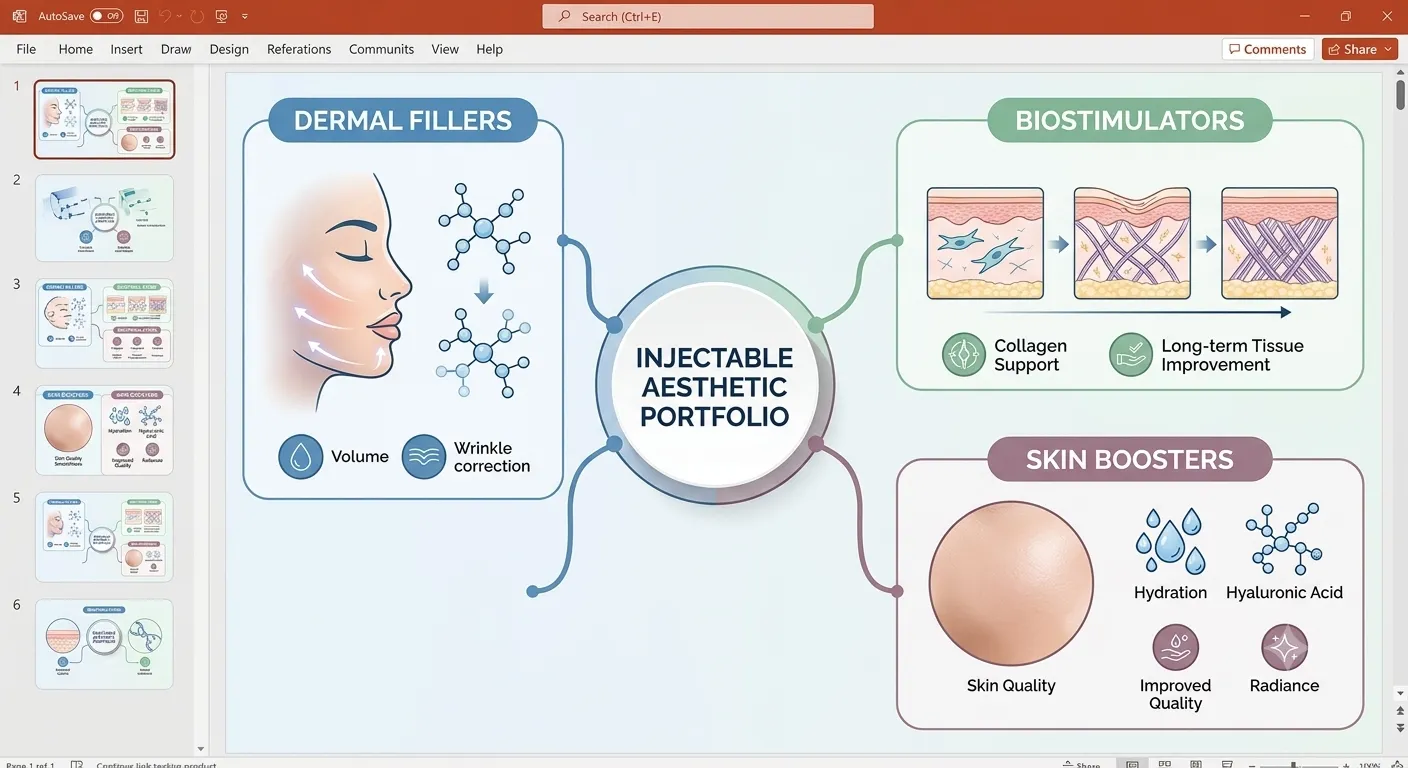
Injectable aesthetic products can be divided into several categories according to their primary treatment goals. Understanding these categories helps clinics and brands build a product range with a clear purpose.
Dermal Fillers for Volume Restoration
Dermal fillers are one of the fundamental categories in aesthetic medicine because they address facial volume loss and contour-related concerns.
As facial aging occurs, changes in soft tissue volume and facial structure can affect overall appearance. Injectable fillers provide a way to restore volume and enhance specific facial features through targeted treatment.
Within an aesthetic portfolio, dermal fillers often serve as a core product category because they can support a wide range of applications.
Depending on product characteristics, clinics may use filler solutions for goals such as:
Facial contour enhancement
Volume restoration
Lip shaping and augmentation
Facial balance improvement
However, selecting filler products for a portfolio requires strategic consideration. Different treatment areas may require products with different characteristics, such as flexibility for natural movement or stronger support for structural enhancement.
A well-developed filler range allows practitioners to choose suitable options according to treatment goals instead of relying on a single product for every application.
For brands and distributors, dermal fillers can also serve as an entry point for expanding into additional injectable categories.
Biostimulators for Long-Term Collagen Support
While dermal fillers are mainly associated with volume enhancement, biostimulatory products represent another approach to aesthetic improvement.
Collagen-stimulating injectables are designed for patients who prefer gradual and natural-looking results. Instead of focusing only on immediate volume changes, these products support treatments that aim for longer-term aesthetic improvement.
Products such as PLLA-based and CaHA-based solutions have become increasingly relevant as the aesthetic market continues to shift toward regenerative approaches.
For clinics, adding biostimulators to an injectable portfolio can help address patients who are interested in:
Gradual facial rejuvenation
Long-term aesthetic maintenance
Natural-looking improvements
From a portfolio strategy perspective, biostimulators complement traditional fillers rather than replacing them. They provide an additional treatment option for patients whose goals differ from immediate volume restoration.
For aesthetic brands, including collagen-supporting products can also create a more complete product offering and help differentiate their portfolio in a competitive market.
Skin Boosters and Regenerative Solutions for Skin Quality
Modern aesthetic treatments are increasingly focused not only on facial structure but also on overall skin condition. Many patients are seeking solutions that improve skin appearance, hydration, and texture rather than only changing facial contours.
Skin boosters and regenerative injectable products fill this role within an aesthetic portfolio. Unlike dermal fillers, which mainly focus on restoring volume, these products are positioned around improving skin quality and supporting maintenance-based aesthetic treatments.
For clinics, adding skin quality-focused solutions allows them to serve patients who may not need significant volume correction but still want professional aesthetic improvement.
This category can help address treatment goals such as:
Supporting healthier-looking skin
Improving skin texture and hydration
Providing maintenance treatments
Expanding options for early aesthetic concerns
From a portfolio perspective, skin boosters create another layer of treatment possibilities. They work alongside fillers and biostimulators by addressing different aspects of facial rejuvenation.
A complete injectable portfolio does not require every product to serve the same purpose. Instead, each category should have a clear role:
Dermal fillers support structural enhancement
Biostimulators focus on gradual aesthetic improvement
Skin boosters support skin quality management
This approach allows clinics to build treatment plans based on individual patient needs while helping brands create a more balanced product range.
How to Match Injectable Products With Different Treatment Goals
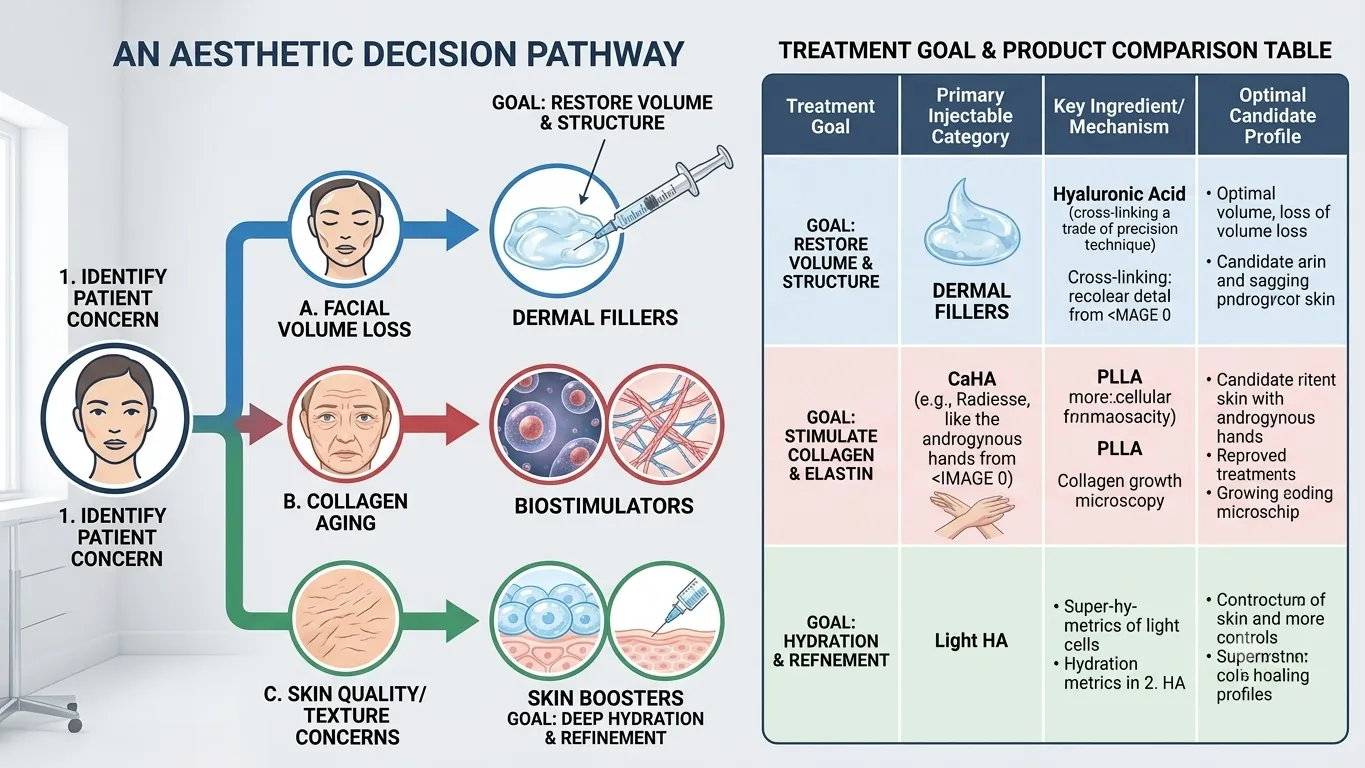
Building an injectable portfolio requires more than selecting popular products. Clinics and brands should understand which product categories are suitable for different treatment objectives.
A strategic portfolio should help practitioners choose solutions according to patient expectations, treatment areas, and desired outcomes.
Treatment Goal | Product Category | Role Within a Portfolio |
|---|---|---|
Restore facial volume and improve contours | Dermal fillers | Core solution for structural enhancement |
Support gradual rejuvenation strategies | Biostimulators | Advanced option for collagen-focused treatments |
Improve skin appearance and maintenance needs | Skin boosters and regenerative products | Supports skin quality-focused treatments |
Address specific aesthetic demands | Specialized injectable solutions | Expands treatment possibilities |
This type of product structure helps clinics create more complete treatment pathways.
For example, a patient interested in facial aging may require different solutions depending on whether their primary concern is volume loss, reduced skin quality, or a desire for gradual improvement. A diversified portfolio gives practitioners more flexibility when developing treatment plans.
For distributors and brands, this structure also improves market adaptability. Different regions may have different customer preferences, and a well-organized portfolio makes it easier to support various clinic requirements.
Key Factors to Consider When Expanding an Injectable Product Portfolio
Expanding an injectable product range requires careful planning. Adding more products does not automatically create a stronger portfolio. Each product should provide clear value and complement existing solutions.

Product Diversity and Market Positioning
A successful portfolio should balance product variety with clear positioning.
Offering multiple products with similar functions may create unnecessary competition within the same product line. Instead, clinics and brands should focus on developing a range where each category serves a specific purpose.
For example, combining volume-enhancing fillers with collagen-supporting treatments and skin quality solutions creates a more complete offering than simply increasing the number of similar filler products.
Understanding target customers is also important. A clinic focused on facial rejuvenation may need a different portfolio strategy compared with a distributor serving multiple aesthetic markets.
Quality, Documentation, and Product Consistency
Injectable aesthetic products require a high level of quality control and reliability. For professional buyers, product performance is only one part of the decision-making process.
Clinics and brands should consider factors such as:
Manufacturing standards
Product documentation
Quality control procedures
Batch traceability
Storage requirements
Regulatory compliance
Consistent product quality helps practitioners maintain confidence and supports long-term relationships between manufacturers, clinics, and distributors.
OEM and Customization Support
For aesthetic brands developing their own product lines, manufacturing capability can influence long-term growth.
A reliable manufacturer should provide more than finished products. Support may include:
Customized packaging options
Branding support
Technical documentation
Production scalability
OEM and customization capabilities allow brands to create products that match specific market requirements while maintaining professional manufacturing standards.
Why Choosing the Right Aesthetic Manufacturer Matters
A complete injectable aesthetic portfolio depends not only on product selection but also on the reliability of the manufacturing partner behind it.
For clinics and distributors, working with an experienced aesthetic manufacturer can simplify product management and provide greater confidence in quality, documentation, and supply stability.
A capable manufacturer should understand different injectable categories and have the ability to support product development across multiple aesthetic applications.
This is particularly important for brands that want to expand beyond a single product category. As market demand changes, having a flexible manufacturing partner allows businesses to introduce new solutions while maintaining consistency across their product portfolio.
Choosing the right supplier is therefore not only a purchasing decision. It is a long-term strategic decision that can influence product quality, brand reputation, and market growth.
Conclusion
Building a complete injectable aesthetic product portfolio requires a strategic approach rather than simply increasing the number of available products.
A strong portfolio combines complementary categories that address different treatment goals, including volume restoration, collagen-focused improvement, and skin quality enhancement.
For clinics, this approach creates more personalized treatment opportunities and supports broader patient needs. For aesthetic brands and distributors, a well-structured portfolio provides stronger market positioning and long-term growth potential.
By selecting the right product categories and partnering with a reliable manufacturer, businesses can build an injectable portfolio that meets evolving aesthetic demands while maintaining quality and consistency.
Frequently Asked Questions
1. How many injectable aesthetic products should a new clinic launch with?
A new clinic does not necessarily need a large number of injectable products at the beginning. The ideal product range depends on the clinic’s target patients, treatment expertise, local market demand, and business goals. Starting with a focused selection of complementary products can help clinics maintain quality control and build practitioner confidence before expanding further.
2. Should clinics work with one injectable manufacturer or multiple suppliers?
Both approaches have advantages. Working with one experienced manufacturer can simplify supply management, product training, documentation review, and quality communication. However, some clinics or brands may choose multiple suppliers when they need specific products, regional approvals, or different technology platforms.
3. How often should an aesthetic brand update its injectable product portfolio?
There is no fixed timeline for portfolio updates. Brands should evaluate market trends, customer feedback, regulatory changes, and treatment demand before introducing new products. Expanding a portfolio should be based on strategic needs rather than simply adding new items.
4. What certifications should aesthetic injectable manufacturers provide?
The required certifications depend on the target market and product category. Professional buyers should review relevant manufacturing certifications, quality management documentation, product registration information, and compliance documents required for their region.
5. How can clinics evaluate whether a new injectable product fits their existing services?
Clinics should consider whether the product complements their current treatments, matches patient demand, fits practitioner expertise, and has reliable technical support. A new product should create additional value rather than overlap unnecessarily with existing offerings.
6. What role does product training play when introducing new injectables?
Product training helps practitioners understand proper product handling, treatment considerations, storage requirements, and appropriate patient selection. For clinics introducing new injectable categories, supplier support and professional education can be important parts of successful implementation.
7. Are premium injectable products always better for aesthetic clinics?
Higher pricing does not automatically mean a product is more suitable. Clinics should evaluate product quality, consistency, documentation, supplier reliability, and how well the product matches their target market before making purchasing decisions.
8. How can distributors choose injectable products for different international markets?
Distributors should consider regional regulations, customer preferences, competitive landscape, import requirements, and local treatment trends. A product that performs well in one market may require different positioning or documentation in another region.
9. What information should clinics request before purchasing injectable aesthetic products?
Professional buyers should review product specifications, manufacturer information, quality documentation, storage requirements, shelf life, packaging details, and traceability information before making purchasing decisions.
10. Can a small aesthetic brand compete with larger injectable companies?
Yes, smaller brands can compete by developing a clear market position, offering specialized products, providing strong customer support, and working with reliable manufacturing partners. A focused product strategy can often be more effective than attempting to compete only through product quantity.
其他博客