Blog
How to Choose the Right Dermal Filler for Different Facial Areas: A Professional Guide
Author
Ray
Published
Category
Design & Inspiration
Learn how to evaluate injectable aesthetic product quality with key factors including formulation, manufacturing standards, documentation, traceability, and supplier reliability for professional buyers.


Author
Ray
An esteemed medical aesthetics expert with 40 years of profound experience in the field. With decades of expertise in non-invasive procedures, anti-aging science, and advanced dermatological solutions, the author is dedicated to sharing insights that connect clinical innovation with real-world patient results. Passionate about advancing safe, effective, and high-impact aesthetic treatments for a global clientele.
What’s better than insider perks, pro tips, and surprises?
Sign up to get the most recent blog articles in your email every week.
Join now.
Our company’s main product lines include HA (Hyaluronic Acid) fillers, CaHA (Calcium Hydroxylapatite) fillers, PLLA (Poly-L-Lactic Acid) biostimulators, and other advanced aesthetic solutions, all developed and manufactured by trusted partner facilities with whom we have maintained long-term, stable collaborations.
I help them with sales and export operations, while our company also provides sourcing and procurement services in China to help international clients solve supply-related challenges. If you need assistance with procurement, please feel free to contact us.
Introduction
Selecting injectable aesthetic products requires more than comparing prices, product popularity, or marketing claims. For aesthetic clinics, distributors, and private label brands, product quality directly affects treatment consistency, customer trust, and long-term business development.
As the global aesthetic market continues to expand, professional buyers have access to more injectable solutions than ever before, including dermal fillers, biostimulators, and skin quality-focused products. However, different suppliers may present similar-looking products with significant differences in formulation, manufacturing processes, documentation, and support capabilities.
A reliable evaluation process helps buyers identify products that are suitable for their target market and business goals. Instead of focusing on a single factor, professional buyers should assess the complete product lifecycle—from formulation and production standards to traceability and supplier cooperation.
Why Injectable Product Quality Matters for Professional Buyers
Injectable aesthetic products are closely connected to the quality of services provided by clinics and aesthetic professionals. Unlike ordinary cosmetic products, injectable solutions require higher levels of consistency, technical support, and quality control.
For clinics, choosing reliable products can help practitioners provide more predictable treatment experiences and maintain patient confidence. For distributors and aesthetic brands, product quality influences reputation, customer retention, and long-term market growth.
A comprehensive product evaluation can help reduce risks related to:
Inconsistent product performance between batches
Limited technical information
Unclear product traceability
Supply chain instability
Difficulty expanding into new markets
A professional supplier should provide not only a product but also the information, documentation, and support needed for responsible market development.
Key Factors to Evaluate Injectable Aesthetic Product Quality
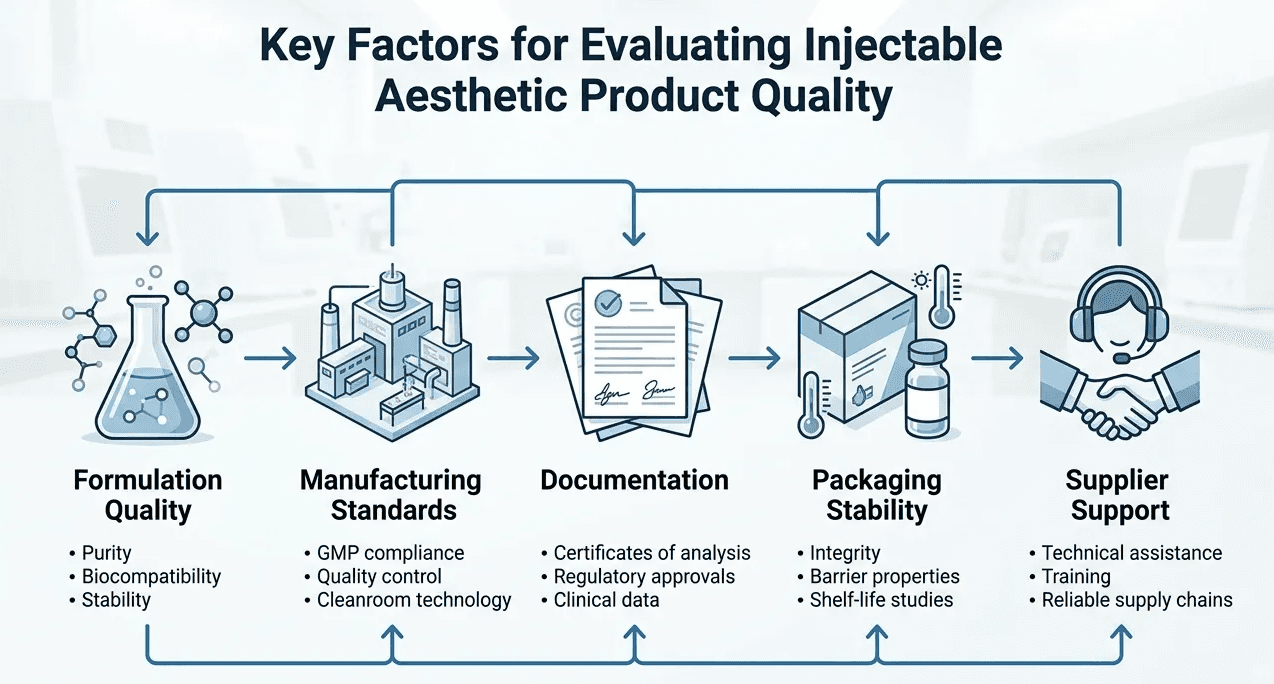
Evaluating an injectable aesthetic product requires looking beyond product appearance or promotional descriptions. Several technical and business factors should be considered before making a purchasing decision.
Product Formulation and Technical Characteristics
The formulation is one of the first areas professional buyers should examine.
Different injectable products are designed for different aesthetic applications, and their characteristics determine how they fit into a clinic’s treatment portfolio.
When reviewing an injectable product, buyers should understand:
Main ingredients and composition
Intended application
Product characteristics
Available technical specifications
Treatment positioning
For example, hyaluronic acid fillers, collagen biostimulators, and skin boosters address different aesthetic needs. A product suitable for facial volume restoration may not serve the same purpose as a product designed for skin quality improvement.
For HA-based fillers, buyers may evaluate factors such as cross-linking technology, gel properties, and product consistency. For biostimulatory products, considerations may include material characteristics, treatment approach, and available clinical information.
The goal is not to find a product that works for every application, but to determine whether the formulation matches the intended market and professional requirements.
Manufacturing Standards and Quality Management Systems
Manufacturing quality is a key indicator of product reliability.
Professional buyers should evaluate whether a manufacturer follows structured quality management procedures throughout production. A consistent manufacturing process helps ensure product stability, batch consistency, and controlled production standards.
Important factors to review include:
Quality management systems
Manufacturing environment
Production controls
Quality inspection procedures
Compliance documentation
For international aesthetic markets, manufacturers with established quality systems, such as ISO 13485-based medical device quality management practices, can provide additional confidence regarding production processes.
However, certification alone should not be the only evaluation factor. Buyers should also consider how quality systems are implemented in actual manufacturing operations.

Product Documentation and Traceability
Clear documentation is essential when purchasing injectable aesthetic products for professional use.
Reliable suppliers should provide appropriate product information to help buyers understand product specifications, handling requirements, and quality details.
Important documentation may include:
Product specifications
Technical information
Storage requirements
Batch information
Manufacturing details
Instructions for use
Traceability is especially important because it allows products to be tracked throughout their lifecycle. Batch numbers, production records, and product identification information help support quality management and professional accountability.
For distributors and brands entering new markets, complete documentation also makes communication with professional customers more efficient.
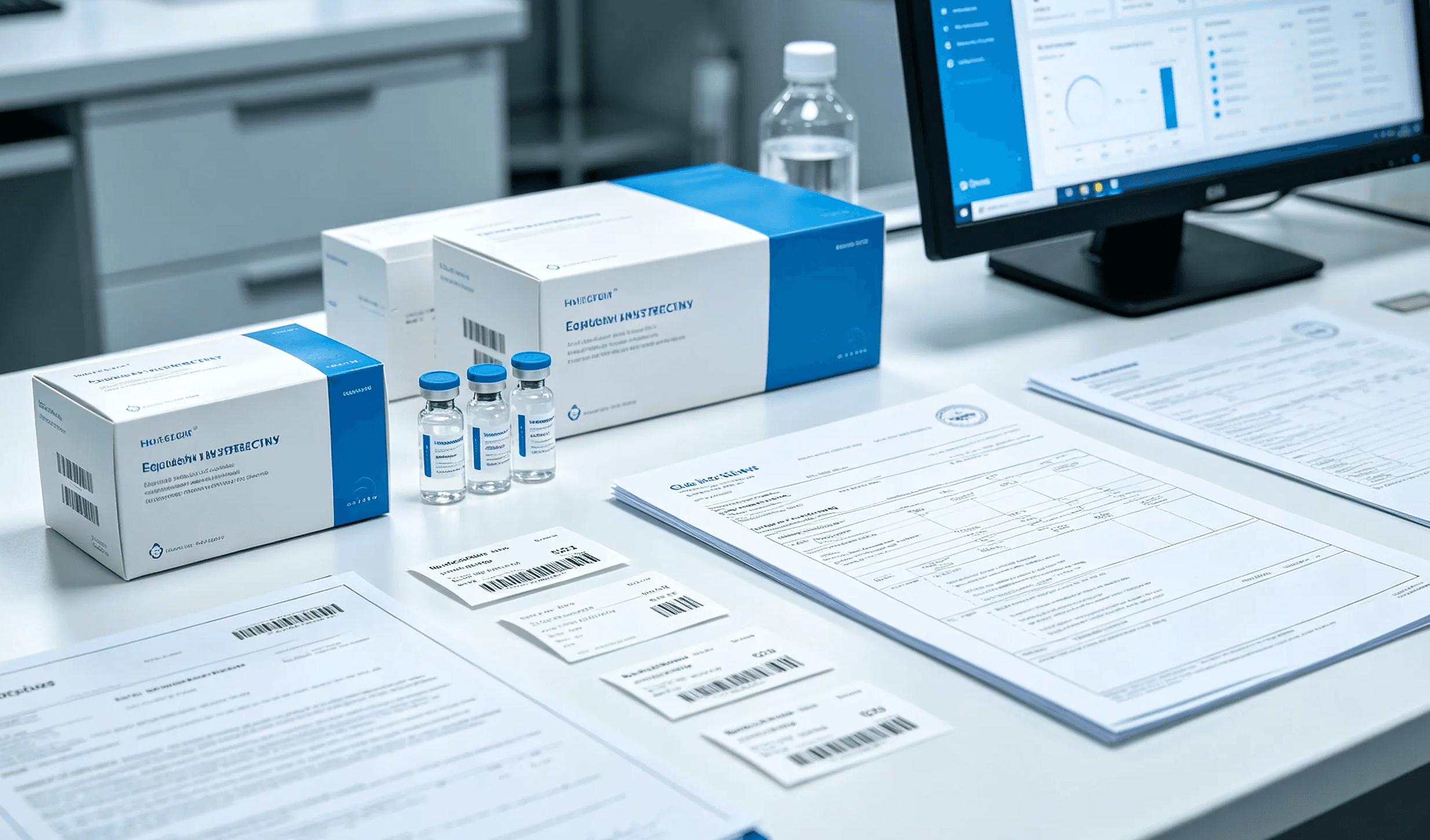
Packaging, Storage, and Product Stability
The quality of an injectable aesthetic product is not determined only during manufacturing. Proper packaging, transportation, and storage conditions also play an important role in maintaining product integrity.
Professional buyers should evaluate whether the supplier has considered product protection throughout the entire supply chain.
Important factors include:
Packaging design and product protection
Sterility assurance
Storage temperature requirements
Transportation conditions
Shelf-life information
For injectable products, packaging should protect the product from contamination, damage, and inappropriate handling. Clear labeling information, including product name, batch number, expiration date, and storage requirements, helps ensure better inventory management.
Storage requirements should also be clearly communicated before purchase. Products that require specific temperature conditions or handling procedures need reliable logistics support to maintain quality during transportation and distribution.
For distributors, understanding these requirements is especially important because improper storage may affect product performance and create unnecessary supply risks.
Manufacturer Experience and Technical Support
Choosing an injectable aesthetic supplier is not only about selecting a product. The manufacturer’s experience and ability to provide ongoing support can significantly influence long-term cooperation.
A reliable manufacturer should be able to support professional buyers through different stages, from initial product evaluation to market expansion.
Evaluating Manufacturer Capability
Before establishing a partnership, buyers should consider:
Manufacturing experience in aesthetic medicine
Research and development capabilities
Production capacity
Quality control procedures
International market experience
Manufacturers with experience serving global professional markets may better understand different market expectations, documentation requirements, and customer needs.
For example, Aowita Biotech provides aesthetic solutions for professional organizations in more than 30 countries and operates under the European ISO 13485 quality management system. A manufacturer’s quality framework and international experience can be important factors when evaluating long-term supply partnerships.
Importance of Technical and Business Support
Beyond product delivery, professional buyers may need additional support, including:
Product training materials
Technical documentation
Marketing resources
Private label or OEM/ODM support
After-sales communication
For clinics and distributors, strong supplier support can make it easier to introduce new products, educate professional users, and build confidence in the market.
A supplier that understands both product development and customer requirements can provide more value than a supplier focused only on manufacturing.
Common Mistakes When Evaluating Injectable Aesthetic Products
Even experienced buyers can make mistakes when selecting injectable products, especially in a market with many suppliers and competing product claims.
Understanding common evaluation errors can help businesses make more informed decisions.
Choosing Based Only on Price
Price is an important business consideration, but it should not be the primary factor when evaluating injectable products.
A lower purchase price may appear attractive initially, but insufficient documentation, inconsistent quality, or limited supplier support can create greater costs over time.
Professional buyers should evaluate overall value, including:
Product reliability
Documentation support
Manufacturing quality
Supplier cooperation
Long-term availability
The most cost-effective choice is usually the product that provides reliable quality and sustainable business value.
Ignoring Product Documentation
Some buyers focus heavily on product appearance or marketing materials while overlooking technical documentation.
However, documentation helps verify important product information and supports responsible business operations.
Before purchasing, buyers should understand:
What the product contains
How it is manufactured
How it should be stored
What information is available for professional users
A supplier that provides transparent information demonstrates greater commitment to product quality and professional cooperation.
Overlooking Supplier Capability
A high-quality product is important, but the supplier behind the product is equally important.
Businesses may face challenges when working with suppliers that cannot provide:
Stable production capacity
Consistent communication
Technical support
Market expansion assistance
Building a long-term relationship with a capable manufacturer can help clinics and distributors develop a stronger and more reliable product portfolio.
How to Build a Reliable Injectable Product Selection Process
A structured selection process allows buyers to evaluate products more efficiently and reduce unnecessary risks.
Instead of choosing products based on trends alone, professional buyers should establish clear evaluation criteria.
Define Your Market and Treatment Goals
Before selecting injectable products, buyers should first understand their target customers and market positioning.
Important questions include:
Which patient needs does the product address?
Is the product suitable for the intended market?
Does it complement existing offerings?
Does it provide meaningful differentiation?
A clinic focusing on facial rejuvenation may prioritize different products compared with a distributor building a wider aesthetic product portfolio.
Clear market positioning helps avoid unnecessary product overlap and improves purchasing decisions.
Evaluate Suppliers Beyond Individual Products
The best supplier relationship is built around long-term cooperation rather than a single transaction.
When comparing manufacturers, buyers should consider the complete partnership potential:
Product quality
Manufacturing capability
Documentation support
Communication efficiency
Future development opportunities
A supplier that can support product growth, customization needs, and market expansion can become a valuable business partner.
Conclusion
Evaluating injectable aesthetic product quality requires a comprehensive approach. Professional buyers should look beyond pricing and marketing claims to assess formulation, manufacturing standards, documentation, packaging, and supplier capability.
For clinics, distributors, and aesthetic brands, choosing reliable injectable products is not only about purchasing inventory—it is about building a foundation for consistent treatments, professional trust, and long-term growth.
By applying a structured evaluation process and working with experienced manufacturers, businesses can make more informed decisions and develop injectable product offerings that better meet market needs.
Frequently Asked Questions
1. What should clinics consider before adding a new injectable aesthetic product?
Clinics should evaluate whether the product matches their treatment services, patient needs, practitioner experience, and business goals. Important factors include product quality, documentation, supplier reliability, and available technical support.
2. How can buyers verify the quality of an injectable aesthetic product?
Professional buyers can review product documentation, manufacturing information, quality management systems, batch traceability, storage requirements, and supplier support capabilities. A complete evaluation should consider both the product and the manufacturer behind it.
3. Is a lower-priced injectable product always a better choice for clinics?
Not necessarily. A lower purchase price may reduce initial costs, but product consistency, documentation availability, supplier support, and long-term reliability are also important factors that influence overall value.
4. Why is batch traceability important for injectable aesthetic products?
Batch traceability allows products to be identified and tracked throughout production and distribution. It supports quality control, inventory management, and professional accountability when product information needs to be verified.
5. What certifications should professional buyers look for when selecting an injectable manufacturer?
Buyers should review certifications and quality systems relevant to the product and target market. Quality management systems such as ISO 13485 can indicate structured manufacturing processes, but buyers should also evaluate documentation, production capability, and supplier experience.
6. How important is the manufacturer’s experience in the aesthetic industry?
Manufacturer experience can influence product consistency, technical support, communication efficiency, and the ability to meet professional market requirements. Experienced suppliers may also provide better assistance during product introduction and market expansion.
7. What information should a supplier provide before an injectable product purchase?
A reliable supplier should provide relevant product information, including specifications, technical documents, storage requirements, batch information, manufacturing details, and other materials needed for professional evaluation.
8. Should clinics choose a supplier based only on product performance?
No. Product performance is important, but clinics should also consider manufacturing quality, documentation support, supply stability, and after-sales communication when selecting a long-term supplier.
9. How can distributors evaluate whether an injectable product is suitable for a new market?
Distributors should consider market demand, product positioning, documentation availability, supplier support, and applicable market requirements before introducing a product to a new region.
10. What makes a reliable injectable aesthetic product supplier different from a basic manufacturer?
A reliable supplier provides more than manufacturing services. Strong suppliers typically offer consistent quality control, technical documentation, professional communication, and support that helps customers develop products successfully in their target markets.
Other Blogs