Blog
How to Choose the Right PDRN Serum Manufacturer for Your Aesthetic Clinic or Brand
Author
Ray
Published
Category
Design & Inspiration
Learn how clinics and skincare brands can choose the right PDRN serum manufacturer by evaluating quality, documentation, OEM options, and supplier reliability.

Author
Ray
An esteemed medical aesthetics expert with 40 years of profound experience in the field. With decades of expertise in non-invasive procedures, anti-aging science, and advanced dermatological solutions, the author is dedicated to sharing insights that connect clinical innovation with real-world patient results. Passionate about advancing safe, effective, and high-impact aesthetic treatments for a global clientele.
What’s better than insider perks, pro tips, and surprises?
Sign up to get the most recent blog articles in your email every week.
Join now.
Our company’s main product lines include HA (Hyaluronic Acid) fillers, CaHA (Calcium Hydroxylapatite) fillers, PLLA (Poly-L-Lactic Acid) biostimulators, and other advanced aesthetic solutions, all developed and manufactured by trusted partner facilities with whom we have maintained long-term, stable collaborations.
I help them with sales and export operations, while our company also provides sourcing and procurement services in China to help international clients solve supply-related challenges. If you need assistance with procurement, please feel free to contact us.
Why Choosing the Right PDRN Serum Manufacturer Matters
Selecting a PDRN serum manufacturer is not only a purchasing decision. For aesthetic clinics and skincare brands, the supplier behind the product can directly influence product consistency, documentation quality, customer trust, and long-term business development.
The growing interest in regenerative skincare ingredients has created more opportunities for clinics and brands to introduce PDRN-based products. However, not every manufacturer offers the same level of formulation capability, quality control, customization support, or production reliability.
A suitable manufacturer should provide more than a finished serum. Buyers need to evaluate whether the supplier can support product requirements, maintain consistent quality between batches, provide necessary documentation, and support future growth.
The Difference Between Buying PDRN Serum and Building a Long-Term Supply Partnership
Many buyers initially focus on product price, but selecting a PDRN serum supplier involves more factors than the initial quotation.
A short-term purchase usually focuses on:
Product availability
Unit price
Minimum order quantity
A long-term partnership requires a broader evaluation:
Product formulation capability
Manufacturing consistency
Quality documentation
Communication efficiency
Customization options
Ability to support repeat orders
For aesthetic clinics developing their own skincare programs or brands building a product portfolio, supplier stability can become an important factor in maintaining customer confidence.
A manufacturer that understands the needs of professional skincare businesses can help buyers avoid common issues such as inconsistent batches, unclear product information, or limited customization options.
What Should Clinics Evaluate When Choosing a PDRN Serum Manufacturer?
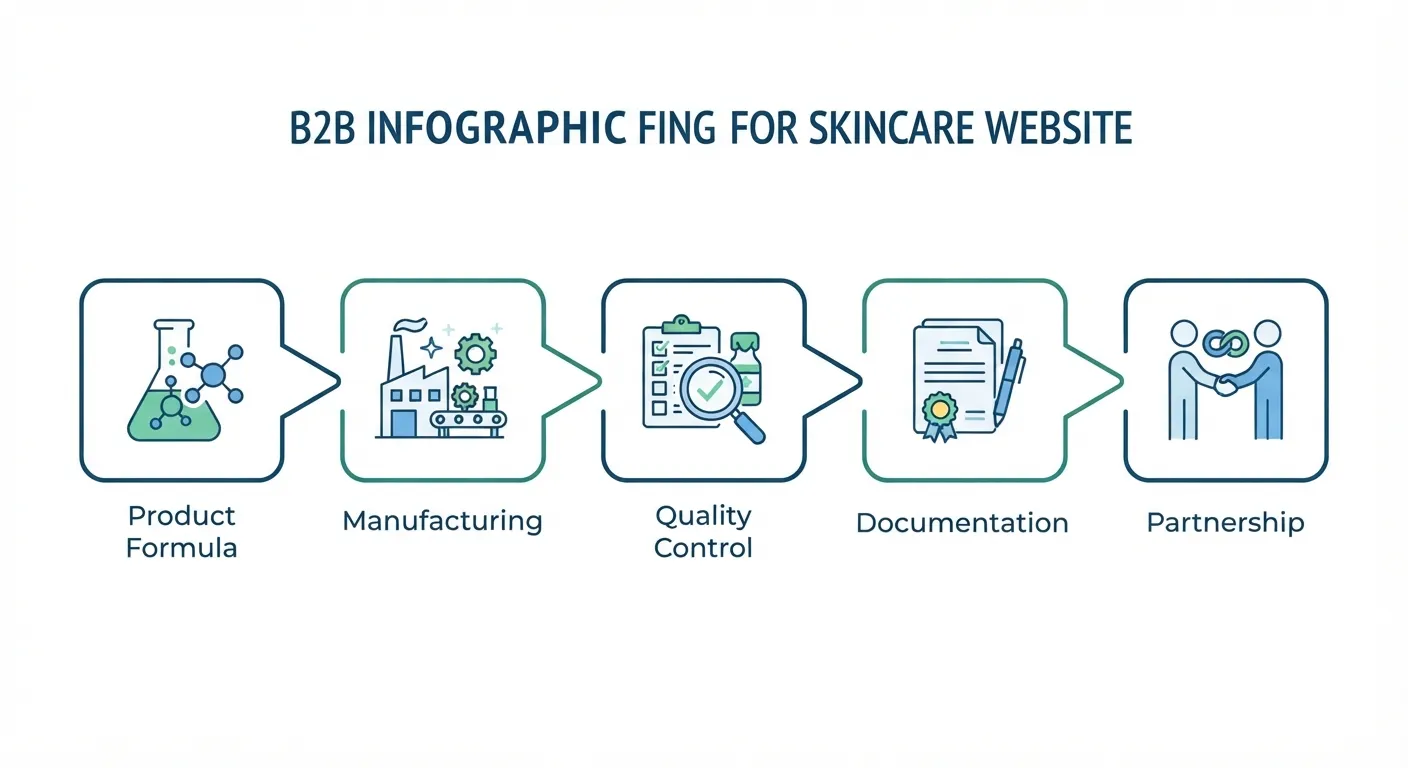
When comparing PDRN serum manufacturers, buyers should look beyond marketing claims and evaluate the factors that affect product quality and business reliability.
A professional evaluation usually includes:
Ingredient information
Formulation experience
Manufacturing capabilities
Quality control procedures
Documentation
Customization services
Supply stability
The right evaluation process helps clinics and brands choose a supplier based on practical requirements rather than only promotional materials.
PDRN Ingredient Source and Product Formulation
The first step is understanding what type of PDRN serum the manufacturer produces and how the formulation is developed.
PDRN-based skincare products may differ in:
Ingredient source
Supporting ingredients
Product positioning
Texture and application experience
Intended market
A manufacturer should be able to provide clear product information and explain the role of each major ingredient in the formula.
For buyers, transparency is important. A supplier should clearly distinguish between:
Ingredient characteristics
Product claims
Testing information
Certification documents
These areas are often confused in skincare marketing, but they represent different levels of information.
Evaluating PDRN Source and Supporting Ingredients
PDRN is only one component of a serum formula. The overall product performance also depends on the complete formulation.
Buyers may need to consider:
Supporting moisturizing ingredients
Skin-conditioning ingredients
Preservative system
Texture requirements
Packaging compatibility
For example, a clinic targeting professional skincare users may have different requirements from a consumer skincare brand launching an everyday serum.
The ideal formulation depends on the intended market, product positioning, and customer expectations.
Understanding Formulation Capability
A reliable PDRN serum manufacturer should be able to explain how it develops and adjusts formulations.
Important questions include:
Can the manufacturer modify existing formulas?
Can they develop products based on specific market requirements?
Can they provide samples before mass production?
How do they evaluate product stability?
Formulation capability is especially important for brands that want to create differentiated products rather than simply resell standard formulas.
Manufacturing Experience and Production Capability
A PDRN serum manufacturer’s production capability directly affects whether a product can be delivered consistently at commercial scale.
For aesthetic clinics and skincare brands, choosing a supplier with suitable manufacturing experience is important because product quality is not determined only by the formula itself. Production processes, equipment, quality systems, and operational management also influence the final product.
A manufacturer with experience producing professional skincare products should be able to explain:
How products are manufactured
How raw materials are managed
How production consistency is maintained
How quality issues are identified and handled
Evaluating Manufacturing Systems and Production Consistency
A reliable supplier should have clear production procedures that help maintain consistency between different batches.
Important areas to evaluate include:
Raw material handling
Production procedures
Quality checks during manufacturing
Finished product inspection
Packaging processes
For brands and clinics planning repeat orders, consistency is especially important.
A first production batch may meet expectations, but long-term cooperation requires the manufacturer to maintain similar product characteristics over multiple production cycles.
Factors such as texture, appearance, packaging quality, and product stability should remain consistent when the same specifications are ordered again.
Why Batch-to-Batch Consistency Matters
Batch consistency is one of the most important considerations for long-term skincare supply.
If product characteristics change between batches, it may affect:
Customer experience
Brand reputation
Product reviews
Clinic recommendations
Before selecting a supplier, buyers should ask how the manufacturer manages production consistency and what quality checks are performed throughout the manufacturing process.
A professional supplier should be able to provide clear answers rather than relying only on general statements about product quality.
Quality Control and Product Testing

Quality control is a key area that separates experienced manufacturers from suppliers that only focus on product availability.
For PDRN serum buyers, quality evaluation should include more than checking the final appearance of the product. Buyers should understand how the manufacturer controls materials, production processes, and finished products.
Depending on the product category and market requirements, quality procedures may include:
Raw material inspection
Product stability evaluation
Microbiological testing
Finished product inspection
Packaging compatibility checks
The exact testing requirements depend on the product formulation, regulatory requirements, and intended market.
What Documentation Should Buyers Request?
Before placing a bulk order, clinics and brands should request relevant product documentation to better understand what they are purchasing.
Common documents buyers may ask for include:
Product specifications
Ingredient information
Certificate of Analysis (COA), where applicable
Test reports, where applicable
Manufacturing-related documentation
However, buyers should understand that different documents serve different purposes.
A certificate, test report, product specification sheet, and regulatory document are not interchangeable.
For example:
A test report provides information about specific testing results.
A certificate may confirm a specific certification scope.
A specification sheet describes product characteristics.
Understanding these differences helps buyers evaluate supplier information more accurately.
How to Verify Manufacturer Claims
Many manufacturers highlight product advantages, but buyers should verify whether claims are supported by appropriate documentation.
When evaluating a PDRN serum supplier, consider asking:
Is the information specific to this product?
Does the document match the actual SKU being purchased?
Is the documentation current?
Does it apply to the target market?
A reliable supplier should be able to explain the relationship between product claims, testing information, and supporting documents.
This verification process helps buyers avoid relying on unclear marketing statements when making purchasing decisions.
Certifications and Compliance Documentation
Certifications and compliance information are important considerations when selecting a PDRN serum manufacturer, especially for brands selling in different regions.
However, buyers should avoid assuming that one certification automatically means a product meets every market requirement.
The relevance of a certification depends on:
Product category
Target market
Applicable regulations
Certification scope
A responsible supplier should help buyers understand which documents are available and what they represent.
Understanding the Difference Between Certificates, Test Reports, and Regulatory Approvals
These terms are often used together in product marketing, but they have different meanings.
A certificate may confirm that a company, facility, or product meets a specific requirement.
A test report provides results from a specific evaluation or laboratory test.
A regulatory approval or registration refers to requirements established by a specific market authority.
Before purchasing, buyers should confirm exactly what each document covers and whether it applies to the product they plan to sell.
Evaluating Documentation for Different Markets
Clinics and brands selling internationally should consider whether the supplier can support their target market requirements.
Important questions include:
Does the manufacturer understand the destination market?
Can they provide required product information?
Are documents available for distributor or regulatory review?
Can they support future compliance requests?
Market requirements can vary significantly, so buyers should confirm requirements based on their own sales region rather than assuming one standard applies everywhere.
Should Clinics Choose OEM or Private Label PDRN Serum Manufacturing?
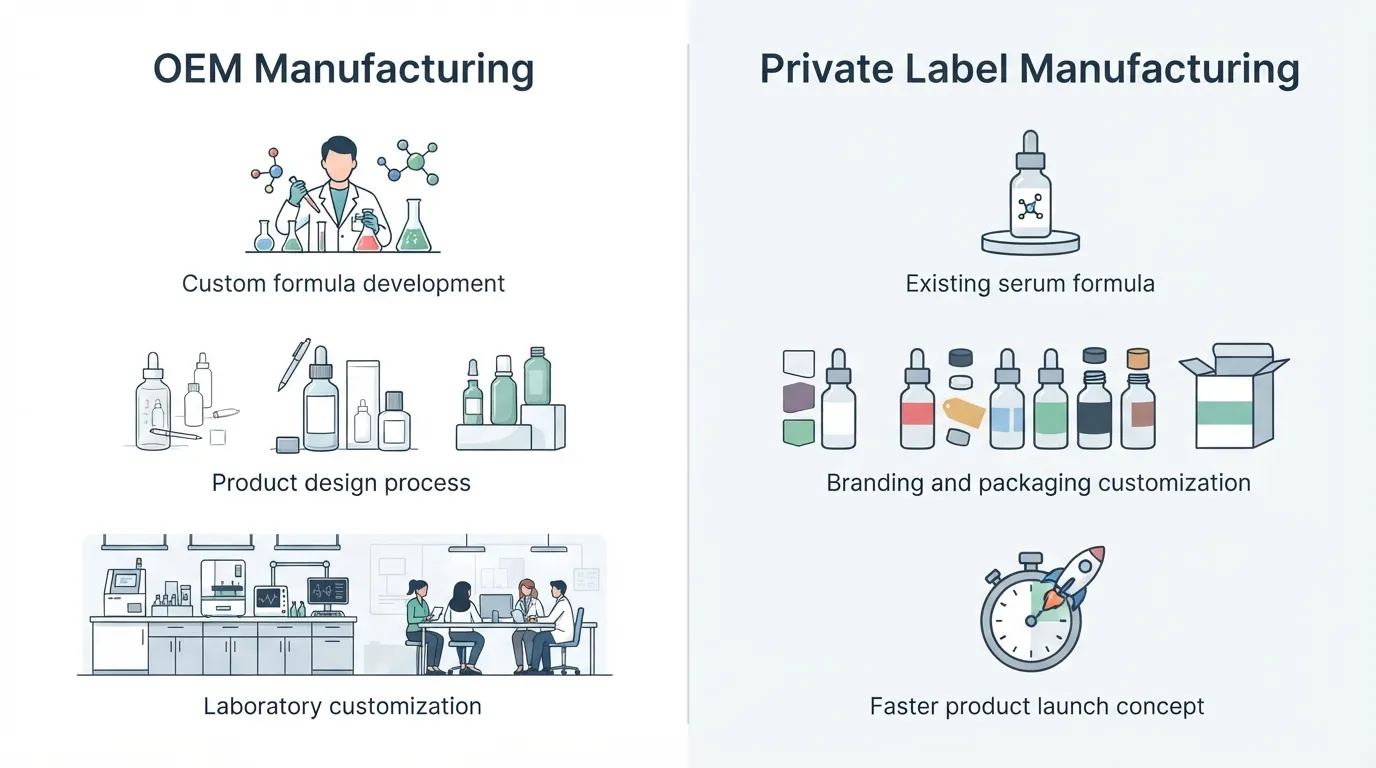
For clinics and skincare brands, choosing the right manufacturing model is an important part of building a PDRN serum product strategy.
Different buyers have different goals. Some may want a ready-made formula that can be launched quickly, while others may need a customized product that matches their brand positioning.
The two common approaches are OEM and private label manufacturing.
The better choice depends on factors such as:
Brand goals
Product differentiation needs
Budget considerations
Development timeline
Target customers
OEM PDRN Serum Manufacturing
OEM (Original Equipment Manufacturing) allows brands to work with a manufacturer to produce products based on specific requirements.
This model is often suitable for companies that already have a clear product concept but need manufacturing support.
Potential OEM services may include:
Formula development or adjustment
Ingredient selection
Packaging customization
Product production
Documentation support
For example, a skincare brand may want a PDRN serum with a specific texture, packaging style, or supporting ingredients that match its market positioning.
Before choosing an OEM partner, buyers should confirm the manufacturer’s development capability and how much customization is available.
Private Label PDRN Serum Solutions
Private label manufacturing usually allows businesses to use existing product formulas and sell them under their own brand name.
This option can be suitable for:
Clinics launching branded skincare products
Businesses entering the aesthetic skincare market
Companies looking for a faster product launch process
Compared with fully customized development, private label solutions may require less development time because the manufacturer already has an existing product framework.
However, buyers should still evaluate:
Formula quality
Documentation availability
Packaging options
Product differentiation opportunities
A private label product should still meet the brand’s quality expectations and market positioning.
Questions to Ask a PDRN Serum Manufacturer Before Ordering
Before placing a bulk order, clinics and brands should ask detailed questions about the product, manufacturing process, documentation, and long-term cooperation.
A supplier evaluation process helps buyers reduce risks and choose a manufacturer that matches their business requirements.
Can You Provide Product Samples Before Bulk Production?
Requesting samples before a large order allows buyers to evaluate important product factors, including:
Texture
Appearance
Packaging quality
User experience
Product suitability for the target market
Sample evaluation is especially useful when developing a new product line or comparing different suppliers.
However, buyers should understand that a sample represents one production stage. Long-term consistency should also be evaluated through manufacturing processes and quality systems.
What Is Your Minimum Order Quantity and Production Capability?
MOQ and production capability affect whether a supplier is suitable for a specific business model.
Smaller brands or clinics may need lower-volume options when testing market demand, while established brands may prioritize larger-scale production capacity.
Before cooperation, buyers should clarify:
Minimum order quantity
Production schedule
Repeat order capability
Packaging availability
These factors help avoid supply issues after a product enters the market.
Can You Support Packaging Customization and Branding?
Packaging plays an important role in how a skincare product is presented to customers.
Depending on the manufacturer’s capabilities, customization may include:
Bottle design
Label design
Outer packaging
Product information materials
Brands should confirm which customization options are available and whether they match the intended market positioning.
How Do You Maintain Product Consistency for Repeat Orders?
Long-term supply requires more than producing the first batch successfully.
Buyers should ask how the manufacturer manages repeat production, including:
Raw material consistency
Production procedures
Quality checks
Batch records
A stable supply partner should have processes that help maintain consistent product characteristics over time.
What Support Is Available After Production?
Supplier support does not end after shipment.
For long-term cooperation, buyers may need assistance with:
Product documentation
Technical information
Packaging updates
Quality-related questions
Clear communication after production can help brands manage customer feedback and future product development more efficiently.
Common Mistakes When Selecting a PDRN Serum Supplier
Choosing Only Based on Price
Price is an important factor, but it should not be the only selection criterion.
A lower initial cost may create additional challenges if the supplier cannot provide consistent quality, reliable documentation, or stable production.
A better evaluation considers the overall value provided by the manufacturer.
Ignoring Documentation Verification
Some buyers focus heavily on product claims while paying less attention to supporting documents.
Before ordering, buyers should confirm:
What documents are available
Whether they apply to the specific product
Whether information matches the intended market
Proper documentation review helps create a stronger foundation for future sales and compliance discussions.
Not Requesting Samples Before Bulk Orders
Skipping sample evaluation can increase purchasing risks.
Testing samples allows buyers to identify potential issues before committing to larger production quantities.
For new suppliers, sample approval is an important step in confirming whether the product meets expectations.
Failing to Consider Long-Term Supply Stability
A supplier should not only meet the first order requirement.
For growing clinics and brands, long-term considerations include:
Consistent production
Communication quality
Ability to support future orders
Flexibility as product requirements change
A reliable manufacturing relationship can become an important part of building a sustainable skincare business.
Practical Checklist Before Partnering With a PDRN Serum Manufacturer
Before choosing a PDRN serum manufacturer, clinics and brands can use a structured evaluation process to compare suppliers more effectively.
A practical checklist should focus on the areas that influence product quality, cooperation efficiency, and long-term supply reliability.
Confirm Product Specifications
Before placing an order, buyers should confirm the essential product information, including:
Product formula details
Main ingredients
Product positioning
Packaging specifications
Intended market application
Clear product specifications help avoid misunderstandings during production and future repeat orders.
Review Documentation and Product Information
Buyers should request and review relevant documentation before cooperation.
Depending on the product and market requirements, this may include:
Ingredient information
Product specifications
Quality-related documents
Testing information where applicable
The goal is not simply collecting documents, but understanding what each document proves and whether it applies to the specific product being purchased.
Evaluate Samples Before Mass Production
Sample approval is an important step before moving into larger orders.
During sample evaluation, buyers can assess:
Product appearance
Texture and user experience
Packaging suitability
Overall alignment with brand expectations
For brands developing their own skincare line, sample review also provides an opportunity to make adjustments before production begins.
Understand Manufacturing and Supply Processes
A suitable supplier should be able to explain how products move from development to production.
Buyers should understand:
Production process
Quality control points
Production timeline
Repeat order management
This information helps determine whether the manufacturer can support long-term business growth.
Confirm Communication and Support Expectations
Clear communication is often overlooked during supplier selection.
Before starting cooperation, buyers should clarify:
Main communication contacts
Update frequency during production
Process for handling product questions
Support available after delivery
A reliable communication process can reduce delays and improve cooperation efficiency.
Conclusion
Choosing the right PDRN serum manufacturer requires more than comparing prices or product claims.
For aesthetic clinics and skincare brands, the best supplier is one that can provide suitable formulations, consistent production, reliable documentation, and support throughout the product lifecycle.
Before placing an order, buyers should evaluate the manufacturer’s product capabilities, quality systems, customization options, and ability to support long-term cooperation.
A careful supplier selection process can help clinics and brands build stronger skincare product lines while reducing risks during development, production, and future expansion.
Frequently Asked Questions
Q1: What should clinics look for in a PDRN serum manufacturer?
A: Clinics should evaluate more than product price when selecting a PDRN serum manufacturer. Important factors include formulation capability, manufacturing experience, quality control processes, documentation availability, customization options, and long-term supply reliability.
Q2: How can I verify whether a PDRN serum supplier is reliable?
A: Buyers can evaluate suppliers by reviewing product information, requesting samples, checking available documentation, understanding manufacturing processes, and assessing the supplier’s ability to support repeat orders. A reliable supplier should provide clear and consistent information.
Q3: What documents should I request from a PDRN serum manufacturer?
A: The required documents depend on the product and target market. Buyers may request product specifications, ingredient information, quality documents, and relevant testing information where applicable. Each document should be reviewed based on what it specifically verifies.
Q4: What is the difference between OEM and private label PDRN serum manufacturing?
A: OEM manufacturing usually involves more customized product development based on buyer requirements, while private label manufacturing often uses an existing formula that is sold under the buyer’s brand. The suitable option depends on the level of customization and product strategy needed.
Q5: Should clinics request samples before ordering PDRN serum in bulk?
A: Yes, sample evaluation allows clinics and brands to review product quality, texture, packaging, and suitability before committing to larger orders. It is an important step when working with a new supplier.
Q6: Can PDRN serum formulas be customized?
A: Customization options depend on the manufacturer’s capabilities. Some manufacturers may support adjustments to formulation, packaging, or product positioning, while others may only provide standard products.
Q7: What factors affect PDRN serum manufacturing costs?
A: Manufacturing costs can be affected by factors such as formula requirements, ingredients, packaging choices, order quantity, customization level, and production requirements. The final cost depends on the specific product project.
Q8: How can brands build a long-term relationship with a PDRN supplier?
A: Long-term partnerships usually require clear communication, consistent product quality, reliable documentation, stable production processes, and the ability to support future product needs.
Q9: Is the cheapest PDRN serum manufacturer always the best choice?
A: Not necessarily. A lower price may be attractive, but buyers should also consider product consistency, documentation quality, production reliability, and supplier support before making a decision.
Q10: What is the most important question to ask a PDRN serum manufacturer?
A: The most important questions depend on the buyer’s goals, but product quality control, documentation, customization capability, and long-term supply stability are among the most important areas to evaluate.
Other Blogs