Blog
How to Manage Injectable Aesthetic Product Inventory: A Guide for Clinics and Distributors
Author
Ray
Published
Category
Design & Inspiration
Learn how clinics and distributors can manage injectable aesthetic product inventory through batch tracking, documentation, expiration control, and supplier planning.


Author
Ray
An esteemed medical aesthetics expert with 40 years of profound experience in the field. With decades of expertise in non-invasive procedures, anti-aging science, and advanced dermatological solutions, the author is dedicated to sharing insights that connect clinical innovation with real-world patient results. Passionate about advancing safe, effective, and high-impact aesthetic treatments for a global clientele.
What’s better than insider perks, pro tips, and surprises?
Sign up to get the most recent blog articles in your email every week.
Join now.
Our company’s main product lines include HA (Hyaluronic Acid) fillers, CaHA (Calcium Hydroxylapatite) fillers, PLLA (Poly-L-Lactic Acid) biostimulators, and other advanced aesthetic solutions, all developed and manufactured by trusted partner facilities with whom we have maintained long-term, stable collaborations.
I help them with sales and export operations, while our company also provides sourcing and procurement services in China to help international clients solve supply-related challenges. If you need assistance with procurement, please feel free to contact us.
Introduction
For aesthetic clinics and distributors, purchasing injectable products is only the first step in building a reliable supply system. Proper inventory management plays an equally important role in maintaining product quality, improving operational efficiency, and ensuring that products can be tracked throughout their lifecycle.
Unlike general beauty products, injectable aesthetic products require stricter management because they are used in professional medical aesthetic settings. Product information, storage conditions, expiration dates, and batch records all need to be carefully monitored.
Poor inventory management may lead to avoidable problems, such as expired products, missing documentation, inefficient stock planning, or difficulties when product information needs to be verified.
A well-organized inventory system helps clinics and distributors:
Maintain product traceability
Reduce product waste
Improve purchasing decisions
Support consistent treatment planning
Build better relationships with reliable suppliers
For professional buyers, inventory management should be considered part of overall product quality management rather than a simple storage task.
Why Injectable Aesthetic Product Inventory Management Matters
Injectable aesthetic products are closely connected with professional treatment services. Therefore, managing these products requires more attention than ordinary cosmetic inventory.
A complete inventory process should cover the entire product journey:
Supplier selection → Product delivery → Storage management → Usage tracking → Reordering
Each stage affects product availability, documentation accuracy, and operational efficiency.
Maintaining Product Traceability
Traceability allows clinics and distributors to identify important product information when needed.
A proper tracking system should record details such as:
Product name
Manufacturer information
Batch or lot number
Expiration date
Purchase date
Quantity received
Distribution or usage records
Maintaining these records helps businesses quickly verify product details and manage their inventory more effectively.
For distributors, traceability is especially important because products may move through multiple stages before reaching professional users.
Reducing Product Waste and Expiration Risks
Poor inventory planning can create unnecessary losses.
Common issues include:
Ordering more products than needed
Keeping similar products without clear usage plans
Failing to monitor expiration dates
Forgetting older inventory during new purchases
An effective inventory system helps businesses understand product demand and maintain appropriate stock levels.
The goal is not to keep the largest inventory possible, but to maintain the right products in the right quantities.
Key Elements of Injectable Aesthetic Inventory Management
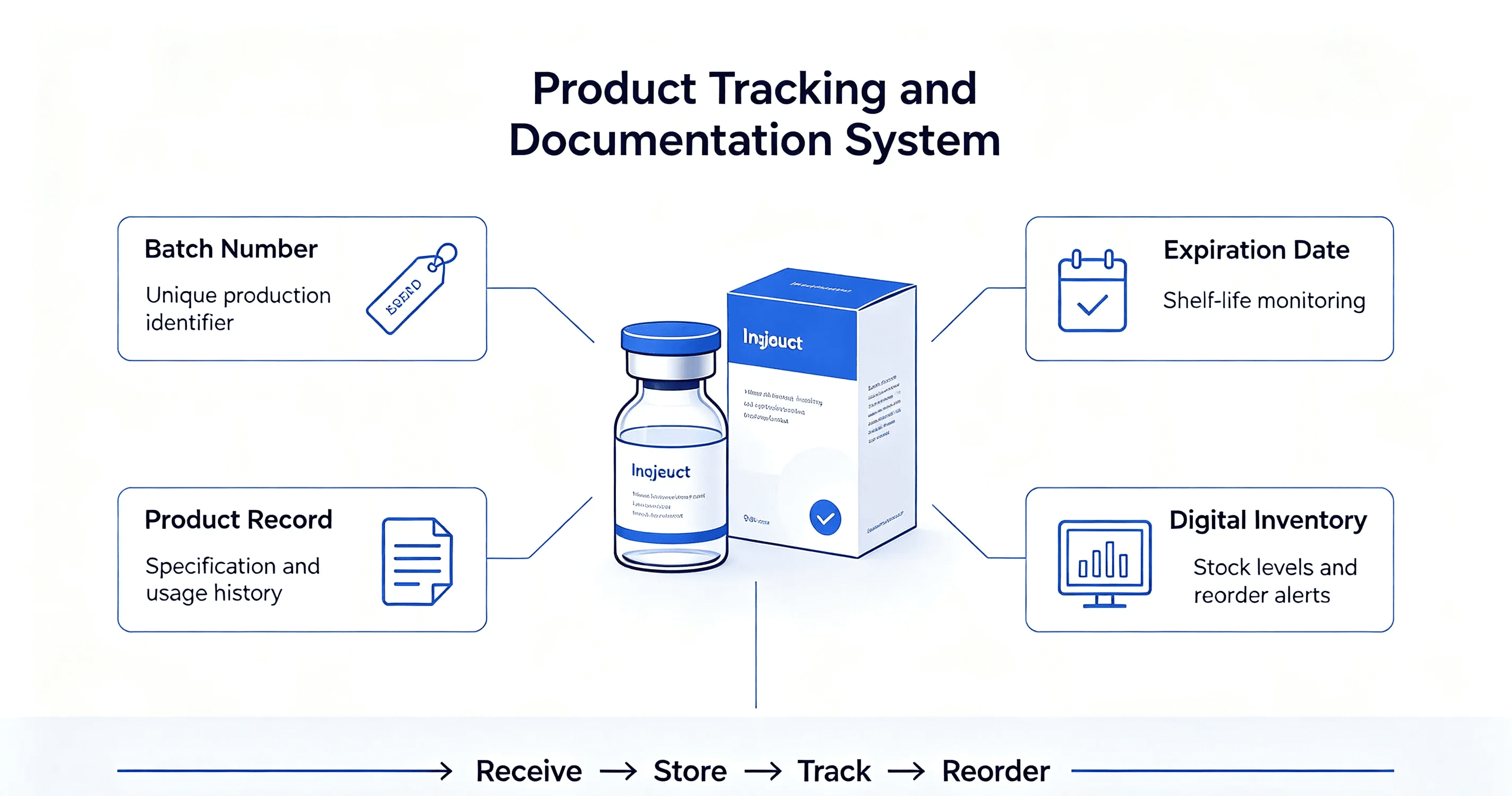
A professional inventory system should include several important components.
Product Information Management
Every injectable product should have complete and organized information.
Important records may include:
Product specifications
Manufacturer details
Batch information
Expiration information
Storage requirements
Technical documentation
Keeping this information accessible helps clinics and distributors manage products more efficiently and respond quickly when verification is required.
For professional buyers, complete product documentation is also an important factor when evaluating long-term supplier relationships.
Batch and Lot Number Tracking
Batch tracking is one of the most important parts of injectable product management.
A batch number connects a product with its manufacturing history and allows users to identify specific production information.
Tracking batch information can support:
Product verification
Inventory organization
Quality management
Communication with suppliers
For distributors managing products across different customers or regions, batch tracking provides better control over product movement.
Expiration Date Management
Expiration date monitoring helps prevent avoidable inventory losses and ensures products are used within the appropriate timeframe.
Clinics and distributors should regularly review:
Products approaching expiration
Current stock levels
Usage frequency
Future purchasing needs
A structured inventory rotation system allows businesses to prioritize products based on expiration timelines instead of simply using newly received stock first.
Storage Condition Monitoring
Proper storage management is an important part of maintaining injectable product quality.
Different injectable aesthetic products may have specific storage requirements depending on their formulation, packaging, and manufacturer instructions. Clinics and distributors should always follow the official product documentation provided by the manufacturer.
Effective storage management includes:
Maintaining appropriate storage conditions
Protecting products from unsuitable environments
Regularly checking inventory status
Keeping products organized and easy to identify
Storage areas should also be managed carefully to reduce the risk of misplaced products, damaged packaging, or incomplete records.
For professional buyers, selecting a manufacturer that provides clear product documentation and storage guidance can make inventory management more efficient.
Common Injectable Aesthetic Inventory Management Mistakes

Even experienced clinics and distributors may encounter inventory challenges. Understanding common mistakes can help businesses improve their management systems.
Overstocking Similar Products
One common mistake is purchasing too many products with overlapping applications.
For example, a clinic may stock multiple similar products without clearly defining their treatment purposes. This can increase inventory pressure and make product rotation more difficult.
A more effective approach is to build a balanced product portfolio where each product has a clear role.
This allows businesses to maintain flexibility while avoiding unnecessary inventory complexity.
Failing to Maintain Complete Product Records
Missing documentation can create difficulties when businesses need to verify product information.
Important records should be maintained throughout the product lifecycle, including:
Supplier information
Purchase records
Batch details
Inventory movement
Complete records support better quality management and improve communication between clinics, distributors, and manufacturers.
Ignoring Inventory Forecasting
Inventory decisions should not rely only on current demand.
Clinics and distributors should consider:
Seasonal demand changes
Treatment trends
Patient preferences
Existing stock levels
Supplier lead times
Better forecasting helps prevent both shortages and excessive inventory.
How Distributors Can Build a Reliable Injectable Supply System
For distributors, inventory management becomes more complex because products may need to be managed across multiple customers, locations, or markets.
A reliable supply system should include:
Working With Consistent Manufacturing Partners
A stable manufacturer relationship helps distributors maintain predictable supply.
Important factors include:
Production capability
Communication efficiency
Documentation support
Quality consistency
Long-term cooperation with reliable manufacturers can reduce supply uncertainty and improve business planning.
Maintaining Clear Product Documentation Across Markets
Distributors serving international markets should organize product information carefully.
Depending on the target market, buyers may need to manage:
Product documents
Packaging information
Regulatory materials
Import-related requirements
Organized documentation helps distributors respond more efficiently to customer inquiries and market requirements.
Creating Efficient Stock Planning Processes
Distributors should balance availability with inventory efficiency.
A strong stock planning process considers:
Customer demand
Sales patterns
Product categories
Reorder timing
Available storage capacity
The objective is to provide reliable supply without creating unnecessary inventory pressure.
Choosing a Manufacturer That Supports Long-Term Supply

Inventory management does not begin after receiving products. It starts with selecting the right manufacturing partner.
A reliable injectable aesthetic manufacturer should provide more than product supply.
Professional buyers should consider whether a manufacturer can support:
Consistent Product Quality
Stable manufacturing processes help businesses maintain confidence in product performance and supply reliability.
Complete Product Documentation
Clear documentation supports inventory management, product verification, and professional use.
Reliable Communication and Support
Responsive communication helps solve issues related to orders, documentation, and product information.
Long-Term Supply Capability
For clinics and distributors building sustainable businesses, supplier stability is an important consideration.
Manufacturers with structured quality systems, professional documentation processes, and international market experience can help buyers establish more reliable product management systems.
Conclusion
Effective injectable aesthetic product inventory management is an essential part of running a professional aesthetic business.
For clinics, it helps maintain organized product usage, reduce waste, and support better treatment planning.
For distributors, it improves supply control, documentation management, and customer support.
A successful inventory system requires more than tracking product quantities. It involves maintaining traceability, managing expiration dates, following storage requirements, and working with reliable manufacturing partners.
By developing a structured approach to inventory management, aesthetic businesses can improve operational efficiency and build stronger foundations for long-term growth.
Frequently Asked Questions
Q1: Why is inventory management important for injectable aesthetic products?
A: Inventory management helps clinics and distributors maintain product traceability, reduce waste, monitor expiration dates, and ensure products are available when needed.
Q2: What product information should clinics keep for injectable aesthetic products?
A: Clinics should maintain records such as product name, manufacturer details, batch or lot number, expiration date, purchase records, and relevant product documentation.
Q3: How often should injectable product inventory be reviewed?
A: The review frequency depends on business size, product volume, and usage patterns. Regular inventory checks help identify products approaching expiration and prevent unexpected shortages.
Q4: What is batch tracking and why does it matter?
A: Batch tracking connects a product with its manufacturing information. It helps clinics and distributors verify product details, organize inventory, and communicate effectively with suppliers when needed.
Q5: How can clinics reduce expired injectable product waste?
A: Clinics can reduce waste by monitoring expiration dates, forecasting demand, maintaining appropriate stock levels, and using inventory rotation systems based on product timelines.
Q6: Should clinics stock multiple injectable products with similar applications?
A: Clinics should evaluate whether each product has a clear purpose within their treatment offerings. Too many similar products may increase inventory complexity without providing additional value.
Q7: What should distributors consider when managing injectable product inventory across different markets?
A: Distributors should consider customer demand, documentation requirements, supply stability, storage conditions, and market-specific requirements when managing inventory.
Q8: How does the manufacturer affect injectable product inventory management?
A: A reliable manufacturer can support inventory management by providing consistent supply, clear documentation, product information, and responsive communication.
Q9: What is the difference between inventory management and product storage?
A: Product storage focuses on maintaining suitable conditions for products, while inventory management covers the broader process of tracking, planning, organizing, and controlling product availability.
Q10: How can businesses improve their injectable product supply system?
A: Businesses can improve supply management by choosing reliable suppliers, maintaining accurate records, forecasting demand, and creating structured inventory processes.
Other Blogs