博客
What Is NMN + PDRN Biotox Serum? Ingredients, Mechanism, and Who It's For
作者
Ray
已发布
类别
设计与灵感
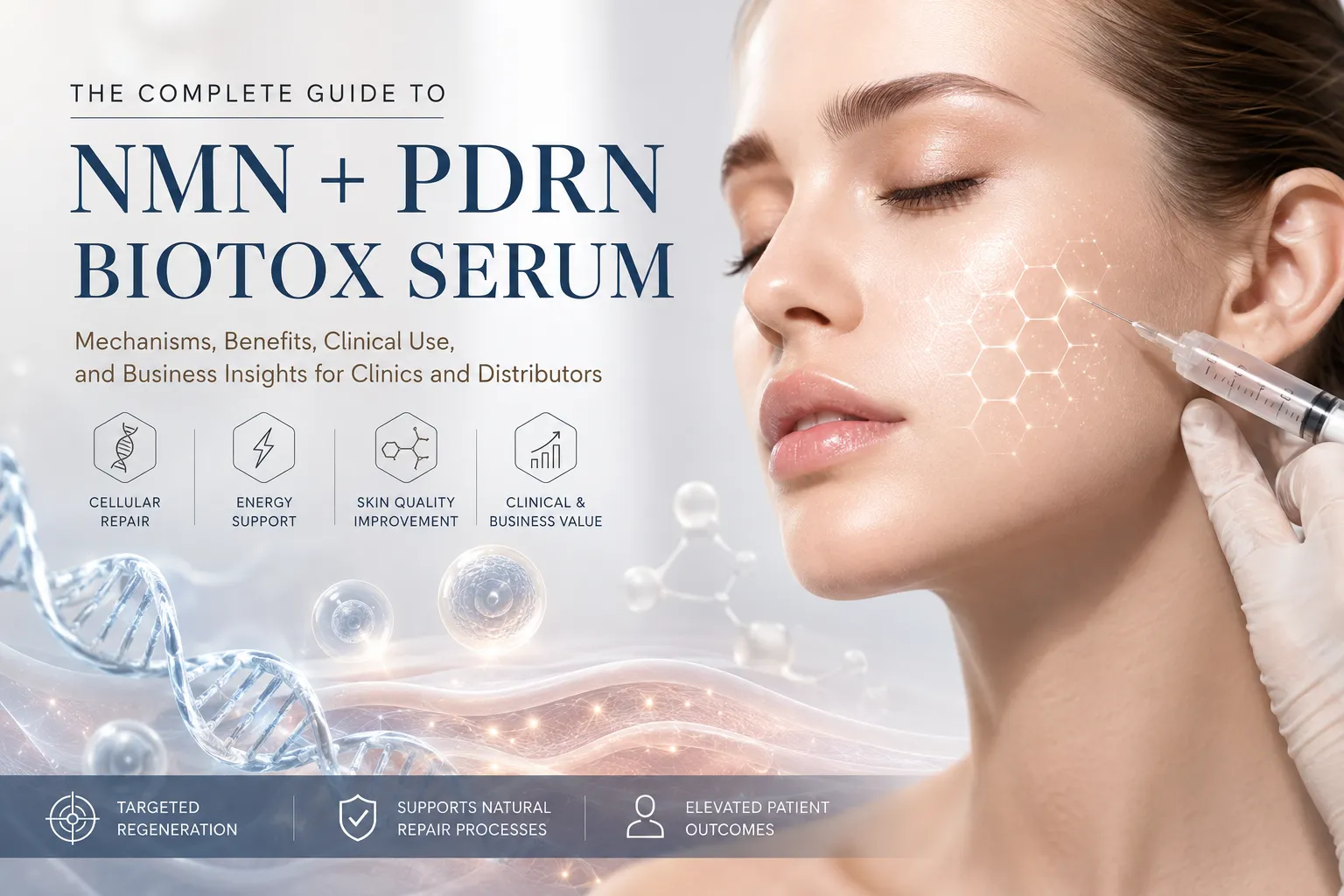
NMN + PDRN biotox serum combines cellular energy support with tissue repair signaling. Learn the ingredients, mechanism, and which patients are the best fit.

作者
Ray
一位享有盛誉的医学美学专家,在该领域拥有40年的深厚经验。凭借在非侵入性手术、抗衰老科学以及先进皮肤病学解决方案方面的数十年专业知识,作者致力于分享将临床创新与真实患者成果相结合的见解。热衷于为全球客户推进安全、有效且高影响力的美学治疗。
还有什么比内部优惠、专业建议和惊喜更好的呢?
注册可每周在您的电子邮件中接收最新的博客文章。
立即加入。
Our company’s main product lines include HA (Hyaluronic Acid) fillers, CaHA (Calcium Hydroxylapatite) fillers, PLLA (Poly-L-Lactic Acid) biostimulators, and other advanced aesthetic solutions, all developed and manufactured by trusted partner facilities with whom we have maintained long-term, stable collaborations.
I help them with sales and export operations, while our company also provides sourcing and procurement services in China to help international clients solve supply-related challenges. If you need assistance with procurement, please feel free to contact us.
Introduction
Aesthetic clinics are always looking for the next formulation that can justify a premium treatment menu, and "biotox" serums built around NMN and PDRN are the newest example of that trend. Instead of relying on a single active, these serums pair two very different mechanisms — one focused on cellular energy, the other on tissue repair — under a single injectable or topical product. For clinics and distributors trying to decide whether this combination is a genuine upgrade or simply a marketing repackaging of familiar ingredients, it helps to understand exactly what NMN and PDRN serum each do, how they interact, and which patients actually benefit from the combination. This guide breaks down the ingredient profile, the mechanism of action, and the clinical and business considerations that matter before adding an NMN + PDRN biotox serum to a treatment room or a product catalog.
What Is NMN + PDRN Biotox Serum
An NMN + PDRN biotox serum is a formulation that combines nicotinamide mononucleotide (NMN), a precursor to NAD+ involved in cellular energy metabolism, with polydeoxyribonucleotide (PDRN), a DNA-derived compound best known for tissue repair and regeneration. "Biotox" is a marketing term rather than a regulatory category — it generally signals a serum positioned as a next-generation alternative to neuromodulator-style treatments, aimed at improving skin quality, elasticity, and repair capacity rather than muscle relaxation. The combination is usually delivered through microneedling, mesotherapy, or fine-needle injection, and less commonly as a topical layered over other actives.
The logic behind pairing NMN and PDRN is straightforward on paper: PDRN gives the skin a repair signal, while NMN is meant to support the cellular energy supply needed to act on that signal. Whether this synergy holds up in practice is something clinics should evaluate critically rather than take at face value, which is part of why understanding each ingredient separately matters before judging the combination.
Key Ingredients Breakdown
PDRN (Polydeoxyribonucleotide)
PDRN is a purified DNA fragment, most commonly salmon-derived PDRN, that has been used in wound healing and aesthetic medicine for years. It works primarily through adenosine A2A receptor activation, which supports fibroblast activity, angiogenesis, and tissue regeneration. This is the ingredient responsible for most of the "skin repair" and "regenerative" claims attached to biotox serums, and it's the same active found in standalone [standalone PDRN serums] already common in clinic menus.
NMN (Nicotinamide Mononucleotide)
NMN is a nucleotide that the body converts into NAD+, a coenzyme central to cellular energy production and DNA repair processes. In topical and injectable skincare, NMN is included on the theory that boosting local NAD+ availability supports mitochondrial function in skin cells, which in turn may improve resilience against oxidative stress and slow visible signs of cellular aging. Evidence for topical or intradermal NMN penetration and efficacy in skin specifically is still developing, so clinics should treat NMN as a supporting ingredient rather than the clinical anchor of the treatment.
Supporting Actives
Most commercial NMN + PDRN biotox serums are not just a two-ingredient blend. Formulators frequently add:
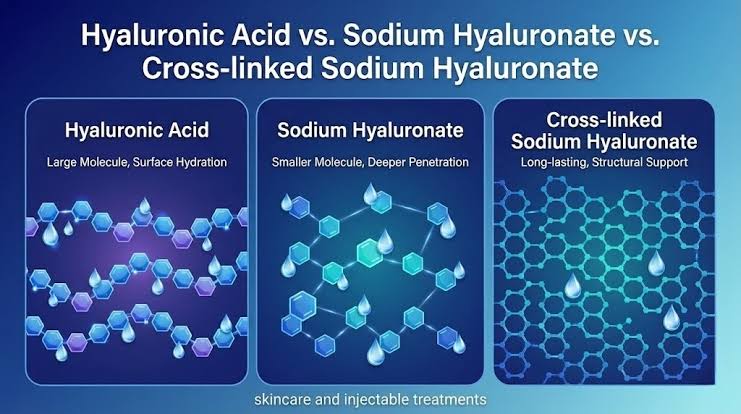
Hyaluronic acid or sodium hyaluronate for hydration and as a delivery vehicle, similar to what's used in standard HA skin boosters
Peptides to reinforce the anti-aging positioning
Antioxidants, which tie into broader antioxidant barrier repair strategies
Amino acids or vitamins as fillers that support the "biotox" branding without adding meaningful clinical weight
When evaluating a supplier's formulation, it's worth asking for the full ingredient list and concentration ranges rather than accepting "NMN + PDRN" as a complete description — the supporting actives can meaningfully change both cost and results.
How It Works: Mechanism of Action
Cellular Repair Through PDRN
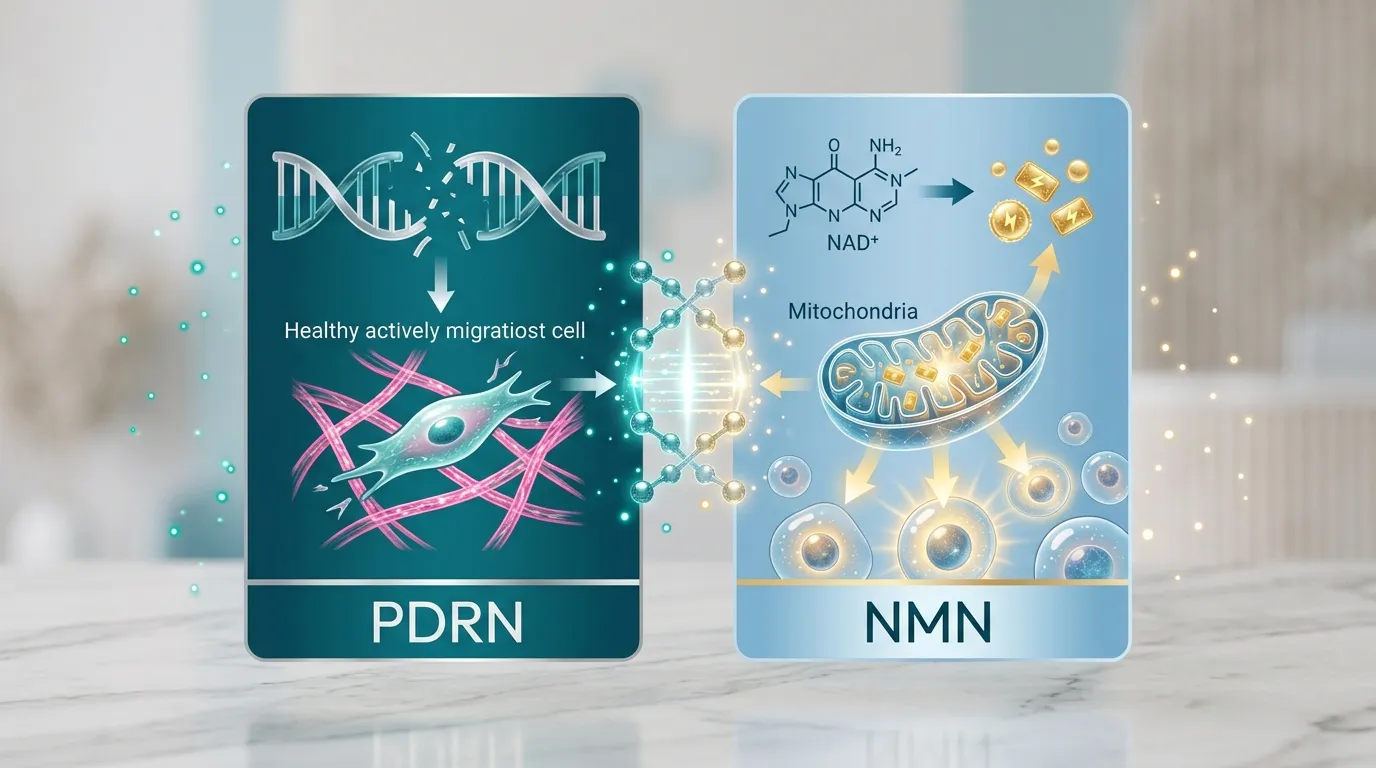
Once delivered into the dermis, PDRN triggers a repair cascade: adenosine receptor activation increases fibroblast proliferation and collagen synthesis, while also promoting local blood flow. This is the same mechanism that makes PDRN effective in wound healing contexts and is well documented compared to newer actives, which is part of why dermatologists recommend PDRN comparatively often relative to some other regenerative ingredients.
Cellular Energy Support Through NMN
NAD+ is required for enzymatic processes involved in DNA repair, mitochondrial function, and cellular signaling. As NAD+ levels naturally decline with age, the theory behind adding NMN is that replenishing local NAD+ availability gives skin cells more capacity to actually execute the repair signals PDRN provides. This is a plausible mechanism, but it's important to be clear with patients that this is a supportive, not independently validated, pathway in dermal applications.
The Combined Effect
In marketing materials, the two ingredients are often framed as working in a loop: PDRN signals repair, NMN supplies the energy to carry it out. Clinically, this is best understood as a hypothesis supported by the individual mechanisms of each ingredient rather than a combination with its own dedicated clinical trial base. Clinics offering this treatment should position it accordingly — as an enhanced regenerative serum built on a well-established base, since how salmon PDRN works is already well documented, with an added ingredient (NMN) that is still building its own evidence.
Who Is It For
Skin Concerns
NMN + PDRN biotox serums are most commonly positioned for:
Dull, fatigued-looking skin with reduced elasticity
Early to moderate signs of aging where regeneration matters more than volume
Post-procedure recovery support after treatments like microneedling or lasers
Patients seeking a "prejuvenation" option before committing to fillers or biostimulators like collagen biostimulators
Patient Profiles
This treatment tends to suit patients who want visible skin-quality improvement without volume change, and who are already comfortable with injectable or microneedling-based treatments. It is generally not a substitute for structural correction — patients looking to address deeper wrinkles or volume loss are usually better candidates for standard dermal filler options or biostimulators rather than a regenerative serum alone.
How It's Used in Clinic
Delivery method affects both cost and outcome, so clinics should be clear with patients about which protocol they're offering:
Microneedling infusion — the serum is applied topically and driven into the skin through microchannels, similar to protocols used in mesotherapy treatments
Mesotherapy injection — small intradermal injections across the treatment area, offering deeper and more even delivery
Fine-needle point injection — targeted delivery to specific areas of concern, often combined with other injectables in the same session
Most protocols recommend a course of 3–4 sessions spaced two to four weeks apart, followed by maintenance sessions every few months — a cadence broadly similar to other skin booster formulations treatments.
How It Compares to Related Treatments
Because "biotox" serums sit adjacent to several existing categories, patients and even some practitioners can conflate them. A few clarifying comparisons:
NMN + PDRN vs. standard PDRN serum — the core mechanism is the same, but NMN is an add-on rather than a replacement, so results should be evaluated against a standalone PDRN HA serum as the baseline.
NMN + PDRN vs. exosome serums — both are marketed as regenerative, but the mechanisms differ substantially; clinics comparing the two should look at the PDRN vs exosome serum breakdown before positioning either to patients.
NMN + PDRN vs. PN (polynucleotide) treatments — PN and PDRN are frequently confused; the distinction is covered in more detail under PDRN vs PN.
NMN + PDRN vs. HA-based skin boosters — HA boosters prioritize hydration and volume, while PDRN-based serums prioritize repair signaling; see the full PDRN vs HA comparison for more detail.
What Distributors and Clinics Should Look For When Sourcing
Because "biotox" is not a standardized term, sourcing quality varies widely between suppliers. Before adding an NMN + PDRN serum to a menu or catalog, buyers should evaluate:
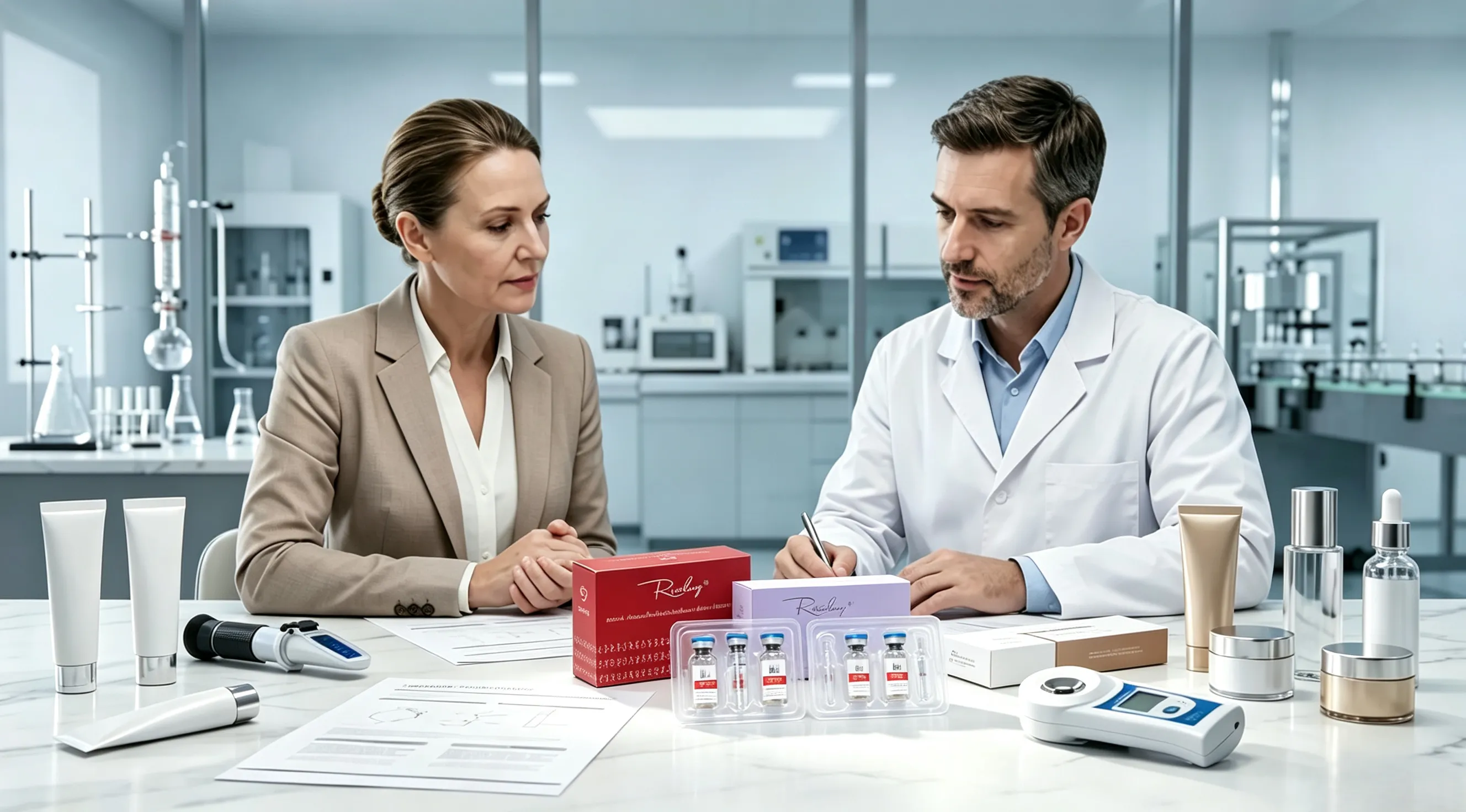
Ingredient sourcing and documentation — confirm PDRN origin (typically salmon or trout DNA) and NMN purity grade, and request the same level of product documentation you'd require before importing any injectable aesthetic product
Manufacturer track record — the same due diligence used when choosing a PDRN manufacturer applies here, since NMN + PDRN products are usually made by the same category of suppliers
Private label and OEM options — brands looking to launch their own version should understand the difference between OEM vs ODM before signing a manufacturing agreement, and review what's involved in private label PDRN serum development
Fit within a broader portfolio — this serum works best as one part of a coherent regenerative offering; clinics building out a full menu may want to reference a guide on injectable product portfolio building
Conclusion
NMN + PDRN biotox serum is best understood as an established, well-studied active — PDRN — paired with an emerging one, NMN, under a marketing label designed to signal innovation. For clinics, that means the treatment can be offered with confidence in its PDRN-driven repair effects, while NMN's added benefit should be communicated to patients as promising but still developing science. For distributors and brands, the opportunity lies less in the novelty of the ingredient pairing and more in sourcing a well-documented, consistently manufactured product and positioning it clearly within an existing regenerative treatment menu rather than as a standalone breakthrough.
Frequently Asked Questions
Q1: Is NMN + PDRN biotox serum the same as a regular PDRN serum?
A: No. It uses PDRN as its core active but adds NMN, typically alongside supporting ingredients like hyaluronic acid or peptides, which changes the formulation cost and, in theory, the mechanism of action compared to a standalone PDRN serum.
Q2: How long do results from NMN + PDRN biotox serum last?
A: Results vary by protocol and skin condition, but most clinics report visible improvement building over a course of 3–4 sessions, with effects maintained through periodic touch-up treatments every few months, similar to other skin booster timelines.
Q3: Is NMN + PDRN biotox serum injectable or topical?
A: It can be formulated for either use, but the injectable and microneedling-assisted versions are more common in clinics because they allow deeper delivery into the dermis, where PDRN and NMN are believed to be most active.
Q4: Can NMN + PDRN biotox serum replace Botox?
A: No. The mechanisms are entirely different — Botox relaxes muscle activity, while this serum targets skin quality and repair. Clinics marketing it as a "biotox" alternative are referring to positioning within a treatment menu, not an equivalent mechanism of action.
Q5: Are there safety concerns with combining NMN and PDRN?
A: Both ingredients have individually favorable safety profiles in aesthetic use, but as with any newer combination product, clinics should request safety and stability data from the manufacturer and screen patients for known contraindications to either ingredient.
Q6: Who should avoid NMN + PDRN biotox serum treatments?
A: Patients with active skin infections, known allergies to fish-derived PDRN, or those who are pregnant or breastfeeding are generally advised to avoid treatment, consistent with standard precautions for PDRN-based products.
Q7: How is this different from exosome-based serums?
A: Exosome serums rely on cell-signaling vesicles rather than a DNA fragment and NAD+ precursor combination. The two categories target overlapping goals but through distinct biological pathways, which is worth reviewing in more detail before choosing between them for a treatment menu.
Q8: Can clinics private label an NMN + PDRN biotox serum?
A: Yes, this is increasingly common as demand grows. Brands typically work with a manufacturer through an OEM or private label arrangement, which requires the same supplier vetting process used for any injectable or serum-based aesthetic product line.
其他博客