Blog
Can PDRN Help Acne-Prone Skin? What Clinics Should Know About Regenerative Skincare for Acne Concerns
Author
Ray
Published
Category
Design & Inspiration
Can PDRN help acne-prone skin? Learn how salmon PDRN supports skin recovery, barrier repair, and post-acne skin quality, plus what clinics should know before offering PDRN treatments.

Author
Ray
An esteemed medical aesthetics expert with 40 years of profound experience in the field. With decades of expertise in non-invasive procedures, anti-aging science, and advanced dermatological solutions, the author is dedicated to sharing insights that connect clinical innovation with real-world patient results. Passionate about advancing safe, effective, and high-impact aesthetic treatments for a global clientele.
What’s better than insider perks, pro tips, and surprises?
Sign up to get the most recent blog articles in your email every week.
Join now.
Our company’s main product lines include HA (Hyaluronic Acid) fillers, CaHA (Calcium Hydroxylapatite) fillers, PLLA (Poly-L-Lactic Acid) biostimulators, and other advanced aesthetic solutions, all developed and manufactured by trusted partner facilities with whom we have maintained long-term, stable collaborations.
I help them with sales and export operations, while our company also provides sourcing and procurement services in China to help international clients solve supply-related challenges. If you need assistance with procurement, please feel free to contact us.
Introduction
Acne-prone skin remains one of the most complex concerns for aesthetic clinics because clients are rarely dealing with only one issue. While active breakouts are often the primary complaint, many patients also experience sensitivity, weakened skin barrier function, uneven texture, redness, and long recovery periods after acne-related procedures. As a result, clinics are increasingly exploring regenerative skincare ingredients that focus not only on improving visible skin concerns but also on supporting overall skin condition.
Salmon-derived PDRN has gained attention in aesthetic medicine because of its association with skin repair and regeneration. However, its role in acne-prone skin is often misunderstood. PDRN is not an acne medication and should not be positioned as a direct replacement for proven acne treatments. Instead, it is better understood as a supportive ingredient that may help improve skin recovery, resilience, and quality when acne or acne treatments have affected the skin barrier.
For clinics considering whether to introduce PDRN-based treatments, the key question is not simply whether PDRN can “treat acne,” but where it fits within a broader skin improvement strategy. Understanding its mechanism, suitable applications, and limitations allows professionals to create more accurate treatment recommendations and realistic client expectations.
Understanding the Role of PDRN in Acne-Prone Skin
PDRN (polydeoxyribonucleotide) is a DNA-derived ingredient commonly sourced from salmon or other marine organisms and widely used in regenerative aesthetic treatments. Unlike ingredients that primarily target oil production, exfoliation, or acne-causing bacteria, PDRN focuses on supporting the skin’s natural repair processes.
This difference is important when discussing acne-prone skin. Acne development involves multiple factors, including excess sebum, clogged pores, inflammation, microbial activity, and hormonal changes. Because PDRN does not directly address these causes, it should not be categorized as an acne-fighting active in the same way as ingredients such as retinoids, salicylic acid, or benzoyl peroxide.
Instead, PDRN is often considered in situations where the skin requires additional support after stress or damage. This includes clients experiencing:
Skin sensitivity after intensive acne treatments
Reduced barrier function caused by over-exfoliation
Redness or irritation following breakouts
Uneven texture after acne recovery
Post-procedure skin recovery needs
For aesthetic professionals, this distinction helps define the correct treatment positioning. PDRN is less about stopping acne formation and more about improving the condition of skin that has been affected by inflammation, irritation, or previous treatments.
How PDRN Works in Skin Repair and Regeneration
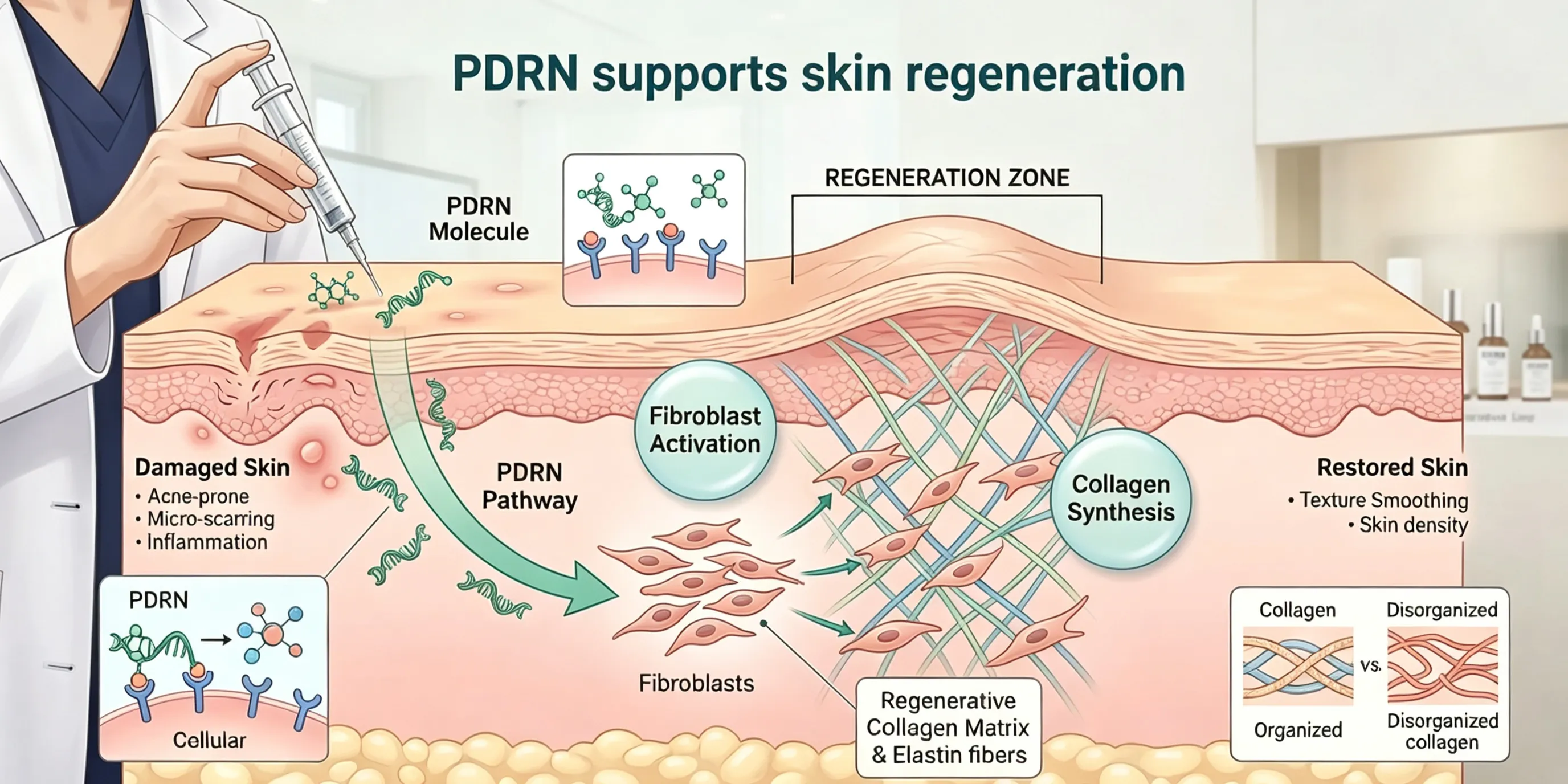
The main reason PDRN has become popular in regenerative skincare is its connection with tissue repair pathways. PDRN is associated with activation of adenosine A2A receptors, which play a role in cellular communication, fibroblast activity, and processes involved in skin regeneration.
Fibroblasts are important cells responsible for producing structural components such as collagen and extracellular matrix proteins. As skin ages or experiences repeated inflammation, its ability to recover efficiently may decline. Supporting fibroblast activity is one reason PDRN is often included in treatments designed to improve overall skin quality.
For acne-prone skin, this regenerative approach is particularly relevant after inflammatory episodes. A breakout may disappear, but the skin can remain in a compromised state with lingering redness, uneven texture, or reduced resilience. By supporting repair mechanisms, PDRN may help create a healthier environment for skin recovery.
This is also why PDRN is commonly discussed alongside procedures such as microneedling or professional skin treatments. In these settings, the goal is often not to eliminate acne directly but to support the skin during the recovery process and improve overall appearance.
However, clinics should be careful when communicating these benefits. The presence of a regenerative ingredient does not mean every acne concern will respond in the same way. Patient condition, acne severity, existing skincare routines, and treatment combinations all influence outcomes.
Why Acne-Prone Skin May Need Barrier Support
Many acne-prone clients have a weakened skin barrier, either because of the acne itself or because of aggressive treatment routines. Long-term use of strong exfoliating ingredients, frequent cleansing, or multiple active products can sometimes leave the skin more reactive and less able to maintain moisture balance.
A compromised barrier can contribute to:
Increased sensitivity
Tightness and dryness
Greater reaction to skincare products
Longer recovery after procedures
This creates an important distinction between treating acne and supporting acne-prone skin. A client may have fewer active breakouts but still experience poor skin quality because the barrier has not fully recovered.
PDRN-based skincare approaches are often positioned around this recovery stage. By supporting regenerative processes, PDRN may complement acne management strategies that focus on controlling breakouts while helping improve the overall condition of the skin.
For clinics, this makes PDRN particularly relevant for clients who are transitioning from active acne management toward skin restoration. These clients are often looking for improvements in texture, comfort, and skin quality rather than only a reduction in breakouts.
How PDRN May Support Skin After Acne-Related Damage
While acne itself requires targeted management, many clients continue to experience visible skin concerns after breakouts have improved. Post-acne changes such as redness, uneven texture, sensitivity, and reduced skin resilience often become the next priority for patients seeking aesthetic treatments.
This is where PDRN may have a role. Rather than focusing on reducing acne formation, PDRN is generally positioned as a regenerative ingredient that supports the recovery process after the skin has experienced inflammation or treatment-related stress.
For aesthetic clinics, understanding this difference is essential. Clients may search for solutions related to acne, but their actual treatment goals are often broader: healthier-looking skin, improved texture, faster recovery, and better tolerance to professional procedures.
Supporting Compromised Skin Barrier Function
The skin barrier plays an important role in maintaining hydration, protecting against external stressors, and regulating skin sensitivity. When this barrier is weakened, acne-prone skin can become more reactive and difficult to manage.
Common causes of barrier disruption include:
Overuse of retinol or other active ingredients
Frequent acne-focused treatments
Environmental stress
Repeated inflammation from breakouts
When the barrier is compromised, adding more aggressive ingredients is not always the best approach. Some clients may need a period focused on recovery and improving skin tolerance before continuing intensive acne treatments.
PDRN is often considered in these situations because of its association with skin regeneration and repair support. By helping support the natural recovery processes of the skin, PDRN-based treatments may contribute to improving overall skin condition and resilience.
However, clinics should position this benefit carefully. PDRN does not “repair” the skin barrier instantly, and results depend on multiple factors, including the formulation, delivery method, treatment protocol, and the client’s existing skincare routine.
Improving Skin Recovery After Inflammation or Procedures
Inflammation is a major part of many acne-related concerns. Even after active breakouts have reduced, the skin may remain affected by prolonged inflammatory responses, leaving behind visible redness, uneven appearance, or sensitivity.
This is one reason regenerative ingredients such as PDRN have gained interest in aesthetic settings. Supporting recovery after inflammation is a different goal from treating the original acne trigger.
PDRN may be considered as part of recovery-focused protocols for clients undergoing procedures such as:
Microneedling
Laser treatments
Skin resurfacing procedures
Professional rejuvenation treatments
In these cases, the objective is usually to support the skin during the healing process and improve the overall treatment experience.
For clinics, this creates an opportunity to position PDRN as part of a broader skin improvement program rather than a standalone acne solution. Patients who have completed acne management but still struggle with skin quality concerns may be more suitable candidates for regenerative approaches.
Addressing Post-Acne Skin Quality Concerns
Many acne patients are not only concerned about breakouts. After acne improves, they often focus on issues such as:
Uneven skin texture
Dull appearance
Reduced elasticity
Visible signs of previous inflammation
Skin that appears tired or stressed
These concerns explain why regenerative skincare has become increasingly popular in aesthetic clinics. Patients are often looking for treatments that go beyond basic acne control and help improve the overall appearance and condition of their skin.
PDRN is commonly discussed in this context because it is associated with collagen-related activity and tissue recovery support. While the results may vary between individuals, its positioning fits within the broader category of skin-quality improvement treatments.
For professional providers, this also highlights the importance of patient consultation. A client with active inflammatory acne may require a different approach compared with someone whose acne has improved but who is seeking better texture and recovery support.
PDRN and Active Acne: Understanding Its Limitations
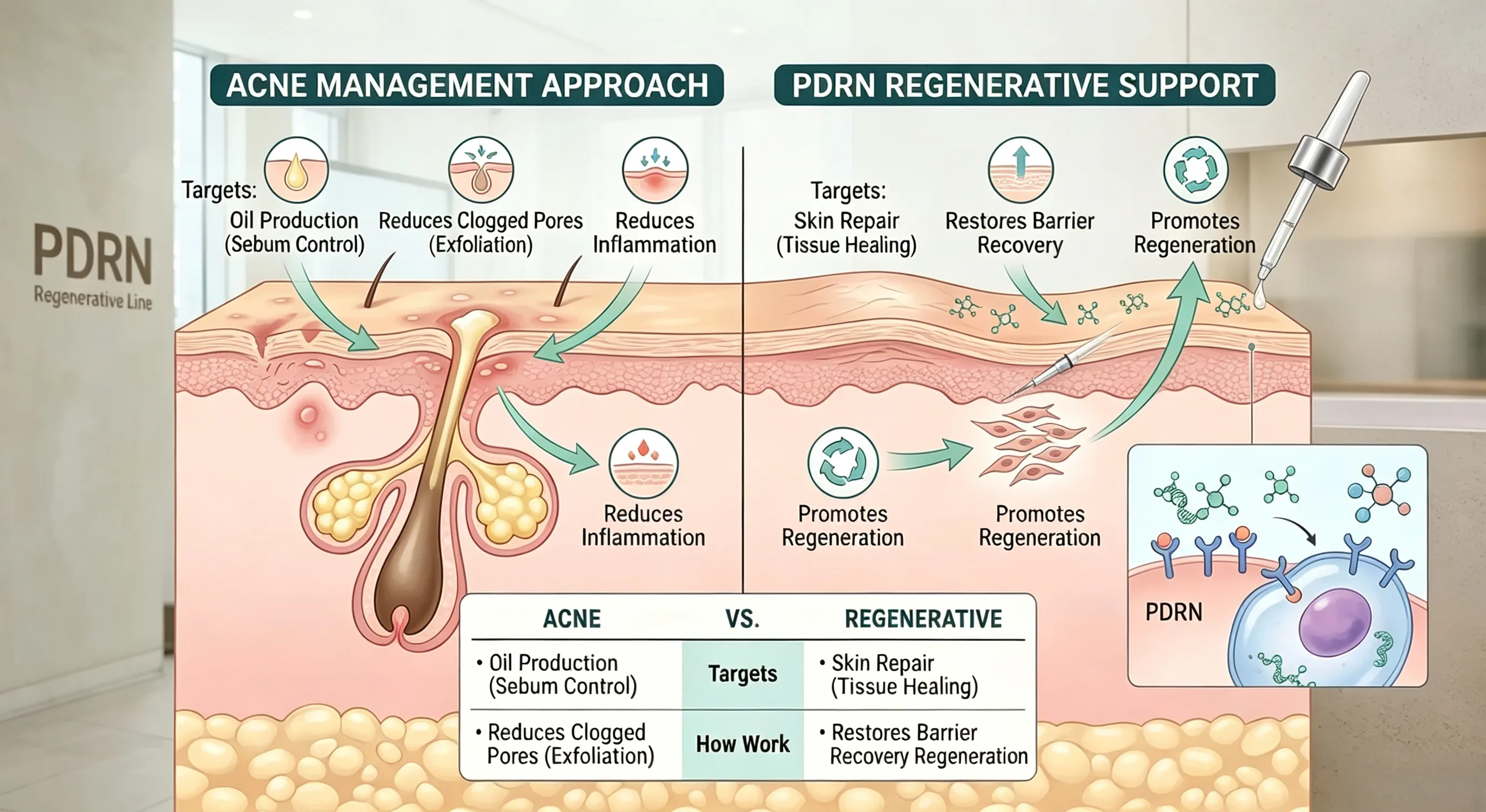
One of the biggest challenges with emerging aesthetic ingredients is the risk of overpromising. Because PDRN has strong associations with regeneration and skin improvement, some marketing claims may suggest broader acne benefits than current evidence supports.
A professional approach requires understanding both the potential applications and the limitations.
Why PDRN Is Not an Acne Treatment
Although PDRN may support skin recovery, it should not be considered a direct acne treatment.
Active acne is influenced by several biological factors, including:
Excess sebum production
Follicular congestion
Cutibacterium acnes activity
Hormonal influences
Inflammatory pathways
Traditional acne treatments are designed to address these specific mechanisms. For example, retinoids help regulate cell turnover, while other acne medications target inflammation or bacterial factors.
PDRN works differently. Its primary positioning is related to repair and regeneration rather than controlling acne formation.
For clinics, this distinction matters because accurate treatment communication builds trust. Describing PDRN as a supportive regenerative treatment is more appropriate than presenting it as a replacement for established acne therapies.
When Acne-Prone Clients May Benefit From PDRN Support
Although PDRN is not designed to eliminate acne, certain acne-prone clients may still benefit from its inclusion in a broader skincare strategy.
Potential candidates may include clients who:
Have completed intensive acne treatment and want skin recovery support
Experience sensitivity caused by previous acne routines
Are concerned about post-acne texture changes
Need support after professional procedures
Want to improve overall skin quality rather than only reduce breakouts
In these situations, PDRN may complement other approaches by focusing on skin condition and recovery.
The key is patient selection. A client with severe active acne seeking a quick solution may not be the right candidate for a PDRN-focused treatment. However, a client looking to restore skin quality after acne-related damage may find regenerative treatments more aligned with their goals.
Choosing the Right PDRN Formulation for Acne-Prone Skin
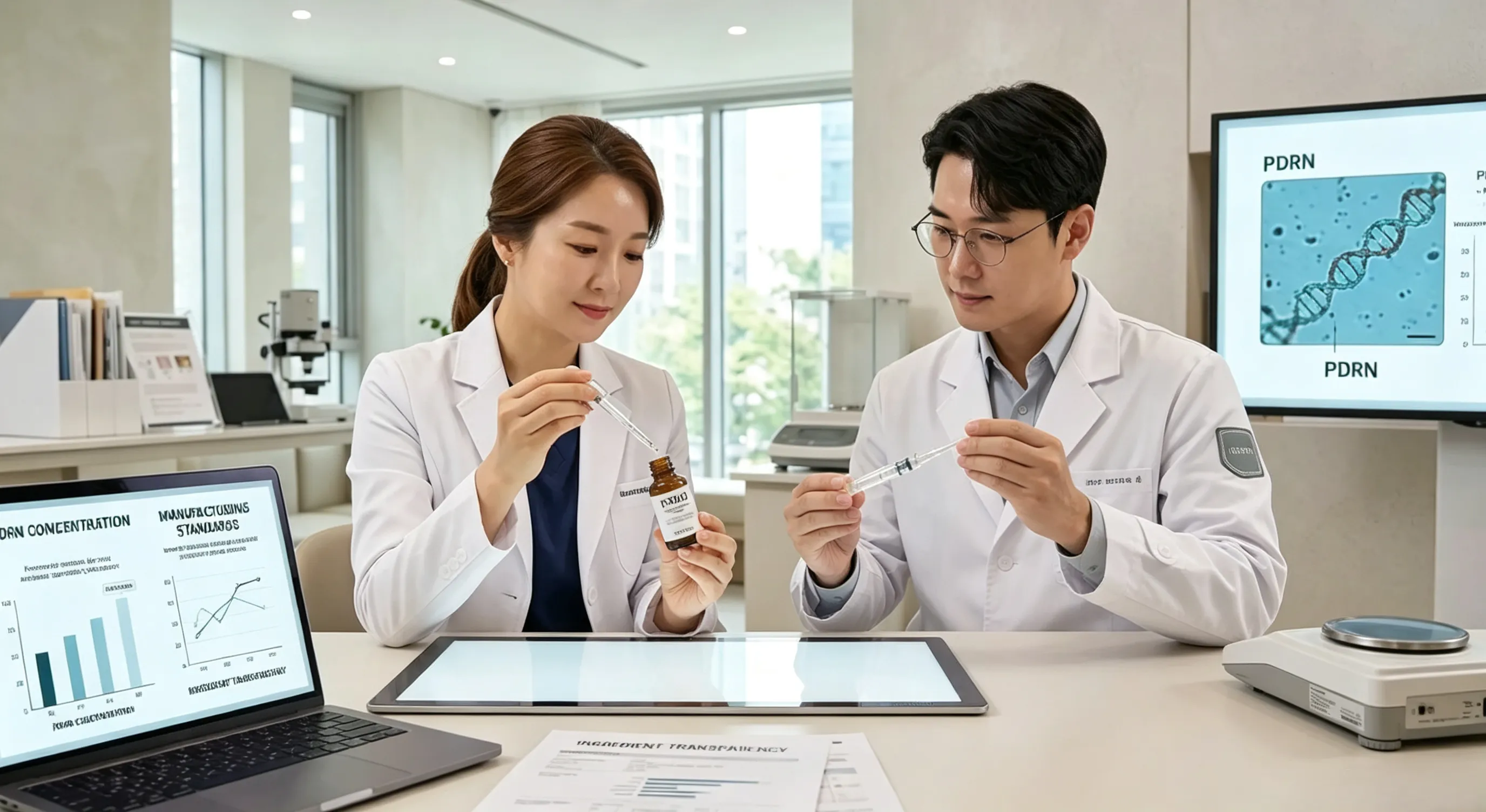
When clinics evaluate PDRN products for acne-prone clients, the ingredient name alone should not be the only consideration. Two products may both contain PDRN but deliver very different experiences depending on the overall formulation, supporting ingredients, texture, and intended use.
For acne-prone skin, the goal is usually not simply to maximize active ingredients. A suitable formulation should balance regenerative support with skin comfort, lightweight hydration, and compatibility with clients who may already be using acne-focused products.
This is particularly important because some acne-prone clients have highly reactive skin after repeated use of exfoliating acids, retinoids, or other intensive treatments. A well-designed PDRN formula should support skin quality without adding unnecessary irritation or heaviness.
Ingredient Source and Product Quality
PDRN products can differ significantly depending on the source, manufacturing process, and quality control standards behind the ingredient.
For professional buyers, several factors should be evaluated:
PDRN origin and sourcing transparency
Ingredient documentation
Batch consistency
Complete formulation disclosure
Salmon-derived PDRN is one of the most widely recognized sources in aesthetic skincare. However, the presence of PDRN alone does not automatically determine product performance. The final formula, stability, delivery system, and supporting ingredients all influence how the product performs in real-world use.
For clinics and brands, this means supplier evaluation should go beyond checking whether a product contains PDRN. Understanding where the ingredient comes from and how it is incorporated into the formula provides a clearer picture of product quality.
Formulation Design and Skin Compatibility
For acne-prone skin, formulation design is often just as important as the active ingredient itself.
A lightweight PDRN serum or ampoule format is usually easier to incorporate into routines where clients are already managing oil control, congestion, or sensitivity. Products with a fast-absorbing texture may be preferred because they provide regenerative support without creating a heavy feeling on the skin.
Important formulation considerations include:
Suitable hydration level
Minimal unnecessary irritants
Compatibility with other skincare routines
Appropriate balance between moisture and occlusion
A common misunderstanding is that breakouts caused after starting a PDRN product are always related to PDRN itself. In many cases, the issue may come from the surrounding formula, such as richer emollients, heavier creams, fragrances, or other ingredients that do not suit a particular skin type.
For this reason, clinics should evaluate the complete ingredient profile rather than focusing only on the headline active.
Additional Ingredients That May Affect Suitability
Many PDRN formulations combine additional ingredients to improve hydration, soothing effects, or overall positioning.
Common supporting ingredients include:
Hyaluronic acid for hydration support
Niacinamide for barrier and skin tone support
Peptides for broader anti-aging positioning
Panthenol or soothing ingredients for comfort-focused formulas
For acne-prone skin, supporting ingredients should complement the purpose of the product rather than make the formula unnecessarily complicated.
For example, a PDRN serum designed for post-acne recovery may prioritize:
Lightweight hydration
Barrier-supporting ingredients
Calming components
Good skin tolerance
A richer cream-based formula may be more suitable for dry or mature skin but may not provide the same experience for clients who are prone to congestion.
From a clinic perspective, the “best” PDRN product is not necessarily the one with the highest number of active ingredients. It is the one that matches the treatment objective and the client’s skin condition.
PDRN Compared With Other Acne-Prone Skin Ingredients
PDRN is often compared with other popular skincare ingredients because many clients are looking for solutions that improve both current skin concerns and long-term skin quality.
However, these ingredients usually work through different mechanisms. The choice between them depends on the client’s main goal rather than which ingredient is universally better.
PDRN vs Retinol: Different Approaches to Skin Improvement
Retinol and PDRN are often compared because both are associated with skin renewal and improvement, but their roles are different.
Retinol is primarily known for supporting:
Cell turnover regulation
Texture improvement
Fine line reduction
Acne-related concerns linked to clogged pores
PDRN is generally positioned around:
Skin repair support
Recovery after irritation or procedures
Improving overall skin resilience
Regenerative skincare approaches
For acne-prone clients, retinol may be more relevant when the main goal is managing concerns related to uneven cell turnover or clogged pores. PDRN may be more suitable when the priority is supporting compromised skin, improving recovery, or maintaining skin quality after acne-related stress.
In many professional skincare strategies, these ingredients are not necessarily competitors. They may serve different stages of a client’s skin journey.
A client using stronger acne treatments may benefit from recovery-focused support, while another client may require ingredients that directly address acne formation.
PDRN vs Peptides: Repair Support vs Skin Signaling
Peptides are another ingredient category frequently compared with PDRN because both are associated with advanced skincare and anti-aging formulations.
Peptides generally work as signaling molecules that communicate with skin cells and are often included in formulas targeting:
Collagen support
Skin firmness
Visible aging concerns
PDRN is more commonly associated with regenerative pathways and tissue recovery support.
For acne-prone clients, the difference is mainly about treatment goals:
Peptides may fit clients focused on long-term skin maintenance and aging concerns.
PDRN may be more relevant for clients prioritizing recovery, barrier support, and post-inflammatory skin quality.
For clinics building treatment menus, understanding these differences helps avoid presenting every advanced ingredient as a replacement for another. Instead, each ingredient can be positioned according to the specific skin concern it is designed to support.
Using PDRN in Professional Acne-Prone Skin Programs
For aesthetic clinics, the value of PDRN is not only determined by the ingredient itself but also by how it is integrated into a complete treatment strategy. Acne-prone clients often require a more personalized approach because their concerns may include active breakouts, sensitivity, post-inflammatory changes, or reduced skin quality after previous treatments.
A professional PDRN protocol should focus on matching the treatment purpose with the client’s actual skin condition. For some clients, the priority may be recovery after acne management, while others may need support after procedures designed to improve texture or skin appearance.
Current clinical discussions around PDRN in aesthetic medicine focus mainly on its regenerative and recovery-related applications rather than positioning it as a direct acne therapy. Research and clinical reviews highlight PDRN’s association with repair-related pathways, anti-inflammatory effects, and post-procedure skin recovery, while also noting that evidence varies depending on formulation and application method.
Combining PDRN With Other Skincare Approaches
PDRN is often most effective when considered as part of a broader skincare plan rather than a single solution.
For acne-prone clients, treatment strategies may involve multiple stages:
1. Managing active acne concerns
Clients with ongoing inflammatory acne may require approaches that directly address acne-related mechanisms, such as controlling excess oil, reducing congestion, or managing inflammation.
PDRN should not replace these targeted treatments because its primary role is related to skin recovery and regeneration rather than acne suppression.
2. Supporting recovery after intensive treatments
Some acne patients experience sensitivity or barrier disruption after using strong active ingredients or undergoing procedures. In these cases, regenerative ingredients may become more relevant because the treatment goal shifts from acne control toward skin restoration.
3. Improving overall skin quality
After acne improves, many clients continue to seek solutions for:
uneven texture
visible redness
weakened skin condition
dull appearance
reduced confidence in their skin
PDRN-based treatments may fit into this stage by supporting a skin-quality-focused approach rather than focusing only on breakout reduction.
For clinics, this creates a more accurate treatment positioning: PDRN is not a replacement for acne management, but it may be a useful addition to programs designed around recovery and skin improvement.
Setting Realistic Expectations for Clients
One of the most important aspects of introducing regenerative treatments is managing expectations.
Because PDRN has become popular in aesthetic skincare, some consumers may assume it can solve every skin concern. However, professional consultation should clearly explain what PDRN can and cannot do.
Appropriate expectations may include:
Supporting healthier-looking skin
Improving recovery after irritation or procedures
Helping maintain skin quality
Supporting a more balanced treatment approach
Expectations that require more caution include:
Eliminating acne completely
Replacing medical acne treatments
Guaranteeing removal of acne scars
Producing identical results for every client
Clear communication is especially important for clinics offering premium aesthetic treatments. Clients are more likely to value regenerative treatments when they understand the purpose behind them rather than viewing them as a quick fix.
What Clinics Should Consider Before Adding PDRN Treatments
Adding a PDRN product to a clinic menu requires more than evaluating ingredient popularity. Clinics should consider whether the product fits their target clients, treatment philosophy, and overall service portfolio.
A successful regenerative skincare program depends on three elements:
Appropriate patient selection
Reliable product quality
Accurate treatment positioning
Patient Selection and Treatment Goals
Not every acne-prone client is an ideal candidate for PDRN-focused treatments.
A suitable candidate may include clients who:
Have completed or are managing acne treatment
Want to improve overall skin condition
Experience sensitivity or dryness after intensive routines
Are interested in post-procedure recovery support
Have concerns about texture and skin quality
On the other hand, clients with severe active acne may need other approaches before considering regenerative treatments.
A consultation should identify the main concern:
Is the client trying to stop active breakouts?
Are they recovering from previous acne damage?
Are they seeking better texture and skin appearance?
The answer determines whether PDRN is the appropriate option.
Product Documentation and Supplier Evaluation
For clinics and distributors, choosing a PDRN product involves evaluating more than marketing claims.
Important factors include:
Ingredient sourcing information
Manufacturing standards
Batch consistency
Product documentation
Safety information
Application guidelines
This is particularly important because “PDRN” is now used across different product categories, including professional treatments and cosmetic skincare. The concentration, delivery method, and formulation design can significantly influence how a product is positioned and used.
Professional buyers should also evaluate whether the supplier provides transparent information about the product rather than relying only on trend-driven claims.
A reliable manufacturer or supplier should be able to explain:
Where the PDRN ingredient comes from
How the formulation is developed
What quality controls are applied
Which applications the product is designed for
Avoiding Overpromising Results
The growing popularity of PDRN has created significant marketing opportunities, but it also increases the risk of unrealistic claims.
For acne-prone skin, responsible positioning should focus on:
Skin recovery support
Regenerative skincare
Improved skin condition
Professional aesthetic applications
Avoid claims such as:
“PDRN replaces acne medication”
“PDRN removes all acne scars”
A scientifically responsible approach protects both the clinic’s reputation and the client experience.
For aesthetic businesses, the strongest long-term opportunity is not simply selling a trending ingredient. It is building trust by offering treatments that are clearly explained, appropriately selected, and supported by realistic expectations.
Conclusion
PDRN can be a valuable addition to acne-prone skin programs when its role is clearly understood. It is not an acne medication and should not be positioned as a direct solution for active breakouts. Instead, its strongest application lies in supporting skin recovery, improving overall skin quality, and complementing broader aesthetic treatment strategies.
For clinics and brands, the opportunity with PDRN is not simply following a skincare trend. The real value comes from selecting quality formulations, educating clients properly, and integrating the ingredient into a treatment approach based on realistic skin goals. When positioned correctly, PDRN can become part of a professional regenerative skincare portfolio that addresses the growing demand for healthier, more resilient skin.
Frequently Asked Questions
Q1: What do dermatologists think about PDRN?
Dermatologists and aesthetic professionals generally evaluate PDRN based on its regenerative properties, safety profile, and available clinical evidence. While PDRN has established interest in wound healing and skin recovery applications, its role in acne management should be considered supportive rather than a replacement for established acne treatments.
Q2: Can salmon PDRN help with acne?
Salmon-derived PDRN may support acne-prone skin by helping improve skin recovery, barrier condition, and overall skin quality. However, it is not designed to directly treat the causes of active acne.
Q3: Is PDRN worth the hype?
PDRN has gained attention because of its regenerative potential and growing use in aesthetic skincare. Whether it is worthwhile depends on the client’s goals, the product formulation, and whether expectations match what the ingredient is designed to support.
Q4: How often should you use PDRN?
Usage frequency depends on the specific PDRN product, delivery method, and treatment protocol. Clinics should follow manufacturer guidance and consider the client’s skin condition before creating a treatment schedule.
Q5: How much does PDRN treatment cost?
PDRN treatment costs vary depending on the product type, treatment method, location, and clinic pricing structure. Injectable and professional procedures typically differ significantly from topical PDRN skincare products.
Other Blogs